

This week, bad weather all over the country turned tragic when a large slip came down on a Mt Maunganui campsite, burying tents and vehicles. Six people are presumed dead, including young people, with search and recovery efforts continuing. Reports have named 15 year old Sharon Maccanico, originally from Italy, and Rotorua grandmother Sue Knowles as two of the six people unaccounted for.
Campers described hearing cracking sounds before the hillside gave way, others spoke of racing into unstable rubble in desperate attempts to pull people free before the ground shifted again. Emergency responders have been working under extreme conditions with saturated ground and the awareness of the very real risk of further slips.
The Prime Minister cancelled his scheduled trip to Rātana Pā so he could go to the weather effected areas, and meet with those effected.
Questions are beginning to be asked about why there was no evacuation order, despite visible instability and days of heavy rain. There will be time when the recovery process is complete to turn to reviewing risk assessments, warning systems, and whether known hazards were adequately communicated. But this could get uncomfortable as The Post is reporting “a 2025 report to Tauranga’s council flagged that the Mount was vulnerable to slips triggered by heavy rain or earthquakes.”
For now, though, families and communities are grieving and coming to terms with the horrifying reality that their loved ones are not going to be found alive.
Election 2026: the long road to November
With the announcement that the general election will be held on 7 November 2026, the country has officially entered campaign year. Christopher Luxon framed the timing as common sense while Chris Hipkins said "it's a late election relative to what we've seen recently” alleging that this made Luxon look “desperate”. Chris Bishop responded saying “Nonsense. There have been three October elections since 1996. Three November and three September. Perfectly normal date.”
Luxon’s State of the Nation speech was managerial, disciplined, and light on spectacle. Inflation easing, interest rates stabilising, and a promise to “fix the basics” formed the spine of the address. Supporters saw competence and restraint and critics saw a boring and out of touch man.
Chris Hipkins responded with a very different tone. His speech was combative, backward-looking, and heavy on blame. Labour’s argument appears to be that New Zealanders are tired of what he characterised as Government “negativity.” It was a curious framing, given that the speech itself was largely an exercise in attack and historical reinterpretation rather than forward planning.
The lines are now clearly being drawn, and the march to November has begun. I wrote more in depth about Luxon’s speech here and Hipkins’ speech here.
The Prime Minister cancelled his scheduled trip to Rātana Pā so he could go to the weather effected areas, and meet with those effected.
Questions are beginning to be asked about why there was no evacuation order, despite visible instability and days of heavy rain. There will be time when the recovery process is complete to turn to reviewing risk assessments, warning systems, and whether known hazards were adequately communicated. But this could get uncomfortable as The Post is reporting “a 2025 report to Tauranga’s council flagged that the Mount was vulnerable to slips triggered by heavy rain or earthquakes.”
For now, though, families and communities are grieving and coming to terms with the horrifying reality that their loved ones are not going to be found alive.
Election 2026: the long road to November
With the announcement that the general election will be held on 7 November 2026, the country has officially entered campaign year. Christopher Luxon framed the timing as common sense while Chris Hipkins said "it's a late election relative to what we've seen recently” alleging that this made Luxon look “desperate”. Chris Bishop responded saying “Nonsense. There have been three October elections since 1996. Three November and three September. Perfectly normal date.”
Luxon’s State of the Nation speech was managerial, disciplined, and light on spectacle. Inflation easing, interest rates stabilising, and a promise to “fix the basics” formed the spine of the address. Supporters saw competence and restraint and critics saw a boring and out of touch man.
Chris Hipkins responded with a very different tone. His speech was combative, backward-looking, and heavy on blame. Labour’s argument appears to be that New Zealanders are tired of what he characterised as Government “negativity.” It was a curious framing, given that the speech itself was largely an exercise in attack and historical reinterpretation rather than forward planning.
The lines are now clearly being drawn, and the march to November has begun. I wrote more in depth about Luxon’s speech here and Hipkins’ speech here.
MMP: Where yesterday’s villains become today’s options
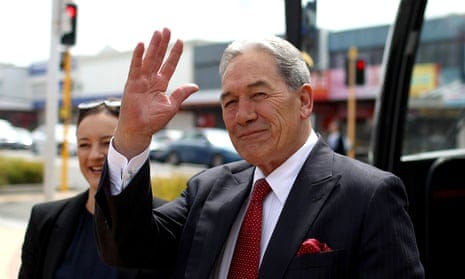
For all its faults our MMP election system certainly creates plenty of drama and intrigue. Suddenly parties who have been calling each other every name under the sun and alleging Nazism are “willing to work” with each other. This week, Te Pāti Māori co-leader Debbie Ngarewa-Packer suddenly expressed willingness to contemplate working with Winston Peters and New Zealand First after spending the past two years trying to persuade the electorate that he is a traitor to his race and the devil incarnate.
Sadly, for Te Pāti Māori, their new-found willingness is not reciprocated. Winston Peters told media “I said from day one, we’re never going to work with a party based on race”. He also gave his most emphatic response to questioning about working with Labour: “we’re never going back there again”. Subsequently, Ngarewa-Packer has posted an Instagram Story backing off her comments and saying she would simply work with anyone willing to entrench the Treaty.
Photograph: Phil Walter.
NZ First’s polling continues to surge, recording its strongest ever result in the latest Taxpayers’ Union–Curia poll. And while Labour made gains in the poll too, the left-bloc is down overall so they are not taking votes from National so much taking them from their coalition partners.
Rurawhe exits, Dansey enters, and Pugh bows out
Former Speaker Adrian Rurawhe’s decision to retire after Waitangi Day marks the end of a parliamentary career in which he became widely respected across the House to the extent that when he spoke often heckling stopped. His time in the Speaker’s chair was characterised by an emphasis on order and fairness during a period when parliamentary politics often ran hot. His dignity and mana will be missed by all.
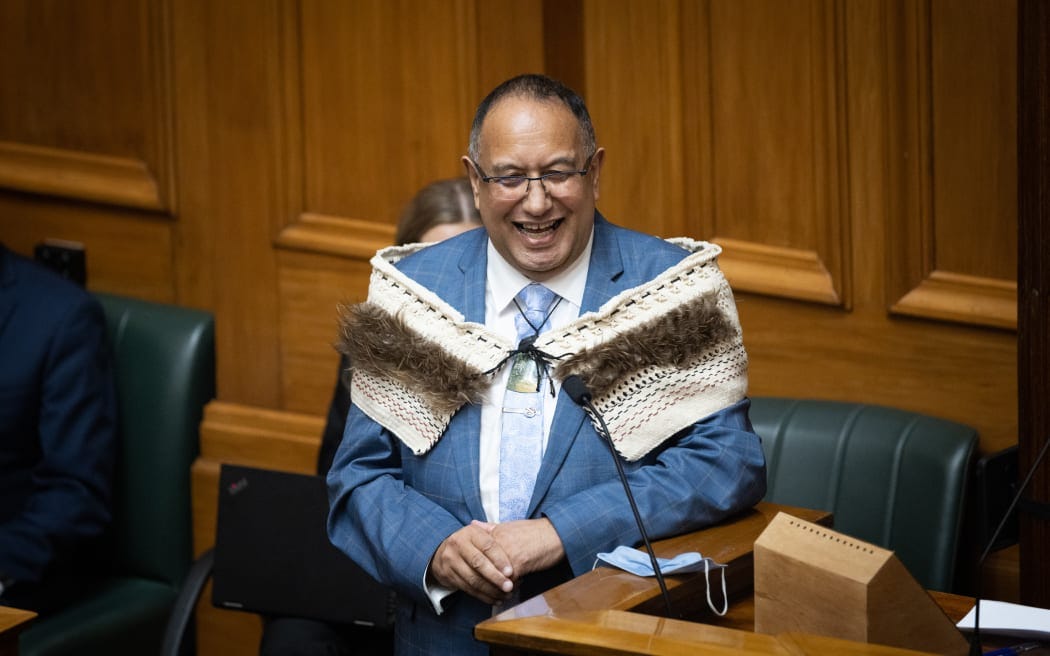
Photo: Phil Smith.
His departure clears the way for Georgie Dansey, a former secondary school teacher and current union organiser, to enter Parliament as a list MP. Dansey is classic of the new brand of Labour. She is young, has all the ‘right’ luxury beliefs, is in the process of discovering her Māori whakapapa, and calls herself “queer”. She is steeped in leftist political culture.
Long-serving West Coast–Tasman National MP Maureen Pugh has confirmed she will retire at the election after a decade in Parliament. Pugh has been an electorate MP with deep regional roots and a claim to fame no other MP can match: being struck by lightning not once, not twice, but three times. If nothing else, it’s a reminder that surviving Parliament sometimes requires an unusual level of resilience.
Greens raise the topic of entrenching Māori seats again
The Greens have introduced a members’ bill seeking to entrench the Māori seats, placing them alongside protected electoral provisions that require a supermajority to change. Entrenchment would make it far harder for a future Parliament to abolish the seats.
The bill has little chance of passing under the current parliamentary numbers, and the Government has shown no appetite for constitutional change of this kind. But the Greens are using it to position themselves as defenders of Māori political representation.
It is interesting timing given the renewed calls recently for a conversation about whether we need Māori seats at all. Unlike the Greens some see the success of Māori being over-represented (in relation to population) in Parliament and so well represented in Cabinet as proof that the seats are no longer required.
Manage My Health breach continues
The fallout from the Manage My Health data breach continues, with officials warning that fraudsters may attempt to contact affected users directly. The compromised information includes personal details, though there is no confirmation at this stage that full medical records were accessed.
The Privacy Commissioner has launched a formal inquiry into the company’s cybersecurity practices, focusing on whether reasonable safeguards were in place. For users, the immediate risk lies in phishing attempts and identity misuse rather than direct clinical harm.
The episode is a reminder that health digitisation brings convenience and vulnerability. Timely as work carries on to digitise our broader civic experience.
Greenland, tariffs, and political theatre
Blending old-fashioned territorial brinkmanship with 21st-century strategic competition and social media diplomacy, Greenland is at the centre of a trans-Atlantic posturing battle. US President Donald Trump has been combining public pressure, threats of tariffs, and NATO influence to direct the conversation toward a deal.
Denmark, Norway, France, Germany, the UK, Sweden, Finland and others condemned threats of tariffs on their exports aimed at coercing a Greenland deal, warning it could trigger a “dangerous downward spiral” in trans-Atlantic relations. EU leaders in Brussels described tariff threats as a mistake and stressed that Greenland’s sovereignty is non-negotiable, even as the EU prepared to bolster Arctic security cooperation. The European Parliament even halted work on key US-EU trade measures in protest, signalling that Brussels was willing to use economic relationships in response to diplomatic pressure.
However, what shows the Greenland episode is clearly a bit of a performance, by all sides, is that even as Denmark has talked a big game ‘standing up’ to the USA, it has been continuing to deepen defence ties with Washington. Copenhagen is in the midst of a significant military upgrade that includes purchasing US-made weapons systems, building on its existing investment in American-built F-35 jets and expanding capabilities linked to Arctic defence. These acquisitions are framed as strengthening NATO interoperability and securing the High North against Russian and Chinese influence.
At the World Economic Forum in Davos, Trump ruled out the use of force and dropped the new tariffs. He announced a “framework” discussion with NATO Secretary-General Mark Rutte on future Arctic cooperation. Officials from Greenland and Denmark stressed that sovereignty and territorial integrity remain “red lines” that cannot be traded away or compromised.
The controversy has also prompted wider strategic shifts, ones that successive American Presidents have been demanding of Europe. EU leaders are now pushing a package to strengthen Arctic defence and infrastructure, including European icebreaker capability and indigenous support, as part of a broader effort to reduce dependency on both Russian and American security guarantees. A win for Western security.
For now, Greenland’s immediate future isn’t one of annexation but intensified diplomacy and competition over security, resources (including critical minerals), and influence in the High North.
The US walks away from the WHO and Winston applauds
The United States has now formally withdrawn from the World Health Organisation, a year after Donald Trump gave notice via executive order. The administration has justified the move on the grounds of bureaucratic overreach, political bias, and poor performance during Covid-19, arguing that American taxpayers have already contributed more than enough. I am currently reading award winning Australian journalist Sharri Markson’s book on the covid pandemic and I frankly astounded that every country hasn’t pulled out and depended reparations from the WHO.
Photo: FABRICE COFFRINI/AFP.
Predictably, international reaction has been largely critical, with public-health experts warning that the exit weakens global disease surveillance, slows information-sharing, and undermines coordinated responses to future pandemics. Which is ironic given WHO failed on every single one of those fronts during the covid pandemic.
In New Zealand, Winston Peters has praised the US withdrawal, describing the WHO as a collection of “unelected globalist bureaucrats” and questioning whether New Zealand’s continued membership represents value for money.
Iran: pressure without resolution
Iran remains locked in a sadly familiar but intensifying standoff between internal repression and external pressure. Over recent weeks the regime has moved decisively to crush protest activity, deploying mass arrests, lethal force, and sweeping internet restrictions to reassert control. While demonstrations have largely been driven off the streets, the underlying drivers like economic collapse, political exclusion, and anger at clerical rule, remain unresolved. Human rights groups continue to report a high death toll and widespread detentions, though the true scale is difficult to verify amid tight information controls.
Internationally, pressure is mounting but poorly coordinated. The United States has expanded sanctions targeting Iranian officials and revenue streams, while Europe has condemned the crackdown and pushed for further accountability through international bodies. Tehran has responded with defiance, framing unrest as foreign interference and warning against military escalation in the region. Neither reform nor regime collapse appears imminent.
BREAKING: minister appoints people who share vision and politics
There is an attempt to create controversy around Associate Justice Minister Nicole McKee’s involvement in appointing new members to the Ministerial Arms Advisory Group. Some are calling the process “cronyism” after gun control advocate Philippa Yasbek was not reappointed. The implication is that McKee improperly stacked the advisory group with politically aligned figures, undermining a supposedly neutral, merit-based appointments system.
This is a complete beat-up. Ministers appointing people whose values, experience, and worldview broadly align with the Government’s policy direction is not corruption, it is normal politics. If the media or advocacy groups applied the same forensic zeal to ministerial appointments made under Labour, they would find exactly the same pattern: advisers becoming commissioners, aligned experts sitting on advisory groups, and selections reflecting the priorities of the government of the day. That is not “cronyism”; it is how democratic mandate is translated into governance.
Tariffs from Europe on British steel
The European Union’s threat to impose tariffs of up to 50% on British steel is an unwelcome test of Keir Starmer’s promise to “reset” relations with Brussels. The proposed measures are part of a broader EU effort to shield its steel industry from a surge of cheap imports. Nearly 80% of UK steel exports go to the EU, so Britain is caught squarely in the blast radius.
Politically, the timing is awkward. Both Britain and the EU are doing the performative dance with Trump and Starmer has made closer alignment with the EU a centrepiece of his economic strategy, arguing that reduced friction and improved cooperation would deliver tangible growth. But Brussels is making clear that access to its market is conditional, not sentimental.
Sports journalist forgets he is meant to report on sport
There was an uncomfortable sideshow at the Australian Open this week, where Owen Lewis of The Athletic repeatedly used post-match press conferences to bait American players into distancing themselves from their country and condemning Donald Trump. He framed his questions around whether athletes felt “complicated” representing the United States, whether their state “felt different”, or whether the last year in America made national pride awkward. It had nothing to do with tennis, and everything to do with extracting an anti-Trump headline.
The players, to their credit, largely shut it down. Jessica Pegula declined to “dabble in politics” and noted that life in Florida had been “fine”. Amanda Anisimova flatly stated she was “always proud” to represent the US and dismissed the political framing as irrelevant. Others, including Taylor Fritz and Coco Gauff, appeared visibly uncomfortable, with Fritz noting the obvious that anything he said would be clipped, sensationalised, and stripped of context. It is interesting that American athletes are routinely pressured to apologise for their country, while players from actively authoritarian states are rarely asked to account for theirs. Lewis was attempting to hold a struggle session and it revealed far more about him than the values of the athletes he put on the spot.

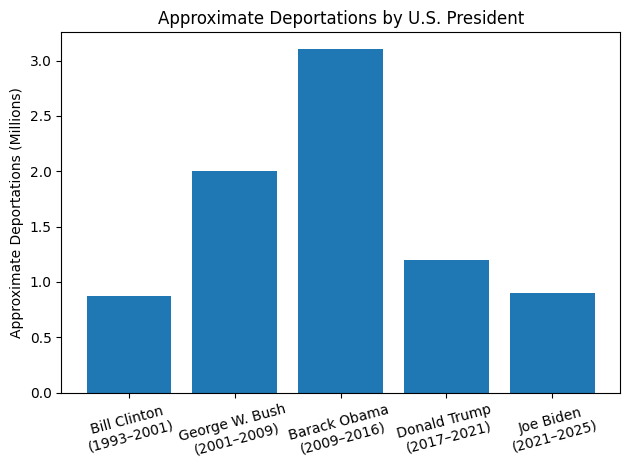
Chart of the Week:
I will be posting an article on the dishonesty around American illegal immigration policy this weekend.
In short - other stuff that happened:
- John Tekuru, 20, who snatched a 3 year old girl from a Rotorua daycare centre with the intention to rape her will be released from jail in just over six weeks. He was sentenced to two years’ jail but under New Zealand law, those sentenced to a term of two years jail or less can be automatically released from prison after serving half of the term.
- A 9 year old Hamilton girl, Zhongfei (Victoria) Chen, who moved to New Zealand less than a year ago, is now the youngest person to pass an NCEA Level 3 exam.
- Spanish investigators have confirmed the final death toll from the high-speed train collision is 45 with about 120 more injured.
- Australia’s new hate-speech laws broaden offences beyond direct incitement to violence to include speech deemed likely to “inflame” harm or hostility, the legislation lowers the threshold for criminal intervention and hands police and prosecutors wide discretion over what constitutes unacceptable opinion.
- New Jersey special ed teacher, Allison Havemann-Niedrach (45), admits to sexually assaulting 15-year-old boy she texted 25,000 times. She faces 12 years behind bars when she is sentenced in May.
- Prince Harry has taken offence to comments made about allied troops in Afghanistan by President Donald Trump.
- Former Canadian Olympic snowboarder and alleged drug kingpin Ryan Wedding has been arrested in Mexico and will be extradited to the US after years on the run. He had been on the FBI's Ten Most Wanted Fugitives list accused of running a transnational drug trafficking operation and murder.
- This week there were four shark attacks in waters along Australia's New South Wales coastline in under 48 hours.
- Ukrainian and Russian negotiators met in Abu Dhabi on Friday to tackle the issue of territory as Russian airstrikes plunged Ukraine into its worst energy crisis of the nearly four year war.
- A date has been set for Luigi Mangione’s federal murder trial for the killing of the United HealthCare CEO Brian Thompson. It is scheduled to start with jury selection on 8 September 2026.
- The Beckham family rift has gone nuclear with eldest son Brooklyn and his wife taking to soical media to air grievances. It began as wedding tensions and hardened into estrangement, with family members blocking each other, and missed family events. I am obsessed with the memes resulting from this drama.
- New research from Massey University shows the street price of methamphetamine fell to its lowest level on record in 2025, with inflation-adjusted prices down more than 50% since 2017. The same survey found cocaine is increasingly easy to obtain.
I am fascinated to see where the internal feuding in Te Pāti Māori goes in 2026. Mariameno Kapa Kingi is back in court with her party next month and it appears that a comms war is waging. Waatea News, with its close ties to Te Pāti Māori President John Tamihere, has published a thorough dossier on Kapa Kingi and her family in a transparent attempt to smear her character. READ HERE.
Ani O'Brien comes from a digital marketing background, she has been heavily involved in women's rights advocacy and is a founding council member of the Free Speech Union. This article was originally published on Ani's Substack Site and is published here with kind permission.
2 comments:
Amongst their multitude of business interests none of the maori mps list the manufacture of neck anchors. Seems a lucrative field overlooked
Thanks again Ani for an excellent summary
Post a Comment
Thank you for joining the discussion. Breaking Views welcomes respectful contributions that enrich the debate. Please ensure your comments are not defamatory, derogatory or disruptive. We appreciate your cooperation.