

On 15 January 2026, Public Service Commissioner Sir Brian Roche met with former Police Commissioner Andrew Coster. They met in public, at Mojo Café near Parliament, six weeks after Coster had resigned as CEO of the Social Investment Agency.
Allow me to refresh your memories. Andrew Coster tried to anoint child and bestiality porn criminal Jevon McSkimming as Coster’s successor as Police Commissioner. Coster did so in full knowledge that McSkimming was, as Deputy Police Commissioner, sexually predating upon a young woman.
But instead of firing McSkimming for surreptitiously slipping his predated-upon paramour into New Zealand’s Police force, Coster allowed McSkimming to orchestrate a criminal prosecution of the victim of McSkimming’s predation, under the Harmful Digital Communications Act.
Later, in the formal process of trying to ensure McSkimming’s appointment as Coster’s successor as Police Commissioner, Coster lied (by omission) to Roche, deliberately not disclosing McSkimming’s carnal and prosecutorial proclivities. Coster is therefore a deceitful, self-serving and otherwise dubious character, on whom I’ve previously commented:
IMPOSTER COSTER SHIFTS INTO SURVIVAL MODE
John McLean 27 November 2023
Later, in the formal process of trying to ensure McSkimming’s appointment as Coster’s successor as Police Commissioner, Coster lied (by omission) to Roche, deliberately not disclosing McSkimming’s carnal and prosecutorial proclivities. Coster is therefore a deceitful, self-serving and otherwise dubious character, on whom I’ve previously commented:
IMPOSTER COSTER SHIFTS INTO SURVIVAL MODE
John McLean 27 November 2023
On 1 November 2023 I attended a Free Speech Union event at Wellington’s Pipitea Marae. The theme for the “conversation” between former New Zealand Prime Minister Sir Bill English and former UK Supreme Court Justice Lord Jonathan Sumption was “A crisis of law and politics; the right to defend a tolerant culture
Read full story
After his term as Two-Tier Policing Commissioner expired, the current Government (through Minister for Social Investment, Nicola Willis) appointed Coster as CEO of the Social Investment Agency, with a base salary of half a million dollars a year. Following Coster’s resignation from that Agency and a report from the Independent Police Complaints Authority detailing some of Coster’s murky machinations, Roche announced:
Roche therefore claimed, in the same breath, that Coster hadn’t “committed anything personally” (i.e. wasn’t remotely at fault – or perhaps, unlike McSkimming, isn’t a convicted criminal) but that Roche would nevertheless have sacked Coster. Ummm.
By not sacking Coster as S.I.A. CEO (as he should’ve), Roche gifted Coster an extra bonus - three months’ salary ($125,000) “in lieu of notice”. To the media, Roche downplayed his Coster Coffee as a “general catch-up”.
All of which begs the question - are Roche and Coster close mates? Given Coster is no longer in the public service, in what capacity could Roche have been meeting up with Coster, other than as firm friends? And doesn’t Roche have anything better and more useful to do with his time as Public Service Commissioner than catch up with buddies within the State’s bureaucratic Blob?
Roche often talks the sort of rubbish that betrays his fundamental misunderstanding of what the role of the Public Service Commissioner ought to be. I’ve previously questioned Roche’s credentials and credibility:
THE COCK ROCHE AND THE HERON
John McLean 27 February 2025
Read full story
After his term as Two-Tier Policing Commissioner expired, the current Government (through Minister for Social Investment, Nicola Willis) appointed Coster as CEO of the Social Investment Agency, with a base salary of half a million dollars a year. Following Coster’s resignation from that Agency and a report from the Independent Police Complaints Authority detailing some of Coster’s murky machinations, Roche announced:
“If I’d had to [sack Coster, as Social Investment Agency CEO], I would have. I didn’t have to because he made the right professional decision. I’m not of the view that he has committed anything personally”
Roche therefore claimed, in the same breath, that Coster hadn’t “committed anything personally” (i.e. wasn’t remotely at fault – or perhaps, unlike McSkimming, isn’t a convicted criminal) but that Roche would nevertheless have sacked Coster. Ummm.
By not sacking Coster as S.I.A. CEO (as he should’ve), Roche gifted Coster an extra bonus - three months’ salary ($125,000) “in lieu of notice”. To the media, Roche downplayed his Coster Coffee as a “general catch-up”.
All of which begs the question - are Roche and Coster close mates? Given Coster is no longer in the public service, in what capacity could Roche have been meeting up with Coster, other than as firm friends? And doesn’t Roche have anything better and more useful to do with his time as Public Service Commissioner than catch up with buddies within the State’s bureaucratic Blob?
Roche often talks the sort of rubbish that betrays his fundamental misunderstanding of what the role of the Public Service Commissioner ought to be. I’ve previously questioned Roche’s credentials and credibility:
THE COCK ROCHE AND THE HERON
John McLean 27 February 2025

The Public Service Commission has at last released its report on the abuse of New Zealanders’ personal information in connection with Auckland’s Manurewa Marae and the 2023 general election.
Read full story
The Public Service Commissioner’s constitutional loyalties should be to the Government of the day and Parliament, to help ensure that the public service performs well. But instead, Roche thinks his primary loyalties and duties are to his senior Blob Buddies, as evidenced by this caffeinated conversation with Coster.
Roche sees his role as providing senior public servants and ex-Public Sector Blobarians such as Coster with pastoral care and protection from Governmental and public scrutiny and accountability.
If you watch his hands (i.e., what he’s actually doing) and ignore his verbiage, it’s readily apparent that Roche is running interference for senior public servants, insulating them from accountability to the Government for their under-performance and misconduct.
And the legions of mainly Woke and otherwise useless senior public servants are extremely grateful for Roche’s loyalty and shelter. Because the public service elites are bunkering down, thumbing their snooty noses at the current Government and looking forward to outlasting the current regime until “normal” service resumes i.e., a Labour/Maori Party/Greens coalition government results from the next election scheduled for 7 November 2026.

In mild defence of Roche, his deficiencies are not entirely his own fault. He’s a natural born accountant and accountants are rarely complex thinkers. Roche clearly struggles to grasp the complexities and subtleties of New Zealand’s constitutional arrangements. By cozying up with Coster, Roche has demonstrated yet again that his grip on what he’s supposed to be doing is tenuous at best.
So is it time to abolish the office of Public Service Commissioner? Abolition would make the heads of Government Departments, Ministries and other State agencies directly accountable to their relevant responsible Minister. That’d certainly be more democratic.
Notionally, the office of Public Service Commissioner exists to shield senior public servants from direct political interference from Government Ministers and to help ensure political neutrality in the public service. Under the Public Service Act 2020, the Public Service Commissioner’s role and functions include to:
- act as the Head of [the Public] Service by providing leadership of the public service, including of its agencies and workforce and by oversight of the performance and integrity of the system
- promote integrity, accountability, and transparency throughout agencies in the State services
- act as the employer of public service chief executives including by appointing chief executives and reviewing their performance
- advise Ministers on improvements of delivery of public services and the governance and allocation of functions
Unfortunately, Sir Brian and his immediate predecessors as Public Service Commissioners have not promoted political neutrality in the public serve. Instead, they’ve promoted and protected a politically partisan public service by insulating New Zealand’s Leftie/Woke public service from accountability to democratically elected Ministers.
All this begs another question – if Roche and Coster aren’t just friends, what might have prompted Roche to caffeinate with Coster, a man who is no longer a public servant and who ought to be persona non grata. Who knows. The most generous interpretation is that the rancid rendezvous resulted simply from Roche’s mindless, misguided loyalty to public servants and disgraced ex-senior public servants.
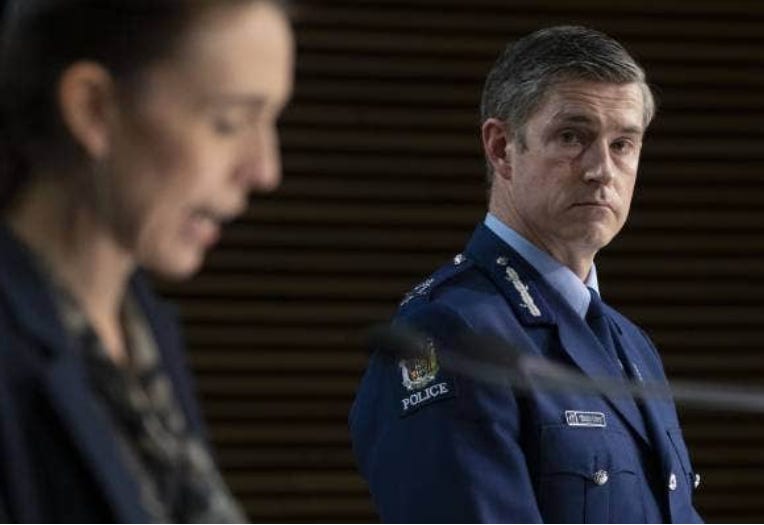
But what explains Coster’s impunity to accountability and his continuing allure to the likes of Roche? As Police Commissioner, Coster must necessarily have learnt all sorts of damaging information about public servants and politicians. Could it be that Coster is exploiting his extensive knowledge of where bodies are buried and skeletons can be found? Could it be that Conniving Coster blackmailed his way into his Social Investment Agency CEOship?
What other explanation could there be for the National Party appointing Ardern acolyte Coster as Social Investment Agency CEO, when Police Minister Mark Mitchell obviously hates Coster? Why isn’t Coster poisonous, in official circles? Does Machiavelli Coster have juice on Reptilian Roche?
Coster did not respond to media questions about his meeting with Roche. And that’s typical too. He’s a slippery creature, blessed with animal cunning. Don’t be surprised if, sometime soon, he slips out from under his rock to bask in the sun of another State-funded sinecure, again appointed by Roche.
Roche, meanwhile, will continue to muddle along, struggling to understand what his role is, and what’s appropriate conduct for a Public Service Commissioner.
Unfortunately, Roche’s term as Public Service Commissioner isn’t due to end until 30 June 2027, and it’s devilishly difficult to remove a Public Service Commissioner. Under the Public Service Act, a Public Service Commissioner can only be removed if the Commissioner is first suspended by the Governor General (in effect, the Prime Minister) for misbehavior or incompetence. The G-G must then present a full statement of the grounds for suspension to Parliament, with the Commissioner only removed if Parliament resolves that the Commissioner must be removed.

Despite the hurdles, it still may be worthwhile for the current Government to try and remove the CockRoche, because (unlike Coster), a Public Service Commissioner cannot be re-appointed to the State services and is not entitled to a retiring allowance from the Government Superannuation Fund.
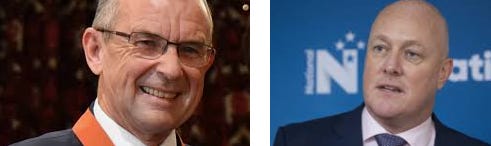
At the very least, Prime Minister Luxoflex shouldn’t be blind to Roche’s unholy allegiance to disgraced public servants and should formally warn Roche to get on with what he’s supposed to be doing…MOPGA. Make Our Public Service Great Again.
John McLean is a citizen typist and enthusiastic amateur who blogs at John's Substack where this article was sourced
3 comments:
Just more of the inept protecting the inept. Our reliance on both accountants and lawyers to run both the country and big businesses is our biggest failure.
It was a grave mistake to remove the power of dismissal of a Departmental CEO from a Minister. A win for the blob, you might say.
The public services act 2020 needs to be repealed and this role disestablished.
Post a Comment
Thank you for joining the discussion. Breaking Views welcomes respectful contributions that enrich the debate. Please ensure your comments are not defamatory, derogatory or disruptive. We appreciate your cooperation.