

Spoonley’s relaxed take echoes a broader argument you increasingly hear from progressive commentators and policymakers who insist that declining birth rates represent a triumph of women’s empowerment rather than a looming social problem.
As long as women exercise “choice,” the reasoning goes, society has no right to worry about the consequences. They rely on a distorted idea of women’s rights to justify ignoring or deriding a vital conversation about women’s lives, fertility, and the demographic pressures ahead.
This highlights a complacency that is intellectually dishonest, morally negligent, and, I argue, fundamentally anti-women. In recent years parts of academia have become strangely hostile to questioning their own assumptions. It appears they will do the same when it comes to conversations about the realities of women’s fertility, birth rates, and increasing anti-natalism.
This highlights a complacency that is intellectually dishonest, morally negligent, and, I argue, fundamentally anti-women. In recent years parts of academia have become strangely hostile to questioning their own assumptions. It appears they will do the same when it comes to conversations about the realities of women’s fertility, birth rates, and increasing anti-natalism.

To be clear, I am not arguing that women’s rights should be sacrificed for population targets. On the contrary, it is that women’s rights are not being served by a society that is set up to function in a way that is fundamentally at odds with our biological timeline.
Women have been absorbed as crucial to the economy since Second Wave Feminism expanded the world of women from the home sphere to include everywhere men were inhabiting. Now, instead of being merely mothers and wives, women are primarily workers and the system is obsessed with retaining them in the workforce. Concern is for how long women will take out of the workforce when they have children. How will their careers be impacted? What is the ‘motherhood penalty’ they will pay in job progression? Because women must return to the workforce. But missing from the conversation are questions on the flip side like how are workforce pressures impacting women’s desire and ability to have children? What is it costing women to be rushed back into work? Why it is so difficult for a family to live on a single income so one parent can remain at home?
When one outcome or pathway is treated as an inevitability or as the correct set of life choices, we are not truly enabling women to choose. We are simply funnelling women down a different path. The definition of a “meaningful life” has become tightly tied to career and the decision to have children is portrayed on the other side as low-status, a detour from more important things, and even something that will cause women boredom and misery. But in reality, how many women have a job that does not cause them some degree of boredom or misery? How many women have a career that provides them high-status and genuinely feels important? Why is it that the grind of 9 to 5 is promoted as the solution to life fulfilment and bringing life into the world is not?
New Zealand recorded 57,705 live births in 2025, with a total fertility rate (TFR) of 1.55 births per woman, well below the replacement level of 2.1 and down from roughly 2.0 as recently as the early 2000s. The median age of women giving birth has risen from around 25 years old in the early 1970s to 31.7 years in 2025, and half of babies are now born to women over 32. The median age of first time mothers has increased from roughly 28 years at the turn of the century to about 30 years in the 2020s.
Such breezy attitudes to these statistics not only assume that women want to be primarily economic units of production, but also ignores the economic and social consequences of an ageing population. It treats delayed motherhood and declining fertility as a matter of individual lifestyle choice, neglecting the economic and social pressures shaping those choices and the public goods like pensions, healthcare, and intergenerational support, that rely on demographic stability.
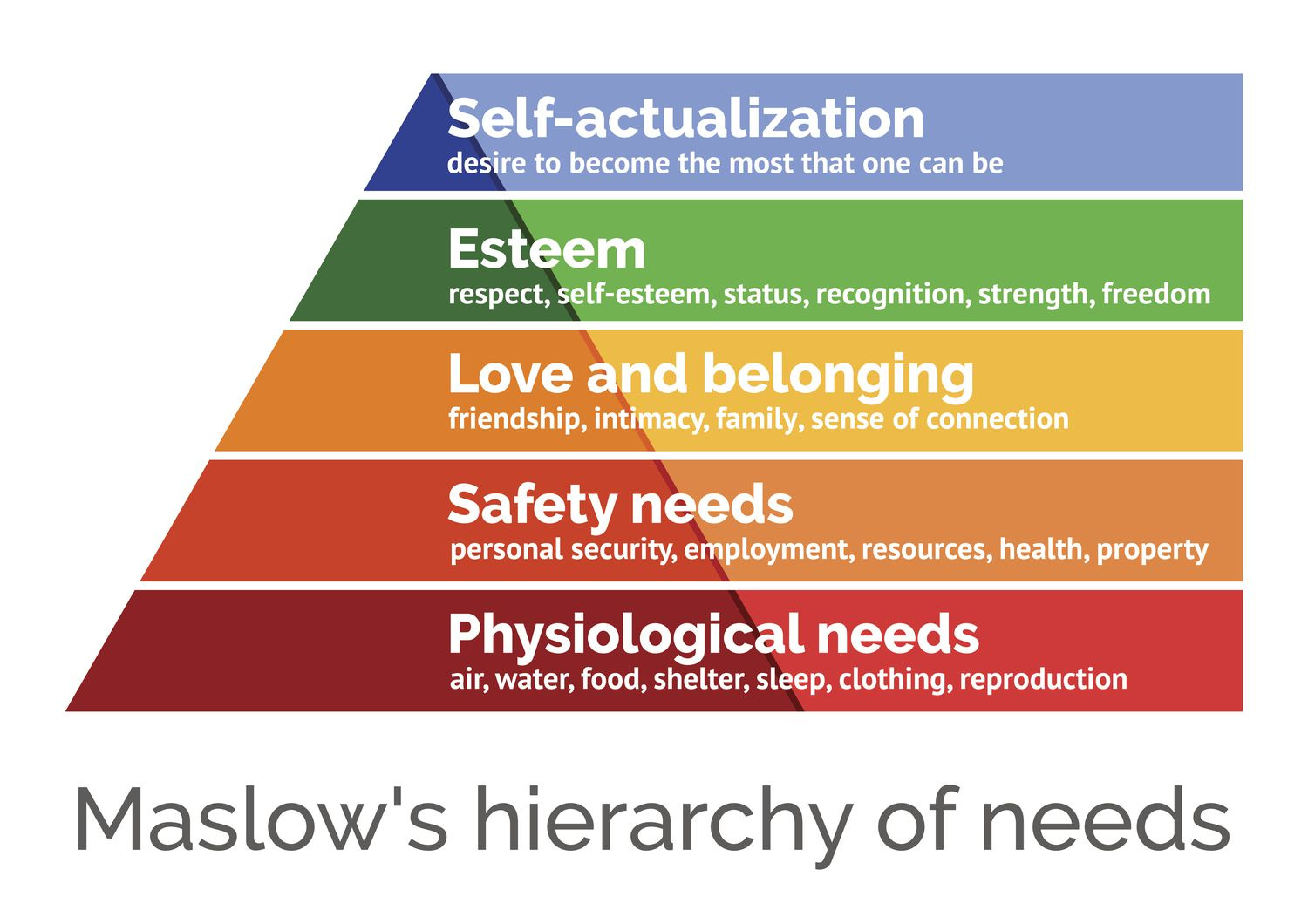
The first thing that privileged commentators seem unable to grasp is that most people have jobs, not careers. Only the very luckiest people go to work with real prospect of experiencing the intangibles at the top of Maslow’s Hierarchy of Needs. The idea that society is full of ‘girl bosses’ marching into boardrooms is a fantasy. In actual fact, most women work in jobs that require them to be on their feet serving, wiping, caring, with a lot of repetition. Women are more heavily represented in lower paid sectors.
Women have been absorbed as crucial to the economy since Second Wave Feminism expanded the world of women from the home sphere to include everywhere men were inhabiting. Now, instead of being merely mothers and wives, women are primarily workers and the system is obsessed with retaining them in the workforce. Concern is for how long women will take out of the workforce when they have children. How will their careers be impacted? What is the ‘motherhood penalty’ they will pay in job progression? Because women must return to the workforce. But missing from the conversation are questions on the flip side like how are workforce pressures impacting women’s desire and ability to have children? What is it costing women to be rushed back into work? Why it is so difficult for a family to live on a single income so one parent can remain at home?
When one outcome or pathway is treated as an inevitability or as the correct set of life choices, we are not truly enabling women to choose. We are simply funnelling women down a different path. The definition of a “meaningful life” has become tightly tied to career and the decision to have children is portrayed on the other side as low-status, a detour from more important things, and even something that will cause women boredom and misery. But in reality, how many women have a job that does not cause them some degree of boredom or misery? How many women have a career that provides them high-status and genuinely feels important? Why is it that the grind of 9 to 5 is promoted as the solution to life fulfilment and bringing life into the world is not?
New Zealand recorded 57,705 live births in 2025, with a total fertility rate (TFR) of 1.55 births per woman, well below the replacement level of 2.1 and down from roughly 2.0 as recently as the early 2000s. The median age of women giving birth has risen from around 25 years old in the early 1970s to 31.7 years in 2025, and half of babies are now born to women over 32. The median age of first time mothers has increased from roughly 28 years at the turn of the century to about 30 years in the 2020s.
Such breezy attitudes to these statistics not only assume that women want to be primarily economic units of production, but also ignores the economic and social consequences of an ageing population. It treats delayed motherhood and declining fertility as a matter of individual lifestyle choice, neglecting the economic and social pressures shaping those choices and the public goods like pensions, healthcare, and intergenerational support, that rely on demographic stability.
The first thing that privileged commentators seem unable to grasp is that most people have jobs, not careers. Only the very luckiest people go to work with real prospect of experiencing the intangibles at the top of Maslow’s Hierarchy of Needs. The idea that society is full of ‘girl bosses’ marching into boardrooms is a fantasy. In actual fact, most women work in jobs that require them to be on their feet serving, wiping, caring, with a lot of repetition. Women are more heavily represented in lower paid sectors.
This does not at all mean that these women do not value or enjoy their jobs, nor does it mean they would rather become mothers and exit the workforce. But I argue, it means we should stop measuring women’s wants and needs by the very most privileged women whose experiences are utterly foreign to the bulk of the population. Perhaps women for whom work is a pay cheque not a validation of ego or life purpose do not have the same concerns about rushing back into the workforce beyond the need for the income that comes with it.
Unfortunately, media and academia seem intent on making this a left/right issue in which concern for our low birth rate is just something that conservatives have got a bee in their bonnet about. This is a skewed reading of the situation and fails to understand how poor and working class New Zealanders already struggle under these conditions and will be the ones who get hit the hardest if demographic decline continues. If you care about the working class and poor, our incoming demography crisis should worry you immensely. This is not to say I believe the left are actually any better at caring about the poor than the right; they simply think they are and that is what matters here.
There is also a broader fiscal issue that New Zealand’s ageing population, and below-replacement-level birth rates, threaten the sustainability of our welfare state and will intensify inequality. The old‑age-dependency ratio (the number of people aged 65+ per 100 people aged 15–64) is projected to soar from 25 in 2024 to 33–38 by 2051 and 43–57 by 2078. In other words, where there are about 3.9 working‑age people supporting each senior today, there will be roughly 2.8 by mid‑century and only 2.0 by the late 2070s.
The taxes generated by a smaller proportion of the population will be required to sustain the public services that a larger proportion of the population entirely rely on. We simply will not have the necessary tax base to continue funding our welfare state. This will result in the entire beneficiary cohort (unemployed, sick/injured, elderly) to suddenly be without the safety net that our society has prided itself in maintaining. The only possible result of this downstream is immense abject poverty which the working population will not be equipped to deal with.
This issue is a crisis for all of society, but I return to my argument that it is potentially the feminist issue of our time. Women bear the brunt of the biological, social and economic costs of reproduction, but because progressive narratives have misled women into believing that time is on their side, women are unable to really choose the life we want.
But there is another way to think about this; one that is both feminist and pro-family. One that recognises the human importance of childbearing, respects reproductive autonomy, and calls for social conditions that enable women to have children earlier if they wish, rather than trapping them in a system designed around male biological timelines.
The progressive narrative has been that women can delay childbearing without consequence. This is a lie that once realised causes devastation, costly and sometimes fruitless fertility treatments, and a feeling of having been deceived about ‘having it all’. It is this deception that must be stopped in favour of honest conversations that realistically look at trade-offs.
Female fertility begins to sharply decline in our early thirties and drops even more steeply after 35. The American College of Obstetricians and Gynecologists explains that women’s peak reproductive years are actually in our late teens through late twenties. This is inconvenient and at odds with how modern society is structured as well as many of our social norms.
Getting pregnant is also more tricky than people anticipate. For healthy couples in their twenties and early thirties about one in four women conceive each cycle, but by age 40 only about one in ten do. By age 45 natural conception is “highly unlikely”. This is because women are born with a finite number of eggs that decline in quantity and quality over time. The British Fertility Society says that baby girls are born with about two million eggs, dropping to around 400,000 by adolescence and only about 25,000 by age 37.
And IVF is not a magic bullet. The widespread myth that IVF is sitting there waiting if women delay motherhood neglects to inform women of how the success of IVF is far from guaranteed and also declines over time. The latest Australia–New Zealand Assisted Reproductive Technology report shows conservative cumulative live-birth rates for a first complete ART cycle series of about 50.6% for ages 30–34, 35.8% for ages 35–39, and 13.6% for ages 40–44 after one complete cycle, rising with additional cycles.

While men are not immune to reproductive ageing, their timeline is more forgiving. Men produce sperm continuously throughout life. Weill Cornell Medicine notes that sperm volume decreases by 3–22%, sperm motility worsens by 3–37%, and abnormal morphology increases with age, leading to decreased conception odds. Yet the decline is gradual, accelerates only after age 40, and men can father children much later in life.
Despite these obvious biological facts, fertility education in New Zealand is woefully inadequate. A 2025 Victoria University of Wellington commentary criticises the national relationships and sexuality curriculum for focusing almost exclusively on avoiding pregnancy and sexually transmitted infections while neglecting fertility awareness. But young women have a right to the knowledge of the timelines that will affect their lives too. There are consequences to teen pregnancy and significant impacts on the life trajectory of the young mother, but there are consequences as well for delaying motherhood that can cause a huge amount of grief. We should talk about both.
The Victoria University commentary argues that young people harbour misconceptions about the optimal age to start a family and overestimate the success of IVF. A survey of 5,157 university students found they believe fertility declines later than it actually does and are unrealistically optimistic about assisted reproductive technology.
Delayed reproduction also carries greater health risks for women. The risks of miscarriage and chromosomal abnormalities increase from age 35 and complications such as gestational diabetes, placenta praevia, and stillbirth are more common in older mothers.
By dismissing concerns about delayed childbearing, experts contribute to this misinformation. When prominent demographers reassure women that there is no problem with waiting until their thirties or forties, they implicitly validate a social structure that pushes reproduction to the margins of a woman’s productive years and minimises the biological reality of ageing. Feminists should demand accurate information so that women can make truly informed choices. To celebrate delayed motherhood as empowerment without acknowledging its costs is to perpetuate a lie.
Modern workplaces are not designed around female biology. In a 2024 article in The Conversation, scholars note that the “everwork” culture demands workers be constantly reachable and available, while mothers are expected to also practise “intensive mothering,” spending twice as much time with their children as mothers in the 1970s. Women who use flexible work options often face punitive workloads and lost opportunities. Pregnancy is deemed inconvenient, and postpartum women struggle to find spaces for breastfeeding. As a result, many women feel they have to choose between full time work and full time parenting. This pushes motherhood into a compressed period in women’s thirties after they have established careers, not because they desire delay but because workplaces punish early motherhood.
Delayed motherhood is thus not a triumph of women’s freedom but a testament to how little our institutions value caregiving. The reality is that society is structured around male biological rhythms. Men do not need to take time off work to gestate or breastfeed. Workplaces assume and demand uninterrupted labour across the twenties and thirties in order to achieve career progression. Women’s peak reproductive window (late teens to late twenties) coincides with the period when careers are launched, and higher education is obtained. Without robust parental leave, affordable childcare and respect for caregiving, women are effectively forced to choose to either postpone motherhood to align with male career structures or forgo economic security.
Choice only means something if the conditions actually allow it. When the only way to pursue stable employment is to delay childbearing, the choice is illusory. Policies that treat reproduction as purely a private matter ignore the ways in which public infrastructure (education, housing, healthcare) and cultural norms (work hours, sex roles) shape private decisions. Sociologist Jolene Tan argues that governments implementing pro-natal policies must prioritise individuals’ reproductive autonomy and rights, rather than focusing solely on population targets. True autonomy requires conditions that support childbearing and child‑rearing, including affordable housing, secure employment, parental leave and accessible healthcare conditions.

An increasingly common claim is that choosing to have children is somehow selfish. That argument says that the world is too unstable, unequal, and environmentally fragile to justify bringing new life into it. It frames reproduction itself as irresponsible, on the grounds that humans are a blight on the planet and that the moral response to climate change is depopulation. Underlying these views is a bleak philosophy that sees human beings less as creative, thinking, world-shaping creatures and more as parasites consuming a fragile Earth. This treatment of the continuation of the human story as a problem is nihilistic and misanthropic.
This view is additionally outrageously historically ignorant. Throughout most of human history the world has been far harsher than the one we inhabit today. Two hundred years ago roughly 80–90% of the global population lived in extreme poverty, surviving on the equivalent of less than US$2 a day. Life expectancy was low, child mortality was common, and basic necessities like reliable food, sanitation, and medical care were luxuries. Yet humanity did not conclude that bringing children into the world was immoral. Instead, people continued building families, communities, and institutions that gradually improved human life.
Industrialisation, technological progress, and expanding economic growth transformed living standards. By 1981 around 42% of the world still lived in extreme poverty, but by 2000 that had fallen to about 28%, and by 2015 it was roughly 10%. Today the figure sits around 8–9% of the global population. In just two centuries humanity has moved from a world where poverty was the normal condition for almost everyone to one where it is a minority condition, an astonishing improvement driven by human innovation, cooperation, and ambition.
With this in mind, the claim that it is immoral to have children because the world is imperfect can be viewed as deeply arrogant. Every generation has inherited a world with problems and has worked to improve it for the next. The idea that our generation should end the chain because we face challenges, from climate change to (much reduced) inequality, reveals a performative moral seriousness and total historical amnesia. It is a luxury belief most commonly expressed by highly educated people in wealthy societies who themselves benefit from unprecedented prosperity and stability.
A healthier perspective recognises that humans are not a blight on the planet but a species that has repeatedly solved problems and made the world better than the one we inherited. The next generation will inherit challenges, just as every generation has before it, but they will also inherit the knowledge, technology, and institutions created by those who came before them. Bringing children into the world is not an act of selfishness, but an expression of hope in humanity’s continuing story.
Ultimately, a society that derides or demonises reproduction creates a toxic association around the unique ability women have in that process. Instead of fostering respect for female roles, disdain is encouraged and women are seen only as valuable and respectable when they succeed in traditionally male dominated fields.
While feminist pro-natalist agenda should focus on aligning social institutions with reproductive realities with comprehensive fertility education, employment that supports earlier motherhood, generous paid parental leave for both parents, affordable childcare, and the addressing of housing costs and job insecurity, the most important shift we must make is cultural.

Motherhood must be restored to a position of genuine respect and status. The dominant message to women has been that real achievement lies elsewhere and that having children represents a retreat from ambition or, worse, a capitulation to “the patriarchy.” The result has been to downgrade one of the most consequential roles any human being can undertake. Bearing and raising the next generation should not be framed as a low-status fallback for women who could not succeed elsewhere. It should be recognised for what it is; an immense social contribution and a uniquely female capacity that no society can function without.
This means openly valuing the fact that women can do something men cannot. Pregnancy, childbirth, and the early nurturing of children are extraordinary biological and social contributions. They are not signs of weakness or surrender but of generational stewardship. A healthy culture celebrates this reality rather than apologising for it. When motherhood is treated with honour, spoken about with pride, respected in workplaces, and reflected positively in media and public life, it becomes easier for women to see family formation not as a sacrifice of status but as a meaningful and respected path. Restoring that cultural esteem is not about limiting women’s choices; it is about ensuring that one of the most important choices they can make is treated with the dignity it deserves.
Ani O'Brien comes from a digital marketing background, she has been heavily involved in women's rights advocacy and is a founding council member of the Free Speech Union. This article was originally published on Ani's Substack Site and is published here with kind permission.
2 comments:
Oh sweet summer child! Speaking of motherhood with pride (which still happens, that hasn’t gone away despite your virtue signalling) isn’t going to bring down the cost of education, housing, or in fact the cost of living. Nor will it bring about job security or pay parity (the other side of the ledger). One can spot people who live in a bubble so easily these days, Ani.
All good Ani. Have to add a plea for the need to put children first in procreation - 1 in 20 born with FASD in NZ - genetic screening for families with known serious disorders - what else?
Post a Comment
Thank you for joining the discussion. Breaking Views welcomes respectful contributions that enrich the debate. Please ensure your comments are not defamatory, derogatory or disruptive. We appreciate your cooperation.