

On the evening of 13 May 2025, Finance Minister Nicola Willis hosted a pre-Budget drinks event in her parliamentary office. The event appears, in official records, as “EVENT: Press Gallery… Parliament… Invited Guests” at 6pm in her ministerial diary. It was intended to be a fairly standard engagement. These gatherings are a familiar ritual; relatively informal, off-camera, and populated by the country’s most senior political journalists alongside ministers and staff. They exist in the grey space between professional obligation and social familiarity and are a mechanism through which relationships are built and managed.
However, expectations of behaviour at these events is fairly high. Politicians are aware that journalists are never fully off-the-clock and they know any messy behaviour or drunkenness could end up as a headline. And whereas we once had a Prime Minister (Muldoon) announce a snap election while plainly off his face, nowadays tolerance for tipsy elected representatives is pretty low. Think of National MP’s Andrew Bayly’s awkward attempt at banter with the staff member at the winery. Once upon a time that just would not have been news.
What unfolded inside Nicola Willis’ office on the 13th of May, however, was not a matter of ministerial or MP misbehaviour. It was a journalist whose conduct saw the event shut down.
Multiple attendees, parliamentary staff and journalists from different organisations, have corroborated that during the event, TVNZ political editor Maiki Sherman repeatedly shouted the homophobic slur “faggot” at fellow journalist Lloyd Burr. Sherman has claimed this occurred in response to an alleged racial slur used by Burr, a claim he disputes. The precise factual dispute over what prompted the exchange remains unresolved. The core facts are that attendees were drinking and the former chair of the press gallery Maiki Sherman repeatedly and in a professional setting called a gay colleague a “faggot”.
The incident was so disruptive and inappropriate that the event was abruptly ended.
What unfolded inside Nicola Willis’ office on the 13th of May, however, was not a matter of ministerial or MP misbehaviour. It was a journalist whose conduct saw the event shut down.
Multiple attendees, parliamentary staff and journalists from different organisations, have corroborated that during the event, TVNZ political editor Maiki Sherman repeatedly shouted the homophobic slur “faggot” at fellow journalist Lloyd Burr. Sherman has claimed this occurred in response to an alleged racial slur used by Burr, a claim he disputes. The precise factual dispute over what prompted the exchange remains unresolved. The core facts are that attendees were drinking and the former chair of the press gallery Maiki Sherman repeatedly and in a professional setting called a gay colleague a “faggot”.
The incident was so disruptive and inappropriate that the event was abruptly ended.
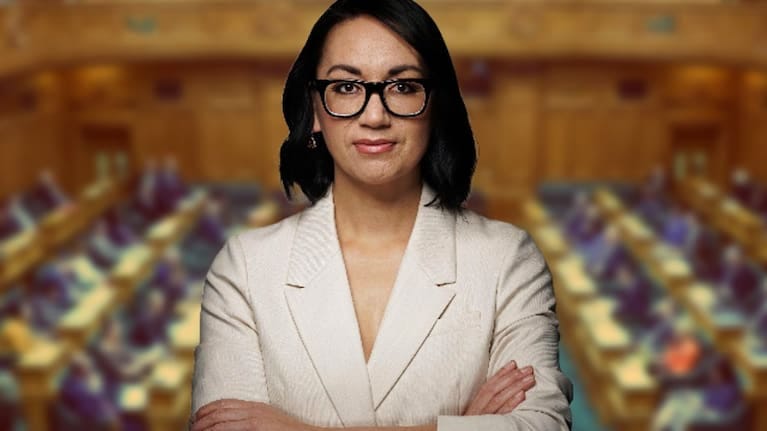
TVNZ Political Editor Maiki Sherman.
In almost any other context involving public figures, such behaviour would have triggered immediate and sustained scrutiny. Yet in this case, for the past year the incident has been talked about only in fragmented rumours and with an air of inevitability that these things are dirty laundry not to be aired. The story did not garner a single headline and it certainly did not become a defining moment in the ongoing conversation about standards and conduct in public life.
Now some will argue that journalists should not be held to the same standards as politicians and that is fair. Politicians roles require them to be much more unimpeachable. However, this would be a much easier position to maintain if there was a fair and consistent standard of expected behaviour being applied across politics and if the frequent moralising by media were not so nauseating. It starts to look unfair when the tiniest of errors by a politician is blown up into a full national scandal by journalists whose own behaviour falls far short too.
It is a strange structural imbalance within New Zealand’s political media ecosystem that sees politicians subjected to intense public scrutiny, by journalists who themselves operate within a system of limited and largely opaque accountability. The same journalists who have a record of drunk behaviour are shoving microphones in the face of politicians. They are the first to accuse MPs of bullying and they turn out to be the bullies themselves.
In theory, the expectations placed on members of the parliamentary press gallery are not ambiguous. Under the official Protocol for Interviewing, Filming, and Photography in Parliament Buildings, journalists are explicitly instructed that their conduct “must not undermine the dignity of Parliament” and that they “must not pursue members… who decline to be interviewed”. The rules go further, requiring that MPs and staff must be able to “conduct their business and move about… without being obstructed by the media”. Anyone who, like me, has worked in Parliament knows that the members of the press gallery frequently transgress all three of those requirements.
Membership to the press gallery is conditional. The Rules of the Parliamentary Press Gallery outlines that journalists are expected to act in accordance with professional standards, and the Speaker retains the power to investigate breaches and, if necessary, suspend or revoke access. On paper, this reads like a robust system. It recognises the power of the press and places clear limits on how that power should be exercised. In practice, however, the enforcement of these standards, particularly in relation to the conduct of senior journalists, remains lax.
That gap between formal rules and reality is starkly illustrated by an incident last week that resulted in a complaint being laid by Minister Simeon Brown relating to the National Party leadership drama of the past week. On Tuesday evening, at approximately 9.30pm, TVNZ political editor Maiki Sherman followed National whip Stuart Smith into a corridor where media engagement was not permitted without consent. When Smith declined to comment, Sherman reportedly banged on his door for around ten minutes and told him through the door that his refusal would influence how he would be portrayed on TVNZ television show Breakfast the following morning.
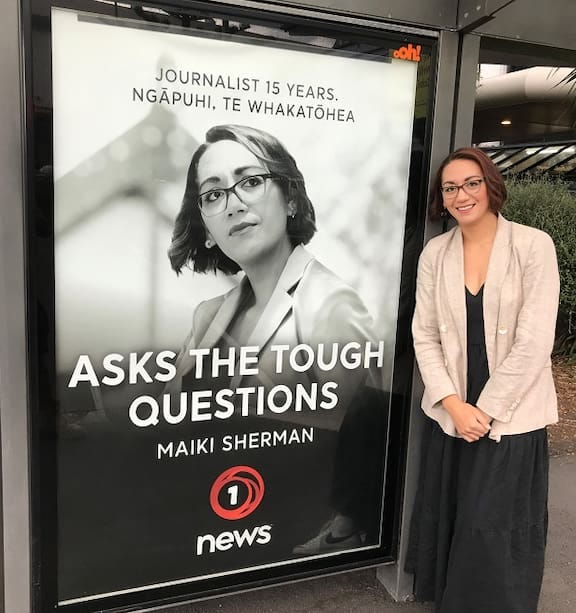
This clearly breaches parliamentary protocol on several fronts. Journalists are not permitted to pursue individuals who decline interviews, nor to obstruct or interfere with their movement within the precinct. The threat of being reported on negatively, and the inverse implication that talking to the journalists would remove that threat, is highly unethical as well.
Yet, until Brown took the unusual action of posting about this on social media, the public had no idea about how the media behave in Parliament.
I am not the first person to look into the Sherman incident at the pre-budget press gallery drinks and the behaviour of TVNZ journalists. I found an Official Information Act request dated 7th August 2025 seeking details about complaints regarding the conduct of TVNZ press gallery staff. The response shows that issues of conduct within TVNZ are neither rare nor negligible. In the 18 months covered by the request for information, TVNZ confirms there have been five formal complaints about bullying or inappropriate behaviour and twelve ex gratia payments made to staff. “Ex gratia” payments are goodwill settlements made without any admission of wrongdoing, typically used to resolve workplace disputes before they escalate further. While they do not prove liability, organisations do not make such payments lightly, and the number TVNZ have paid out suggests issues serious enough to warrant financial resolution.
Yet despite this, almost all meaningful detail about who complaints were about and who received payouts is withheld on privacy grounds, and the organisation declines to provide even basic contextual information such as which parts of the business were involved. TVNZ also states it does not centrally track how many staff have been “spoken to” about their behaviour, meaning informal or lower-level misconduct is effectively unrecorded at an organisational level. The document paints a picture of a workplace where conduct issues do arise with some regularity, but where the public has almost no ability to scrutinise patterns, accountability, or outcomes.
If this were occurring at a private business this lack of transparency would not be unexpected. But TVNZ is a state-owned broadcaster, meaning it is owned by the New Zealand government on behalf of taxpayers. While it earns much of its revenue commercially through advertising, it also receives public funding, directly and indirectly, through government allocations and NZ On Air–funded content, which is paid for by taxpayers. That places it in a hybrid position of operating like a commercial media company, but with public ownership and a public interest mandate, which in turn creates an expectation of higher transparency and accountability.
The same OIA requester submitted a second similar request just last month. This second response from TVNZ is even more resistant to divulging information. When asked directly how many complaints had been made about the conduct of TVNZ’s press gallery, the organisation stated that “no information is responsive to this request”, effectively claiming no record of such complaints exists. Requests for communications about journalist behaviour were declined as too burdensome to collate, while questions about bullying allegations were dismissed on the basis that agencies are not required to create information. At the same time, TVNZ signalled that any such information, if it did exist, would likely be withheld anyway on privacy and confidentiality grounds. A closed loop where complaints are either not recorded in a retrievable way, or are inaccessible to the public, ensuring that scrutiny of journalistic conduct remains functionally impossible.
Can you imagine the reaction of journalists if they received this response from a ministry? This lack of transparency not only clashes with that which they demand from other taxpayer-funded organisations and officials, but it sits uneasily alongside TVNZ’s own internal standards. The organisation’s Harmful Conduct Policy defines bullying as behaviour that is “victimising, humiliating, intimidating, belittling, abusive or insulting”. It also outlines formal reporting mechanisms, investigation processes, and potential disciplinary outcomes.
This stonewalling by TVNZ isn’t new. A different OIA relating to complaints about Maiki Sherman’s coverage from back in May 2024 received an opaque response to this request:
I am writing to formally request access to all internal correspondence pertaining to the 50 formal complaints received by the state broadcaster regarding Maiki Sherman’s recent report on the TVNZ political poll conducted last month. Specifically, I would like detailed information on the handling of each complaint, including the treatment afforded to each complainant by your staff. Additionally, I am requesting copies of any emails or memos exchanged among staff members involved in addressing these formal complaints.
TVNZ refused to release any internal correspondence about how those complaints were handled, citing privacy, commercial sensitivity, and the need for “free and frank” internal discussions. It also declined to provide any data on complaints against Sherman as an individual, arguing that complaints are recorded against the organisation, not journalists, and that producing such a breakdown would require creating new information. The effect is the same as in the later responses. Even where significant public backlash is clearly documented, there is no meaningful visibility into how complaints are assessed, what standards are applied, or whether any accountability follows.
There are additional stories about Maiki Sherman’s conduct towards her press gallery colleagues. I was told by two people, one in media and one a staffer, that not long after the incident in Nicola Willis’ office that she approached another journalist in the Parliamentary bar telling them to “stop stealing my f***ing stories.” She also allegedly said “I know what you’ve done” and the reporter still has no idea what she meant by that but puts it down to her level of inebriation. Others have characterised the incident as “not as bad as the thing with Lloyd” and stressed she apologised the next day.
And all of this is why perhaps the most revealing aspect of the particular situation on 13th May 2025 is not the incident itself, but what happened, or did not happen, afterwards. Multiple sources within New Zealand’s media industry confirm that there was internal interest, particularly within NZME, in reporting on the pre-Budget drinks incident and related conduct issues. That reporting did not proceed and two factors appear to have played a role.
The first was internal reluctance, institutional squeamishness, about reporting on a senior journalist within a competing organisation. The second was external pressure. TVNZ, through legal correspondence sent to Newstalk ZB, reportedly warned against publication on the grounds of privacy and defamation.
That dual claim is contradictory. For a matter to be protected by privacy, it must generally relate to facts that are true, but not public. For a claim to be defamatory, it must be false as truth is, in New Zealand law, a complete defence to defamation. To assert both simultaneously is to argue, in effect, that the same set of facts is both true and false.
In any case, the Sherman incident is not speculative. It has been corroborated by multiple attendees, including parliamentary staff and journalists from different outlets. The barrier to reporting has not been a lack of evidence. It has been a lack of willingness and, arguably, a lack of institutional courage.
Like most things that are political, reluctance is not simply about what is or isn’t legal. It is primarily an issue of social and cultural constraints.
Journalists have expressed concern about the conduct issues described above. Many acknowledged privately that the incidents raised legitimate questions about standards within the press gallery. None were willing to speak on the record.
There is an entirely rational fear of professional repercussions in a small industry and a reluctance to challenge a senior figure with significant influence. There is a perception that doing so would carry personal or career risk. Maiki Sherman is not only a prominent journalist; she has also a former chair of the press gallery itself.
I am writing this, in part, because of that silence. There was, for a time, a belief among some observers that if the issue was left alone, it might be eventually taken up by mainstream media and reported through conventional channels. It hasn’t.
I am an outsider. Not a journalist and not welcome in the media circles. I am well aware that my name is mud in the newsrooms and while I don’t relish it, it is unsurprising when I seem to be the one who ends up saying the unsayable. I understand the fear of stepping out of the acceptable frame. Every week I hear about how this person or that person is “asking questions” about me and looking to write a story about how I am at the centre of some kind of big bad conspiracy. The truth is I am just a disagreeable woman who is devastated by the abdication of duty by the media so set up a Substack.
I set this context because there are also secondary dynamics at play. When issues are raised by voices outside the traditional media establishment, particularly those seen as critical of it, there is a tendency within the press to close ranks. Especially those of us who have been tarred as a persona non grata, “a bad guy”. I have broken news before and there is almost a stubborn resistance by mainstream media to pick the news up simply because I broke it. They see themselves as the gatekeepers of what is considered news and so punish those who circumvent the borders they have erected to prevent access to the power of information dissemination.
Because of this, I thought twice about writing this. Would me writing about it effectively kill the story dead? I don’t want to be a blackhole of news! But at the end of the day the incident occurred nearly a year ago now and the media just isn’t reporting.
We have a system of unequal scrutiny. Politicians are scrutinised continuously, although to varying degrees depending on their allegiances. Their behaviour is documented, analysed, and often criticised in real time. Missteps dominate news cycles and consequences can be swift and brutal.
What this all ultimately reveals is not just a single incident or even a single journalist behaving badly, but a system that is out of balance. Where scrutiny flows relentlessly in one direction, and almost never the other. Where those tasked with holding power to account operate behind a veil that shields them from the same standards they so confidently impose. That imbalance corrodes trust, not just in the media, but in the broader democratic ecosystem that relies on credibility, fairness, and a shared understanding of what accountability actually means.
The parliamentary press gallery exists, by its own rules, to “hold those in power to account”. That role is fundamental to New Zealand’s democracy. But if the media expects transparency, professionalism, and ethical conduct from politicians, it must be prepared to demonstrate the same standards within its own ranks.
None of this requires lowering expectations for politicians. If anything, it requires raising expectations for others. The answer is to apply standards consistently, regardless of who breaches them. Because when the public can see the double standard, and they increasingly can, it breeds cynicism. It invites the conclusion that accountability is not a principle, but a tool wielded selectively, often politically, and rarely inwardly.
The media cannot frame themselves as arbiters of conduct while refusing to examine their own. And they cannot expect what little public trust remains in them to hold if they are seen to protect their own at the expense of the truth.
At some point, they become the story. And if the institutions that are supposed to tell that story refuse to do so, then others will.
Note: I have had the allegations in this piece corroborated by members of Parliament, Parliamentary staffers, and media figures. The incident has been an open secret for nearly a year.
Ani O'Brien comes from a digital marketing background, she has been heavily involved in women's rights advocacy and is a founding council member of the Free Speech Union. This article was originally published on Ani's Substack Site and is published here with kind permission.
20 comments:
Simeon Brown issued a statement on behalf of Smith denying he'd been trying to reach PM Luxon
Media were trying to get hold of Smith but he kept dodging
Then when he finally appeared he contradicted the written statement
Very dodgy stuff and Simeon's answer is to go after Maiki Sherman.
I applaud your courage Ani, truely inspirational and something i as a reader value very highly.
Well at some point someone needs to ask Ms Sherman the hard questions.
Are you a racist homophobe?
Maiki Sherman can get away with saying and doing whatever she wants, not because she's a senior journalist, but because she's Maori AND a woman. Intersectionality at play here...double-tick in the DEI column...
This is shocking. Ani sat on this for a year before letting us know about what’s going on. Ani, what else are you holding onto that you’re not telling us about? Why would you hold onto this for a whole year??
“looking to write a story about how I am at the centre of some kind of big bad conspiracy. The truth is I am just a disagreeable woman”
I hope you could keep from cracking up laughing while putting that sentence together, Ani. Dirty Politics, ahoy!
Ani - for those of us who "log into this website" and read articles like yours (above) we 'normal' New Zealander's would not know what was going on, as the ability of NZ MSM to "report" anything with truth, honesty, clarity, integrity, without prejudice - has long gone down the 'road that took Muldoon'.
Yes there will be people who read this article and become naysayers, thankfully the Moderation system will prevail and not allow inappropriate comments to be published - but sadly we have Social Media - where into today's world adults act like children with their postings.
Your comment re NZ MSM being "gatekeepers" to NZ News, sadly this is an unbalanced view by them, when you compare International News - to what is reported here in NZ against overseas presentations - I am aware which direction many New Zealander's now go to seek clarity - and it certainly not TVNZ/TV3 or any print Media
Your comment re "being well regarded" within NZ MSM Editorial spaces, makes you an equivalent 'body' to Sean Plunkett, he who faces "scrutiny" from the BSA - keep in mind if the BSA "wins" then other likeminded podcasters here in NZ will face the same draconian issues.
Canada has current issues with Media and the Govt, dating back to Justin Trudeau's time as PM (Rebel News is a good example), even with the current PM, there is a concerted effort being made to implemented "control" of media and media information and that includes the Internet, Social Media as well as You Tube - one wonders if such attempts would be instigated here in NZ, if so, then this website will "disappear'" thus removing articles by yourself and others - remember the phrase - "We will be the Podium of Truth" - it has become a catch cry Internationally.
Hence NZ MSM " burying stories".
Simeon Brown issued a statement on behalf of Smith denying he'd been trying to reach PM Luxon
Media were trying to get hold of Smith but he kept dodging
Then when he finally appeared he contradicted the written statement
Very dodgy stuff and Simeon's answer is to go after Maiki Sherman??
Well researched and well written. Think back to what happened to the Judge who mouthed off at a NZF function in Auckland.
Sherman has an inflated opinion of her own worth. There’s an expression “ what goes around, comes around”. Bye bye Sherman.
When things like this lurk behind closed doors and transparency and honesty is compromised all we have to do is wait. The protagonists will eventually find they can dig no more and will self distruct. Now, where have we seen that before?
It really is time management at both RNZ and TVNZ take a long hard look at their objectives and how they run these businesses.
Or I think it will cause their collapse if they fail to see
Sherman was a political appointment, based on her race and her personal views which she had been made very plain before she was given that role.
Which is exactly why myself and tens of thousands no longer trust TVNZ, and especially regard their One News as poisonous.
Speaks volumes of the culture of this outfit and explains the quality of their broadcast. Frankly, not sure why the government still invest in these guys
This article does not make sense. Surely, Sherman did not make her comment because she did not like homosexuals, and she had too much to drink. Surely, if a racial slur had been made to her, that would be relevant. Depending on the slur, it could be very relevant.
Of course Maori are mostly insulated from criticism! (and job cutbacks and redundancies). Just look in the Education Sector.
The result of Simeon Brown getting stuck into his campaign assignment from Luxon, I’d imagine.
Did you see the headlines about our GDP last week? Or the staff shortages leading to possible deaths in hospitals today?
Pretty disgusting, the tactics National is turning to while Rome burns.
Hey, NZ has 44,000 less jobs than in October 2023 & 100,000 below what we need to match population growth. Ani has done great work to uncover those numbers and hold the government to account for such a feckless display in the face of challenging circumstances. Keep it up, Ani! NZ is getting back on track as promised.
Quite a few strrawman arguments and “woe is me” statements in this article. Emotional language may be useful when trying to get your way in a relationship. Reporting something of importance you’re best to stick just to facts.
I would be far more interested in knowing how much drinking and schmoozing does go on in the Ministerial offices. Which Minister is the most popular for providing the best quality drink etc.
How can we members of the hoi polloi get an invite?
Question for Ani. You wouldn’t by any chance be doing a demolition job on Maiki Sherman?
Is it hypocritical that the author herself uses slurs while also abhorring the use of slurs? This is not a historical thing, she has been doing that as recently as January. There is a saying about “if she didn’t have double standards…”. All to be expected in an election year, I suppose. Dirty.
Post a Comment
Thank you for joining the discussion. Breaking Views welcomes respectful contributions that enrich the debate. Please ensure your comments are not defamatory, derogatory or disruptive. We appreciate your cooperation.