

A story that should have received far more attention this week was Chloe Swarbrick’s extraordinary decision to take her domestic political grievances offshore. The Green Party co-leader wrote (along with Belgian Green MEP Saskia Bricmont) to the European Commission, suggesting New Zealand’s methane target changes may breach our trade deal with the EU and calling for an independent investigation. In other words, she invited foreign trade officials to scrutinise New Zealand’s democratically chosen domestic policy settings because she disagrees with them in the hopes they would punish us economically.
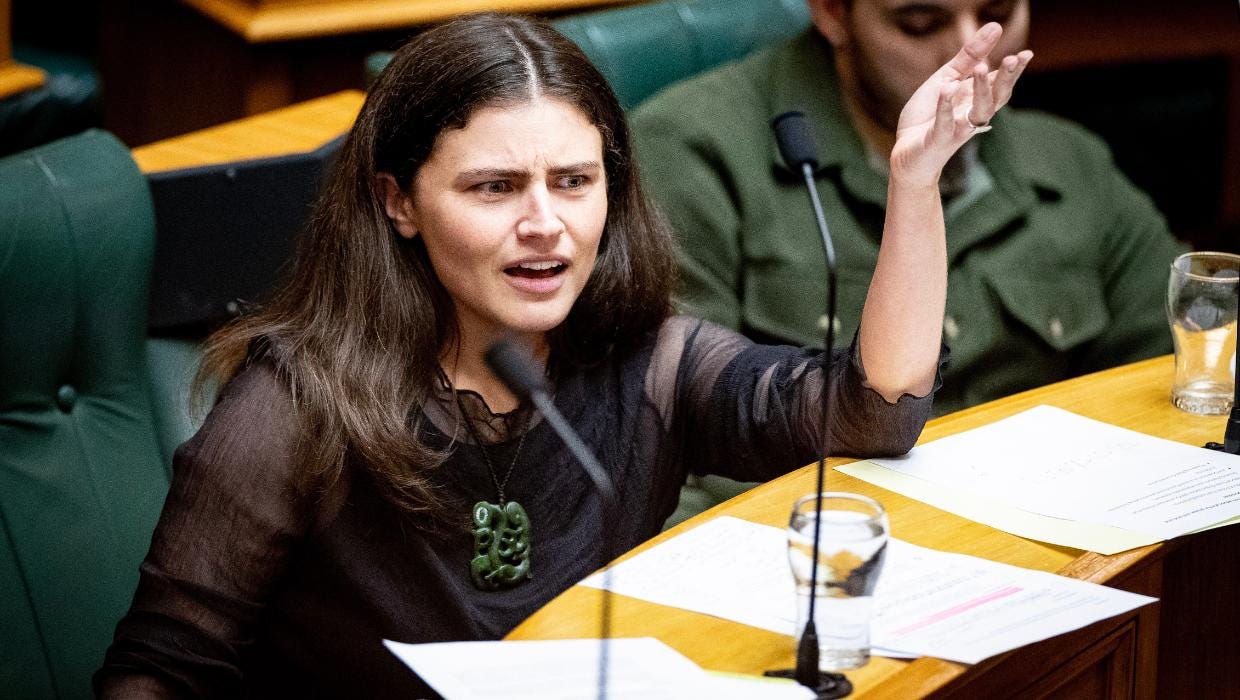
File photo of Swarbrick during question time in the house on June 24. Alex Cairns
New Zealand is a small trading nation. Our prosperity depends on exporters, market access, and the trust we maintain with trading partners. You do not have to support every government policy to understand that running overseas to ask larger powers to investigate your own country’s trade compliance is a serious act. It is not brave or principled or whatever version of “speaking truth to power” Swarbrick has convinced herself she was doing. It is asking foreign power to intervene because you lost the argument at home. The results could have meant hundreds of millions of dollars piled on Kiwi businesses due to tariff increases.
Trade Minister Todd McClay accused Swarbrick of acting against the interests of New Zealanders and exporters. The fact that the EU responded to her with disinterest does not make her attempt any better. It only makes it less successful.
The last thing New Zealand Police need
Police Commissioner Richard Chambers is the subject of complaints being investigated by both the Independent Police Conduct Authority and Police’s own National Integrity Unit. One complaint reportedly comes from a former police staffer, another from a woman in Australia relating to alleged events more than 20 years ago. Chambers has strongly rejected the allegations and remains in the role with the backing of the Public Service Commissioner and Police Minister while the inquiries continue.
The Commissioner is entitled to due process and the investigations need to run their course. But regardless of where the investigations ultimately end up, the fact that New Zealand Police are once again dealing with allegations barely a year after the Jevon McSkimming scandal prompted soul-searching about integrity, accountability and culture at the top of Police, means the public is once again reading headlines about investigations into the Commissioner’s office.
🇬🇧 No. 10's revolving door keeps spinning
Britain is getting yet another prime minister, because apparently treats national leadership like seasonal produce. Keir Starmer resigned this week after less than two years in the job, having managed the impressive feat of turning a landslide Labour victory into a total collapse in support. All signs point to Andy Burnham, until very recently the Mayor of Greater Manchester, taking over.
Burnham is basically Keir Starmer with a different accent, slightly different glasses, and better eyelashes. Stunning eyelashes, to be fair. Britain is going to replace one managerial Labour dad with another managerial Labour dad, but this one wears tshirts under his blazers.
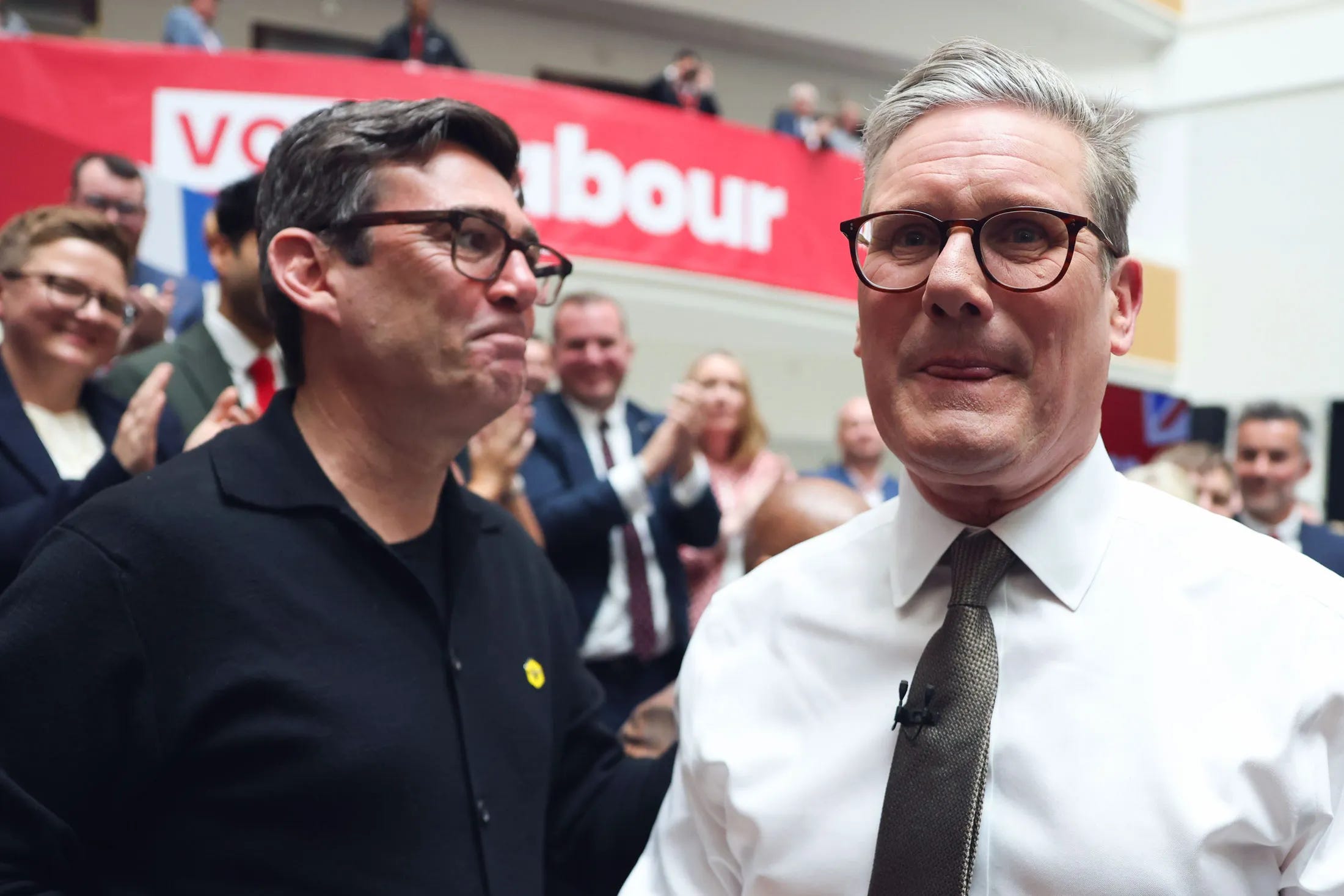
Photo credit: Hollie Adams
Burnham’s arrival in Westminster has not exactly been subtle. He was sworn in after winning the Makerfield byelection and has since been doing a sort of cringe victory lap around Parliament. There is something distasteful about the whole performance. Starmer may be a wet lettuce leaf with a God complex, but a little dignity during the handover would not kill anyone.
The most Un-National National policy
National’s KiwiSaver announcement is politically significant because it is so un-National. Christopher Luxon has announced that if elected National will make KiwiSaver compulsory for all workers from 2028, automatically enrol newborns with a $1500 “Baby Boost”, contribute to parents’ KiwiSaver while they are on paid parental leave, and require employers to keep contributing for workers over 65. By 2032, employees and employers would each contribute 6%.
It is a major philosophical shift for a party that once opposed compulsory retirement savings. National is now arguing that long-term financial security justifies requiring people to save. New Zealand’s ageing population means the cost of Super will continue to rise, and compulsory KiwiSaver builds a larger pool of private savings, giving future governments more options.
Politically, it is also a shrewd move. National has planted itself firmly on Labour’s traditional territory by embracing one of their signature reforms, leaving Chris Hipkins in the awkward position of having to criticise a policy direction his party has historically championed. At the same time, it has irritated both coalition partners. ACT objects to the compulsory nature of the scheme, while NZ First accuses National of stealing a policy Winston Peters announced only weeks earlier.
The Conservation Backdown
The Conservation Amendment Bill set off a political panic the government should have seen coming a mile off. The bill as drafted would have changed the rules around conservation land, including disposal and exchange provisions that critics argue could open up large parts of the conservation estate to sale or development. Forest & Bird maps lit the match, social media did the rest, and suddenly everyone was convinced their favourite lake, forest park, walking track, and emotionally significant patch of moss was about to be flogged off to billionaires for luxury bunkers.
The Government insists this was never the intention. Tama Potaka repeatedly said the bill was aimed at “bits and bobs” of low-value land, not beloved national treasures. But it is an election year and his opponents seized on reacting to what the bill appeared to make legally possible, not what he intended. In politics, “trust us” is rarely a sufficient safeguard in any case.
By Thursday, Potaka had performed the traditional ministerial manoeuvre of a swift u-turn. He announced the disposal and exchange provisions would be removed from the Bill, admitting the Government had not been clear enough. Minister Shane Jones too conceded the scope had been too much for the public to swallow.
This is a win for the environmental groups, a partial loss for the Opposition parties who can no longer whack the Government with this particular stick, and a useful reminder for the Government that New Zealanders go from politically disengaged to full environmental activists in about three Facebook posts when it comes to selling off the Conservation Estate. The remaining fight will now shift to the Bill’s economic development provisions, with opponents arguing that even without land sales, the legislation still pushes DOC too far toward commercial use.
MBIE's $33 Million failure is now under investigation
As I outlined last week, Immigration NZ (MBIE) spent roughly $33 million over 7 years on a Biometric Capability Update project meant to modernise identity management for immigration border security. It was cancelled in November 2025 after delivering nothing usable, leaving taxpayers with the bill and officials still needing to maintain the ageing system they were supposed to replace.
This week, Public Service Commissioner Sir Brian Roche appointed Michael Heron KC to investigate MBIE’s conduct, including whether officials withheld information or misled ministers, what MBIE knew about the project, whether advice to ministers matched reality, whether the “no surprises” principle was followed, and claims of “creative accounting” designed to avoid Cabinet scrutiny.
Then Speaker Gerry Brownlee referred the conduct of MBIE officials to Parliament’s Privileges Committee, after concerns that officials appeared before the Education and Workforce Committee in March and failed to tell MPs the project had already been axed. Misleading a minister is serious. Potentially misleading Parliament is another level again.
This week in Election 2026
National officially launched its campaign at its annual conference with Christopher Luxon telling party members elections are won on doorsteps, not conference floors. National president Sylvia Wood warned that “this election will be tight.”
The latest 1News-Verian poll showed that Labour fell five points to 32%, but National slipped slightly as well to 29%. Together, the two major parties now command just 61% of the vote, their lowest combined support since MMP was introduced in 1996. Meanwhile the Greens climbed to 13%, New Zealand First reached 11%, and ACT slipped to 6%. Setting tongues wagging the most was the Opportunity Party reaching 4.6%, just shy of the 5% threshold needed to enter Parliament. However, their best bet at securing a spot may be in a cup of tea handshake with Labour over Mt Albert. Labour’s Helen White only just won the electorate in 2023 and TOP’s leader Qiulae Wong is set to challenge her this time round.
ACT rolled out another tranche of electorate candidates, including former MP Chris Baillie in Nelson and New Zealand Deerstalkers Association president Callum Sheridan in Waitākere.
Te Pāti Māori leaders openly confirmed that their overriding objective is ensuring the Coalition becomes a one-term government, and they hinted that their election strategy may prioritise that goal above maximising their own party vote. Political commentators have begun openly discussing the possibility of a “one-tick” campaign, where Te Pāti Māori encourages supporters to give only an electorate vote to Te Pāti Māori candidates while directing their party vote elsewhere on the left.
There is also chatter about how the Māori roll itself can be used strategically. Since Māori voters can now change between the Māori and general rolls much more freely than in previous elections, there are more opportunities for strategic swapping. With the number of Māori seats locked in, voters can now swap back to the general roll to influence results there while not risking shrinking the influence of the Māori seats.
National finds a climate policy everyone likes
National also announced a solar policy this week, promising a Home Energy Fund that would give homeowners access to low-interest, long-term loans for solar panels, batteries, insulation, heat pumps and other energy upgrades. The loans would be attached to the property and repaid through rates, rather than requiring households to wear the full cost upfront.
It has received an unusual amount of cross-party support. Labour said solar is the future and welcomed anything that makes it easier to install, though Megan Woods pointed out that it mainly helps people who already own homes. Well, yeah… if you don’t own a home where are you going to put solar panels?
The policy is modelled on work from Rewiring Aotearoa, and it aims to solve the issue that banks already offer green loans, but those often require an existing mortgage relationship and short repayment terms. National’s version would be longer term, secured against the house, and repaid through council rates. The proposed Crown contribution is a one-off $7 million equity investment with participating councils and the Local Government Funding Agency doing the rest.
Alongside the fund, National also wants to strip out some of the more deranged consent requirements for small-scale renewable energy. Rooftop solar would not need consent, small batteries would be allowed as of right, farm-based solar would be a permitted activity with safeguards, and small micro-hydro would be easier for on-site use.
My Protein Powder has betrayed me
A 45 minute YouTube investigation by Jordan Federici, Cameron Boot, and Jamie McDowell, made a series of allegations about NZ Muscle’s labelling, packing, and food handling practices. Normally these sorts of exposés disappear into the internet abyss after attracting a few angry comments and accusations of “clout chasing”. This one was the real deal.
Within days, NZ Muscle acknowledged an internal review had identified labelling and packing issues across several product lines, pulled products from sale, offered refunds, and apologised to customers. The Ministry for Primary Industries, through New Zealand Food Safety, opened an investigation into alleged breaches of the Food Act, while the Commerce Commission confirmed it was reassessing complaints it had previously received about the company. Since then, New Zealand Food Safety has ordered a recall of several creatine products because they may contain undeclared milk allergens. Some of the more serious allegations made in the YouTube investigation remain under investigation.
I must disclose a conflict of interest here. I have been a loyal NZ Muscle customer for years and I am devastated that I now appear to have to find another supplier of caramel latte protein powder.
Greens: If it moves, tax it. If it doesn't, tax it anyway
The Greens launched their tax policy this week. The package includes a 2.5% annual wealth tax on net assets over $10 million, an inheritance and gifts tax, a 45% income tax rate, a higher corporate tax rate, a bank levy, a big tech withholding tax, removing interest deductibility for residential rentals, and restoring the bright-line test to 10 years. In return, the Greens promise a $10,000 tax-free threshold and say 96% of New Zealanders would get an income tax cut.
The political sales pitch is simple is tax the “super-rich” and “mega-corporates” to fund services and ease pressure on ordinary people. The problem is that this treats wealth, profit, inheritance, property investment, banks, large companies, and high earners as fiscal piñatas, then assumes there will be no serious consequences when the state starts swinging.
The rollout of the policy was a comedy of errors. It was accidentally published online early, forcing the Greens to bring forward the launch. Then they had to correct an $800 million error after funding for Inland Revenue was counted as revenue instead of a cost. Chloe Swarbrick called it a typo, which is certainly one way of describing accidentally putting $100 million a year on the wrong side of the ledger.
National called it “economic lunacy”. ACT accused the Greens of turning tall poppy syndrome into a tax policy. And more importantly, Labour immediately ran away from it with Chris Hipkins saying Labour would stick to its own capital gains tax.
Professionalism has left the chat at Auckland Council
Auckland Council had another normal one this week, by which I mean everyone appears to hate each other and Wayne Brown is somehow still getting away with saying outrageously offensive things to colleagues.
Howick councillor Bo Burns publicly called out what she described as a toxic culture of bullying, intimidation, hostility, and fear inside Auckland Council. She said she had walked out of council work situations twice because the behaviour was unacceptable. Councillor Maurice Williamson backed her up, saying he had also experienced “nastiness” and attacks since joining council. The NZ Herald reported broader complaints from councillors about Brown’s leadership, including claims he “revels” in insults, punishes councillors who cross him, drops the F-bomb in formal settings, and has created a fearful atmosphere around the council table. Brown denies there is a bullying culture and says robust debate is part of the job.
Of course, this is not exactly a shocking character revelation. Wayne Brown has always sold himself as the grumpy bloke who says the quiet part loudly into a microphone. But there is a point at which “straight-talking” becomes a very convenient marketing term for behaviour nobody else would get away with.
There is a long history here. When Brown became Far North Mayor in 2007, the Public Service Association accused him of insulting and threatening council staff in his maiden speech. Brown was unapologetic then too.
Meanwhile, Aucklanders are staring down a 7.9% rates rise and watching their council descend into yet another bout of infighting, dysfunction, and wounded egos. Perhaps the Mayor could spend a little less time making videos explaining why Aucklanders should not be angry about rates hikes and a little more time ensuring the council he leads does not resemble a badly moderated Facebook comment section with a billion-dollar budget.
Teachers’ Union gets political… again
The New Zealand Post Primary Teachers' Association (PPTA) has somehow managed to become even more brazen in its political overreach, which is quite an achievement given the starting point. This week it announced it is hiring an expert to produce guidance for teachers on dealing with “far-right extremism” in classrooms. Schools should have zero tolerance for genuine neo-Nazism, Holocaust denial, racial hatred, and intimidation.
The problem is that the PPTA has repeatedly demonstrated it struggles to distinguish between genuine extremism and political views it simply dislikes. In its own description of the problem, Holocaust denial sits alongside “trad wife” culture, the “manosphere”, transphobia, and other ideological labels. When everything to the right of the union’s hard left politics starts being folded into the category of “extremism”, it becomes difficult to avoid the conclusion that this is less about safeguarding classrooms and more about ideological gatekeeping.
What makes the Holocaust rhetoric particularly difficult to take at face value is the PPTA’s own recent behaviour. This is the same union that insisted Palestine be discussed with the Education Minister during pay negotiations, prompting criticism that it had wandered well beyond its remit.
It goes further than that. Last year’s PPTA conference adopted a paper entitled Peace is Union Business, which argues that the union should campaign on international conflicts, build alliances with other unions and NGOs to influence New Zealand’s foreign policy, and explicitly frames the Israel-Gaza conflict through the language of oppression, citing Gaza repeatedly as a cause the union should champion. It also proposes establishing a dedicated “Peace Taskforce” to advance these objectives.
The difficulty is that much of the wider Palestine activist movement the PPTA has aligned itself with has, at various protests and demonstrations, been dogged by allegations of antisemitic rhetoric, conspiratorial claims about Jews, and slogans that many Jewish New Zealanders have experienced as threatening. That does not mean every Palestine supporter is antisemitic. But it does make the union’s sudden invocation of Holocaust denial as the defining threat to classrooms feel somewhat selective. It is hard not to wonder whether antisemitism is treated as an urgent moral issue only when it arrives wearing a swastika, but receives considerably less attention when it emerges from political movements the union otherwise supports wearing a keffiyeh.
🇬🇧 Dispatches from TERF Island: wins and wobbles
The latest victory is another by For Women Scotland in the courts. Following Lady Ross’s judgment that the Scottish Prison Service’s policy of allowing males who identify as trans to be housed in women’s prison was unlawful, the Scottish Government has announced it will not appeal. The consequence is that male prisoners will be removed from the women’s prison estate and housed according to their biological sex. The Scottish Prison Service has already withdrawn its transgender prisoner guidance and begun transferring inmates. It is another practical consequence flowing from the UK Supreme Court’s landmark ruling that “woman” in the Equality Act refers to biological sex.
Unfortunately the news isn’t all good as the UK government has confirmed that the controversial Pathways puberty blocker trial will proceed. Puberty blockers remain banned for routine clinical use following the Cass Review, but children as young as 11 (for girls) and 12 (for boys) may now be recruited into the research trial. Opponents argue it is ethically indefensible to expose vulnerable children to drugs already deemed too risky for ordinary clinical practice.
Labour has also published a draft Conversion Practices Bill carrying penalties of up to 5 years’ imprisonment and unlimited fines. Beatings, coercion or so-called exorcisms are already illegal under existing criminal law, and there are concerns that the proposed legislation uses broad and subjective concepts such as “psychological pressure”, “serious distress”, and “transgender identity” in ways that may impact ordinary conversations between parents, counsellors, teachers, clergy, and young people.
A law originally conceived to prevent abusive attempts to make gay people straight now risks creating legal uncertainty around parents trying to help gender-distressed children become comfortable in their own bodies.
The normalisation of political violence on the Left
This week, Eru Kapa-Kingi posted a video encouraging followers to imagine a punching bag was Prime Minister Christopher Luxon before repeatedly striking it. He then invited supporters to share who they imagined the bag represented, “liked” comments naming senior ministers including David Seymour, Karen Chhour, Tama Potaka, and Paul Goldsmith, and also liked a comment suggesting they “all deserve more than a punch”.
On its own, perhaps some people would dismiss that as edgy political theatre. But Kapa-Kingi previously challenged David Seymour to a boxing match after saying that if someone “talks smack” about your mother, “you’re bound to get slapped up”. Around the same period, Winston Peters’ home was targeted by protesters before a man smashed a window while Peters’ partner and guest were inside. Earlier, Rawiri Waititi shared social media posts joking about cutting down David Seymour like his lawn and had previously joked about putting poisonous karaka seeds in Seymour’s drinking water. Greens candidate Tania Waikato has also spoken about punching Seymour and Peters in the face. Considered individually, some of these incidents may be dismissed as jokes, hyperbole, or political theatre. Together, however, they contribute to a political culture in which violent imagery directed at senior government ministers is increasingly normalised.
In short - other stuff that happened
- 🇻🇪 International rescue teams have arrived in Venezuela after twin 7.2 and 7.5 magnitude earthquakes killed at least 235 people, injured more than 4,300, and destroyed hundreds of buildings, as rescuers continue searching for survivors trapped beneath rubble.
- 🇺🇸 Seattle is pressing ahead with its designated World Cup "Pride Match" between Egypt and Iran despite both countries objecting. Local LGBTQ activists say the match is an opportunity to promote acceptance in countries where homosexuality is criminalised, while Egypt asked FIFA to stop Pride activities and Iran also lodged a formal objection.
- Labour's promise of "3 free doctor's visits" comes with a rather important asterisk. The party admits those appointments may actually be with a nurse practitioner rather than a doctor, and neither Chris Hipkins nor Ayesha Verrall could say how many patients would see an actual GP.
- The India Free Trade Agreement has passed its first reading.
- After managing to spend nearly $600,000 on a fairly ordinary library website, Wellington City Council has commissioned an independent review to work out how the project went so spectacularly off the rails. Former Department of Internal Affairs chief executive Colin MacDonald will carry out the review for free, investigating whether the spending represented value for money.
- The fallout from the McSkimming scandal continues, with police officer Matthew Rogers now publicly named after appearing in court on 9 charges of possessing objectionable publications spanning 2023 to 2025, while a second officer faces 11 similar charges, including material allegedly depicting child exploitation, bestiality and rape, but has interim name suppression. The prosecutions stem from a rapid police review of information security controls that has so far investigated 22 cases, led to four resignations, disciplinary action against 12 staff, and left 3 investigations still ongoing.
- The Hindu Board of New Zealand has called on police to take legal action against Destiny Church leader Brian Tamaki after he urged supporters to "purge" Hindus, Sikhs and Muslims from New Zealand and suggested burning down mosques and temples in retaliation for alleged persecution of Christians overseas. Police are assessing the comments.
- The Free Speech Union has condemned Brian Tamaki's comments, describing the remarks as divisive, inflammatory, and deserving of unequivocal public condemnation. However, it also warned against expanding censorship laws in response, arguing that offensive speech should generally be met with criticism rather than state intervention.
- 🇩🇰 Denmark's centre-left government is moving to ban the Islamic call to prayer from being broadcast over loudspeakers, with Immigration Minister Morten Bødskov declaring it "has no place in Denmark" and saying parts of the country are beginning to feel like "a suburb of Islamabad". The proposal is the latest sign that even Europe's traditionally left-wing parties are taking an increasingly hard line on immigration and integration.
- The New Zealand College of Clinical Psychologists removed a peer-reviewed article by Māori clinical psychologist Dr Arna Mitchell, not because it contained fraud, plagiarism, or scientific misconduct, but because the College decided it no longer aligned with its organisational values. The move has sparked criticism from psychologists, academics, and the Free Speech Union, who argue controversial ideas should be challenged through evidence and debate rather than disappearing from the academic record. The College insists the removal was necessary because it conflicted with its commitments under Te Tiriti.
- Former soldier Joshua William Ford (22) was convicted for grooming a girl who had just turned 15. He used a fake Wizz account (claiming 2006 birthdate), matched with her, moved to Snapchat, promised a vape pen for sexual favours, picked her up after midnight, drove her to a secluded spot, coerced her into a sex act while preventing access to her phone, then gave her the vape and drove her home. He was sentenced to 6 months’ community detention, 15 months’ intensive supervision, and a $2,000 emotional harm payment.
- The entire Psychotherapists Board has resigned after Associate Health Minister Matt Doocey warned members he was considering sacking them over what he said were credible whistleblower allegations and possible neglect of duty. The board insists it was never shown any evidence, never subjected to a formal investigation despite receiving an "exemplary" governance review.
- 🇬🇧 UK football club owner Barrie Drewitt-Barlow (57), one of Britain’s first gay surrogate fathers and husband Scott Drewitt-Barlow (32), face multiple child sex charges including rape, sexual assault and modern slavery for sexual exploitation. They allegedly targeted and groomed young males. Barrie added 15 charges (2 sexual activity with a child, 2 paying for child sexual services, 5 rapes, 4 sexual assaults), Scott 2 rapes and 1 inciting, with both remanded in custody for a January trial.
- 🇵🇰 A French woman who married a Pakistani man she met in Australia says she and her 5 children were held captive, beaten, and isolated for 12 years in a remote Pakistani village. One of the children escaped to alert police, who raided the property.
- 🇦🇺 Karl Stefanovic says he's now "free" and "truly independent" after leaving Channel Nine following the fallout from his Tommy Robinson podcast, insisting the public deserves to hear different perspectives and that free speech means letting audiences make up their own minds. The interview with the British activist was deleted within hours, but Pauline Hanson reposted it to YouTube where it racked up hundreds of thousands of views.
- 🇦🇺 New Zealand-born Newcastle Knights forward Asu Kepaoa has been suspended for 6 matches after admitting to using a homophobic slur during a reserve-grade NSW Cup game.
- Federated Farmers has elected South Canterbury mixed arable and dairy farmer Colin Hurst as its new national president, succeeding Wayne Langford after serving three years as his vice-president. Gisborne farmer Sandra Faulkner was elected vice-president.
- 🇺🇸 Bill Gates has admitted to US lawmakers that Jeffrey Epstein appeared to be collecting information to blackmail him over 3 extramarital affairs, after the disgraced financier learned about relationships Gates had tried to keep secret. Gates says he refused to be intimidated, insists he never witnessed Epstein's abuse, and now concedes spending time with the convicted sex offender in the hope of securing philanthropic donations was "a mistake".
- Triple child killer Lauren Dickason will appeal her murder convictions in February 2027, just months before she becomes eligible for parole after being sentenced to 18 years' imprisonment without a minimum non-parole period for killing her three daughters in 2021. Dickason, who admitted the killings but argued she was legally insane, remains detained in a secure forensic mental health unit while receiving treatment for severe depression.
- 🇬🇧 Britain's Labour Government will begin releasing up to 6,000 prisoners early from September, including some convicted killers, rapists, sex offenders, and violent offenders, in an attempt to ease prison overcrowding.
- 🇦🇺 The media frothed over missing Gus Lamont’s grandfather Josie Murray talking to media and neglected to mention that he is male, calling him Gus’ grandmother. Murray has publicly denied any involvement in the boy's disappearance, calling police theories that Gus died in an accident and was buried "ludicrous". Murray says investigators should instead focus on the possibility Gus was abducted from the family's remote South Australian property, despite police maintaining there is no evidence of an abduction and that a “grandparent” remains a suspect.
- Jacinda Ardern has picked up an honorary degree from Oxford University, joining a group of international figures recognised for what the university describes as an "extraordinary impact" in their fields. Apparently if you lock down an entire country, divide the public by vaccination status, and then write a book about "empathetic leadership", Oxford reckons you've earned yourself a gown.
- 🇺🇸 The WNBA somehow managed to produce a 30th anniversary poster celebrating the league's biggest stars without including the woman who has done more than anyone to drag it into the mainstream. Caitlin Clark's omission has sparked a backlash from fans, who are wondering how the Rookie of the Year, single-season assists record holder, and the player largely responsible for the league's explosion in attendance and ratings didn't make the cut.
Stuff you might find interesting this week
Just in case you missed it, this week I wrote the following articles:
Tall Poppy Economics: the politics of envy won’t make New Zealand rich: The fantasy behind the Greens’ Tax Plan
The media isn’t reporting on TOP’s rise, they are creating it: How the media creates political momentum
Analysis: Human Rights Commission’s Definitions Bill submission: To be sent to MPs engaging with the Legislation (Definitions of Woman an Man ) Amendment Bill.
The sporting backlash: Pride in Sport is doing more harm than good
Just in case you missed it, this week I wrote the following articles:
Tall Poppy Economics: the politics of envy won’t make New Zealand rich: The fantasy behind the Greens’ Tax Plan
The media isn’t reporting on TOP’s rise, they are creating it: How the media creates political momentum
Analysis: Human Rights Commission’s Definitions Bill submission: To be sent to MPs engaging with the Legislation (Definitions of Woman an Man ) Amendment Bill.
The sporting backlash: Pride in Sport is doing more harm than good

Ani O'Brien comes from a digital marketing background, she has been heavily involved in women's rights advocacy and is a founding council member of the Free Speech Union. This article was originally published on Ani's Substack Site and is published here with kind permission.
11 comments:
I don't whether to despise the comfortable middle-class woke brat that is Chloe Swarbrick or feel sorry for her mental state. Chloe the sneak is telling tales. On New Zealand. The very country that pays her more than I could dream of and keeps her in royal comfort. Very feminine Chloe. She is an activist. She knows nothing else.
Activist's break, wreck, tear apart, damage and destroy things they imagine they do not like. They never create, nurture or build. They tend to have so little understanding of their causes and especially the nuances of their causes that the results are almost always contradictory and absurd. But don't worry folks, by then these narcissists have moved on to their next ego soothing cause.
Look at the absurdity that is South Africa. The King of causes, saving the non white world from the anachronism that was apartheid. In 30 years, through Marxism, nepotism, corruption and racism that country has gone from the most functional wealthiest country in Africa to a failing state that is probably more racist than ever in its history. Where are those proud activists who helped turn that country with so much potential into such a lost cause? Where?
Yet apparently 13% will vote Greens. Has NZ lost its mind too?
On polling. National are in trouble, they are so consistently in the late 20's, thats where they'll land.
Their hopeless leader is the wrong guy and an asset to the opposition so he can't save them. Willis bears a chunk of the blame, her fiddling while Rome burns strategy has failed miserably with a third of the country, Auckland, in recession for as long as National have controlled the purse strings. And the rest of the country is barely flat lining. NZ is a backwater slowly dying.
And on race relations, 1 out of 10. Co-governance is sneaking on quietly, and voters who see unequal race treatment for the damaging policy it is and thought National thought that too, (wrong), are left searching for a new party.
Gerry, it's time to retire, Nicola, it's Seek NZ or more whanau time, and The Bish, I have no idea. Good night, thanks for playing.
Holocaust denial is the norm throughout much of the Middle East. It might pay the PPTA to have a good look at some of their bedfellows.
Great read once again. Thanks.
Ani – you mention social media but nasty behaviour continues unabated. Abuse of public figures is one thing but attacking private individuals goes much too far. A few years back we had a couple of young men, members of the young Nationals, harassing female MPs online, and the police intervened.
Today it’s left-leaning, especially Labour-aligned bloggers, students in at least one case, and their followers engaging in horrible treatment of private persons who are being damaged reputationally and potentially being damaged professionally as well.
Apart from bad language, they quote others out of context and make false public accusations of dishonesty, and the so-called “followers” amplify the damage. Students do not have careers to lose and so there is no courage whatsoever in what they do. They sit in the safety and comfort of their bedrooms, armed with a laptop and a Facebook account, and come up with toxic and defamatory material that goes public and gathers thousands of views. The same people are attempting to subvert the process of awards and titles to certain public figures.
Most astonishing is that the “followers” support these behaviours and even put their real names to their vile comments. Why are we doing nothing about this very poor conduct? If these people are comfortable about putting their names to defamatory and hurtful material, then why are we not calling out this behaviour and naming them?
There is an increasingly large group of people who are deeply concerned about the attitudes and behaviour of some of these people. We are trying to meet with the political parties to discuss this matter. So far, Labour and the Greens have displayed no interest at all.
.
“Greens: If it moves, tax it. If it doesn't, tax it anyway”
Err…99.7% of kiwis unaffected by a surgical precision tax that is one small step in the right direction and these commentators lose their MINDS. 2026 is wild.
Good on the teachers union. We must stand up to warmongering politicians, any way we can.
I don’t mind the National Super policy. The only problem is, in a few years National might come along and put a stop to it like they did last time. Then we need to wait a few years for National to come along and put the policy back. It’s very tiring, can’t National and National get together and agree on something long term?
“… useful reminder for the Government that New Zealanders go from politically disengaged to full environmental activists in about three Facebook posts when it comes to selling off the Conservation Estate.”
Yet the quiet transfer of ownership powers to iwi
Is pointless Chloe not happy unless she is unhappy? And if so, do we need a Quisling like this anywhere near government?
And yet Ani is one who abuses others on social media! The hypocrisy is palpable and disgusting.
Post a Comment
Thank you for joining the discussion. Breaking Views welcomes respectful contributions that enrich the debate. Please ensure your comments are not defamatory, derogatory or disruptive. We appreciate your cooperation.