

Across the developed world, governments have concluded they can no longer ignore the mounting evidence that social media is harming children. Australia has legislated an under 16 social media ban that is proving to be pretty flawed to say the least. Britain has announced one and is now floating the idea of a VPN ban. The European Union is actively considering continent-wide restrictions on children's access to social media, while member states including France, Greece and Spain are pushing for stronger action. In the United States, lawmakers continue searching for ways to limit children’s access while holding technology companies to account.
New Zealand is following the same path and encountering much of the same issues cropping up elsewhere. The intra-parliamentary dynamics have National and Labour both support banning under 16s from social media and indicating they will support legislation to select committee. ACT and New Zealand First oppose the proposal, while the Greens previously expressed reservations about its implementation, and TOP’s position hasn’t been established. For once, the usual left-right divide tells us very little. It is the so-called “grand coalition” meeting in the middle to drive this policy and legislative action.
Politicians are right, in my view, to take the problem seriously and polling suggests many parents agree. But, and it is a big BUT, the worry is how quickly some governments have jumped from acknowledging the harm to proposing deeply authoritarian solutions. This week New Zealand briefly flirted with the idea of restricting VPNs before Minister Erica Stanford emphatically ruled it out. Within days, UK Prime Minister in waiting Andy Burnham suggested exploring similar restrictions as part of enforcing a social media ban over there.
Politicians are right, in my view, to take the problem seriously and polling suggests many parents agree. But, and it is a big BUT, the worry is how quickly some governments have jumped from acknowledging the harm to proposing deeply authoritarian solutions. This week New Zealand briefly flirted with the idea of restricting VPNs before Minister Erica Stanford emphatically ruled it out. Within days, UK Prime Minister in waiting Andy Burnham suggested exploring similar restrictions as part of enforcing a social media ban over there.
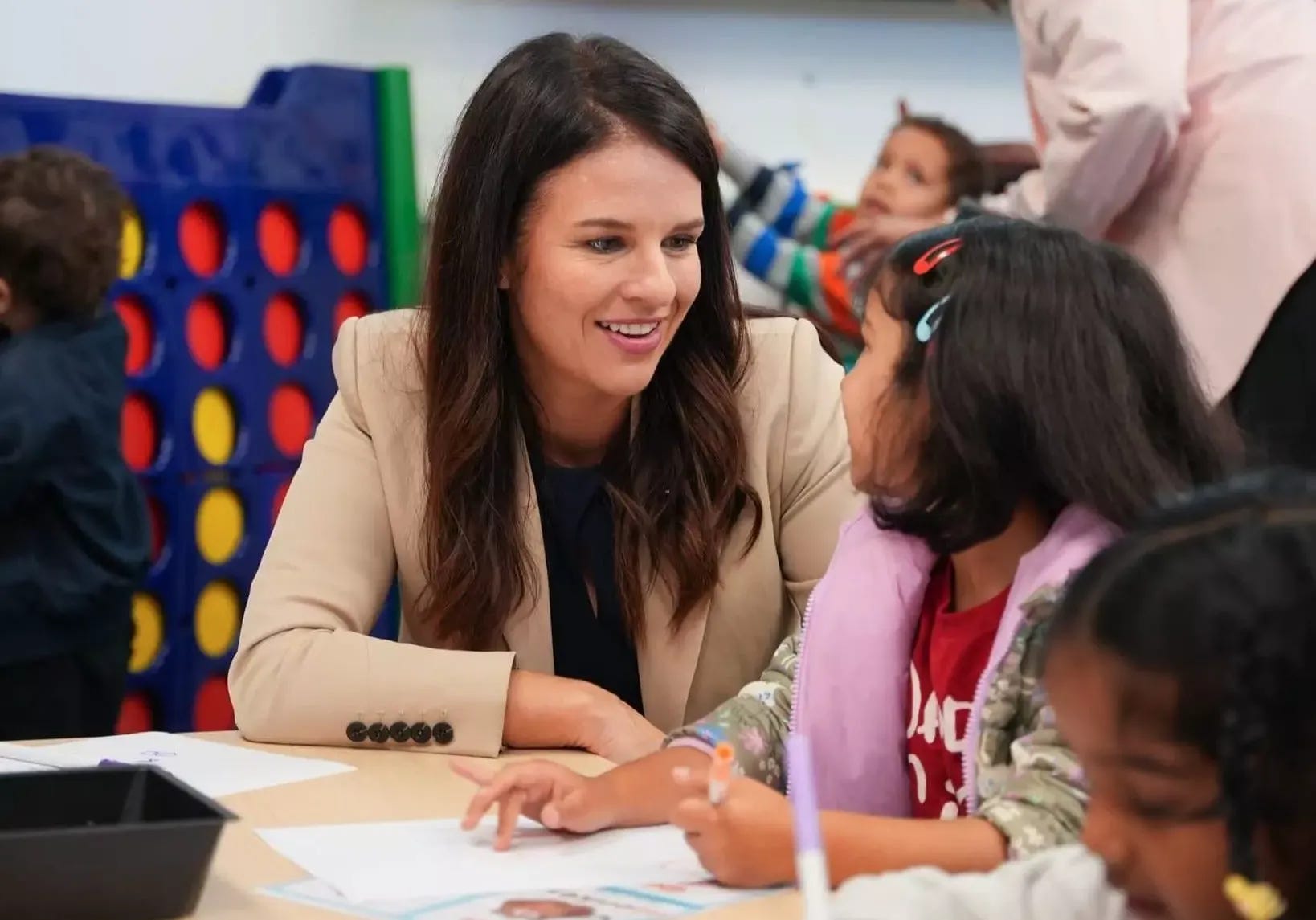
Education Minister Erica Stanford. (Image: Facebook)
However, VPNs are not just a tool for teenagers trying to dodge restrictions. They protect journalists, businesses, whistleblowers, political dissidents, remote workers, and ordinary citizens who simply value their privacy online. Once governments begin treating privacy-enhancing technologies as obstacles to regulation, we have crossed into very dangerous territory.
I have some sympathy for the politicians grappling with this because when I consider the problem myself, I too find myself in a conundrum. I am convinced by a plethora of evidence and observation that social media is causing profound harm to children, and I believe governments are justified in restricting children’s access. But I do not believe protecting children requires or justifies sacrificing the privacy, anonymity, and freedoms of adults.
We are at a point in the public debate where continuing to pretend the evidence is inconclusive is an act of wilful blindness. There are disputes about particular data around mental illness and self-harm, but the problem is much wider than just those aspects. Parents are observing the impacts. And yet, legitimate concerns about smartphones and social media are still being dismissed by some as some kind of moral panic. Every generation, we are told, invents a new threat to blame for the decline of civilisation. Television was supposed to rot our brains, comic books were going to corrupt the young, and video games would create violent psychopaths. Social media, according to this view, is simply the latest chapter in a very old story of adults misunderstanding youth culture.
That scepticism was understandable at first. Correlation is not, after all, causation, technological change often outpaces research, and there are good reasons to be cautious before handing governments new powers to regulate private life. But we are no longer at the beginning of this conversation. We have lived through more than fifteen years of mass social media adoption, and we are at the point where I simply do not think intellectually serious people can continue pretending that nothing is happening.
Social media has the potential to do great harm to adults and arguably society too, however, I am not someone who believes safetyism is a tolerable exchange for freedoms. The state should not intervene with adults’ lawful choices even when they are stupid or ill-advised. My concern is for children and the responsibility we have for them.
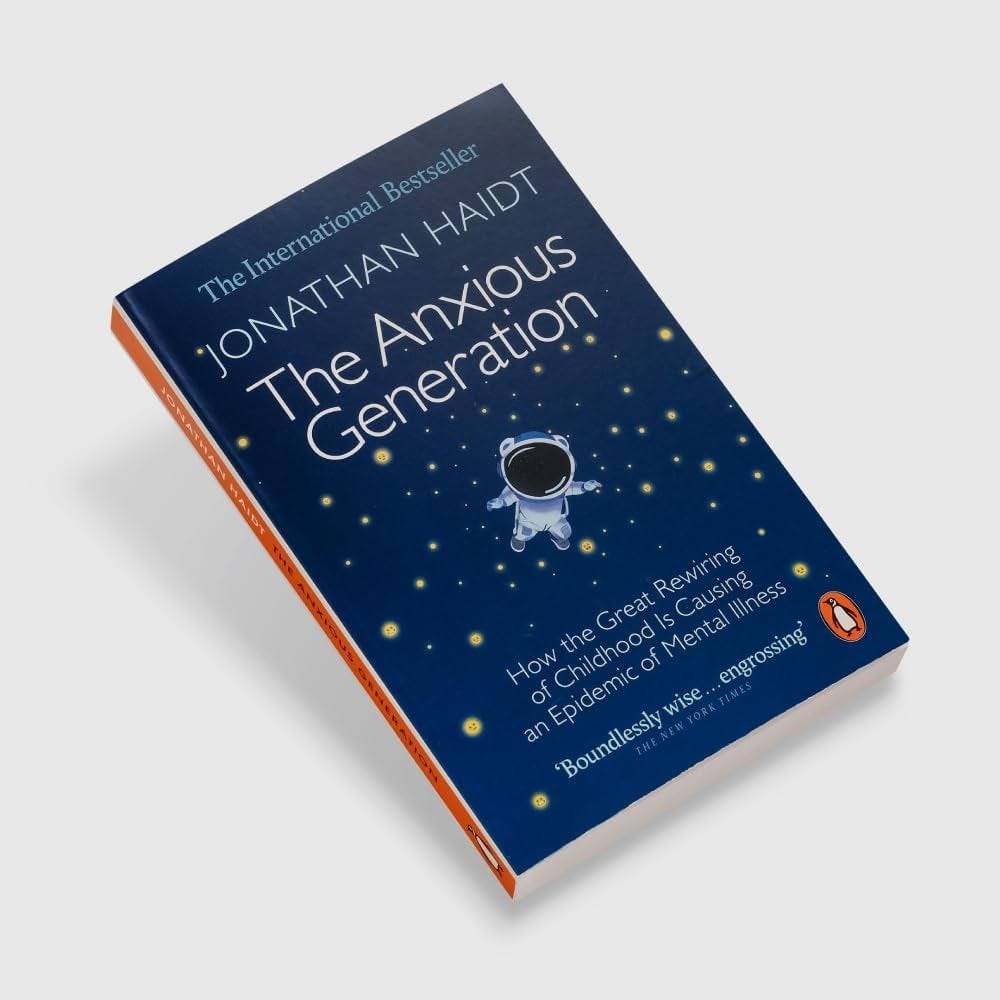
Jonathan Haidt’s The Anxious Generation did not create evidence of harm, but it brought together an extraordinary body of research that had been pointing in the same direction for years. The book brought attention to the effects of social media on young people and is responsible for many politicians starting to ponder the matter as a serious policy challenge. The rise of the smartphone era has coincided with an extraordinary deterioration in adolescent mental health, particularly among girls. Rates of anxiety, depression, self-harm, and suicidal ideation have climbed sharply across much of the developed world.
Longitudinal studies have found that heavy social media use predicts subsequent declines in life satisfaction. Randomised controlled trials have shown that reducing social media use improves mental wellbeing. The United States Surgeon General has warned that adolescents spending more than three hours a day on social media face roughly double the risk of poor mental health outcomes compared with lighter users. Other research has linked intensive social media use to disrupted sleep, cyberbullying, poor body image, lower self-esteem, and higher rates of depressive symptoms. None of these studies claims social media is the sole explanation for every psychological difficulty experienced by young people, but taken together they paint a picture that is difficult to dismiss.
The conversation has evolved from simply being about harmful content itself. For example, violent or highly-sexual content which is an issue in itself. Increasingly, researchers are examining the impact of the architecture of these platforms themselves. Infinite scrolling, autoplay, variable rewards, endless notifications, and algorithms that continually optimise for engagement are not accidental features. They are deliberate design choices intended to maximise the amount of time users remain on the platform.
The comparison often made is with pokie machines, and it is an apt one. The user is never presented with a natural stopping point. There is always another video, another notification, another recommendation, another opportunity for a small neurological reward that keeps your thumb moving almost without conscious thought. Adults struggle to resist those systems despite fully developed impulse control (in theory). Expecting children to exercise the level of restraint required to overcome products specifically engineered to defeat restraint strikes me as hopelessly unrealistic.
British writer Freya India has written particularly perceptively about what this environment has done to girls. I found her book Girls(R) harrowing to read and while as a millennial I related to much of it, it was horrifying to learn how much worse it has become for Gen Z girls. Previous generations certainly faced impossible beauty standards, but those standards were largely imposed by advertisers, magazines, and television. Today’s girls participate in their own surveillance. Social media has not merely commercialised insecurity; it has democratised it. Every teenager now carries a broadcasting studio in her pocket, accompanied by an audience prepared to judge every photograph, friendship, outfit, and every perceived imperfection. Adolescence has always been awkward, but awkwardness used to be transient. Embarrassing moments disappeared, bad haircuts grew out, and unflattering photographs ended up forgotten in family albums. Today everything is documented, shared, compared, and resurrected indefinitely. Identity formation, which should be a private and experimental process, is now a public performance conducted before an audience of peers whose approval feels indispensable.
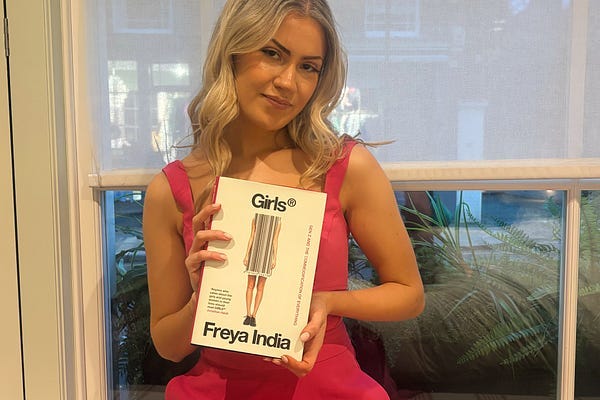
Freya India.
This extends well beyond questions of appearance. Freya India observes that many young women no longer seem to inhabit their own experiences directly. Experiences are mediated through the possibility that they might become content. Holidays are about the photographs that will be taken, heavily edited, and posted online. Friendships become centred around liking each others’ Instagram stories. Meals out are interrupted with full photoshoots. And super concerningly, political opinions become personal branding. Even vulnerability itself is something that can be curated for an audience. There is remarkably little room left simply to exist without simultaneously imagining how one’s existence appears to other people via social media. I suspect that psychological burden is enormously underestimated by adults who remember growing up before every social interaction became potentially permanent.
But this is not simply a story about girls. Boys are struggling too, albeit often in different ways. Loneliness has increased dramatically among boys and face-to-face socialising has drastically declined. Teenagers date less than previous generations, spend less time with friends, attend fewer parties, drive less, and generally participate less in the physical world than their parents did at the same age. They are missing key developmental milestones and remaining in a state of dependence on their parents for much longer.
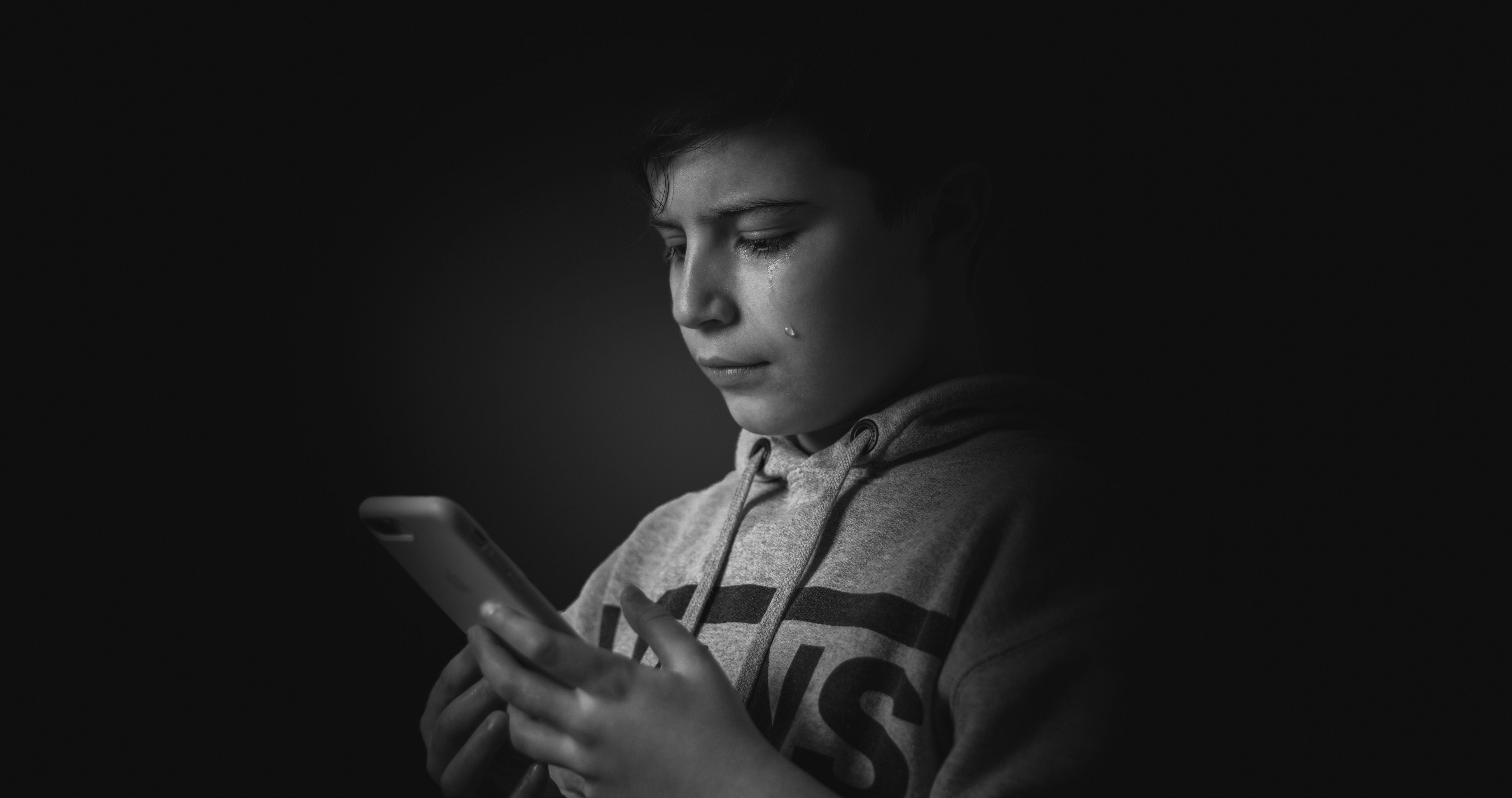
Professor of Psychology at San Diego State University Dr Jean Twenge’s research has documented this shift exploring how social media promised unprecedented connection, but instead we appear to have produced one of the loneliest generations in living memory. The irony is almost unbearable. The technologies that claimed they would bring us together have replaced relationships rather than supplementing them. A group chat is not the same thing as sitting around someone’s living room talking nonsense for three hours. Watching TikTok together is not the same thing as getting together at the mall or the park. Human beings evolved to build relationships through embodied interaction, so we should hardly be surprised that replacing much of that with algorithmically mediated communication carries costs.
These issues, and the public debate over banning under 16s from social media, have prompted thoughtful discussion within the Free Speech Union Council, of which I am a member, about whether restricting children’s access to social media is itself something free speech advocates should oppose. And to be honest there are genuine principles in tension. Some argue that access to online communication is fundamentally an aspect of freedom of expression and that restrictions, even on minors, should therefore be viewed with deep suspicion. Others argue that decisions about children’s social media use belong exclusively to parents and that the state has no business intervening. Those are respectable arguments, and I understand why many people arrive at them.
I simply disagree.
To be clear, this is my personal position rather than the Free Speech Union’s, but I do not believe that children’s rights are identical to adults’ rights. Liberal democracies distinguish between children and adults across countless areas of public policy because children and adults are different in ways that matter morally and legally. We prohibit children from buying alcohol, tobacco, and gambling products. We restrict their ability to drive, vote, enter contracts, and consent to a wide range of activities. None of these restrictions is generally understood as an attack on liberty. They reflect an acknowledgement that children possess developing judgment rather than fully mature judgment, and that society has obligations towards them which do not apply in quite the same way to adults.
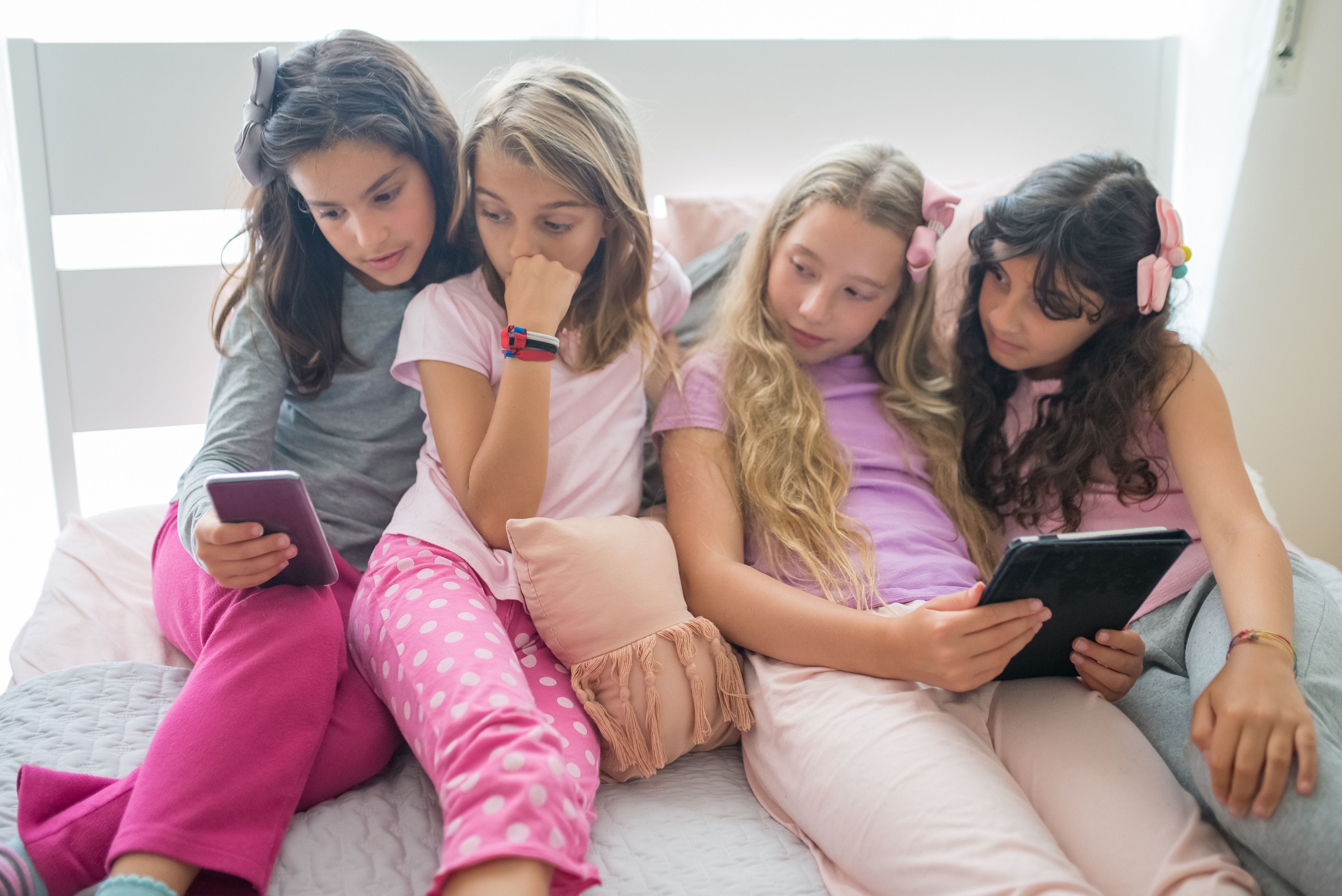
So why, when we have evidence of how bad it is for them, should social media be an exception?
If we genuinely believe these platforms are capable of producing substantial psychological and social harm, particularly among developing minds, why would we suddenly adopt an absolutist conception of liberty that we reject almost everywhere else? The principle seems entirely straightforward to me. Children are afforded fewer freedoms because they require greater protection.
However, this does not mean I am in agreement with the so-called “grand coalition” of the purple party lead by Christopher and Chris. I part company with many politicians who are proponents of a social media ban not over the objective but over the method.
Education Minister Erica Stanford brought up universal age verification recently on Q+A with Jack Tame. At first glance it sounds self-evident. If children are not supposed to use social media, surely everyone should simply prove their age. Problem solved! Except it isn’t. Mandatory age verification means every adult must identify themselves before participating in online activity. The burden of protecting children is transferred directly onto adults, who suddenly lose something that has long been one of the defining features of the internet… the ability to participate anonymously or under a pseudonym.
Anonymous speech has never existed solely to allow trolls to be unpleasant. It protects whistleblowers exposing corruption within their workplaces, victims of domestic violence rebuilding their lives away from abusive partners, people discussing addiction, sexuality, infertility, mental illness, or political dissent without broadcasting those deeply personal experiences under their legal identity. It protects employees who wish to criticise powerful institutions without jeopardising their livelihoods. Some of the most important speech in liberal democracies has been anonymous or pseudonymous. We should not discard that tradition lightly simply because governments have failed to identify a better mechanism for managing children’s online behaviour.
There is also a practical problem in that universal age verification requires these social media giants to hold that information. Whether it is governments, technology companies, or third-party verification providers, somebody must collect, store and secure enormous quantities of personal information linking real world identities to online accounts. We have become remarkably blasé about creating massive new databases of sensitive information despite repeated demonstrations that no database is immune from misuse, abuse, or hacking. Every year brings more headlines about leaked customer records, stolen identities, or security failures. So why are we now seriously entertaining the idea of requiring every adult to hand over even more personal information simply to access what has become one of the central forums of modern public life.
The proportionality feels completely wrong. Liberal democracies are supposed to begin with the presumption that adults are free unless there is an overwhelming reason to restrict them. But this conversation seems to begin with the opposite assumption that adults should accept new surveillance or identification requirements in lieu of the government coming up with alternative solutions.
Nor should we ignore the evidence emerging from Australia, which should inject a degree of humility into this entire debate. Early evidence suggests that implementation has been embarrassingly less successful than advocates hoped. Studies indicate that a substantial majority of under 16s continue to access social media despite the ban. Many simply entered false birth dates while others have created new accounts, or borrowed existing ones. A relatively small number reportedly used VPNs, but the overwhelming lesson was not that VPNs were the principal loophole. It was that determined teenagers are remarkably good at circumventing restrictions.
That is hardly surprising. Every generation has found ways around rules it dislikes. Teenagers have always persuaded older friends to buy alcohol, borrowed fake identification, and found creative ways to evade adult supervision. The existence of circumvention does not necessarily invalidate the law either. We accept that some underage drinking occurs without concluding that minimum drinking ages should therefore be abolished. But it does highlight the danger of continually escalating enforcement. If the first attempt fails because children find workarounds, the temptation is always to impose harsher and more wide-reaching restrictions affecting everyone else. First comes age verification, then restrictions on VPNs, then perhaps device monitoring, or mandatory digital identity. Eventually we discover that we have transformed the internet for every adult in pursuit of a policy aimed at children.
Fortunately, I do not think we face a binary choice between abandoning children to Silicon Valley and constructing a Chinese-style model of internet governance. There are other approaches available, and they begin by recognising a simple truth that has been strangely absent from this debate. The problem is not merely social media. The problem is that we have normalised giving children extraordinarily powerful internet-connected devices that accompany them every waking hour of every day.
If I were designing policy from scratch, that is where I would start. I would ban the hardware before I banned the software.
We have become strangely accustomed to the idea that every child should carry around what is effectively the most sophisticated communications device ever invented, complete with unrestricted internet access, a high-definition camera, GPS tracking, infinite entertainment, and an endless stream of algorithmically curated content available every waking moment. We treat that as the natural starting point, and then wonder how to stop children accessing Instagram or TikTok without compromising the rights of every adult in the country. We are looking at this wrong.
Children do not need smartphones. They may need phones, but those are not the same thing. It is reasonable to want your teenager to be able to contact you after school, ring home if plans change, or call emergency services if something goes wrong. None of those things requires a device capable of delivering an endless stream of personalised content designed by powerful technology companies whose commercial success depends upon capturing and holding children’s attention. A basic mobile phone provides communication. A smartphone provides a portal through which massive corporations fight to capture your child’s attention and feed them messages to buy, believe, and absorb.
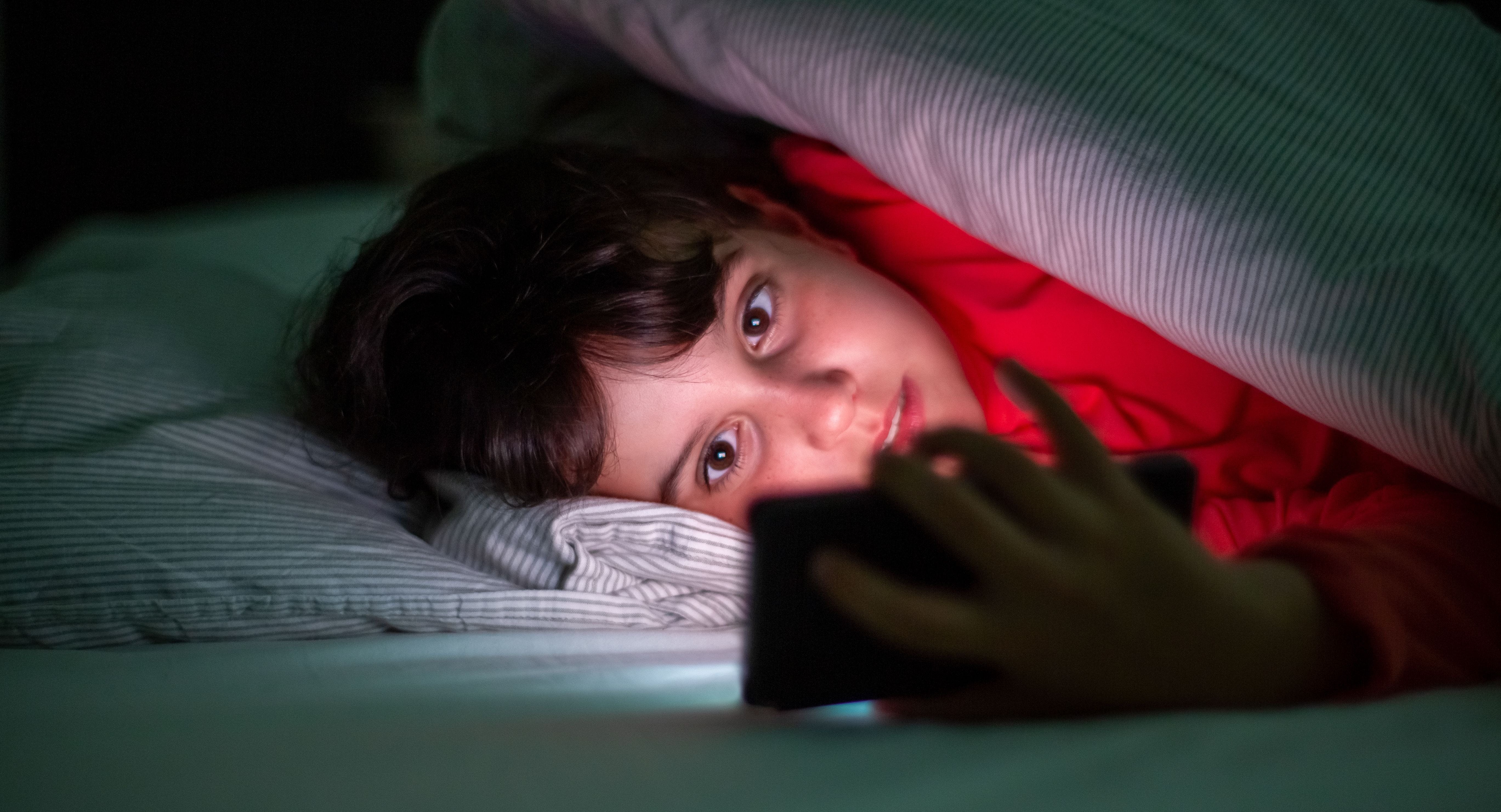
The enforcement mechanism for this would also be considerably cleaner. Rather than requiring every social media company to verify the identity of every adult user, or forcing governments to interfere with how the internet functions, the law would focus on the sale and possession of smartphones by those under sixteen. No solution is perfect, of course. Parents could still give children their own devices and teenagers would undoubtedly find ways around the rules. But it is not incumbent on a policy to eliminate every breach. We do not apply that standard anywhere else in public policy. We do not do away with speed limits because some people speed. We have enforcement mechanisms that act as a deterrent, but some will always break the law.
It is about changing the default. The baseline expectation that most people will abide by. At present, the default expectation is that children receive smartphones at increasingly younger ages. A law targeting the hardware would reverse that expectation without imposing new surveillance obligations on the adult population. Young-looking adults may need to show ID at a store to purchase a phone or on the rare occasion to a police who observes possession. But everyone will not have to plug identity information into the internet.
The second measure I would support is, perhaps surprisingly, a social media ban itself. Yes, I know I have spent a great deal of time challenging this measure, but I would design it very differently from many of the proposals currently circulating. Rather than placing the compliance burden on platforms through universal age verification, I would simply make it unlawful for children under sixteen to hold social media accounts, with responsibility resting primarily on parents rather than technology companies.
Some people will immediately dismiss that as symbolic and therefore pointless. I think they underestimate the value of symbolic law. Liberal societies are full of laws that are not enforced with perfect consistency but nevertheless shape expectations and behaviour. Again, I point to the legal drinking and speed limits. Another example is compulsory school attendance which does not actually ensure perfect attendance. Yet nobody seriously concludes that these laws serve no purpose because compliance is imperfect. Laws do more than create penalties. They establish social norms and communicate collective expectations about responsible behaviour. They provide parents with an external standard to point towards when they inevitably have difficult conversations with their children.
One of the realities is how difficult parenting has become when every child believes that everyone else has access to something they do not. Parents are constantly placed in the position of being told they are the only ones saying “no”. Every conversation becomes a negotiation and every refusal a source of conflict. The argument that “everyone else has one” has probably existed since the stone age, but social media has amplified it dramatically because exclusion genuinely can carry social consequences. A legal prohibition changes that dynamic. It shifts the default expectation away from participation so parents are no longer inventing household rules from scratch. They are reinforcing a standard that society itself has decided to adopt.
Advocates of the “leave it entirely to parents” position often underestimate how different families actually are. The argument usually comes from thoughtful, engaged parents who are deeply invested in their children’s wellbeing. Unsurprisingly, they tend to assume other parents are broadly like them. Many are. Many are not.
Some parents work two jobs simply to keep food on the table. Some are raising children alone, are exhausted, lack confidence, and sadly some are disengaged altogether. Others simply have no idea how sophisticated modern platforms have become or how relentlessly they compete for their children’s attention. Children’s outcomes should not depend entirely upon whether they happen to be born into the most technologically literate household on the street.
We already accept this principle almost everywhere else. Parents retain enormous discretion over how they raise their children, but within boundaries established by society. Liberal societies have always recognised that parental rights exist alongside responsibilities, and that the state has a legitimate role in establishing minimum standards where children’s welfare is concerned.
Parents would still make hundreds of decisions about technology in their own homes. They would decide how much screen time is appropriate, whether games consoles are allowed, when children receive their first “dumb” phone, and how internet use is supervised in the home. The state would simply establish a baseline reflecting that unrestricted access to social media during childhood carries substantial risks that society has a legitimate interest in reducing.
Ultimately, though, neither legislation nor parenting can solve the much larger problem that is essentially cultural. Even the best-designed law will fail if adults continue behaving as though childhood is something to be mediated through screens rather than lived in the physical world. We have gradually accepted a version of childhood in which boredom is treated as an emergency, every spare moment must be filled, every silence interrupted, and every friendship maintained through a device rather than through shared experience. I am increasingly convinced that this has been one of the great mistakes of modern parenting, and it is one that no Act of Parliament can fix on its own.
The answer, I think, is to rebuild childhood rather than to simply regulate technology. That sounds hopelessly nostalgic, I know. But stop and think about what children have actually lost. They have lost hours of unsupervised play, the experience of being bored and making one’s own fun, afternoons spent roaming the neighbourhood with friends, making up games, solving arguments without adult intervention, and learning through countless small interactions, how to function in the real world. Instead, they have inherited a childhood in which every lull is filled by a screen and every emotion is immediately stimulated or soothed by an algorithm. We should not be surprised that resilience is becoming harder to cultivate when we have systematically removed many of the experiences that once built it.
This is not an argument for returning to the 1950s or pretending technology itself is evil. I am not suggesting we all live like the Amish. I am encouraging us all to remember that human beings are embodied creatures. There is something profoundly unhealthy about allowing childhood to become almost entirely exposed to the control of corporations whose commercial incentives are paramount. Their objective is not to produce confident, resilient adults. Their objective is to maximise engagement and if those two goals conflict, we should not kid ourselves about which one wins.
Adults bear a lot of responsibility for this. It is tempting to place all the blame on Silicon Valley because the platforms do deserve plenty of it. Their products are deliberately engineered to be difficult to leave. Internal documents and court cases increasingly suggest the companies understand far more about those effects than they have admitted publicly.
But we also handed our children these devices. We normalised them and convinced ourselves they were inevitable because everyone else was doing the same thing. We accepted a quiet trade-off of fewer arguments, easier car journeys, occupied children at restaurants, a little more peace and quiet at home. Those decisions were understandable. Parenting is exhausting, but understandable decisions can still produce harmful consequences when they are repeated millions of times across an entire society.
Over the past twenty years we have readily accepted digital interaction as an adequate substitute for physical presence. Language has shifted to accommodate a diminished version of social life. The result is that many young people are connected almost constantly while feeling increasingly lonely.
The irony is that Generation Z is already showing signs of recognising this themselves. Increasingly, there is a growing appetite among young people themselves for escaping the tyranny of constant connectivity. The enormous popularity of writers such as Freya India reflects, in part, a generation searching for permission to step away from performative online existence. Even the language of “touch grass” captures that young people know something is not right about being terminally online. They may disagree about the solutions, but many already sense that life lived entirely through a screen is not enough.
That is why I think this debate has been framed incorrectly from the beginning. It is entirely possible to support reasonable restrictions on children’s access to products that cause them harm while remaining absolutely uncompromising about the freedoms of adults. In fact, I would argue that this is the only genuinely liberal position available. Liberalism has always recognised that liberty exists alongside responsibility, and that protecting vulnerable people does not require abandoning the principles that protect everyone else.
The internet has become one of the primary arenas in which political debate, journalism, commerce, and personal relationships now occur. Decisions about how it functions are therefore constitutional questions every bit as much as they are technological ones. Every expansion of state power is wrapped in the language of good intentions. Child protection is among the most compelling justifications imaginable because nobody wants children harmed. That is precisely why we must be especially careful because the best intentions have often produced some of the worst precedents.
There is an old saying that hard cases make bad law. I think emotionally charged issues make bad policy for much the same reason. Faced with genuine harm to children, governments understandably feel pressure to act. Sometimes, however, acting quickly produces solutions that are far-reaching, more intrusive, and more permanent than the problem actually requires. We should resist that temptation. We owe children better than indifference, but we also owe future generations an internet that remains free, open, and private.
The objective should not simply be to keep children away from social media. It should be to give them something better to run towards. More time outdoors, friendships conducted face to face, opportunities to become interesting people before they become online personalities, and a childhood, in the fullest sense of the word. That is ultimately what this debate is about. Not whether children should be able to download another app, but what sort of adults we hope they become.
If protecting that childhood means telling a 14 year old that they must wait a couple of years before having a smartphone and opening an Instagram account, I can live with that. If it means telling every adult that they must surrender their privacy, their anonymity, and their digital security in the process, I cannot. Protecting children and protecting freedom are not competing objectives unless we choose to make them so. The real challenge is having the courage to defend both at the same time.
Ani O'Brien comes from a digital marketing background, she has been heavily involved in women's rights advocacy and is a founding council member of the Free Speech Union. This article was originally published on Ani's Substack Site and is published here with kind permission.
12 comments:
Personally I see it as the political class seeing it as killing two birds with one stone. That is in that they get to look like they have made a difference to children under 16 AND have at the same time harvested their adult population's personally identifiable information. In effect they will have enacted a life long web scraping (with prejudice).
Now, we all understand that the government, banks, IRD and many other organisations already hold large amounts of our personal information (usually freely given) but this is the end game of the absolute!
It becomes, at the finish line a question of not what they have but how, what they have will be used. The usage of your entire personal internet space is the issue which given human nature will ultimately be used against you. We see that already in our very cancel culture world now.......
Social media (and indeed) the internet is the modern day Pandora's box and that lid is never going back on. Humanity will in the end have to mature and evolve into the pros and cons that exist because banning things has always been an historic failure in the result desired.
I recommend Isaac Asimov’s ‘Spacer Worlds’ books if anyone is interested in the end point of this technology driven isolationism.
The end of Homo Sapiens is well under way. It ain't gonna be a replacement by robots either. Homo sapiens, will deteriorate to Homo idioci... unable to speak, think, work, plan, create, build, travel..... just lie in the sun/rain/wind/eating apples/fornicating until death. Think... the Neanderthals disappeared ... and all their earlier ape-men. And there will be no robots either. We were once the prime of Creation.
Governments that truly control the internet:
North Korea
China
Russia and its satellite states.
Of course it is done to protect the population. No other reason. I promise.
Innocent Jacinda Ardern wanted to control everything too including exactly what you could say. It was her "Hate Speech" project that foundered when Kris Faafoi just wouldn't do it. Then she had to front it herself, it looked and was super dodgy and it limped to the too hard dept, and then she went into exile. But look at the UK who implemented it. What a 1984 nightmare.
And this is where the wheels fall off. The unavoidable temptation for progressives who absolutely hate any independent thought that deviates from their own narrative would be to do the North Korean thing, thinking of the children of course. No other reason. They promise.
I think the whole internet harm thing is far more nuanced than caveman thinking bans Nectar they do not mesh with the internet. And given the sheer volume of crime on the internet, good luck banning VPN's, although President Putin would thoroughly approve of Erica's wish list.
To control who can look at it and what they can view is no different to the end result of autocracies, regardless of the woke maxim of meaning well. Its like banning electricity in the Victorian era or Railways. They/it have their negatives but the internet has phenomenal positives too. But it only works if it's pure.
Repeated quality education in it's ills, like anti smoking, to me is the way forward.
"Elvis the pelvis and his evil swaying hips started the rut with that terrible jungle music called rock n roll"
This is the absurd analogy to which I compare this issue.
Especially when I read and hear scare mongering like "governments have concluded".
Most of the problem is poor and weak parenting.
"Of all tyrannies, a tyranny sincerely exercised for the good of its victims may be the most oppressive. It would be better to live under robber barons than under omnipotent moral busybodies... those who torment us for our own good will torment us without end for they do so with the approval of their own conscience." CS Lewis knew before the internet. Sadly we do live under the 'robber barons' as well.
Hilarious that the government is all lovey-dovey towards children when it suits their other purposes. Not so much when it comes to children's 'inheritance' including massive government debt, flagging productivity, contrived racial divisions, slum housing, environmental posturing, and shockingly poor education.
[quote] -"I have some sympathy for the politicians grappling with this because when I consider the problem myself, I too find myself in a conundrum" [end quote]
Two things from this article -
- Ani, you present compelling arguments on many topics, and on this web site get many objective comments.
Sadly I am finding that each article is like reading a "Thesis", how about - simple to the point, with supporting or corroborating data.
- we have here in NZ a group of Women, who are the "founders" of the momentum to action what is being considered by many Govts across the world.
Their rational " is the suicides of many young children, mainly female 13 years plus as a result of "on-line" harm thru a social media entity.
Their objective to reduce access to any/all social media accounts.
- I wish I could, but NDA rational states that I
can not give detail, but simply I have seen, the dead faces of teenage girls, from suicide, due to a "hate" issue on their social media.
page.
Did their school doing anything, probably not.
In NZ we treat "suicides" as a Verboten subject, from which we learn nothing, that may prevent the next one.
Oh and we have other deaths, by suicides, that have resulted from a social media "posting".
- American Media Companies, Google & Meta have always known what happens across their platforms, with Meta in the year leading up to Trump's first presidential win saw an unprecedented outpouring of anti Trump messaging, to which is was proven that Mark Zuckerburg knew all about, but did nothing to reduce the social media flow.
He changed his "tune" when trump was re-elected - that 'change' was hilarious.
Oh and if you made a posting (this also applied to Twitter [pre Musk]) that did not meet "community standards" you had your account deleted.
This then created other Social Media platforms that both Meta & Twitter (being American) wen to great lengths to shut down.
- The CCP set up Tik Tok, which became obvious that it was for dubious reasons, but the content was designed to engage & trap the user. When it was known what was going on, did anyone say NO, stop this - NO, but it was interesting that Trump (first term) made a statement, re Tic Toc - the 'feedback' was not nice.
As for our current Min. of Ed, loves the 'photo ops' but is seen by many - "to be light on the actual portfolio of Education".
As Australia is finding, you can 'create law' but it is hard to implement, when there are those who can find away around it [and educate others in the loopholes]- no doubt other Nations see this, when it comes to similar Legislation re Kids using social media.
I was all for it until voices on the Left started mentioning "restrict the harm done to the young by right wing ideology". It suggested they want to shut down access to ideas rather than prevent harm.
Social media is harming lonely adults as much as it is harming kids. Look at division promoted by the algorithm and the effect it is having on, particularly, conservatives. We need to do something about the loneliness epidemic that is based on community, not hatred and othering.
>"Look at division promoted by the algorithm and the effect it is having on, particularly, conservatives."
Um,. what did I miss in high school maths?!?
Your proposal to ban smart phones to under 16's is a good start Anni' Same as banning smoking and drinking to under 18 year olds, it will be hard to police at first, but society will get used too it. Look at all the furore caused by banning phones during school time. Now accepted as the norm. Lazy parenting by weak parents is a big issue in our society. maybe charge fees or tax the companies who are providing social media. If it is not making money, the company will leave NZ. Will limit usage the same as Sky TV or Netflix does compared to free to air TV. Common sense alone tells you that allowing a child access to adult content on a mini computer in your pocket 24/7 is a stupid idea
Post a Comment
Thank you for joining the discussion. Breaking Views welcomes respectful contributions that enrich the debate. Please ensure your comments are not defamatory, derogatory or disruptive. We appreciate your cooperation.