

We’re barely into the election campaign and I’m already exhausted. New Zealand is facing enormous questions about economic growth, energy security, infrastructure, health, the Treaty, the cost of living, and our place in an unstable world. Parties are releasing substantive policy that deserves serious scrutiny. However, this week far too much of the political conversation has revolved around drinking games, innuendo, and outrage cycles that last 24 hours before being replaced by the next one.
Shane Jones found himself at the centre of a controversy after telling other politicians to "take off your knee-pads" when hosting foreign leaders. Critics, including Chris Hipkins, David Seymour, and Christopher Luxon, condemned the remark as crass, interpreting it as a reference to oral sex. But Jones insisted he was talking about politicians getting down on their knees in a figurative sense, eg. showing excessive deference or grovelling before foreign leaders, and accused the media of reading something salacious into a fairly common expression about submissiveness.
Then the Paul Henry “shoot, shag, marry” saga is another example. Within hours we had multiple stories, follow up stories, and reaction stories. A media feeding frenzy that did not require them to leave their desk or even pick up the phone. Eventually, it had to be acknowledged that the terribly outraged Chris Hipkins had happily played “kiss, marry, kick” in 2023.
Whether the comments are funny or crass is beside the point. My question is why they became the dominant political story while issues that actually speak to the character and conduct of people in public office often barely register.
Then the Paul Henry “shoot, shag, marry” saga is another example. Within hours we had multiple stories, follow up stories, and reaction stories. A media feeding frenzy that did not require them to leave their desk or even pick up the phone. Eventually, it had to be acknowledged that the terribly outraged Chris Hipkins had happily played “kiss, marry, kick” in 2023.
Whether the comments are funny or crass is beside the point. My question is why they became the dominant political story while issues that actually speak to the character and conduct of people in public office often barely register.
Stuart Nash’s final own goal
One story about comments made by a candidate that couldn’t be avoided was Stuart Nash managing to end his political comeback over text message.
Former Attorney General Chris Finlayson revealed that Nash had privately texted him describing National MP Katie Nimon as “the laziest MP I have ever come across” because she had supposedly taken 9 months off on full pay after having a baby. Nimon was actually away from Parliament itself for 6 months, only taking around 10 weeks completely away from work before returning to electorate duties.
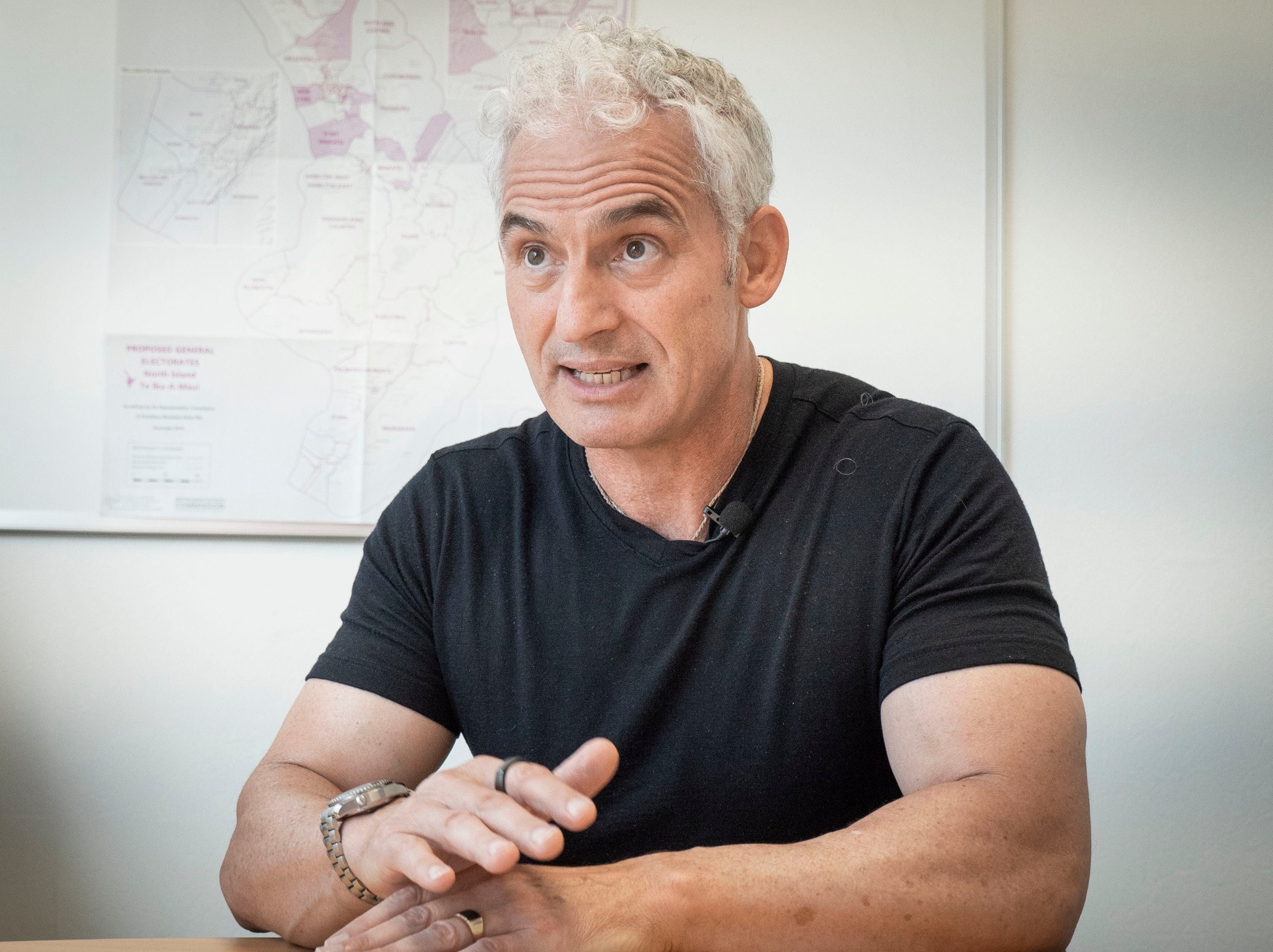
Stuart Nash. Photo / Warren Buckland
MPs across the political spectrum condemned the comments, Christopher Luxon publicly ruled out Nash ever serving as a minister in a government he led, and within hours Nash had resigned as New Zealand First’s candidate for Napier, ending a short lived political comeback for the man with perhaps New Zealand’s worse case of foot-in-mouth disease.
The saga has ignited some debate over whether MPs’ parental leave arrangements are fair. Members of Parliament are not employees in the ordinary sense, and the system surrounding parliamentary leave is different from the paid parental leave scheme available to most New Zealand parents. It is entirely legitimate to ask whether elected representatives should receive different arrangements from the people they represent, particularly when ordinary families often face significant financial pressure after having children. But there is an enormous difference between questioning a public policy and making inaccurate, personalised attacks on an individual MP’s work ethic.
New Zealand First has moved on quickly to confirm Te Kira Lawrence as the new candidate for the Napier Electorate. She is a sitting Napier City Councillor.
Election 2026: the coalition gains ground
National is still polling at levels from which governing parties do not ordinarily win elections, but Labour has so far failed to capitalise and things have started looking better for the coalition.
The latest Talbot Mills poll has Labour on 33% (down 1pt), National on 31% (up 2pts), New Zealand First holding on 12%, the Greens down a huge 4 points on 9%, ACT up 1 on 7%, and Opportunity up to 4.7%. Despite Labour remaining the largest party, those numbers would comfortably return the current coalition to office with a 63 seat majority. Government’s approval rating has also improved and Christopher Luxon has edged ahead of Chris Hipkins as preferred prime minister for the first time in this poll in a year. Naturally all of this good news for National was reported on heavily….right?
Three consecutive major polls have now placed Qiulae Wong’s Opportunity Party just below the 5% threshold. If it crosses 5%, the coalition loses its majority and neither bloc can govern without TOP. On the Talbot Mills numbers, the right would fall to 59 seats, Labour, the Greens and Te Pāti Māori would have 55, and Opportunity’s six MPs would become the kingmakers.
This has intensified speculation about whether Labour should gift Mt Albert to Opportunity leader Qiulae Wong. But Mt Albert is one of Labour’s symbolic heartlands, represented in the past by Helen Clark, David Shearer, and Jacinda Ardern. If Labour were to stand aside, it would be a sacrifice of more than just a seat. However, if Labour genuinely believes another Luxon-led government would be disastrous for the country, it will eventually have to decide what it is willing to do to prevent that.
New Zealand First, meanwhile, has emerged from its convention last weekend energised and continuing to occupy its strongest position this far out from an election since 1996. Historical polling also shows that New Zealand First usually outperforms polls taken three months before polling day.
Who gets credit for consent reform?
National has announced that, if re-elected, it will rewrite New Zealand’s sexual consent laws so that consent must be actively communicated rather than inferred from the absence of a refusal.
Justice Minister Paul Goldsmith says the law should make clear that there must be a “yes”, expressed through words or actions, and that silence is not consent. Consent on one occasion would not imply consent on another, and a previous sexual relationship would not create any ongoing entitlement.
The basic principle is difficult to object to. Sexual activity should be something both people positively choose. Currently rather than defining consent directly, the Crimes Act largely provides examples of circumstances in which consent does not exist. National’s proposal would give judges and juries a clearer positive definition while retaining the existing burden of proof. Prosecutors would still have to prove beyond reasonable doubt both that consent was absent and that the defendant did not reasonably believe it had been given.
Labour is not happy, however, as their justice spokesperson, Camilla Belich, has already drafted a bill covering almost the same ground. It was developed through cross-party work and would define consent as free and voluntary agreement communicated through words or actions. Labour and the Greens say National participated in those discussions before walking away about a month ago to develop and campaign on its own policy.
Goldsmith and Luxon have described it as a matter of “traffic management”. There is plenty of justice legislation already before Parliament, and there may not be enough time to complete this reform before the House rises. That is not unreasonable. Governments have limited parliamentary time, and Labour had six years in office to make the same change but did not.
The End of Mana Whakahono ā Rohe agreements
The Government has confirmed that existing and proposed Mana Whakahono ā Rohe (MWR) agreements will not transfer into the new resource management system. Instead, councils will be able to negotiate new, more narrowly defined iwi participation agreements with clearer statutory limits.
MWRs are currently formal agreements between a local council and one or more iwi authorities that set out how they will work together on resource management matters under the Resource Management Act (RMA). They usually cover things like when and how iwi are consulted on planning decisions, how information is shared between councils and iwi, processes for developing district and regional plans, identifying wāhi tapu and culturally significant sites, and how Treaty settlement obligations would be reflected in council planning processes.
Objections to MWRs arose for reasons including that they give iwi privileged institutional access to planning processes that other community groups don't have. The agreements can shape how planning occurs from the outset, so opponents see them as creating an additional layer of influence that isn't directly accountable to voters.
When the replacement RMA legislation was introduced there were only 8 agreements in force nationwide. By mid-2026, several dozen more had been signed or initiated as councils and iwi rushed to preserve them before the law changes.
Another confidence problem for Police
New Zealand Police have reopened a historical sexual assault investigation after an internal review found the original inquiry was so flawed that the complainant “was not listened to and not believed”, while the accused sportsman’s “promising career” was prioritised.
The 15 year old girl had woken after a party with no memory of having sex, only to later be told by the 20 year old sportsman that she should take the morning-after pill because they had. Detective Sergeant Darren Folau concluded there should be no prosecution, noting that the young man had “a promising career as a professional athlete” and recommending, at most, a warning. A review conducted by Detective Inspector Scott Anderson years later found the investigation was poor, key lines of inquiry were missed, the complainant’s evidence was not properly tested before the suspect was interviewed, and that DS Folau had reached his conclusion remarkably early in the process. DI Anderson concluded the sportsman did not appear to have a valid legal defence to the under 16 charge at all. Whether the reopened investigation ultimately results in charges is now a matter for the independent investigators.
This case is part of a much wider problem for New Zealand Police. As of June, 33 police staff were under investigation for alleged sexual misconduct. Police insist this represents only a small proportion of a workforce of more than 16,000 people. But, Police are the people victims are expected to trust with the most frightening and traumatic experiences of their lives. Allegations of sexual misconduct within the force therefore carry a significance far weightier than in other workforces.
A very public case behind closed doors
The coronial inquest into Pauline Hanna’s death begins next month, but NZME, Stuff and RNZ have been refused permission to report on it fully. They asked the Chief Coroner for exemptions from the usual restrictions on reporting suspected self-inflicted deaths. The Chief Coroner ruled that the restrictions must remain because further reporting could create a risk of “suicide contagion”.
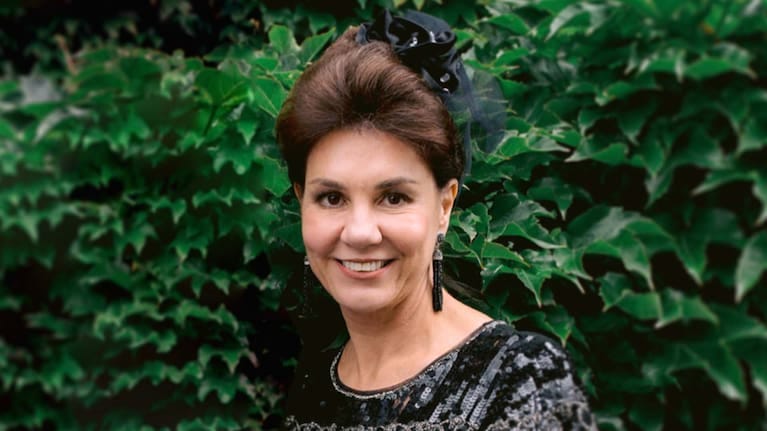
Pauline Hanna. (Source: 1News)
The trial of eye doctor Philip Polkinghorne for her murder was one of the most intensively reported criminal cases in New Zealand history. The public heard weeks of evidence about Hanna’s death, Polkinghorne’s methamphetamine use, their marriage, his infidelity, prostitution, the state of the scene, and the competing theories advanced by the Crown and defence. There have since been podcasts, documentaries, books, and endless public discussion. As Stuff’s Andrea Vance put it “the horse hasn't just bolted from the barn; it’s starring in a three-part TV documentary and a best-selling book.”
There is immense legitimate public interest in this particular inquest because it may produce findings that differ sharply from the outcome of the criminal trial. Polkinghorne was acquitted of murder because the Crown could not prove his guilt “beyond reasonable doubt”. A coronial inquest operates differently with the coroner generally making factual findings on the “balance of probabilities”. Which means whether something is more likely than not. The coroner cannot convict Polkinghorne of murder, overturn his acquittal, or impose criminal punishment. But the inquest may reach findings about the cause and circumstances of Hanna’s death that sit uneasily with the criminal verdict.
Treasury rains on the Greens’ super-rich parade
The Green Party’s Super-Rich Tax was sold as a small number of extremely wealthy people finally paying their fair share, billions rolling into the public coffers, and everyone else better off. But unfortunately, Treasury’s modelling suggests the money may prove rather more elusive than the Greens’ policy implies.
The Greens propose a 2.5% annual tax on net wealth above the policy’s threshold. Their calculations assume that behavioural responses like restructuring assets, shifting wealth offshore, or otherwise reducing exposure to the tax, would shrink the taxable wealth base by 28.5% which is already a substantial concession. It means the Greens accept that nearly $3 out of every $10 they hope to tax will disappear from reach once people respond to the policy.
But Treasury’s methodology says it is much worse than that. In advice prepared during the previous Labour Government’s consideration of a wealth tax, Treasury estimated that each percentage point of tax would produce a 17.5% reduction in the taxable wealth base. Applied to the Greens’ 2.5% rate, that suggests 43.75% of the wealth they hope to tax could be shifted, sheltered, or otherwise removed from scope once the full behavioural response took effect.
Dave Letele’s one-week CEO career
Any genuine threat or attempt to intimidate someone and their family is unacceptable. But, as I wrote last week, claims of online abuse are also increasingly used to shift attention away from legitimate scrutiny. The existence of abusive messages does not make every criticism abusive, nor should they function as shields from hard questions and credible accusations of wrong doing. Some people may have crossed the line, and Dave Letele may still deserve criticism.
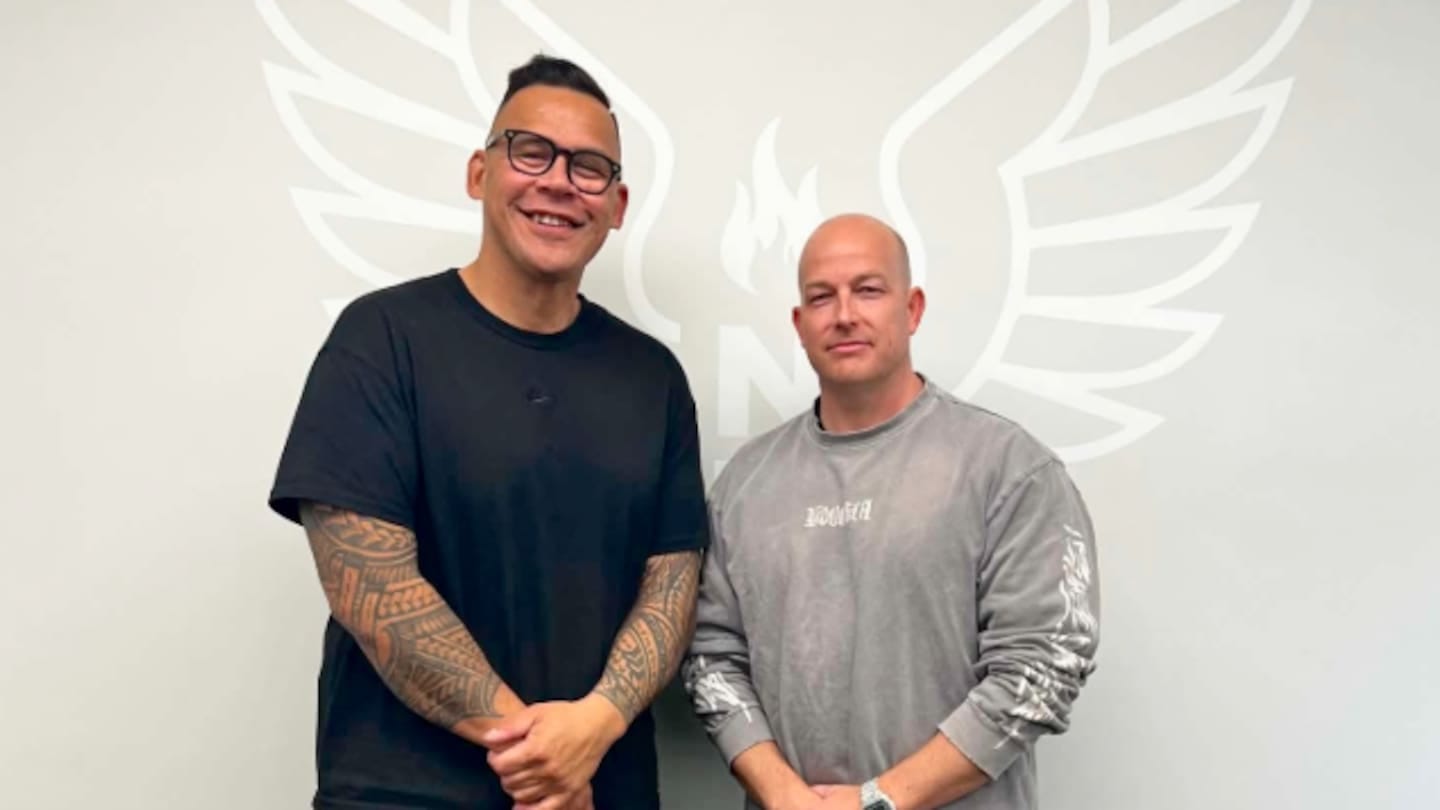
David Letele and owner of NZ Muscle Dion Roosenbrand. Photo / @nzmuscle
Because Dave Letele has not covered himself in glory. His tenure as NZ Muscle CEO lasted just one week. After announcing he would lead the troubled supplements company, saying he wanted to save 35 jobs and turn the business around, Letele announced he was stepping back because he had realised he “can’t help in the way it needs”.
NZ Muscle is not a company suffering from a temporary PR crisis due to a poor taste ad campaign or employee disgruntlement. It is facing investigations by 2 government agencies over allegations of food safety and product labelling failures. Products have been recalled, customers have lost confidence, former employees have made detailed public allegations, and the company looks dodgier than a balaclava in a bank.
Letele clearly saw an opportunity. He has openly said that his public speaking work has dried up and there is nothing wrong with looking out for projects to turn into successes.
There is irony in how successfully and quickly Letele shifted the spotlight off NZ Muscle and onto himself. Within days, the focus was no longer on mislabelled products or breached food safety obligations. The allegations against the company became secondary to stories about death threats, leaked addresses, and sleeping with a baseball bat on the couch.
Those threats, if made, deserve unequivocal condemnation. But they do not negate the validatity of the complaints of NZ Muscle customers and some of the scrutiny on Letele himself. The comments sections did become pretty unpleasant for the man who is constantly declaring that his food bank charity is about to go under. Commenters were eager to remind everyone that he drives a 2019 Lamborghini. He says it was purchased through his speaking income rather than charitable funds. That may well be true, but it is undeniably an awkward image.
Blasphemy laws must not be legislated in New Zealand
The Law Commission’s long-awaited report on hate crime law is, on the whole, a welcome rejection of the worst proposals that followed the Christchurch terrorist attack. It is not perfect, but it is better than expected.
It has declined to recommend creating a new class of standalone “hate crime” offences. Instead, it proposes improving the existing system, under which criminal conduct such as assault, intimidation, or vandalism can attract a heavier sentence when it is motivated by hostility towards a particular group.
One of the Commission’s most important recommendations is that sex should be expressly added to the Sentencing Act’s illustrative list of characteristics. At present, the Act mentions race, colour, nationality, religion, gender identity, sexual orientation, age, and disability, but not sex. The list is not technically exhaustive, but the explicit exclusion was glaring.
Police would also be able to flag a possible hostility motivation when charges are laid and judges would have to record when that aggravating factor was established and explain it at sentencing. Police and the Ministry of Justice would also publish better data under these recommendations.
Crucially, none of this creates a crime of having the wrong opinion. It deals with conduct that is already criminal. So, naturally, the report had barely landed before the usual lobbyists began complaining that it had not gone far enough.
The Federation of Islamic Associations of New Zealand (FIANZ) welcomed the hate crime recommendations but immediately returned to its longstanding demand for hate speech legislation. Its chair, Abdur Razzaq, is alleged to have been a significant force in torpedoing Mark Mitchell’s interfaith initiative, and yet he has immediately come out arguing that hate speech laws such are needed to deal with rhetoric directed at faith communities. Never mind that a lot of the “hate” is between these communities.
FIANZ’s own proposed definitions extend far beyond direct incitement of violence to speech that “denigrates”, “demeans”, “vilifies” or promotes hostility towards religious beliefs and practices. Its suggested warning signs include calling members of a group liars, cheats or criminals, alleging conspiracies, or associating the group with child abuse.
It was entirely fair for the Catholic Church to be accused of child abuse because it emerged that it was indeed covering it up. It is also totally right to call out the practise of underage marriage in the Muslim faith.
A law prohibiting speech that demeans a religion, brings its adherents into contempt, or makes harsh claims about religious doctrines performs the same function as blasphemy law. And FIANZ seeks to place politicians, journalists, historians, ex-Muslims, women’s rights advocates, gay people, and members of competing religions at risk for speaking plainly about Islamic texts, practices, or political movements. Criticism of Muhammad’s life, the treatment of apostates, Sharia penalties, forced marriage, sex segregation, or the persecution of homosexuals could readily be characterised as vilification or hostility.
New Zealand abolished the offence of blasphemous libel in 2019. We should not reconstruct it five years later under the language of social cohesion.
🇺🇸 🇬🇧Turns out "Top G" isn't a legal defence
Andrew and Tristan Tate have spent years projecting that they are untouchable. They have boasted about friendships with powerful people and presented every investigation into them as proof that some shadowy establishment fears their influence. That strategy may finally have run out of road.
The brothers are being held in federal custody in Miami while the United Kingdom seeks their extradition to face a truly awful collection of charges. Andrew Tate faces at least 42 charges in Britain, including rape, human trafficking, assault, extreme pornography, and offences involving indecent images of a child. Tristan faces 17 charges, including rape, sexual assault, and facilitating trafficking for sexual exploitation. Both men deny wrongdoing.
Their lawyers’ attempt to recast the extradition process as “political kidnapping” is laughable. This is not a case built around an ambiguous allegations. The central problem for the Tate brothers is that they have spent years telling on themselves.
There is an almost unbelievable volume of material in which Andrew Tate describes the crimes now alleged against him. He has openly explained how to exploit women. He sold lessons to other men on recruiting women into what he called “sexual slavery,” boasting that he had done it with more than 100 women. There are videos, podcasts, online courses, private messages, War Room chats, and social media posts. There is also footage of Andrew Tate striking a woman with a belt, videos in which he describes grabbing, choking, and threatening women, and messages allegedly sent to an accuser saying, “I love raping you”.
Innocent until proven guilty is an important legal principle, but it does not require us to pretend we are deaf, dumb, and blind. Nor does presumption of innocence compel anyone to regard all explanations as equally plausible. We can acknowledge that guilt has not yet been established beyond reasonable doubt without pretending that no evidence exists.
Andrew has claimed close relationships with members of the Trump family, and told followers that Trump’s return meant he would be free. But he was wrong. The White House has said Trump will not intervene in the extradition process. Secretary of State Marco Rubio has deliberately distanced the administration from the case and former supporters are suddenly unavailable, silent, or keen to minimise their relationships with the brothers.
In short - other stuff that happened
- 🇪🇸 Spain beat Argentina in the FIFA World Cup final.
- 🇺🇸 The US will increase tariffs on New Zealand exports from 10% to 12.5%, with the new measures justified on claims about forced labour, which Trade Minister Todd McClay strongly rejected. McClay said around a third of New Zealand exports, including beef and kiwifruit, remain exempt, and expects the latest US tariff regime to face further legal challenges.
- The Government inquiry into the January Tauranga landslides that killed 8 people has opened public submissions. Led by Sir Mark O'Regan, the inquiry will accept submissions until 11 August before delivering its final report and recommendations in December.
- Datagrid has received consents for a 78,000 square-metre AI data centre in Makarewa, including permission to draw more than 600,000 litres of groundwater a day and discharge about 5000 litres of treated wastewater, prompting concerns that current resource management rules cannot adequately assess the long-term water and energy impacts of hyperscale data centres.
- Stuff has begun a formal consultation process with Digital staff over proposed organisational changes, with affected employees called to confidential meetings and told no decisions have yet been made. The proposals have not been disclosed publicly, but the process comes as the media industry continues to face financial pressure and follows years of job cuts across Stuff, NZME and TVNZ.
- 🇺🇸 Vance Boelter was sentenced to two life terms plus 40 years after pleading guilty to murdering former Minnesota House Speaker Melissa Hortman and her husband, Mark, and critically wounding state senator John Hoffman and his wife after impersonating a police officer and carrying out a planned series of attacks in June 2025. Boelter also continues to face separate state charges including murder, attempted murder, impersonating a police officer and animal cruelty.
- Former Green Party candidate and activist Jack Brazil has been sentenced to 40 hours' community work after pleading guilty to disorderly behaviour and resisting police over a late night incident at a Dunedin bar in November, in which he threw a drink at an off duty staff member, spat at a duty manager and fled from police.
- Finance Minister Nicola Willis is not yet considering ending the $50 weekly fuel payment despite petrol prices falling below $3 a litre for 2 consecutive weeks, saying 4 weeks below the threshold would only trigger a review rather than automatic removal. Deputy Prime Minister David Seymour says the payment should end if prices remain below $3 for 4 weeks.
- 🇳🇮 Nicaraguan President Daniel Ortega has announced the country will no longer hold elections, saying the move is necessary to prevent the opposition from taking power.
- John Ruddock, who recently secured New Zealand citizenship for himself and his three overseas born children after taking a claim to the Waitangi Tribunal, is continuing to campaign for a dedicated citizenship pathway for Māori born overseas, arguing the current law leaves many whānau without a practical route home. Internal Affairs Minister Brooke van Velden says the Government has no plans to amend the Citizenship Act, despite the Waitangi Tribunal recommending the creation of a tikanga-based pathway.
- Shayne Dempster, a Man Up facilitator in Northland, has been sentenced to 5 months' home detention after being convicted of assaulting his wife, threatening to kill her during a dispute on their farm, and unlawfully possessing a prohibited firearm. The court heard Dempster pushed his wife to the ground while taking an iPad from her, told her "You're not leaving here alive".
- At the coronial inquest into the 2021 LynnMall terror attack, Corrections officials said Ahamed Samsudeen repeatedly identified himself as a terrorist, threatened prison staff and displayed escalating violent behaviour while held in Auckland Prison's extreme risk unit.
- A Christchurch police officer charged with theft and allegedly falsifying records has remained suspended on full pay since 2022 while awaiting trial, costing police hundreds of thousands of dollars. The case comes as Police introduce a new disciplinary policy allowing employees facing serious allegations to be suspended without pay in some circumstances.
- Provisional Ministry of Education data shows 64.2% of students attended school regularly in Term 2 2026, up from 58.4% a year earlier and the highest Term 2 attendance rate since 2016.
- Auckland Council has voted 17–5 to support a revised housing intensification plan that retains 6 storey zoning around rapid transit and town centres while allowing 10–15 storey buildings around most train stations within 10km of the CBD. The proposal is intended to meet the Government's housing growth requirements and will go through public consultation as part of Plan Change 120.
- Police have recovered a body in the Swanson area during the search for missing 20 year old Wolvnie Ding, who was last seen on 17 July while visiting family in West Auckland.
- Former The Casketeers personality Scott (Scottie) Williams has been charged with 9 fraud-related offences after allegedly stealing more than $1 million, including taxpayer funds, from 3 trusts and marae between 2021 and 2023.
- 🇬🇧 A UK government-commissioned report has classified anti-transgender narratives as a form of misinformation and recommends using techniques such as "psychological inoculation" and expanded monitoring to reduce the spread of claims it considers false.
- An Auckland lawyer has admitted assaulting his former girlfriend but has filed an urgent application for interim name suppression after the New Zealand Herald sought comment, despite not initially seeking suppression when he pleaded guilty. The lawyer is also applying for a discharge without conviction, retains a current practising certificate, and could still face disciplinary action by the New Zealand Law Society.
- 🇬🇧 A UK employment tribunal has ruled that requiring an employee with anxiety to keep their camera on during online meetings amounted to a failure to make reasonable adjustments for a disability.
Regular readers will know I've been arguing for years that same-sex attraction and gender identity are different issues, and that lumping lesbians, gay men, and bisexuals together with the ever-expanding TQ+ umbrella serves neither group particularly well. This new LGB Alliance report provides some interesting data from 1,709 lesbian, gay, and bisexual supporters of the organisation, the overwhelming majority of whom said they feel uncomfortable being described as "LGBTQ+" or "queer", alongside hundreds of comments explaining why. READ THE REPORT.
RNZ has published a piece asking whether anyone can use a Māori name. It begins with the reassuring answer that "nobody owns culture", but quickly descends into a maze of caveats about cultural consultants, historical trauma, colonialism, and the responsibility to ensure a child understands the political significance of their own name. If your instinct is that choosing a baby's name shouldn't require an ideological risk assessment, it's an interesting example of how even the most ordinary aspects of life are increasingly being filtered through a political lens.....The full article is published HERE
Ani O'Brien comes from a digital marketing background, she has been heavily involved in women's rights advocacy and is a founding council member of the Free Speech Union. This article was originally published on Ani's Substack Site and is published here with kind permission.
1 comment:
"Justice Minister Paul Goldsmith says the law should make clear that there must be a “yes”, expressed through words or actions, and that silence is not consent. Consent on one occasion would not imply consent on another, and a previous sexual relationship would not create any ongoing entitlement".
I get it. The women in Labour are bravely fighting new ground empowering. You go girls, feminism is the winner.
The trouble with this mock progressiveism is this "definition" is nothing other than political theatre at its most egregious. Beyond any pointless virtue signal ever. Why? Because that formula is what the courts have been using to make decisions on consent for years if not decades.
Can Labour, just once, cut the Shakespearean outrage bullshit? It's already there, in daily use you idiots. If they got out more often from your middle class Tesla chat rooms, te reo classes, community Facebook page gossip, Instagram fantasies and lanyard wearing contests and got someone in that shitty party who has experienced life, we could just maybe, be spared Labour's pathetic attempts to manufacture issues and manufacture solutions that don't exist! Maybe they could settle on reality.
What a pointless waste of money that party is. As for National who are left virtue signalling to cut their political twin off at the pass to one up their progressiveness. A bad joke!
God, please, spare us from these hopeless major parties.
Post a Comment
Thank you for joining the discussion. Breaking Views welcomes respectful contributions that enrich the debate. Please ensure your comments are not defamatory, derogatory or disruptive. We appreciate your cooperation.