

My goodness gracious. This term of Parliament has been one marred by poor behaviour in the House unfortunately, and in this second to last week the people we elected to represent us have outdone themselves.
On Tuesday, Labour’s Ginny Andersen and ACT leader David Seymour were both booted out by Speaker Gerry Brownlee. Andersen went first and was somewhat hard done by given she was just one heckler among many who were raucously interjecting (after having been warned to pipe down) during an answer from Revenue Minister Simon Watts. Her seat in the front row in the Speaker’s line of sight was probably to blame for her being the scapegoat of her party.
Seymour then copped the ire of a grumpy Speaker when he argued over whether ACT MP Laura McClure had asked a supplementary question and then, not liking the answer he got, continued the argument after the Speaker had ruled. Seymour later said Brownlee was “clearly in a bad mood”.
On Wednesday it was Chris Bishop’s turn. Barbara Edmonds was raising a point of order (“POINTS OF ORDER MUST BE HEARD IN SILENCE!”) when somebody continued talking from National’s benches. Brownlee briefly played parliamentary Guess Who before Bishop fessed up that it was him. He was sent packing and unlike some who take an ejection from the House as a badge of honour, he said he was embarrassed and that it was the first time in his 12 year parliamentary career he had been sent out.
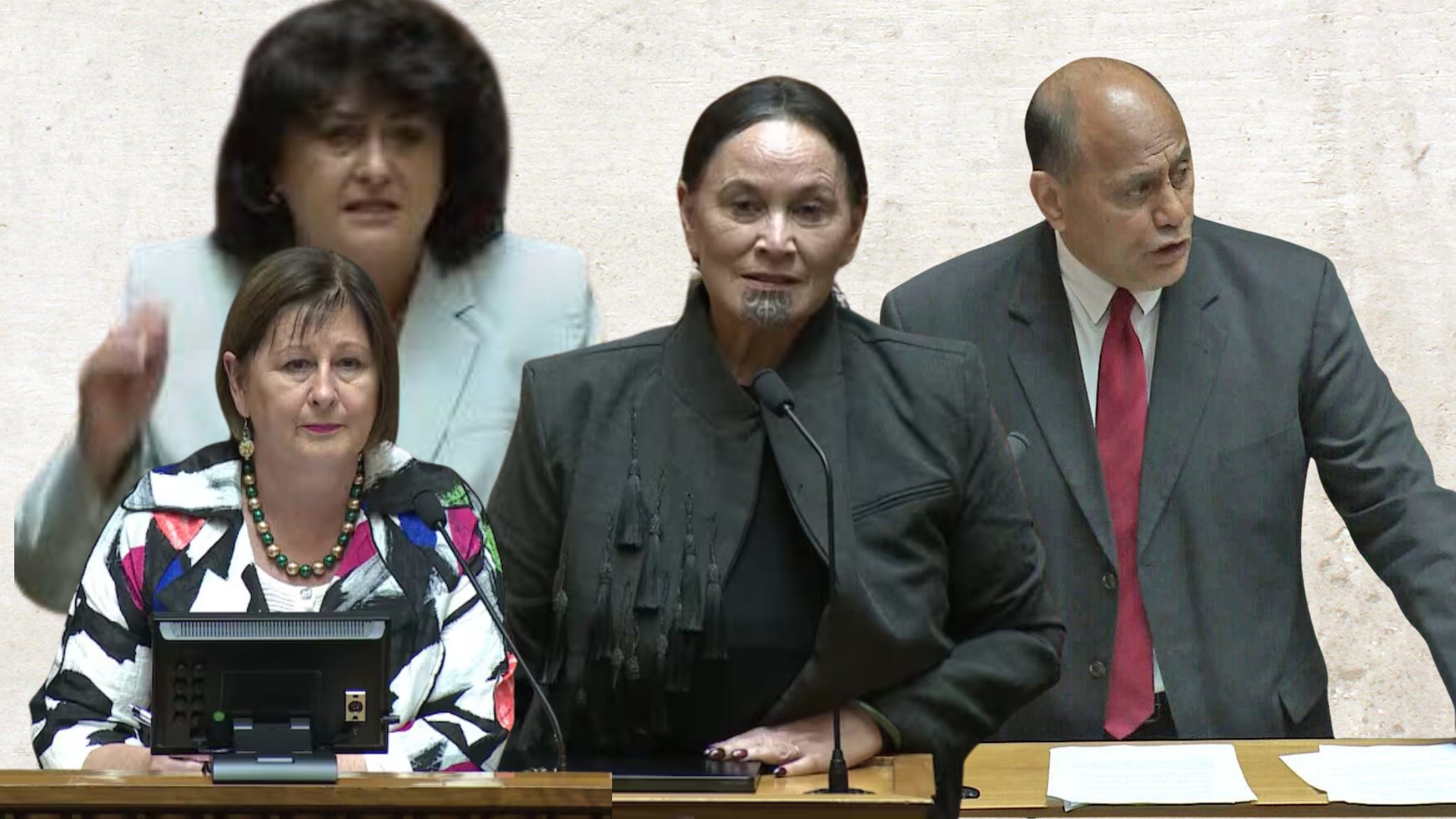
Things well and truly escalated on Thursday when Debbie Ngarewa-Packer used the “C-word” to refer to Assistant Speaker Maureen Pugh after she cautioned Te Pāti Māori MP Oriini Kaipara for saying “it’s bullcrap; it’s crap!” NZ First’s Casey Costello interrupted a very exasperated Julie Anne Genter to raise the matter as a point of order. Like Bishop, Ngarewa-Packer fessed up saying “it was me,” but claimed the word had previously been spoken in Parliament without an expulsion. This was a stretch as when ACT Minister Brooke van Velden used it she was quoting a journalist who had called female ministers the expletive. A bit different from directing it at the person in the big chair. Ngarewa-Packer was ordered out.
Not to miss an opportunity to go home early, Willie Jackson then tagged in and continued arguing with Pugh after being instructed to sit down. He alleged hypocrisy and claimed Ngarewa-Packer as “one of our own” which is very telling. In an extraordinary moment, Pugh had to call on the Clerk to summon the Sergeant-at-Arms to “assist Mr Jackson” to leave as he was not listening. Upon hearing this, he made a quick exit.
Winston Peters, who first entered Parliament in 1979, called the incident the lowest he had seen the House. And he has seen a few incidents in a few Houses.
On Wednesday it was Chris Bishop’s turn. Barbara Edmonds was raising a point of order (“POINTS OF ORDER MUST BE HEARD IN SILENCE!”) when somebody continued talking from National’s benches. Brownlee briefly played parliamentary Guess Who before Bishop fessed up that it was him. He was sent packing and unlike some who take an ejection from the House as a badge of honour, he said he was embarrassed and that it was the first time in his 12 year parliamentary career he had been sent out.
Things well and truly escalated on Thursday when Debbie Ngarewa-Packer used the “C-word” to refer to Assistant Speaker Maureen Pugh after she cautioned Te Pāti Māori MP Oriini Kaipara for saying “it’s bullcrap; it’s crap!” NZ First’s Casey Costello interrupted a very exasperated Julie Anne Genter to raise the matter as a point of order. Like Bishop, Ngarewa-Packer fessed up saying “it was me,” but claimed the word had previously been spoken in Parliament without an expulsion. This was a stretch as when ACT Minister Brooke van Velden used it she was quoting a journalist who had called female ministers the expletive. A bit different from directing it at the person in the big chair. Ngarewa-Packer was ordered out.
Not to miss an opportunity to go home early, Willie Jackson then tagged in and continued arguing with Pugh after being instructed to sit down. He alleged hypocrisy and claimed Ngarewa-Packer as “one of our own” which is very telling. In an extraordinary moment, Pugh had to call on the Clerk to summon the Sergeant-at-Arms to “assist Mr Jackson” to leave as he was not listening. Upon hearing this, he made a quick exit.
Winston Peters, who first entered Parliament in 1979, called the incident the lowest he had seen the House. And he has seen a few incidents in a few Houses.
Election 2026: The Supermarket Wars have begun
If we had been told a year ago that National would head into the 2026 election promising to potentially forcibly restructure one of New Zealand’s largest private businesses, many would have assumed a case of the body snatchers with Chloe Swarbrick taking over Nicola Willis. Yet here we are.
National announced they will “pursue” the structural separation of Foodstuffs, with Pak’nSave split away from New World and Four Square. The idea is that Woolworths plus two genuinely independent Foodstuffs chains would turn the current grocery duopoly into three major nationwide competitors. The problem is that Foodstuffs two major chains sit at opposite ends of the market from each other already so price positioning is already variable. Handily, National has given itself an escape clause, however. They will only go through with it if the Commerce Commission gives it the green light. An excellent way to ensure this flawed policy never gets enacted. Cynical stuff!
BusinessNZ, ordinarily one of National’s friendlier allies, reacted predictably. They warned about regulatory stability, property rights, and the precedent created when a government proposes structural intervention in a private business. They also pointed to the issue that supermarket scale exists partly because purchasing, logistics, distribution, and technology are expensive, and breaking those systems apart can itself create costs. The Taxpayers’ Union made similar observations.
David Seymour has been less subtle. I believe last week I said he was as subtle as a brick. This week he was a sledgehammer. He said multiple National MPs privately approached him hoping ACT will stop the policy.
And then there is Labour. They will have been irritated that National snuck in with their policy just ahead of them, but nonetheless Labour announced they would make “price gouging” illegal for companies with substantial market power in essential sectors including groceries, power, fuel, telecommunications, banking and insurance. This is a pretty subjective concept. One person’s “fair enough” will be another person’s “outrageous”.
And don’t forget the Greens have already announced (to the tune of The Internationale) that they would create state ownership of supermarkets by forcing 120 existing owners to sell up. ACT and New Zealand First have been asking whether everybody has lost their minds.
KiwiSaver: Increasingly compulsory, whichever way you vote
The KiwiSaver policies of the red and blue parties are looking pretty similar. National got in early and nicked the KiwiSaver talking points from their original home with Labour and their position is actually the more compulsory of the two. From July 2028, participation would become compulsory for workers and, by 2032, the standard rate would be 6% from the employee and 6% from the employer. National is also promising the $1,500 “Baby Boost”, automatically enrolling newborns from July 2027, government contributions to KiwiSaver while parents are on paid parental leave, and compulsory employer contributions for people working beyond 65.
Labour also wants employer contributions to reach 6% by 2032 and to become compulsory from July 2028. The big difference is that they would set a 4% default but remove the minimum contribution rate, allowing people to scale their own contributions down if household finances are tight. It would also ban new “total remuneration” contracts that fold the employer’s contribution into the salary package..
KiwiSaver began as a voluntary savings scheme with incentives to join. Twenty years later, the debate between the 2 largest parties is not whether retirement saving should be pushed by the state, but exactly how hard. An interesting political shift.
Labour tries to close the immigration gap
Labour also released its immigration policy this week, watering down the policies from the parties to their right. Inevitably noticing the shift in mood toward tighter immigration settings, they want to close the gap between their policies and the Coalition parties. But without being accused of being racist.
There was also a much smaller and quieter announcement that was celebrated by Labour MP Georgie Dansey. Designed to appeal to the woke contingent, the party’s refugee policy will include 15 places for rainbow refugees, aimed at people from countries where being gay, lesbian or otherwise LGBT can be dangerous. Funny since I left Wellington in part because I was so frequently harassed for being a lesbian who says men cannot be lesbians. What a time to be alive.
New Zealand First is not watering down a thing. Their policy includes putting a proposed 20,000 a year cap on residence visas to a referendum and further tightening citizenship at birth so that having a permanent resident parent would no longer be enough and at least one parent would need to be a citizen. The media took exception to Shane Jones defending that there would be no exemption for descendants of Māori families who have settled in Australia.
Copy Nats and Copy ACTs
Winston Peters has spent much of the week declaring that everybody else is late to the party and simply announcing policies already announced by New Zealand First.
When National announced its Foodstuffs proposal, Peters christened them the “Copy Nats”, pointing out that New Zealand First had already proposed structural separation in the grocery sector. And on Friday he called out the “Copy ACTs” when they said that they want households that generate electricity to be able to sell their surplus. ACT explicitly opposes breaking the gentailers apart though.
Polling: Nobody should be feeling comfortable
The polls are now coming frequently enough that political tragics can pick one to suit almost any preferred narrative. And let’s be honest, we all do it.
The Post/Freshwater Strategy poll put Labour on 28% and National on 27, with the Greens on 14, New Zealand First 13, ACT 9, Opportunity 6, and Te Pāti Māori 2. Chris Hipkins’ response to Labour’s 7 point fall from the previous Freshwater poll was that it was “all up from here”, which is certainly optimistic because there is still plenty of time for them to continue to fall.
The Herald-Motu poll-of-polls, which combines polling rather than providing another standalone survey, had National at 29.9% and Labour at 27.6%, with NZ First at 12, Greens 11.6, Opportunity 8, and ACT 7.9. On which major party had the more credible economic plan, voters were almost perfectly divided with 32% National, 30 Labour, and 30 neither.
The Whakaata Māori-Curia poll painted a very different picture among Māori voters. Labour registered 31%, Te Pāti Māori 18, the Greens 17, NZ First 8, and National 6.
Again, these are snapshots of particular populations at particular moments. But they do demonstrate how differently the projection for the election can look depending on which slice of New Zealand you are asking.
Wellington Bays is all tied up and the Cleine brothers stand for different parties
Wellington Bays is shaping up to be an awfully tight electorate contest. A Taxpayers’ Union-Curia poll had Green incumbent Julie Anne Genter and Labour’s Craig Renney tied on 29%, National’s Karunā Muthu on 15, ACT’s Nicole McKee and NZ First’s Gerald Warner on 5 each, Opportunity’s Kayla Kingdon-Bebb on 3, and 12% undecided. If Genter loses she is placed high enough on the list that she will almost certainly get a seat. The same cannot be said for Renney. One to watch.
Labour found themselves answering questions about Warrick Cleine, who is number 30 on their list. He is currently the chief executive of KPMG’s Vietnam and Cambodia operation and has lived in Southeast Asia for 29 years. Chris Hipkins initially said Cleine was intending to relocate to New Zealand, but Cleine subsequently clarified that he will move back permanently only if he is elected. Presumably he will eventually fly in to join Labour’s campaigning. In a very New Zealand quirk, his brother is running for New Zealand First and he actually lives in New Zealand.
ACT had its own candidate wobble. Unhappy with his list ranking (16th), Ash Parmar posted that he was pausing his campaign while considering his political involvement. The post has since disappeared and ACT says he remains fully committed to the campaign.
FENZ somehow gets worse
Away from the campaign theatre, Internal Affairs Minister Brooke van Velden announced she has lost confidence in Fire and Emergency New Zealand’s chief executive Kerry Gregory after learning he had withheld information from her for a year about what she described as a seriously significant incident. FENZ says the underlying matter is historical, predating 2021, relates to administration of the fire levy, and was proactively referred by the organisation to the Serious Fraud Office. It has also stressed that Gregory himself has not been referred to the SFO.
That arrived on top of the governance and administration committee’s already scathing inquiry into FENZ leadership and governance. The draft report of which somehow made its way to The Post before being formally presented to Parliament. Speaker Gerry Brownlee accepted a privilege complaint from National MP Tim Costley, saying unauthorised publication of confidential select committee proceedings has previously been treated as contempt and referring the matter to the Privileges Committee. Chris Bishop, who chairs it, called an urgent meeting.
Treaty clauses, MMP, and the constitutional scrap
The Government has finally introduced the long promised legislation dealing with Treaty clauses across the statute book. The review covers 19 Acts with some references to be repealed, and others rewritten or made more specific. Justice Minister Paul Goldsmith argues that phrases such as “honour”, “give effect to”, “have regard to,” and “take into account” impose different and uncertain obligations. The Waitangi Tribunal strongly disagrees with the approach and has warned the changes could harm Māori interests and the Māori-Crown relationship.
To be clear, the bill is not a blanket deletion of every Treaty reference from New Zealand law.
Christopher Luxon’s earlier proposed referendum on MMP has raised another question: what exactly would people be voting on? The Government does not yet have a cost estimate and Luxon has declined to rule out including the future of the Māori electorates. ACT tried to have the Māori seats included in the 2011 MMP referendum process but National’s confidence-and-supply agreement with the Māori Party prevented it. NZ First, separately, is already campaigning for a referendum on the seats.
Wellington tells Councils to stick to the basics
The Local Government (System Improvements) legislation has passed. Its stated objectives are to refocus councils on core services, strengthen performance reporting, and financial accountability, remove the statutory emphasis on the four “well-beings”, and limit voting on council committees to elected members only.
The most politically combustible part was the last minute confirmation that Auckland’s Independent Māori Statutory Board would also lose committee voting rights. Auckland Mayor Wayne Brown was furious (they often vote in alignment with him), accusing Local Government Minister Simon Watts of picking a needless fight and saying he had previously warned the Government against interfering with the arrangement. He even raised the possibility of Auckland walking away from parts of its regional deal.
The law does not prevent councils appointing iwi, youth or other representatives to committees, but it removes their vote.
The Government also amended the legislation so councils can recover more of the infrastructure costs created by out-of-sequence fast-track developments rather than automatically leaving existing ratepayers carrying the bill.
Education becomes the next Treaty battlefield
Erica Stanford’s education reforms were hit by a Waitangi Tribunal finding this week. The Tribunal found problems with the Crown’s process around curriculum reform and its engagement with Māori, criticising the weight given to advisers who were sceptical of mātauranga Māori. Stanford rejected parts of that characterisation and has pointed to improving Māori student outcomes as evidence that the reforms are not hostile to Māori learners.
Labour responded by promising a return to “genuine partnership” and greater Māori leadership over Māori education if elected. Willow-Jean Prime said decisions affecting Māori should be made in partnership with Māori.
Labour also announced that they would pause most of the Government’s curriculum overhaul and its replacement of NCEA for a year. The new English and maths curricula would continue, but other curriculum areas would be put on hold while a new Independent Council for Curriculum and Assessment reviewed the work.
The Tom Phillips inquiry is grim reading
The public inquiry into the disappearance of the Phillips children has produced one of the bleakest government reports ever. Its central finding is not that agencies made one catastrophic mistake. It is that warning signs, family concerns, and opportunities accumulated over years without being joined together effectively. The Government has accepted all 9 recommendations and apologised directly to the children, acknowledging that agencies did not take all practical steps to protect them.
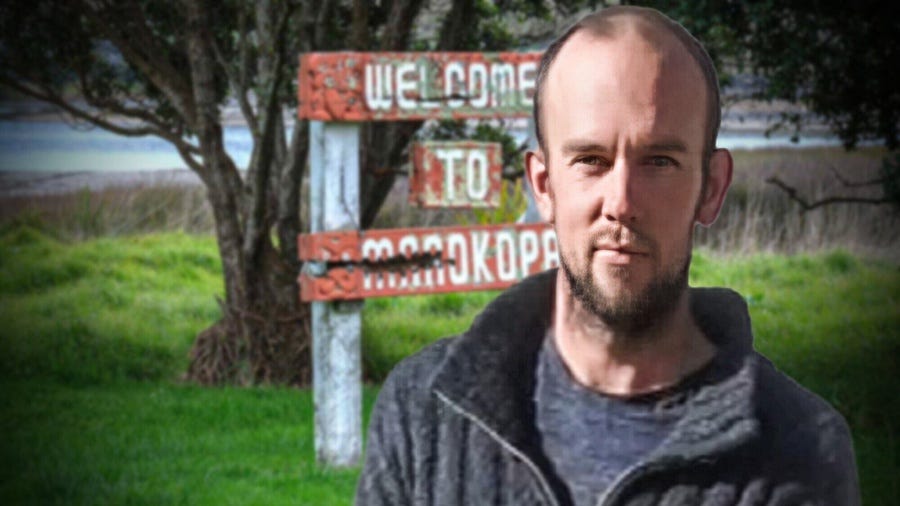
One incident described in the report is especially difficult to comprehend. On 28 May 2023, a woman living near Te Anga Road had a man arrive at her home asking for help jump-starting his vehicle. She drove him in her car to a forestry road, saw his children at the vehicle, took a photograph, and then called Police because she and her mother-in-law suspected the man was Tom Phillips. Police dispatched a unit, but it was diverted to a family-harm incident and the call was subsequently closed without proper follow-up. Police Commissioner Richard Chambers has called the cancellation of that job a wrong decision and a significant missed opportunity.
Meanwhile, Dame Julie Christie is still working on the Netflix documentary The Marokopa Project, filmed with extraordinary access to the police investigation. A camera operator followed the lead detective and other officers, and the production was allowed behind a police cordon on the day Phillips was killed, a decision Commissioner Chambers has since said should not have happened.
HarperCollins and Byron Clark apologise
HarperCollins and writer Byron Clark have issued a public apology to Conservative Party leader Helen Houghton after settling a dispute over Clark’s depiction of her in his 2023 book Fear: New Zealand’s Hostile Underworld of Extremists.
Houghton objected to her appearance in a chapter titled “Women and the Alt Right”, arguing that readers could infer she associated with or shared the views of far-right extremists. The published settlement says HarperCollins and Clark did not intend to defame her and apologises for the hurt and distress caused.
Despite having no qualifications on the matter, Clark has been used extensively by New Zealand media as a commentator on extremism. They have validated his conspiratorial claims and indulged his tendency to call anything and everything he does not like “far right”. Perhaps some more apologies need to be made. Don’t hold your breath.
Guess who’s back six weeks before the election
Nicky Hager has emerged from the mist clutching a new mystery book. The man who famously writes about how people supposedly use political power to nefariously influence politics is back 6 weeks before an election to again try to influence politics.
Hager will launch a new book at Unity Books on 22 September. That is the day before the last day in Parliament which is unlikely to be a coincidence. As usual the book is shrouded in secrecy and Hager says nobody outside the project will receive copies or interviews before launch and even the subject remains under wraps.
Whatever the subject turns out to be, hopefully more care has gone into checking the details than was evident in parts of Hit & Run, Hager’s 2017 book with Jon Stephenson about the NZSAS raid known as Operation Burnham.
It triggered a Government Inquiry which found that the principal allegations in the book about the conduct of the NZSAS were wrong. Operation Burnham was not a revenge raid or “ill-conceived” and the inquiry concluded the New Zealand personnel involved acted in accordance with international humanitarian law. It rejected the book’s claim that the operation amounted to an attack on villages containing no insurgents.
The inquiry’s description was that Hit & Run was “as much polemic as investigative account”, contained “many errors”, and some of them could have been avoided by ordinary research techniques such as checking photographic metadata.
None of that means Hager should not publish controversial material. Investigative journalism depends on people being prepared to annoy governments, expose information powerful institutions would rather keep buried, and protect confidential sources. But the more serious the allegation, the greater the obligation to get the boring factual stuff right.
And when you deliberately drop a secret political book into the middle of an election campaign, knowing journalists and politicians will tear through it and broadcast its allegations that obligation becomes even greater.
A lovely bit of history at Parliament
For the first time, a New Zealand Women’s Suffrage flag was raised at Parliament ahead of Suffrage Day. The flag carries the white camellia, recalling the flowers worn by MPs who supported women’s suffrage in 1893 and given to the male MPs who supported the cause in Parliament.
Women were not given the vote in New Zealand. Nobody benevolently wandered down from on high in 1893 and decided the ladies had waited long enough. Women organised, held meetings, knocked on doors, gathered tens of thousands of signatures, lobbied politicians, and kept coming back until Parliament finally passed the legislation.
New Zealand became the first self-governing country in the world in which all adult women had the right to vote.
The flag was raised because women’s rights advocate Katrina Biggs spent a year pushing, negotiating, and eventually involving lawyers to get permission from the Speaker’s Office. Rainbow flags regularly fly at Parliament and yet one day to acknowledge a significant moment in our history was a drama and a half.
The Mt Albert Medical Centre story needs answers
A man collapsed and died on New North Road just metres from the Mt Albert Medical Centre. Members of the public who tried to help him told media that multiple people went into the clinic seeking assistance and were refused use of a defibrillator, a pillow and blanket, and other help. One Good Samaritan said she was told the man was not a patient of the practice.
The practice’s doctor, Dr Kiran Patel, says he and the only nurse were in surgery with another patient and did not know what was happening outside. He says there appears to have been a misunderstanding at reception and that, once staff understood there was an emergency, they called an ambulance and provided assistance.
The incident has horrified New Zealanders and prompted calls for an investigation into the matter.
🇬🇧 The Cancel Mob comes for Ed Sheeran
Demonstrating the aggressive demand for ideological Pro-Palestine and Anti-Israel conformity that has swept the West since Hamas’ October 7th 2023 attacks on Israeli civilians, the cancel mob has triggered an implosion of Ed Sheeran’s American tour.
Macklemore was removed as an opening act for Sheeran after using his set to deliver extensive lectures on Palestine including displaying images of Gaza. He had allegedly agreed before the most recent show that he would not distract from what was meant to be a night of entertainment by using the platform to talk selectively the ongoing conflict.
Multiple venues told the tour promoter they would not host Ed Sheeran’s concert if Macklemore remained on the bill. His history of overt antisemitism including dressing up as a hooked nose caricature of a Jew and doing Nazi salutes on stage also disturbed them. Sheeran says the final decision belonged to the promoter and venues rather than him personally. But that did not stop the tsunami of hate directed at him and the cancel culture campaign that is now in full swing.
One by one the rest of the opening acts walked out in solidarity (or due to immense pressure) with Macklemore. Then so did Sheeran’s touring band. Outspoken anti-Israel and antisemitic celebrities declared that Ed Sheeran had a moral obligation to take a political position. The position they advocated for naturally.
The counter argument that people who bought tickets for an Ed Sheeran concert did not necessarily sign up for a political presentation from the support act is being dismissed as complicity in genocide. In fact, even though Sheeran has reportedly donated more than $2 million to the Palestinian cause, he is being treated as if he is some kind of stooge for Israel. In Ireland, a popular radio station has pulled all of his music and he is under sustained attack on social media.
Jewish musician P!nk has also received huge amounts of hate and pressure for her moderate stance on the conflict. The experiences of both global superstars shows the immense power of the propaganda wave that followed the terror of October 7th turning many in the West against their own countries and driving disputed narratives about genocide.
In short - other stuff that happened
- Former New Zealand First MP and Northland educator Jim Peters died on Tuesday aged 89; he served in Parliament from 2002 to 2005 and was Winston Peters’ older brother. Peters had been a secondary-school principal, Pro Vice-Chancellor Māori at the University of Auckland and a longstanding NZ First figure, and Parliament marked his death with a period of silence.
- A 19 year old has been charged with common assault after allegedly assaulting a suspected shoplifter he had detained during a citizen’s arrest in Hamilton. Justice Minister Paul Goldsmith said the Government stood by its recently expanded citizen’s arrest powers while declining to comment on the individual case.
- 🇦🇺 Australian Hyrox world-record holder Joanna Wietrzyk has apologised and forfeited her Beijing win after continuing to race after having lost control of her bowels. Footage shows her using shared equipment while covered in poo and Hyrox has since admitted officials should have stopped her and changed its rules to allow race directors to withdraw athletes where blood, vomit, urine, or faeces creates a contamination risk.
- 🇦🇺 Meanwhile, Wietrzyk’s Puma-branded collection disappeared from Puma’s online stores, after the internet did what the internet does and made a gazillion “Poo-ma pants” jokes.
- 🇦🇺 The Fitzroy River which is estimated to contain about 500 saltwater crocodiles, has been approved to host rowing and canoeing at the 2032 Brisbane Olympic and Paralympic Games. A technical assessment examined weather, water levels, flooding, and course conditions, but did not assess the crocodiles, however the river already hosts competitive rowing and has contingency procedures when crocodiles are spotted.
- 🇺🇸The US official poverty rate fell to a record-low 10.2% in 2025, representing 34.5 million people. Child poverty also fell to a record 13.4%. Median household income rose 2.6% to a record US$87,460.
- 🇺🇸US Congresswoman Ilhan Omar is facing an embarrassing scandal as more proof emerges that her former husband Ahmed Elmi was actually her brother. There are mixed opinions on whether a proven sham marriage would by itself allow authorities to deport her. Investigators are also looking into whether there was any fraud or misrepresentation in Omar’s or her family’s naturalisation paperwork which also has come under suspicion.
- 🇬🇧 Lambeth Palace (the official London residence of the Archbishop of Canterbury) has withdrawn the Hubert Walter Award for Reconciliation and Interfaith Cooperation from Pakistani cleric Hafiz Muhammad Tahir Mehmood Ashrafi, after it emerged that he supported giving Osama bin Laden and the Salman Rushdie fatwas. Archbishop of Canterbury Sarah Mullally had presented Ashrafi with the award on 11 September, the 25th anniversary of 9/11.
- 🇦🇺Australian trans-identifying male sex offender Benjamin Charles Jones, who has used the names Lisa and Willow, has been sentenced to a maximum of 3 years and 4 months for assaulting and attempting to rape a 31 year old stranger in Sydney. Jones had been released from a women’s prison about a month before the arrest and had previously served sentences for sexual offences, including the sexual abuse of a 6 year old girl and an assault on a woman.
- 🇩🇪 A 55 year old suspended trans-identifying male German federal police officer is on trial at Traunstein Regional Court accused of raping a 14 year old girl in a fast-food restaurant toilet and possessing hundreds of child sexual-abuse files, some allegedly depicting victims as young as three. Prosecutors also allege the production of pornographic material involving animals. He is being held on remand in the men’s section of Munich prison.
- 🏴 An FOI exercise by Women’s Rights Network Scotland covering 91 of Scotland’s 340 swimming pools found 51 voyeurism offences, 25 sexual assaults, one rape and 21 other sexual offences between 2023 and 2025, with 81 female victims recorded. Within that limited sample the reported incidents occurred at centres with shared facilities and none was recorded at centres offering single-sex spaces.
- 🇫🇯 Fiji’s worsening HIV outbreak is now affecting babies, with Victoria University researcher Sharon McLennan saying about one baby a week is being born with HIV and roughly one a month is dying from HIV-related complications. About 9,000 Fijians were estimated to be living with HIV in March.
- Police were called to LynnMall in West Auckland at about 11.10am on Thursday after an altercation in the car park described as an isolated knife incident. One person was taken into custody and another was injured.
- Australian citizen Lechuan Zhu imported an estimated 2,579,940 illicit cigarettes between December 2023 and June 2025, avoiding about $3.79 million in GST and duty, while his wife Yanan Tang helped import 853,280 cigarettes associated with another $1.29 million in unpaid tax. Zhu has been sentenced to three years’ imprisonment and Tang to 22 months, after the pair were stopped at Auckland Airport and evidence of the operation was found on their phones.
- Labour has recommitted to the Fair Digital News Bargaining Bill and Chris Hipkins says the party will campaign on reviving it. The bill, which seeks to make major technology companies reach commercial arrangements with news publishers for journalism used on their platforms, has been stalled since December 2024. Stuff owner Sinead Boucher strongly backed Labour’s announcement, while Media Minister Paul Goldsmith has said the current Government has made no further decision on the bill and prefers voluntary commercial agreements.
- A 47 page Justice Ministry briefing to Paul Goldsmith has mapped out possible post-election changes to the Official Information Act, including clearer or tougher withholding grounds, restrictions on frequent requesters, new charging mechanisms and a narrower definition of “official information”. The work follows research estimating the system’s total cost could be as high as $750 million a year; these are options under consideration rather than changes that have been enacted.
- Retiring National MP Andrew Bayly used his valedictory to describe his resignation from Cabinet as one of the most brutal experiences of his life, then told RNZ that social media had introduced a “real degree of nastiness” into political life and that pastoral support for MPs was “very little”. Bayly said personal attacks and threats risk deterring capable people from politics and revealed he has been writing a book that he hopes to publish.
- Green MP and former Wellington mayor Celia Wade-Brown, who entered Parliament as a list MP in January 2024, used her valedictory to reflect on arriving in New Zealand as an immigrant and later becoming a councillor, Wellington mayor, and MP.
- Retiring National MP and Assistant Speaker Maureen Pugh used her valedictory to revisit the infamous 2018 recording in which then-leader Simon Bridges called her “f***ing useless”, saying Bridges had never had a conversation with her before making the remark. Her final word on the episode: “he lost his job and I got promoted.”
- Police are investigating allegations of wrongdoing in the 2025 Manurewa Local Board election, after a whistleblower produced photographs purportedly showing voting papers stolen from letterboxes, completed, and returned.
Two legal pieces caught my eye this week, both of which are worth reading in full.
Retired District Court judge David Harvey has written a very good piece for LawNews comparing the new 2026 courtroom conduct guidelines with those they replaced from 2009. The changes range from the sensible to the slightly bizarre. “Sir” and “Ma’am” are being phased out, as is “my learned friend”, lawyers are expected to ascertain clients’ and witnesses’ titles and pronouns, and there are new provisions for tikanga, karakia, and waiata. Yet at the same time the rules have become more prescriptive about things like buttoning jackets. Harvey’s concern is that, despite all this extra specificity, the new rules represent a gradual lowering of the standards and formality once expected of the profession. His conclusion is essentially that modernisation is one thing, but change for the sake of change is quite another.
Roger Partridge, meanwhile, returned to a subject he has been writing about for some time: who actually makes the law? His latest Herald column picks up speeches by Attorney General Chris Bishop and Solicitor General Anna Adams KC, both of whom have now explicitly said that making statute law is Parliament’s job and that Crown lawyers should read Acts as Parliament wrote them rather than invite judges to discover new meanings, values, or sources of law. Partridge argues the next step is to put those principles into legislation, including clearer limits on statutory interpretation and the use of the Bill of Rights Act, rather than leaving Parliament to periodically undo Supreme Court decisions after the event.
Ani O'Brien comes from a digital marketing background, she has been heavily involved in women's rights advocacy and is a founding council member of the Free Speech Union. This article was originally published on Ani's Substack Site and is published here with kind permission.
2 comments:
Great Sunday morning read. Thanks Ani.
There's a lot of criticism of government departments on Tom Phillips but the rot set in long before with his mad dysfunctional relationship in a country where government intervention into families is strictly governed by one of the most complex badly written acts in legislation, the Oranga Tamariki Act 1989.
Somehow we the public think a magic wand is waved and shitty substance abusing Humpty Dumpty's who breed and who cannot run their own miserable pathetic personal lives are somehow put back together again everytime they fall off the wall. Wrong on that.
Then there's the glaring hole, proven time and again by abuse whilst in state care of kids taken because placement is near impossible owing to intergenerational dysfunction, and of what to do with these poor children.
What is not appreciated is NZ is hopelessly under policed. There are not enough police officers. Hence when he was spotted, another domestic violence incident diverted the emaciated resources the police had. That is real. No alternatives were available. The system of the ambulance at the bottom of the cliff failed.
The Commissioner is right, it was a mistake, a mistake made over and over by National/Labour led governments who don't want to fund a justice system properly. To this day!
Be very reassured, there's Tom Phillips out there, aplenty. The underfunded police manage to plug most of the holes in the dam wall but not everytime. But there'll be another. And another until attitudes change by those who matter in governments and society in general. I won't hold my breath though, and just look on at the pointless hand wringing.
We have Tom Phillips because society tolerates it. End of story.
Post a Comment
Thank you for joining the discussion. Breaking Views welcomes respectful contributions that enrich the debate. Please ensure your comments are not defamatory, derogatory or disruptive. We appreciate your cooperation.