

There are some things that are tricky to write about because one knows no matter how earnestly they try, their words will be interpreted in ways not intended and spurious motives attributed. Usually these are the things we most need to discuss because our fears, the self-imposed paralysis, the desire not to offend, it all ensures that the issue itself continues to percolate under the surface growing more toxic. I resolved a long time ago not to be afraid to write about things simply because others would prefer I did not. However, I too never set out to offend. I don’t want others to read malice in my words though sadly often people deliberately suggest it is there.
That is why when the topic of Māori electorates cropped up in the media as a discussion point I knew at once I wanted to write about it while simultaneously thinking ‘Ani, it is nearly the end of the year. You’re tired. Can you really be bothered with drama?’ The answer is, as usual, I can be bothered because I have to be. I must be bothered because we all must be, no matter where our opinions sit on the issue.
Setting aside our economic challenges which are no doubt substantial, New Zealand has a handful of issues that if ironed out would make life much more pleasant for all. Increasingly, it has become clear that a not insignificant number of these issues relate to race, ancestry-based rights and obligations, and how we engage with a 186 year old document in a way that takes us forward together.
In the process of sharing my thoughts on the matter of Māori electorates specifically, I do not wish to play the blame game or antagonise those who think differently. These are simply my thoughts; worth nothing more and nothing less than any other New Zealander. My view is one centred on what I think makes sense for the population who call New Zealand home in 2026 and what path takes us forwards with the greatest prospect of social cohesion. That includes ensuring that how we perceive of, and present, ourselves as a nation is inclusive and based on pride. It has a knock on effect on trade, productivity, national identity, national security, and addressing the gnarly long term issues like superannuation and demographic decline.
It is, in my view, very important, however, that we also take into account the less tangible matters at stake. Māori have words for these things that describe a sense of being and grounding oneself that apply to us all, no matter our background. For example, the concept of tino rangatiratanga is discussed mostly in the context of the Treaty of Waitangi, but all humans thrive when they have self-determination. We all do better when we know who we are, where we came from, how we belong, and that no matter all of that we can chart a path for ourselves that is meaningful and worthwhile.
When humans feel disenfranchised or like they are being robbed of part of who they are, things tend to go down dysfunctional and chaotic routes. Historic Māori land losses, language suppression, and the diminishing of Māori culture for a large part of the 20th century are all good examples of this. They have produced poor outcomes. Māori were alienated from their culture and othered in the lands their ancestors had inhabited for a long time. The Waitangi Tribunal has been vital in restoring mana and righting the wrongs of the past. The success of iwi like Ngāi Tahu and Waikato-Tainui following their settlements shows that these measures have been worth the time and expense. We needed to restore and repair the relationship between iwi and the Crown and, taking into account how hard this is, the process is something we should all be proud of.
But, and this is where people tend to start getting angry, in recent decades it has been non-Māori who increasingly feel alienated in the country they grew up in. In some cases their ancestors go back to the first European ships or the first Chinese gold miners or Dalmatian gum diggers. Others arrived in the waves of immigration from the Pacific or are second or third generation Kiwis of those who arrived to work here. They call New Zealand home and although they do not whakapapa Māori, they have roots, connection, and love for this place.
Currently, we are told we must view our country as belonging primarily to Māori and to see the rest of the population as being here thanks to their benevolent permission. In 2025, Te Pāti Māori/independent MP Mariameno Kapa Kingi made this very clear when she told white New Zealanders “you’re welcome that you get to live here at all”. Her framing painted a picture in which that permission to be here could be revoked at any time. People who feel like New Zealanders to their bones, whose ancestors built the country as we know it today, and who have no other home, no where else to belong, have it shoved in their face that they do not in fact belong here either. This creates a feeling of destabilising disconnection and moral injury.
Some will argue that after Māori were put through colonisation, the descendants of the colonisers should not complain when they experience some comparable treatment. ‘At least no one is stealing your land’, they might say. And it is true that on a large scale this is not the case, but through race-based rights structures in places like resource management, the Marine and Coastal Area (Takutai Moana) Act 2011, and individual cases where an old pōhutukawa is on private land or something, there is an awareness that race and ancestry does mean different treatment for different people. It means you are prevented from cutting down the tree or accessing your local beach or bush walk. The mere existence of special iwi powers to prevent development create an anxiety because it communicates that one group belong more, are entitled to more, and matter more.
The problem is that over the past few decades the argument has become less about denying that race-based law and policy exists and more about it being legitimate to do so. It is quite ordinary for politicians, senior public servants, academics, and the media to assert that it is right to treat Māori differently to other New Zealanders and that to protest this is indicative of hatred for Māori or denial of the wrongs of the past. In fact, it is quite possible to respect Māori and the significant place they have in the history of this country and to believe strongly in the necessity of the Treaty settlement process, and yet to maintain that going forward we must do away with laws, policies, and procedures that treat people differently based on race and ancestry.
In saying all of that, let’s look at the Māori electorates, the Māori seats. I want to delve into the history a bit, because it is important to examine what it is they were intended to do in the first place.
New Zealand has been world-leading when it comes to voting rights. Not only were we the first country to extend the vote to women in 1893, but that meant all women. While elsewhere in the world indigenous people were deprived of the vote for well into the 20th century, here Māori women got the right to vote the same time as other women. This followed from the fact that Māori men had voting rights from the New Zealand Constitution Act 1852 and the forming of our first Parliament in 1854. However, this remarkably progressive situation was undermined by the fact that voting rights were based on property ownership and few Māori owned land outright because they were communally held. The upheaval of the 1860s led to conversations about Māori representation and as a consequence the Māori Representation Act 1867 saw four parliamentary seats set up specifically for Māori. This resulted in something that would not have been fathomable in other colonial territories; that is that Māori men achieved universal suffrage 12 years before European men did. European men continued to only be allowed to vote if they owned or leased property, but Māori men could all vote for their specific representation.
And so, thanks to the four special seats, in 1868, New Zealand’s first four Māori MPs took their places in Parliament. As tends to be the case when things are legislated for “temporarily” the seats have become a permanent part of our electoral system. But in actual fact, they were only meant to be a five year thing. Section 12 of the Māori Representation Act 1867 said the Act “shall continue in force for five years after the passing thereof”. The seats should have expired in October of 1872, but that year it was extended and in 1876 the expiry clause was removed all together. This went unchanged until 1996 when an additional Māori seat was added. Another one was then added in 1999 and one more in 2002 giving us the seven seats we have now.
Over the years the necessity and utility of the Māori electorates has been debated. It certainly is not a new thing in the 21st century for New Zealanders to ponder whether they should stay or go. In fact, one of the more interesting critics of the Māori seats was Sir James Carroll (also known by his Māori name Timi Kara). He experienced Parliament from three different vantage points that informed his unique perspectives. Carroll was the son of a Ngāti Kahungunu mother and an Irish father and while his first language was Māori, he received a European-style education too. He initially worked in the House as an interpreter for the Māori MPs. In 1887, he defeated Wī Pere (having lost to him in 1884) and took the seat for Eastern Māori becoming an MP himself. Then, he made history by becoming the first Māori elected to a general seat (Waiapu) in 1893. I find that extraordinary. This was the same year we achieved universal suffrage and he managed to get a general electorate to vote for him. He went on to represent Waiapu and then Gisborne until 1919.
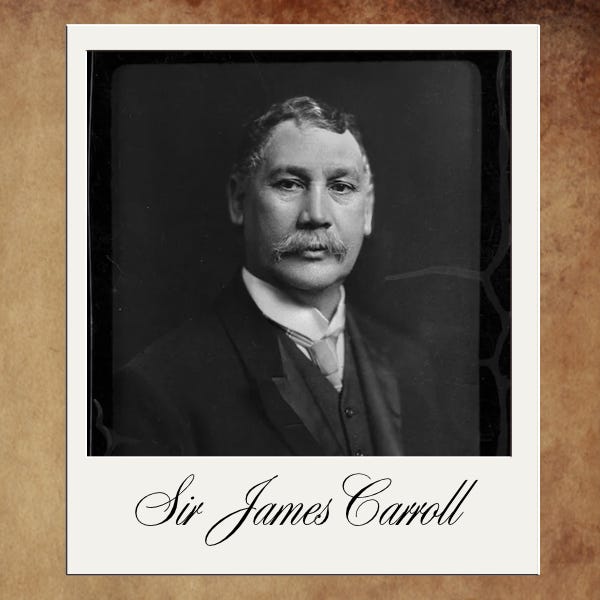
The man he beat in that first election, Wī Pere, was a strong supporter of Te Kotahitanga, the Māori Parliament movement, but Carroll believed Māori could exercise greater influence in the Parliament that already made laws for the whole country. They actually worked together on Māori land rights though. They represented two very different visions for Māori in political life, but nonetheless were both deeply committed to their people.
Carroll’s argument against Māori seats went far beyond the fact that he managed to win a general seat and in fact echoes some of the same logic surrounding Māori representation that is discussed today. He could see the power that Māori could wield in marginal seats and that greater leverage could be achieved. For example, if a matter about Māori land came up in the existing system, the four Māori MPs had the incentive to go in to bat for Māori communities, but the general seats did not answer to them come election time. He argued that if there was a common roll, Māori communities would be better placed to exert the pressure on representatives that everyone else could.
How Māori can exert political pressure is still relevant in 2026. As Dr Lara Greaves pointed out recently, if we were to move to one common roll, the left wing would benefit immensely. She told RNZ that abolishing Māori seats could backfire on ACT and New Zealand First and that “strategically, it could be quite a silly move for them.” She quoted the hypothetical calculations of Curia Research’s David Farrar who estimated that in the 2026 election National would have lost nine electorates, maybe four more, if there was one common roll. Carroll would tell Māori to back abolishing the seats, Pere would say the symbolic significance of them is worth preserving while fighting for a Māori Parliament.
The Treaty is invoked regularly in discussions about Māori seats, but obviously separate political rights are not mentioned in the texts. Proponents of abolishing the seats argue that Article Three actually promises the opposite in that it specifically pledges “all the rights and privileges of British subjects”. The English translation of the Māori version by Professor Hugh Kawharu says almost the same thing: “the same rights and duties of citizenship as the people of England”. The counter to this is that providing separate political pathways enacts the spirit of the Treaty, but it is my opinion that ignoring the central point of Article Three is cherry-picking.
The relationship that is drawn between the Treaty and Māori seats is reflective of a general broadening of the meaning and significance of the texts. I learnt recently when I interviewed Professor Paul Moon and Dr Alistair Reese that there was a significant period of time from the late 19th century and for most of the 20th century in which the Treaty all but disappeared from government and legal discourse. In fact, in 1908 Dr Thomas Hocken found the original Treaty in the basement of Government Buildings in Wellington. He is said to have found them “buried in a heap of old papers and rubbish” and water had damaged the documents and rats had gnawed at them. It is estimated that they were in the basement for about 31 years. Attempts were made to repair the Treaty in 1913, but this caused further damage and so the sheets were placed in storage for 50 years before another attempt at restoration was made.
As a lover of history and a proud New Zealander, this treatment of our founding document infuriates me. Nevertheless it is indicative of how little regard the Treaty was given for most of our history. Some will say this is evidence of an egregious breach of the Treaty, others will say we were getting on with nation building. It was Māori activists in the 1970s who revived interest and reverence for the Treaty even if the physical documents had been locked in a box until 1961. In 1975, just days before Dame Whina Cooper’s Land March reached Parliament, an Act establishing the Waitangi Tribunal passed. A common misconception is that this was about redress for the past, but it was actually about contemporary claims until 1985 when it was extended back to 1840. And it was in 1987 that the famous Court of Appeals judgement by Justice Cooke (New Zealand Māori Council v Attorney-General [1987]) referred to the Treaty as akin to a partnership. He wrote that “the Treaty signified a partnership between races” which was a departure from the material fact that it was an agreement between the Crown and iwi.
Cooke refers to the concept of the Treaty principles a bit further down the judgement saying Treaty principles require the Treaty partners “to act towards each other reasonably and with the utmost good faith.” It was from this point that the Treaty and its principles began to be invoked for an ever-widening number of issues. This accelerated under the Ardern/Hipkins governments which oversaw a rapid increase in the use of te reo Māori throughout the public service that was incredibly jarring for a number of New Zealanders. They also introduced the Treaty more impactfully into legislation and massive projects like Three Waters exacerbated the sharpening of divisions in New Zealand.
I recount all of this because I wish to make the point that the significance and emphasis the Treaty and the principles are given now is relatively new. Certainly the fervour of the public service was unleashed only in the past decade. Now, it can be argued that this is because previous governments suppressed and oppressed. There is some incontrovertible truth in that. Governments did emphasise assimilation and suppress the Māori language. But we never had the discussion about what it should mean now and how it should affect our rights and duties as citizens and how our laws are written and interpreted. The social and cultural changes that swept in under Ardern and Hipkins did not have a mandate from the New Zealand public. A lot of it was done quietly and with deliberate stealth which only caused more angst once more broadly known. There was no referendum and it was never something that Ardern campaigned on.
If we are to accurately describe ourselves as a liberal democracy we need to reckon with this subversion of the will of the public. It is not good enough to declare that something is right and therefore the Government should have free rein to do it or that the population is too ignorant or racist to be trusted to weigh up the arguments for and against matters to do with the Treaty. The damage imposing rapid and substantial change did to social cohesion in New Zealand should not be under-estimated. There was no social licence sought and now there is a rift in our society that continues to fester. That is why I believe we need to have the hard conversations. We need to establish how we can move forward as New Zealanders while acknowledging the past and that Māori were the first people here. If we don’t the division will not heal, it will become a much bigger problem.
A national conversation about the Māori seats is a practical and simple place to start. It is a yes or no answer. Do we continue with the seats or not? It can be easily decided with a binding referendum, but the important part would be what comes before that. If the media and public service behave as they have done for the last decade or so, they would wage a campaign for the retention of the seats. It would be very, very difficult for New Zealanders to experience a true conversation in which the pros and cons of both sides are presented without bias. Unfortunately, this applies to any issue relating to the Treaty and until those with influence behave responsibly and to their job description, we will be hampered in our efforts to resolve matters fairly and in the good faith that Justice Cooke referred to.
The reckoning we will no doubt have soon regarding our MMP electoral system presents a great opportunity to explore the place of Māori seats. The Royal Commission that recommended the adoption of MMP back in 1986 actually also recommended abolishing the Māori electorates. The report said there would be “no separate Māori constituency or list seats, no Māori roll, and no Māori option”. The reasoning was that, under MMP, a party vote cast by a Māori person would count toward a party’s total seats regardless. The Commission predicted that the new system would increase the number of Māori MPs in any case as parties would be incentivised to place Māori candidates higher on the list in order to compete for Māori votes. They were right.
At the first MMP election the number of Māori MPs more than doubled to 17 and after the 2023 election there were 33 Māori MPs across all six political parties. At 26.8% of Parliament this was disproportionate to the Māori share of the population (19.6%), a total success in achieving Māori representation. Additionally, ACT, New Zealand First, the Greens, and Te Pāti Māori all had leaders and/or deputy leaders with Māori whakapapa. A record number of Māori held Cabinet seats in Christopher Luxon’s government; seven of the twenty seats or 35%.
Abolishment of the seats was included in the original electoral reform bill, but was reversed after Māori consultation in the select committee phase, before the 1993 referendum. There was no question on Māori seats included in the referendum on MMP.
Despite the obvious success of MMP in expanding Māori representation in Parliament, the 2023 Independent Electoral Review recommended expressly entrenching the Māori electorates. The review’s panel explicitly said that it had not assessed whether MMP had made the Māori seats unnecessary, but justified entrenchment on the grounds of equal protection against political interference, legal clarity, and constitutional significance. The panel cited the 1986 Royal Commission in relation to the significance many Māori attach to the seats as an expression of their position under the Treaty. Outcomes mattered less than ideological or symbolic attachment to the seats.
The argument and angst about decolonisation and the Treaty are, at their most interesting, arguments between people who know that our colonial inheritance is relevant, but disagree about the country our grandchildren should inherit. He Puapua, the 2019 report on implementing the UN Declaration on the Rights of Indigenous Peoples (UNDRIP), set out one vision for our future. It argued that only Māori should decide on the future of Māori seats. The principle author of the paper, Dr Claire Charters, explained that in her view Māori authority over Māori affairs is a route to a more united country.
The problem is that there is a lot of overlap between what are considered Māori affairs and that which effects all New Zealanders. An iwi deciding what to do with its settlement assets is rightly exercising authority over its own property, but a Māori authority in charge of a river on which a much larger population depends is not, in my view, a justified authority. Dame Elizabeth Rata has argued that New Zealand risks making inherited ethnic identity the basis of political membership. I think that ship has now sailed.
At the moment there are two New Zealands, or rather, there is New Zealand and Aotearoa. This is not sustainable. But it is my hope that honest, good faith conversations can take place and that they will not be corrupted by the media and public service imposing their will. In my opinion it is possible for us to find a way forward that is faithful to the promises made in 1840 while ensuring equal rights and duties for all. Because more than the geographic boundaries that make up this nation, who we are and what New Zealand is, depends first and foremost on its people. As the saying goes:
“He aha te mea nui o te ao? He tāngata, he tāngata, he tāngata.”“What is the most important thing in the world? It is people, it is people, it is people.”
Ani O'Brien comes from a digital marketing background, she has been heavily involved in women's rights advocacy and is a founding council member of the Free Speech Union. This article was originally published on Ani's Substack Site and is published here with kind permission.
No comments:
Post a Comment
Thank you for joining the discussion. Breaking Views welcomes respectful contributions that enrich the debate. Please ensure your comments are not defamatory, derogatory or disruptive. We appreciate your cooperation.