

This week the Government announced that there were 49,000 fewer victims of violent crime in the year to October 2025 compared to the two years prior. Forty-nine thousand. That is tens of thousands of New Zealanders who were not assaulted, murdered, violated, or terrorised. Pair that with the near-total collapse in ram raids, once a nightly ritual on the 6pm news, and it is very hard to argue that nothing has changed. On law and order, this Government has, objectively, had its strongest performance. They’ve brought in a raft of legislative changes, tougher sentencing settings, youth justice reforms, gang crackdowns, and measurable outcomes.
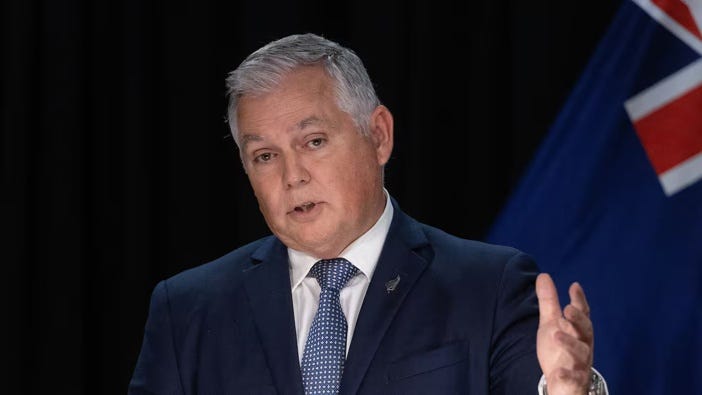
Police Minister Mark Mitchell. Photo / Marty Melville
And yet…
On the day the crime stats dropped, Benedict Collins on 1News ran a law and order hit piece portraying the Government as having failed across the board. He focused on how there are now three more gang members than police officers in New Zealand. The framing was so aggressively detached from context that even veteran broadcaster Barry Soper called it biased and revealed that a TVNZ executive had contacted the Police Minister Mark Mitchell to apologise for the reporting.
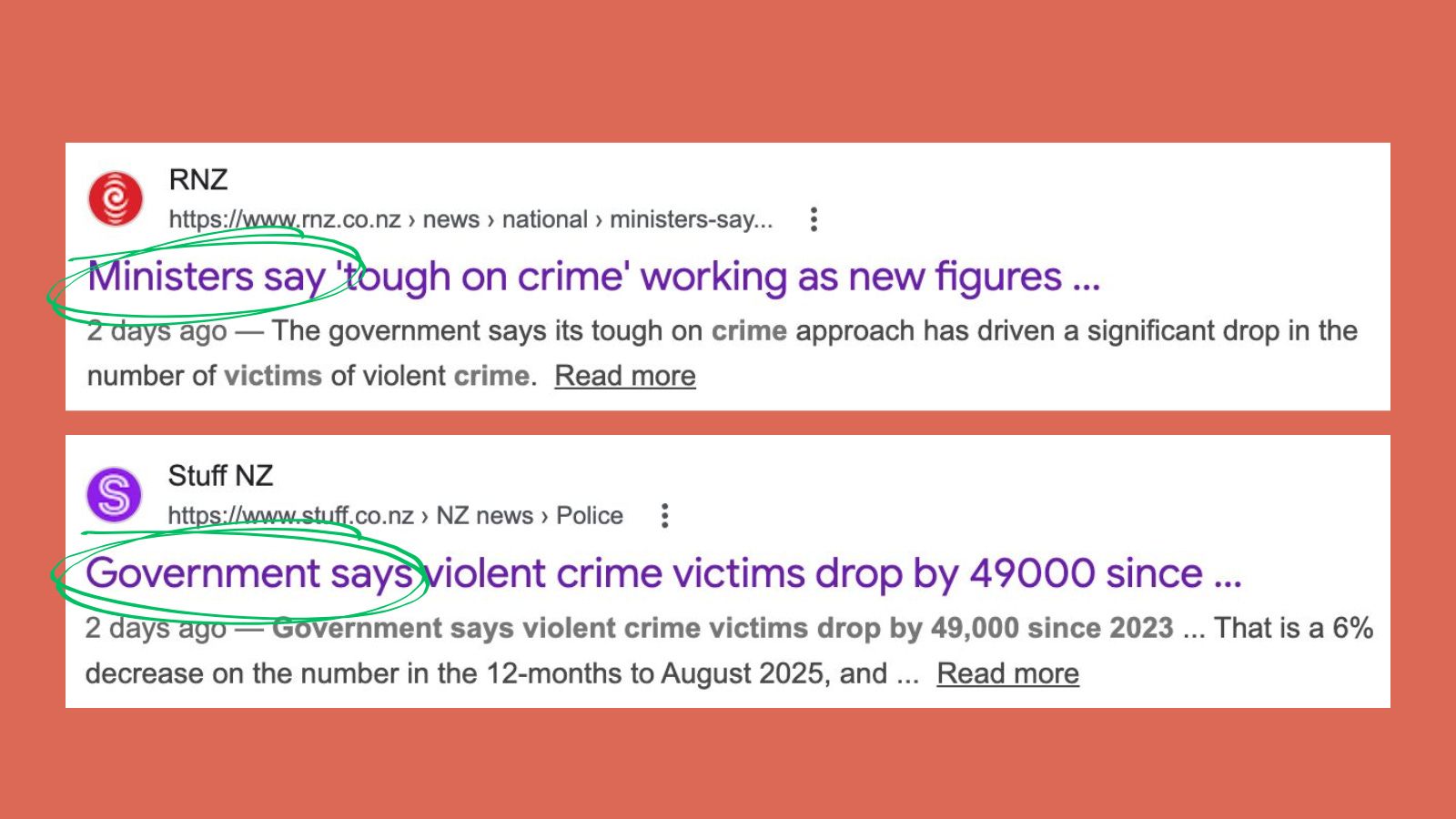
Other media continue to use language that suggests that figures aren’t real. Instead of saying that the Ministry of Justice Crime & Victims survey shows that there have been tremendous decreases, they report that the “Government says” it.
🇬🇧 The BAFTAs and the hierarchy of victimhood
This week’s most absurd cultural scandal unfolded at the BAFTAs. The film I Swear, a biopic about Tourette’s advocate John Davidson, was being celebrated, with its young lead taking home Best Actor. Davidson himself was present as guest of honour. He has Tourette’s syndrome, obviously, and he has dedicated his life to awareness and support for others with the condition. He was awarded an MBE by Queen Elizabeth a few years ago, and at the ceremony he involuntarily ticced “F**k the Queen,” which she gracefully ignored because she had been properly briefed.
At the BAFTAs, the audience had also been warned that Davidson would likely tic audibly. He did so many times, but when he shouted “n*gg*r!” while two black actors were presenting he triggered a revelation of how little people understand Tourettes. The backlash was instant and vicious, particularly from American commentators steeped in critical race theory frameworks. The reaction treated the tic as intentional speech and branded him a racist. It became a lesson in identity hierarchy where race apparently sits above disability. It was ugly. And revealing. I wrote more about it here.
🇦🇺 Ardern moves to Australia
News broke this week that our former Prime Minister Jacinda Ardern is now living in Australia and house-hunting there, after her stint in the United States working at Harvard. She resigned as our Prime Minister in early 2023 and left the country not long after. She has not returned to live here since.
Some are treating her decision to live overseas as a kind of failing of our country, but it is worth remembering that the New Zealand she appears reluctant to reside in is the one she governed for six years. She left while Chris Hipkins still lead a Labour government. The housing market, the cost of living, the institutional culture, all shaped, in part, by her leadership. Of course, former prime ministers are entitled to live wherever they please, but it is ironic that she immediately left the country she shaped for two terms.
Predictably, the New Zealand media ran fawning coverage of the news including breathless local reactions about the thrill of meeting her. The media reverence for her remains intact, even if she no longer lives here.
The defendants claim backpacker consented in Auckland “Pack Rape” trial
The Auckland High Court trial involving three young Afghan men accused of raping a 19 year old German backpacker has been seriously grim with the defendants are pushing the narrative that “she wanted it”. The allegation is that the backpacker blacked out, awakening mid-assault inside a van, too intoxicated to consent. Prosecutors argue the men led her away from the Karangahape Rd bar and drove her to an industrial carpark in Avondale where they took turns raping her. Two of the defendants (“B” and “O”) admit sexual activity but say it was consensual, while the third (“S”) has told police he was asleep and didn’t have sex with her, despite footage and witness accounts contradicting that claim.
This week the defence case culminated with “O” giving evidence, claiming the woman propositioned him, appeared to be enjoying herself, and was “thankful” and apologetic by the time she was dropped at her hostel; a story the Crown attacked as implausible and at points directly contradicted by CCTV. The Avondale footage showed “tagging in” behaviour and a woman who was not participating but incapacitated.
The surrounding details paint a horrifying picture with a text message sent by the backpacker to friends believed to be a misspelling of the German word for “help,” later texts explicitly asking for help, hostel witnesses describing her as sweaty, dishevelled, frightened, and trying to run into the road, and a forensic doctor noting injuries and swelling were so severe the exam had to be cut short were “very uncommon” even in sexual assault cases.
Closing addresses are now underway, and the jury will then decide whether this was a drunken sexual encounter reimagined after regret, as the defence implies, or exactly what the Crown alleges… three men using alcohol and isolation to enact a brutal pack rape.
The Citizens’ Select Committee: performance on pay equity
Former MPs, including Marilyn Waring, returned their report this week following a “citizens’ select committee” examining the Government’s changes to pay equity legislation. The exercise was theatrical by design, an informal parallel process conducted by figures largely aligned with opposition politics and furious about the changes Workplace Relations Minister Brooke van Velden made to pay equity legislation. Unsurprisingly, the report was scathing.

Former MP Dame Marilyn Waring. Photo: AUT
Finance Minister Nicola Willis dismissed it as hyperbole and van Velden indicated she had no intention of reading it as she had heard from the group already. The Government is not going to reverse its changes and the writers of the report know that.
On the other hand, Labour has repeatedly said they will restore the previous pay equity framework, a move estimated to cost roughly $13 billion. Labour can endorse the theatrical “select committee” as much as it likes, but voters deserve clarity on if they intend to reverse the Government’s action. They must either rule out it or commit to restoring it explaining where it is going to find the $13 billion to pay for it.
Government rejects Ia Tangata report
The Government has ruled out progressing the Law Commission’s recommendations in the Ia Tangata report, which proposed amending the Human Rights Act to include gender identity and sex characteristics as protected grounds. Feminists, myself included, argued that embedding gender identity into discrimination law without clear sex-based protections would create direct conflicts with women’s rights to single-sex spaces, sport, and opportunities.
The Government provided no reasoning for the rejection beyond that the matter is “not a priority.” While shelving the recommendations is, in my view, the correct outcome, it is disappointing that the door has been left ajar. “Not a priority” is not the same as binning it because the recommendations were patently ridiculous and ideological. It leaves room for the issue to be picked up by a future government.
To sell or not to sell: Air New Zealand
Air New Zealand reported an after-tax loss of $40 million for the 6 months to December. This continues a pattern of underperformance and has reignited debate about the Government’s 51% majority shareholding. While National has reiterated its no-asset-sales pledge for this term, they and ACT would likely be open to divestment. New Zealand First has made clear it opposes selling.
On Duncan Garner’s podcast this week, I pointed out that the airline has drifted from core competency and is viewed by some as being more focused on virtue signalling than providing exceptional service for their customers. Extraordinary amounts are spent on increasingly elaborate safety videos which now inevitably come with political messaging embedded. Then there are performative environmental gestures, such as restricting takeaway cups for Koru Club members, which generate headlines but arguably do little to restore profitability or service reliability. All this while Qantas has posted profits of AU$1.46 billion.
Move-on powers are not meant to treat causes of homelessness
The Government has announced new “move-on” powers for police, designed to address anti-social behaviour, intimidation, and threatening conduct in city centres. The objective is to restore public confidence in urban spaces, increase foot traffic, and make CBDs more appealing for residents and tourists.
Opposition parties argue this is the wrong approach and that homelessness and disorder should be addressed through root causes rather than enforcement tools. They are right that the orders will not do anything to address the root causes, but these new powers are intended to target threatening or disorderly behaviour, not poverty itself.
It is also worth noting that during the previous six years of government, homelessness visibly worsened despite ambitious promises. Jacinda Ardern famously pledged that all homelessness people would be housed within 4 weeks of her becoming Prime Minister. That obviously did not materialise. The Opposition are talking big now, but they were all out of ideas in government.
The Free Speech Union is also seeking assurances that the move-on orders cannot be misused to disperse lawful protest or suppress unpopular speech in public spaces. Tools designed to manage intimidation must not become tools to silence dissent.
Winston’s social media slap downs
It is worth following Winston Peters on X for the pure entertainment factor and this week he didn’t disappoint. When media reports said that Chris Hipkins was keeping his coalition options open including potentially working with Winston Peters, he responded in vintage form, making it abundantly clear that as far as he was concerned, there are no options:
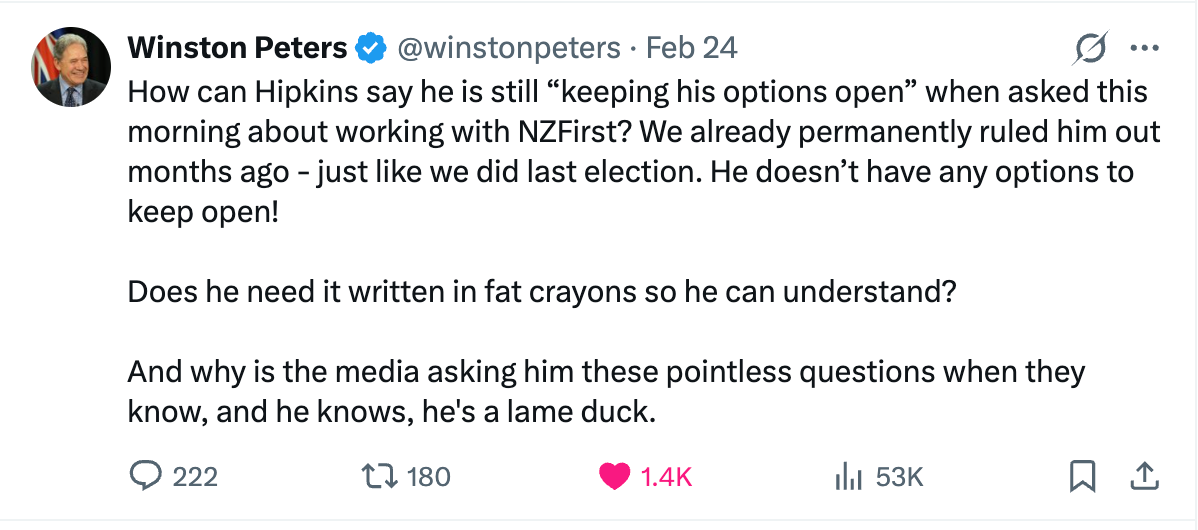
Click to view
Beneath Peters’ post, commenters asked whether New Zealand First would rule out Labour entirely as they perceived that while Peters has been unequivocal about not working with Hipkins personally, he has not formally ruled out Labour with a different leader.
He also took aim at Te Pāti Māori after they posted a graphic featuring Rawiri Waititi which misspelled the word “reign”.
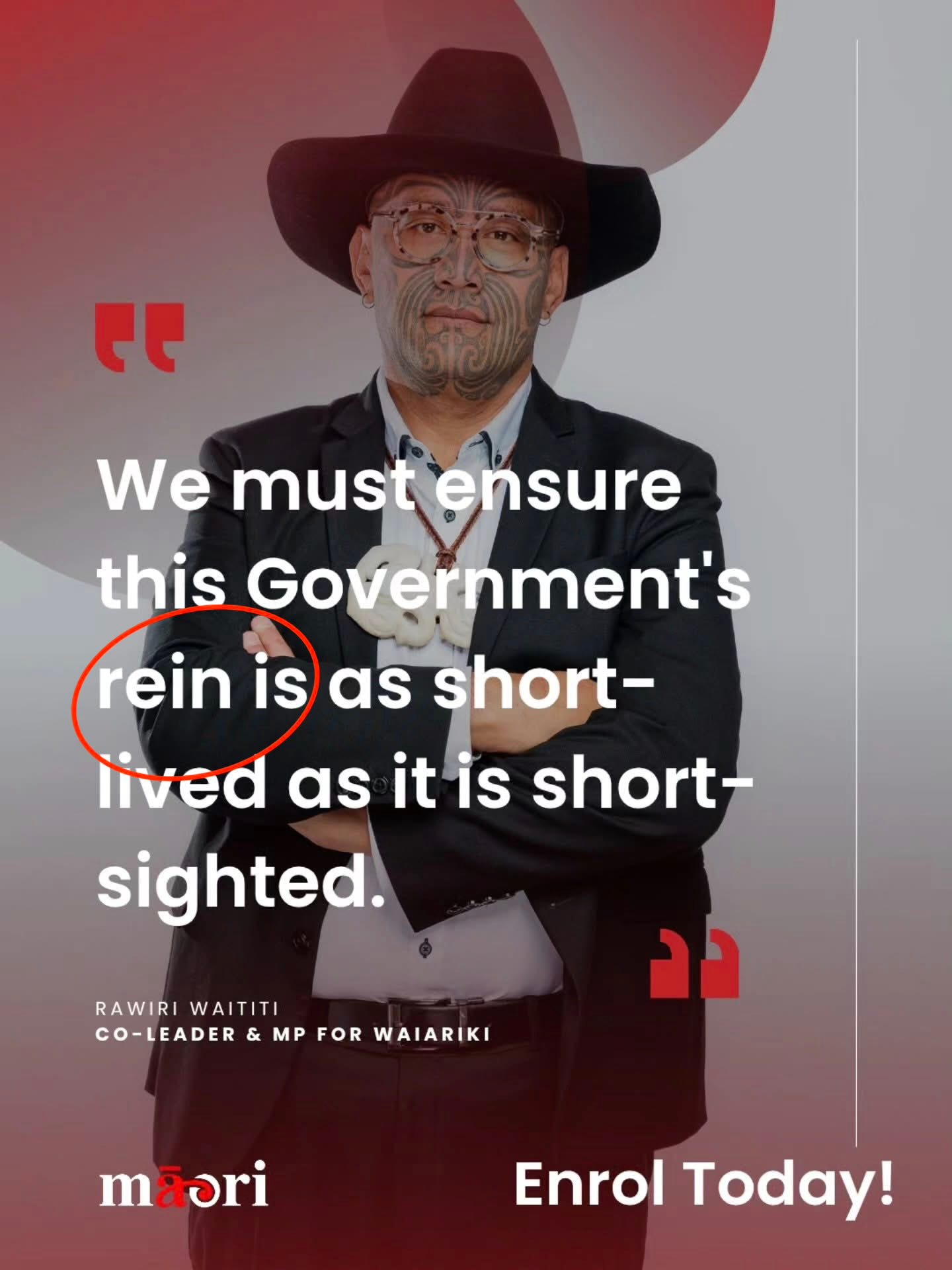
Peters pounced: “It’s spelt “reign” not “rein”….this is why we are making English an official language….”
Child poverty statistics remain the same
New figures from Stats NZ show no statistically significant change in child poverty rates in the year ended June 2025 compared with the previous year. On the headline measures under the Child Poverty Reduction Act 2018, 12.6% of children lived in households earning less than 50% of median income before housing costs with roughly one in seven in material hardship. In other words, after years of turbulence marked by a pandemic, inflation spikes and economic slowdown, poverty has plateaued rather than worsened over the past 12 months. Not good news, but not worsening.
Material hardship remains higher for tamariki Māori (25.1%), Pacific children (31%), and disabled children (26.9%). The Children’s Commissioner has highlighted that while there is not much change between 2024-25, there is a statistically significant rise in material hardship since 2022. However, the data shows that the sharpest increases occurred between 2022 and 2023, and again between 2023 and 2024, in other words, during the final stretch of the previous government and immediately following the 2023 election.
🇬🇧 The UK puberty blocker trial halted
In the UK, the controversial puberty blocker trial that emerged from the collapse of the Tavistock clinic has now been halted over safety concerns. That decision sits squarely within a growing body of international caution around medicalised interventions for gender dysphoria in minors.
Howver, in New Zealand, resistance to the Government’s move to restrict puberty blockers continues, with PATHA pursuing judicial review (expected to be heard in May). Much of the media framing has portrayed the Government’s position as ideological overreach. Yet international developments, from Scandinavia to the USA, consistently point in the direction of greater restraint, not expansion. The halting of a major trial on safety grounds is not the culture war talking point our media are treating it as. It is evidence of a major medical scandal unfolding.
Pharmac expands melanoma drug access
Pharmac has opened consultation on widening access to two immunotherapy medicines, nivolumab and ipilimumab, for people with stage 3B to stage 4 melanoma. If approved, from 1 May 2026 these drugs could be used pre-surgery while the cancer is still operable. Clinical advice to Pharmac indicates that when used together before surgery, nearly two in three patients show a very strong response by the time their tumour is removed. In practical terms, that can mean fewer post-surgery infusions, fewer hospital visits, and lower risk of recurrence.
Pharmac is also proposing to fund new first-line combination therapies for chronic lymphocytic leukaemia (CLL), venetoclax with ibrutinib or obinutuzumab. These treatments would allow some patients to avoid traditional chemotherapy altogether. Around 80–90 patients are forecast to benefit over five years.
🇦🇺 Australia’s app-based hate crimes: Islamic groups target gay men
Disturbing reports out of Australia this week revealed a pattern that authorities appear to have been aware of for at least two years. In parts of New South Wales and Victoria, gay and bisexual teenage boys and young men have allegedly been lured through dating apps by groups of Islamic youths, ambushed, assaulted, and filmed. According to figures obtained by the ABC, at least 64 people have been charged since 2023 in relation to these app-based luring attacks.
Activist group Trans Justice Sydney posted an extraordinary response to these violent assaults on gay and bisexual young men. Instead of centring the victims, they pivoted to concerns about Islamophobia and police violence, effectively reframing a targeted attack on gay men as a messaging problem.
🇺🇸 Trump’s State of the Nation
President Donald Trump delivered his State of the Union address. It was spectacle-heavy with honoured guests, emotional crescendos, partisan jabs, self-congratulation, and all delivered with the confidence of a man who understands the camera better than any President ever has. Love him or loathe him, Trump intrinsically grasps how modern politics works with symbolism, narrative, and how to capture and hold attention.
At one point he asked those in the chamber to stand if they agreed that the government’s duty is first and foremost to American citizens rather than illegal immigrants. Republicans rose and Democrats did not. The split-screen imagery practically edited itself and that clip will be repackaged, slowed down, captioned, and blasted across swing districts ahead of the midterms. Whether one agrees with the premise or not, the staging was clever.
🌎 The Epstein Files are a rolling stone
The Epstein saga continues to widen its net. The head of the World Economic Forum Borge Brende has now resigned following scrutiny of his connections to Jeffrey Epstein. Former Secretary of State and First Lady Hillary Clinton came before a congressional hearing to explain her own connections to Epstein and Ghislaine Maxwell. Former President Bill Clinton is due to front up on Friday (today NZ time). Despite insisting on their innocence, the Clintons are deeply connected with Bill appearing repeatedly in files. Ghislaine Maxwell also attended their daughters’ wedding despite having already been named in a civil lawsuit filed by the late Virginia Giuffre.
Then there is former UK Labour politician Baron Peter Mandelson, whose exposure is not merely reputational but potentially legal. Allegations that he shared sensitive government information with Epstein elevates his case to national security concern. The European Anti-Fraud Office is also going to look into the former US ambassador’s time as trade commissioner in Brussels.
Chart of the week:
For the first time in a long time, polling has returned a dip in the number of people in American identifying as LGBT. As the trans madness continues to subside it is likely this drop will continue.
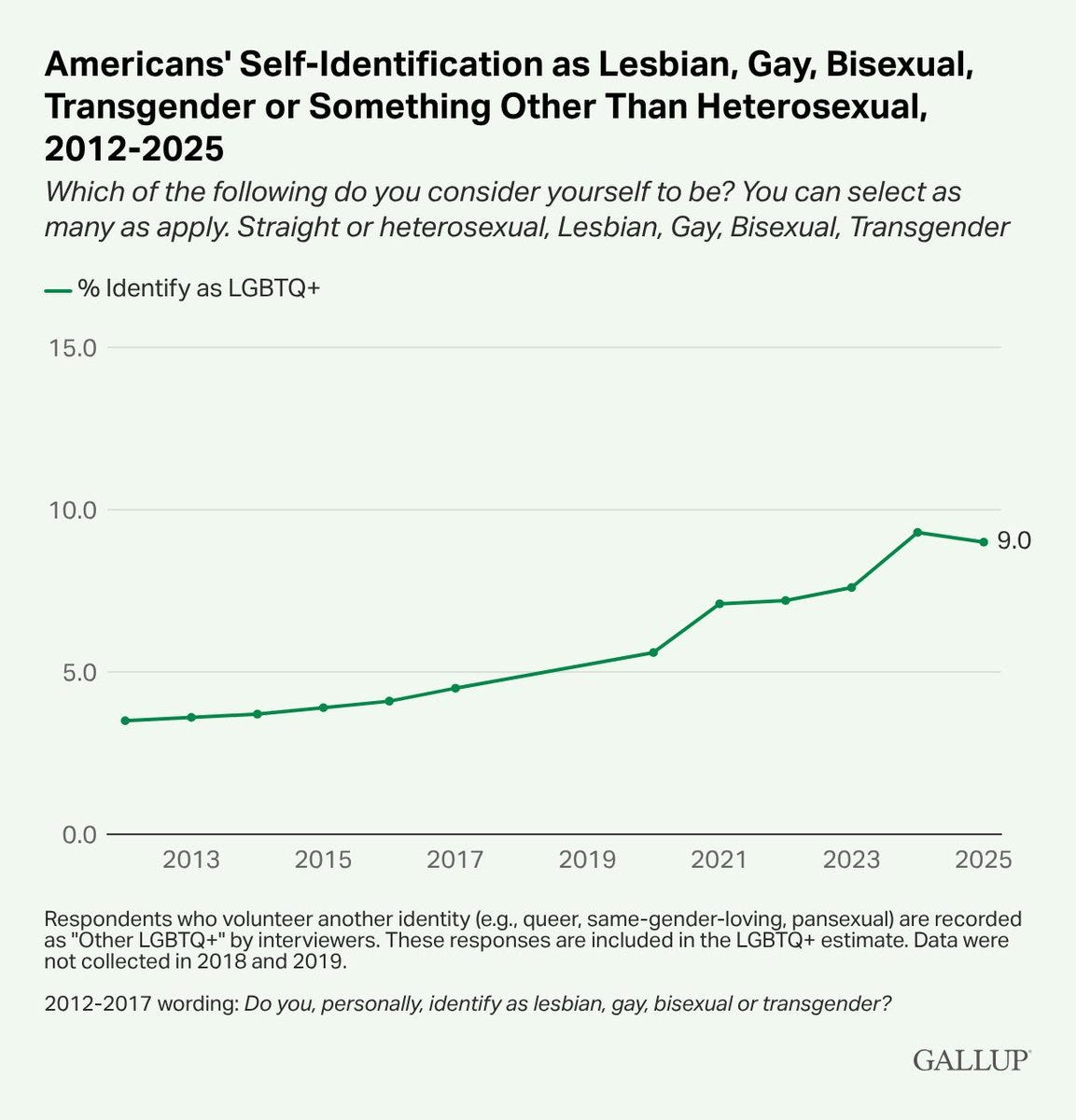
Click to view
In short - other stuff that happened:
- Labour had their State of the Nation event. They did not announce anything new and Hipkins said he doesn’t want to over-promise. I wrote about it here.
- Emails from “Ms Z” to Jevon McSkimming were released appearing to show her demanding money for past sexual encounters and alleging rape by deception.
- McSkimming also claimed that former Police Commissioner Andrew Coster was the one who advised him to file harassment complaints against Ms Z.
- Cabinet divisions have emerged over proposed Hauraki Gulf protections, with Conservation Minister Tama Potaka pushing for stronger environmental measures while Oceans and Fisheries Minister Shane Jones warns the changes could cost up to $250 million by breaching Treaty settlement arrangements.
- The Government has scrapped its quarterly action plans, which were initially launched as a transparency tool to track measurable delivery but had become increasingly vague and less useful over time.
- Wellington Mayor Andrew Little took a highly publicised swim at Lyall Bay to demonstrate the water was safe following the capital’s sewage issues, declaring himself fine afterward. Unfortunately, a day or so later the beach was deemed unsafe for swimming again.
- 🇮🇷 Iran has been elected vice chair of the UN Special Committee on the Charter of the United Nations. Yeap…
- A Stuff/The Post poll found overwhelming support for large-scale infrastructure, with 82% of New Zealanders saying mega projects are important to the country’s long-term future.
- Ronndog Elliott Keefe pleaded guilty to 13 charges, including distributing and possessing child sexual exploitation material, exposing a young person to indecent material, and threatening to kill. He also planned a mass stabbing attack. He was sentenced to five years and four months’ imprisonment and placed on the Child Sex Offender Register.
- Name suppression has lapsed for Auckland teacher Tamlin May, who pleaded guilty to grooming an 11 year old boy and indecency with a child under 12. She was sentenced to 6 months’ home detention and 6 months’ post-detention conditions, and will not be placed on the Child Sex Offender Register.
- A DNA breakthrough has linked serial rapist Malcolm Rewa to another attack from 37 years ago, in which a teenage girl was raped, suffocated, tied up and gagged. Rewa is now 72 and already serving an indefinite sentence for raping more than 20 women.
- The Government has received the final report from the Royal Commission of Inquiry into New Zealand’s COVID-19 response, with the findings set to be tabled in Parliament on 10 March and then made public.
- The Medical Council is currently consulting on a new cultural safety framework that would embed expansive interpretations of the Treaty of Waitangi, tikanga, and mātauranga Māori into professional standards for doctors. Critics argue it risks turning contested political and ideological positions into regulatory obligations, raising concerns about professional freedom and scope creep within clinical governance.
- 🇵🇰 🇦🇫 Conflict has escalated between Pakistan and Afghanistan’s Taliban authorities into what has been described as “open war,” including Pakistani air strikes on Kabul and cross-border clashes. This escalation could have broader regional security implications if it further destabilises South Asia.
- 🇬🇧 In the UK, Hamit Coskun has won a landmark case overturning his conviction for a religiously aggravated public order offence after burning a Koran outside the Turkish consulate. The ruling has been described as a humiliating defeat for prosecutors and is being seen as a significant test of the boundaries between free expression and religious offence laws.
- The Crown has signed a Deed of Settlement with Ngāti Ruapani mai Waikaremoana after 6 years of negotiations, including a $24 million financial package, forestry interests, cultural and commercial properties, and the return of approximately 12,000 hectares of land into Te Urewera. The agreement also includes a formal Crown apology and marks the conclusion of Treaty settlement negotiations in the Te Urewera region.
- 🇬🇧 In the UK, Ian Huntley (52) is being treated for serious head injuries after he was ambushed with a spiked metal pole in a prison workshop, the third time he has been attacked by fellow inmates. Huntley is serving a life sentence for the 2002 murders of 10 year old girls Holly Wells and Jessica Chapman.
🌎 This Bloomberg interview with Tedros Ghebreyesus is well worth your time if you want insight into how the head of the World Health Organization sees the current global health landscape.
That said, I’m very suspicious of Tedros as an authority on pandemic leadership. His handling of COVID-19 was widely criticised for being slow, and compromised by problematic relationships with certain member states, especially China.
So while the interview is informative and covers important issues, I don’t take his reflections at face value and you should listen with a healthy dose of scepticism.
🇦🇺 If you care about defence policy, military culture, or the way Western institutions are drifting into abstraction, this speech is worth your time. Deputy Chief of Army Major General Chris Smith’s blunt warning that the Australian Defence Force has become “detached” from the violent nature of war, and polluted by managerial jargon and euphemism, is unusually frank from someone at that level. His rejection of sanitised language in favour of plain truths about what armies actually do is confronting, but necessary. It’s a serious, intellectually grounded critique of modern military thinking and a reminder that democracies need armed forces that understand, without illusion, what war really is.
Ani O'Brien comes from a digital marketing background, she has been heavily involved in women's rights advocacy and is a founding council member of the Free Speech Union. This article was originally published on Ani's Substack Site and is published here with kind permission.


3 comments:
If Aussie army Major General Smith had te reo to contend with his comments would be of even greater interest.
I'm hearing you on the improvements in crime stats, most welcome. But...
It was National, being woke, long before the term woke was definitive, that around 2013 changed the sections that govern police response to young person offending. In their rewrite of the 1989 Child Young Persons and their Families Act this the Oranga Tamariki Act, National put into place road blocks to police officers dealing with juvenile criminals.
They took away the ability for police to arrest on sight a recidivist young person breaching their bail conditions until they had breached it on 3 sequential times for the same offence. Were it a different offence, as they are often on multiple offences, then the clock would start at zero. National also made it much more difficult for police to arrest a young person for anything, no matter how serious. The natural violent horrific results of this woke left police disempowerment were seen and experienced by the public ever since.
It may seem small but if parliament takes away law enforcements ability to enforce the law, no one should be surprised with the terrible outcome. Yes, Labour Greens idiotic anti public order law and order reign certainly didn't help but there is always a lag effect and it hit it straps in the late Key era and was turbocharged by the Ardern government.
National still have not properly rectified the damage their progressive liberal law changes rendered, but with more service stations now personal and shop free, more young persons being incarcerated and more bollards installed around shops, plus many that simply went out of business, it reached it nadir.
I think it important to attribute credit or blame where it's due. Hence I do not trust National one little bit either. I think they, like their twin Labour, are a major part of the problem.
Wasn't Chris Finlayson Minister of Justice (as well as Treaty Minister) during the Key era? That rewrite of Oranga Tamariki Bill seems to have his grubby paw-marks all over it.
Post a Comment
Thank you for joining the discussion. Breaking Views welcomes respectful contributions that enrich the debate. Please ensure your comments are not defamatory, derogatory or disruptive. We appreciate your cooperation.