

The political rumour mill went into overdrive on Thursday night as news spread of a dire poll for National. The Taxpayers’ Union–Curia poll released on Friday has National dropping to the lowest it has been under Christopher Luxon (28.4%). If this was an election result, the Party would get just 36 seats. They currently have 48 and it is likely senior ministers would be among the list MP to lose their seats. The poll has Labour on 34.4%, up 0.3.
National MPs (and Luxon himself) are telling media that his job is safe, but that cannot possibly be true. It is not just the voting numbers that are bad. Issue specific IPSOS polling is looking dire with Labour somehow ahead of National on inflation/cost of living despite being responsible, for the most part, for the state of it. Luxon’s handling of media questions around Iran was abysmal this week also. He was very wobbly and created a situation where everyone turned to Winston Peters for a proper answer.

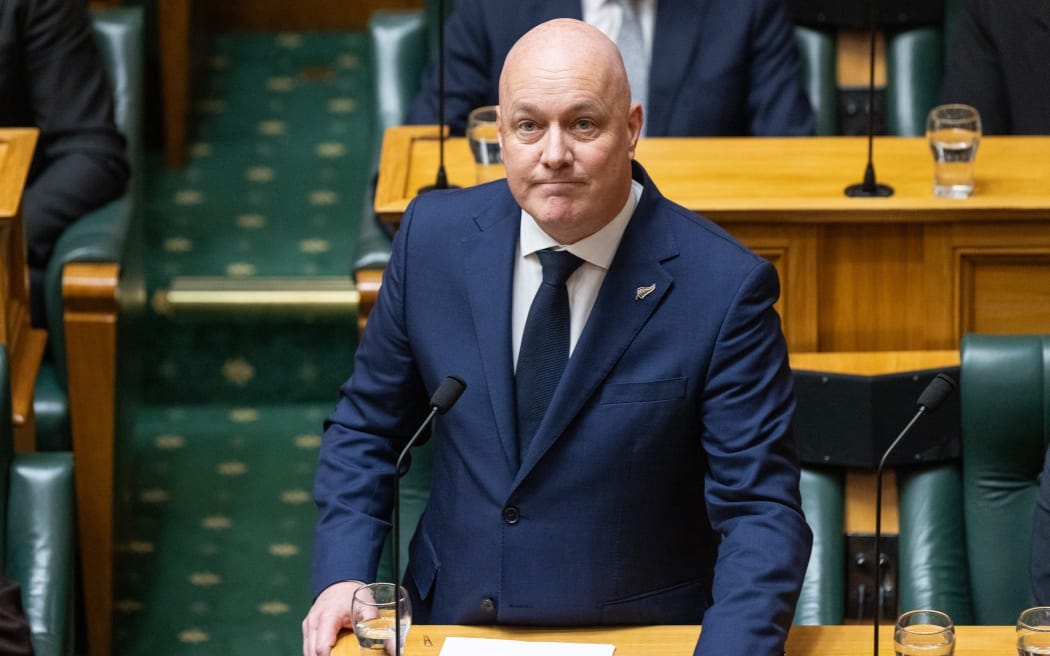
Christopher Luxon. Photo: VNP / Phil Smith
The stupid thing is, National’s record this term when dissected has been largely successful. Law and order reforms are working, the economy has stabilised after the inflation spiral of the Ardern-Robertson-Hipkins years, an immense amount of legislation has passed, and yet Luxon has never converted that into political authority. This comes down to a failure to communicate successes and struggles and an inability to connect with New Zealanders.
I didn’t buy into leadership coup chatter last year and have cautioned against rushing into rolling leaders. It is immensely destabilising. However, time is running out and Luxon’s political trajectory is unlikely to change direction. If New Zealanders are willing to consider Chris Hipkins again after he left health, police, education, and the economy in tatters, there must be a serious issue with how Luxon is being perceived.
The obvious question is who should replace Luxon, and the answer is not entirely clear. Chris Bishop’s name is probably mentioned the most, Nicola Willis will be arguing that she can connect better with female voters, and Mark Mitchell no doubt has his hat in the ring. Simeon Brown and Erica Stanford’s names crop up too. At this point it perhaps does not matter as much who replaces him because we have reached ‘anyone-but-Luxon’ stage.
The Great Iran Grandstanding of New Zealand Parliament
I am sure that Donald Trump and Marco Rubio have not once wondered what New Zealand thinks about their strikes on Iran. Nevertheless, it is important for New Zealanders to know where we stand on these kinds of important global matters. And boy did our politicians go all in on the grandstanding.
Luxon was confused and, as Chloe Swarbrick said, “not across his brief”. Winston Peters was statesman like and trod his usual careful line of support for our allies, condemnation for the Iranian regime, while not involving our country explicitly. David Seymour leaned further into support for America and Israel.
On the other side of the House, the opposition leaders demonstrated an embarrassing lack of geopolitical knowledge and appeared to be driven by reflexive anti-Trump, anti-America, and anti-West sentiment. Swarbrick might have been right about Luxon’s woeful knowledge, but her’s is pure outrage and fantasy. The Greens would have New Zealand side with a terroristic regime that oppresses women, throws gays off buildings, and is the number one funder of terrorism worldwide. It is nuts. Chris Hipkins did not go as far as his would-be coalition partners, but he made the mistake of taking a similar position to UK Prime Minister Keir Starmer who is seen by many as a total embarrassment. A weak stance that relies on the myth of “international law” and the naivety of thinking that the so-called “rules based order” means anything without the threat of violence behind it. And Rawiri Waititi did Te Pāti Māori supporters the disservice of leaning into conspiracies about Zionists.
The Government books look better than expected
Treasury’s Financial Statements for the seven months to 31 January 2026 show the Crown’s books performing better than expected. The Government’s main operating measure, the operating balance before gains and losses (OBEGAL) recorded a $6.0 billion deficit, which is $1.9 billion smaller than forecast in the Half Year Economic and Fiscal Update (HYEFU). While net core Crown debt stood at $184.3 billion, or 41.9% of GDP, around $1.1 billion lower than forecast.
The improvement appears to be driven primarily by lower-than-expected government spending rather than stronger revenue growth. Core Crown expenses were $83.1 billion, about $1.2 billion below forecast, while tax revenue of $70.4 billion came in broadly on target. Overall Crown revenue was $77.3 billion, slightly under expectations partly because Emissions Trading Scheme revenue fell after the carbon price dropped. Treasury also reported a $4.0 billion operating surplus including gains and losses, far stronger than forecast.
Trio of ship sinkers are off to face court martial
Reminding everyone of exactly why no one cares about New Zealand’s opinion on military matters, this week three naval officers were charged and will face court martial in relation to the Royal New Zealand Navy disaster involving HMNZS Manawanui, which sank off Samoa in October 2024.
Commander Yvonne Gray and Lieutenant Commander Matthew Gajzago have been charged alongside a third officer of the watch at the time of the grounding. They will go before a judge and a panel of senior military members to face charges including negligently causing a ship to be lost, which is punishable by up to two years in prison.
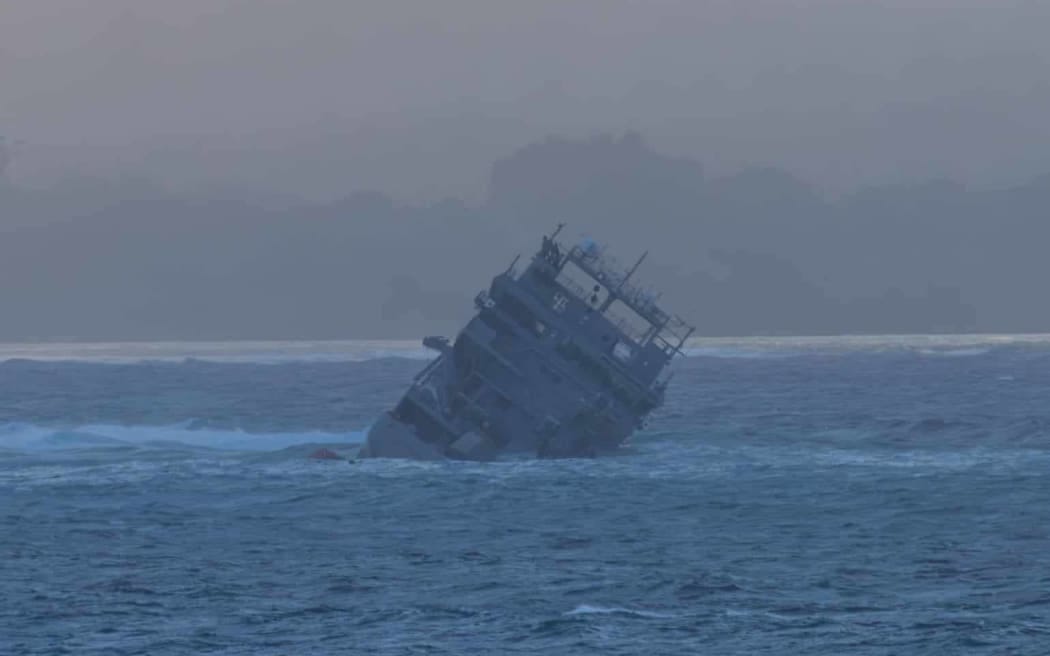
The HMNZS Manawanui capsized and sank after hitting a reef off the southern coast of Samoa. Photo: Profile Boats
English Language Bill gets unanimous support despite outrage from opposition
New Zealand First’s English Language Bill passed its first reading with unanimous support. This might sound like a moment of rare cross-party unity, but that is far from the truth. If you listened to the debate beforehand you would have thought the legislation was some sort of linguistic apocalypse. Opposition MPs delivered speeches drenched in outrage. Green co-leader Chloe Swarbrick thundered about colonialism and cultural erasure, while Labour’s Kieran McAnulty delivered a performance of theatrical indignation that suggested the bill was somewhere between a constitutional crisis and a personal insult. And then the Bill passed First Reading without opposition.
Sometimes parties support a Bill at First Reading simply to allow it to go to select committee for scrutiny. But we were treated to speeches of high moral fury followed immediately by a unanimous vote in favour.
Chloe Swarbrick told Stuff not calling for a party vote to officially record the Green’s votes against the Bill was a “mistake”:
Christopher Luxon. Photo: VNP / Phil Smith
The stupid thing is, National’s record this term when dissected has been largely successful. Law and order reforms are working, the economy has stabilised after the inflation spiral of the Ardern-Robertson-Hipkins years, an immense amount of legislation has passed, and yet Luxon has never converted that into political authority. This comes down to a failure to communicate successes and struggles and an inability to connect with New Zealanders.
I didn’t buy into leadership coup chatter last year and have cautioned against rushing into rolling leaders. It is immensely destabilising. However, time is running out and Luxon’s political trajectory is unlikely to change direction. If New Zealanders are willing to consider Chris Hipkins again after he left health, police, education, and the economy in tatters, there must be a serious issue with how Luxon is being perceived.
The obvious question is who should replace Luxon, and the answer is not entirely clear. Chris Bishop’s name is probably mentioned the most, Nicola Willis will be arguing that she can connect better with female voters, and Mark Mitchell no doubt has his hat in the ring. Simeon Brown and Erica Stanford’s names crop up too. At this point it perhaps does not matter as much who replaces him because we have reached ‘anyone-but-Luxon’ stage.
The Great Iran Grandstanding of New Zealand Parliament
I am sure that Donald Trump and Marco Rubio have not once wondered what New Zealand thinks about their strikes on Iran. Nevertheless, it is important for New Zealanders to know where we stand on these kinds of important global matters. And boy did our politicians go all in on the grandstanding.
Luxon was confused and, as Chloe Swarbrick said, “not across his brief”. Winston Peters was statesman like and trod his usual careful line of support for our allies, condemnation for the Iranian regime, while not involving our country explicitly. David Seymour leaned further into support for America and Israel.
On the other side of the House, the opposition leaders demonstrated an embarrassing lack of geopolitical knowledge and appeared to be driven by reflexive anti-Trump, anti-America, and anti-West sentiment. Swarbrick might have been right about Luxon’s woeful knowledge, but her’s is pure outrage and fantasy. The Greens would have New Zealand side with a terroristic regime that oppresses women, throws gays off buildings, and is the number one funder of terrorism worldwide. It is nuts. Chris Hipkins did not go as far as his would-be coalition partners, but he made the mistake of taking a similar position to UK Prime Minister Keir Starmer who is seen by many as a total embarrassment. A weak stance that relies on the myth of “international law” and the naivety of thinking that the so-called “rules based order” means anything without the threat of violence behind it. And Rawiri Waititi did Te Pāti Māori supporters the disservice of leaning into conspiracies about Zionists.
The Government books look better than expected
Treasury’s Financial Statements for the seven months to 31 January 2026 show the Crown’s books performing better than expected. The Government’s main operating measure, the operating balance before gains and losses (OBEGAL) recorded a $6.0 billion deficit, which is $1.9 billion smaller than forecast in the Half Year Economic and Fiscal Update (HYEFU). While net core Crown debt stood at $184.3 billion, or 41.9% of GDP, around $1.1 billion lower than forecast.
The improvement appears to be driven primarily by lower-than-expected government spending rather than stronger revenue growth. Core Crown expenses were $83.1 billion, about $1.2 billion below forecast, while tax revenue of $70.4 billion came in broadly on target. Overall Crown revenue was $77.3 billion, slightly under expectations partly because Emissions Trading Scheme revenue fell after the carbon price dropped. Treasury also reported a $4.0 billion operating surplus including gains and losses, far stronger than forecast.
Trio of ship sinkers are off to face court martial
Reminding everyone of exactly why no one cares about New Zealand’s opinion on military matters, this week three naval officers were charged and will face court martial in relation to the Royal New Zealand Navy disaster involving HMNZS Manawanui, which sank off Samoa in October 2024.
Commander Yvonne Gray and Lieutenant Commander Matthew Gajzago have been charged alongside a third officer of the watch at the time of the grounding. They will go before a judge and a panel of senior military members to face charges including negligently causing a ship to be lost, which is punishable by up to two years in prison.
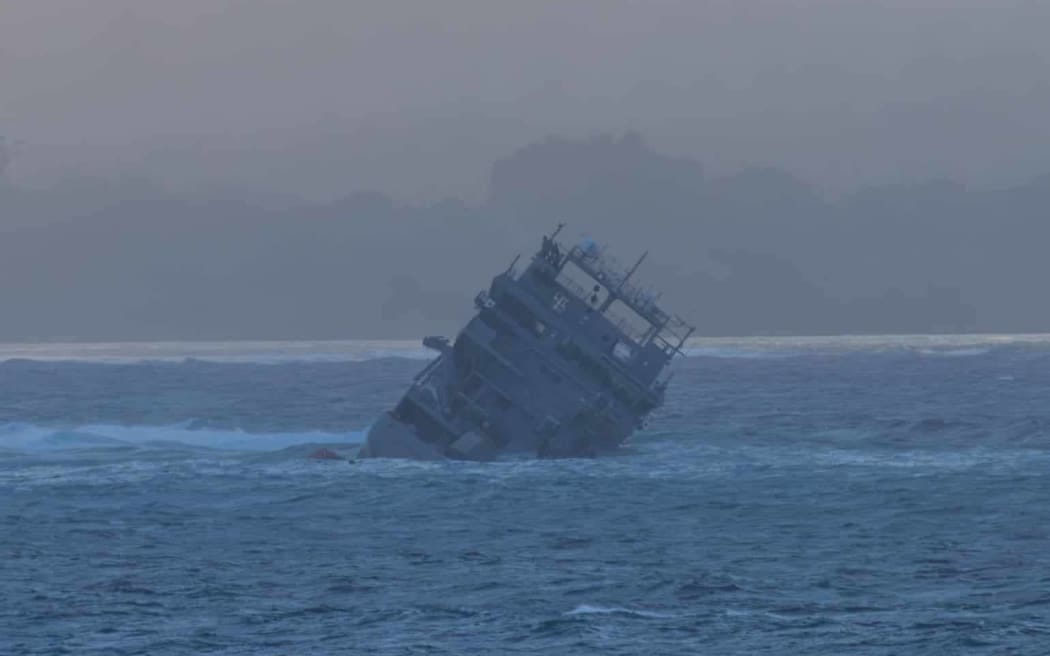
The HMNZS Manawanui capsized and sank after hitting a reef off the southern coast of Samoa. Photo: Profile Boats
English Language Bill gets unanimous support despite outrage from opposition
New Zealand First’s English Language Bill passed its first reading with unanimous support. This might sound like a moment of rare cross-party unity, but that is far from the truth. If you listened to the debate beforehand you would have thought the legislation was some sort of linguistic apocalypse. Opposition MPs delivered speeches drenched in outrage. Green co-leader Chloe Swarbrick thundered about colonialism and cultural erasure, while Labour’s Kieran McAnulty delivered a performance of theatrical indignation that suggested the bill was somewhere between a constitutional crisis and a personal insult. And then the Bill passed First Reading without opposition.
Sometimes parties support a Bill at First Reading simply to allow it to go to select committee for scrutiny. But we were treated to speeches of high moral fury followed immediately by a unanimous vote in favour.
Chloe Swarbrick told Stuff not calling for a party vote to officially record the Green’s votes against the Bill was a “mistake”:
“Just so happens that we are human beings as with many other human beings in this line of work we make mistakes sometimes then we do our best to correct the record.”
While the Greens blame their own incompetence, Labour simply admitted to media later that they do actually support it. All the Bill is set to do is make English an official language of New Zealand as well as te reo Māori and New Zealand Sign Language.
Covid-19 Wave 9 hits and no one notices
New Zealand is said to be entering our ninth wave of Covid-19, with wastewater monitoring and hospitalisations both trending upwards. In the past week, there were 184 hospitalisations and 19 deaths, with the likely driver being waning immunity rather than a new variant.
Covid is behaving like an endemic respiratory disease that flares up from time to time much like influenza. Professor Michael Baker notes that Covid now causes roughly 500–1000 deaths a year in New Zealand, roughly comparable to influenza in a bad season.
We shut down the entire country, closed businesses, separated families, halted travel, and racked up tens of billions in economic damage, in response to fewer cases than currently exist. The death toll now sits squarely within the range of other diseases we have always managed without shutting society down. I’m not claiming Covid is harmless; clearly it is not. But the difference between the rhetoric of 2020 and the reality of 2026 is night and day.
Sir Two-Tier Keir humiliates Britain on the world stage
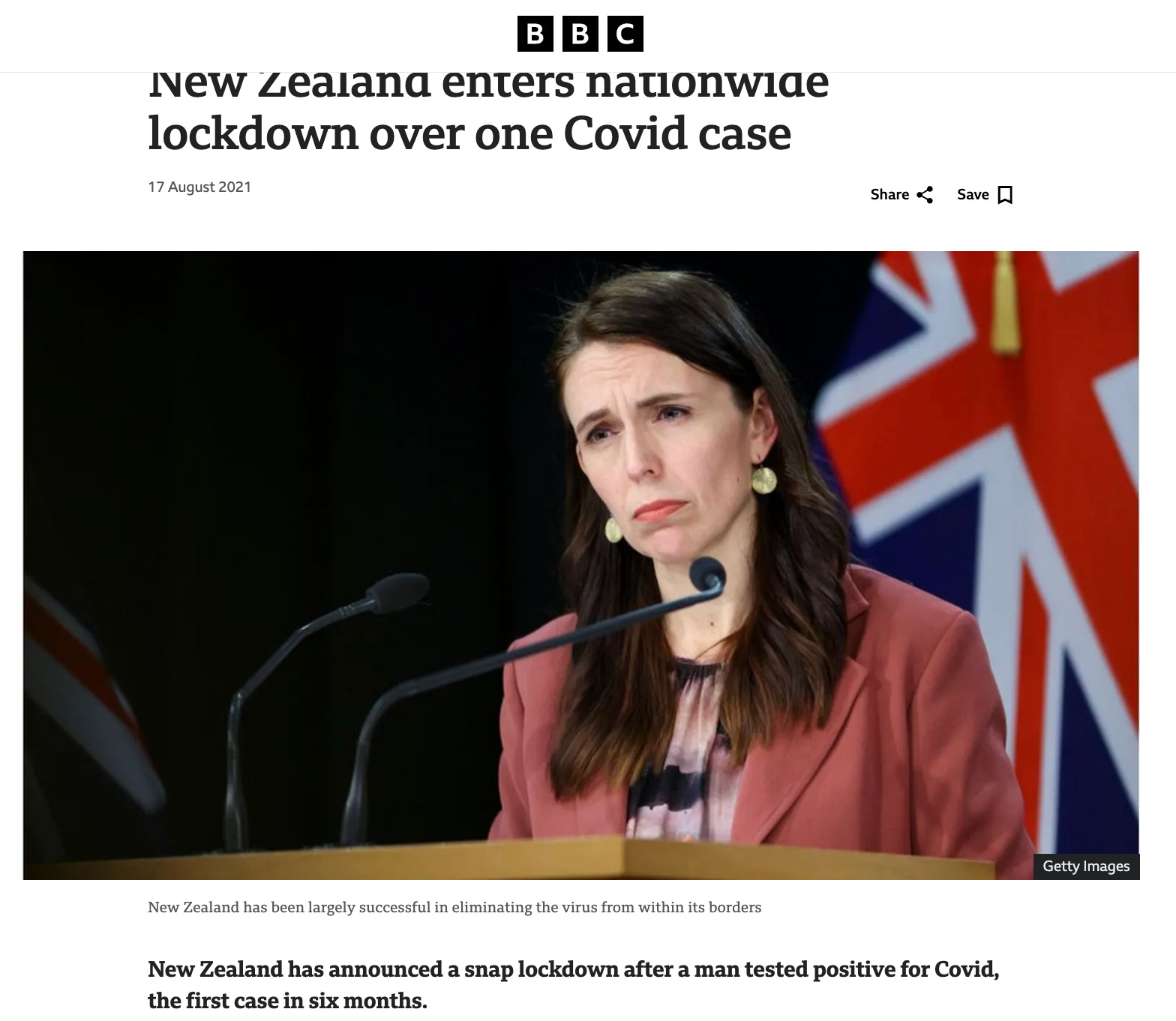
Keir Starmer has treated the world to a masterclass in political weakness. When the United States and Israel struck Iranian targets, Britain’s Prime Minister responded by repeatedly telling the media that Britain “was not involved” and nattering on about International Law. Britain’s closest ally was acting against a regime that openly threatens Western security and his instinct was to refuse to help. Donald Trump, never one for subtlety, remarked that Starmer was “no Winston Churchill.” On the evidence of this week, that feels like a painfully obvious observation.
The US’ inability to use the joint UK–US base at Diego Garcia in the Chagos Islands highlights the stupidity of Starmer’s extraordinary agreement to hand the Islands to Mauritius. The base is clearly central to Western power projection in the Indian Ocean and Middle East and handing over the land it sits on is just one example of how weak the former superpower of the seas is militarily and how detached parts of the British political class have become from basic questions of national security.
And then, the day after the strikes began, Starmer was filmed at the Ramadan “Big Iftar” event in Westminster Hall enthusiastically emphasising that he had ensured Britain was not involved in the operation which earned him applause from the Muslim audience. Critics have pointed out that Labour has become increasingly nervous about losing Muslim voters and just days earlier had lost the Gorton and Denton by-election to Gaza-focused Green candidate Hannah Spencer.
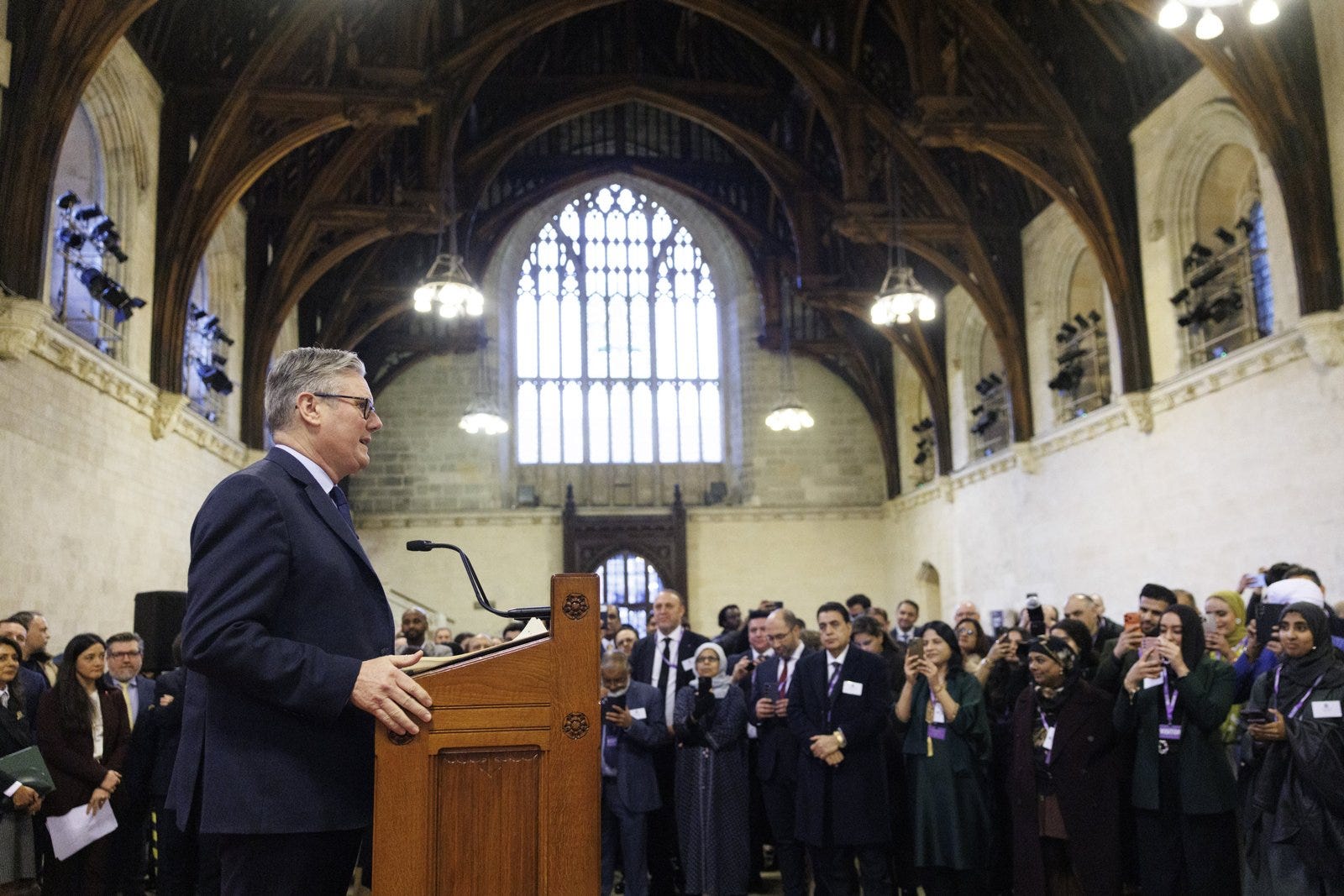
Keir Starmer at the Big Iftar in Westminster Hall. Photo: Downing Street.
Radio Waatea’s very expensive email
UMA Broadcasting Limited, which operates Radio Waatea, has been ordered to pay more than $43,000 after unjustifiably dismissing news editor Adam Gifford, who had worked at the station for 18 years.
The saga began when new general manager Matthew Tukaki announced plans in September 2024 to merge the station’s English and Māori news teams. Staff were emailed advising that “any change for employees may include reassignment, partial or full redundancies.” Gifford met with Tukaki and even offered suggestions about improving the station’s news delivery, but at no point was he told clearly that his specific role was on the chopping block.
Nonetheless, on 4 October 2024, Tukaki emailed Gifford advising his role would be cut in the merger. Twenty-five minutes later a formal termination letter landed in his inbox. Four minutes after that, an all-staff email went out announcing he would not be part of the new structure. If anyone needed a textbook example of what employment lawyers mean when they talk about a decision being “pre-determined,” that timeline probably qualifies.
Unionist Matt McCarten, the HR advisor brought in by UMA to guide the restructure, ultimately gave evidence supporting Gifford’s case at the ERA hearing, distancing himself from how the process had unfolded. The Authority awarded Gifford $19,000 for humiliation and loss of dignity, $24,230.77 in lost wages, plus KiwiSaver contributions and interest.
The Medical Council wants power to deregister doctors based on Treaty politics
The Medical Council of New Zealand is proposing new draft cultural competency standards that some say would require doctors not merely to treat patients fairly, but to actively pursue political concepts like “checking one’s privilege” and “dismantling power imbalances.” According to the draft guidance, doctors may be expected to recognise systemic power structures in healthcare and help advance outcomes aligned with Māori equity frameworks. Whatever one thinks about those ideas in the abstract, it marks a significant shift in what professional regulation is supposed to do.
Medical regulators are meant to exist to ensure doctors are clinically competent and patients are safe. Do we really want them drifting into the territory of enforcing ideological worldviews? New Zealand already struggles with shortages of GPs and specialist staff, and morale across the health system ain’t great. Introducing regulatory language that suggests doctors must take positions on contested political ideas is unlikely to improve that situation.
I wrote more about this consultation and the Nursing Council code of conduct here.
The Iran situation is more complex than you think
The current crisis with Iran is often presented as an overly simplistic moral binary with Israel and the United States on one side, Iran on the other, but the reality is far more complicated. The modern conflict essentially began with the 1979 Islamic Revolution, when the Shah (monarchy) of Iran was overthrown and replaced by Ayatollah Khomeini’s revolutionary Islamic theocracy. That revolution rapidly turned Iran from a Western-aligned state into one of the United States’ most determined enemies. They refer to the US as the “Great Satan” and “Death to America” is their catch cry. Israel is “Little Satan”. Within months of the revolution, militants seized the US embassy in Tehran and took dozens of Americans hostage, holding 52 of them for 444 days.
Since then the relationship has been defined by a cycle of sanctions, proxy wars, nuclear negotiations, and periodic military escalation. Over the years, Iran has built up a network of militant Islamist extremist groups across the Middle East, including organisations such as Hezbollah and Hamas, as well as militias in Iraq and Yemen. At the same time, Iran’s nuclear programme has remained a persistent flashpoint. Western governments have feared Iran could develop nuclear weapons capability which, given their open hatred and commitment to destroy the West, would spell disaster.
The current confrontation sits on top of 47 years of unresolved hostility, ideological rivalry, and strategic competition in the Middle East. On top of that is the global dimension, the interests of China in Gulf energy supplies, the role of Western financial and shipping systems, and the broader geopolitical competition between great powers, and it is clear why the situation is so volatile. What looks like a regional conflict is really the latest chapter in a much longer struggle over power, security, and influence in the international system. I am working on an article that explores the different layers to the conflict and lays out where China fits in it all. I will share it in the coming week.
Online harm report risks creating powerful speech regulator
Parliament’s Education and Workforce Committee has released its report into social media harm, recommending a wide-ranging new regulatory framework including a ban on under-16s using social media, new rules around deepfakes and algorithms, and the possible creation of a national online regulator. Acting chair National MP Carl Bates said New Zealand should take a “fast follower” approach, looking to overseas regimes such as those in Australia and the United Kingdom when designing its own system for regulating online platforms.
The Free Speech Union, however, warns the proposals risk going far beyond protecting children and could fundamentally reshape how all adults in New Zealand use the internet. The organisation supports efforts to reduce genuine harms facing young people online, but argues the report risks using child safety as a justification for much broader state control over online speech. It is particularly concerned about the proposal for a powerful new online safety regulator with the ability to define “harm” and create new rules.
FSU has drawn several “non-negotiable red lines” for any future legislation including no online regulator without strict limits on its powers, no digital identity regime for adults as a by-product of age verification systems, and clear legal definitions of harm tied to existing criminal law rather than subjective standards.
Chart of the week
@Charteddaily says:
“TVNZ’s half-year financial results out today make it hard to see how it can survive in the long term without either a taxpayer bailout or a drastic reduction in costs.
Ad revenue of $128m was the lowest first-half result in over 27 years, and is down 25% in just three years.”
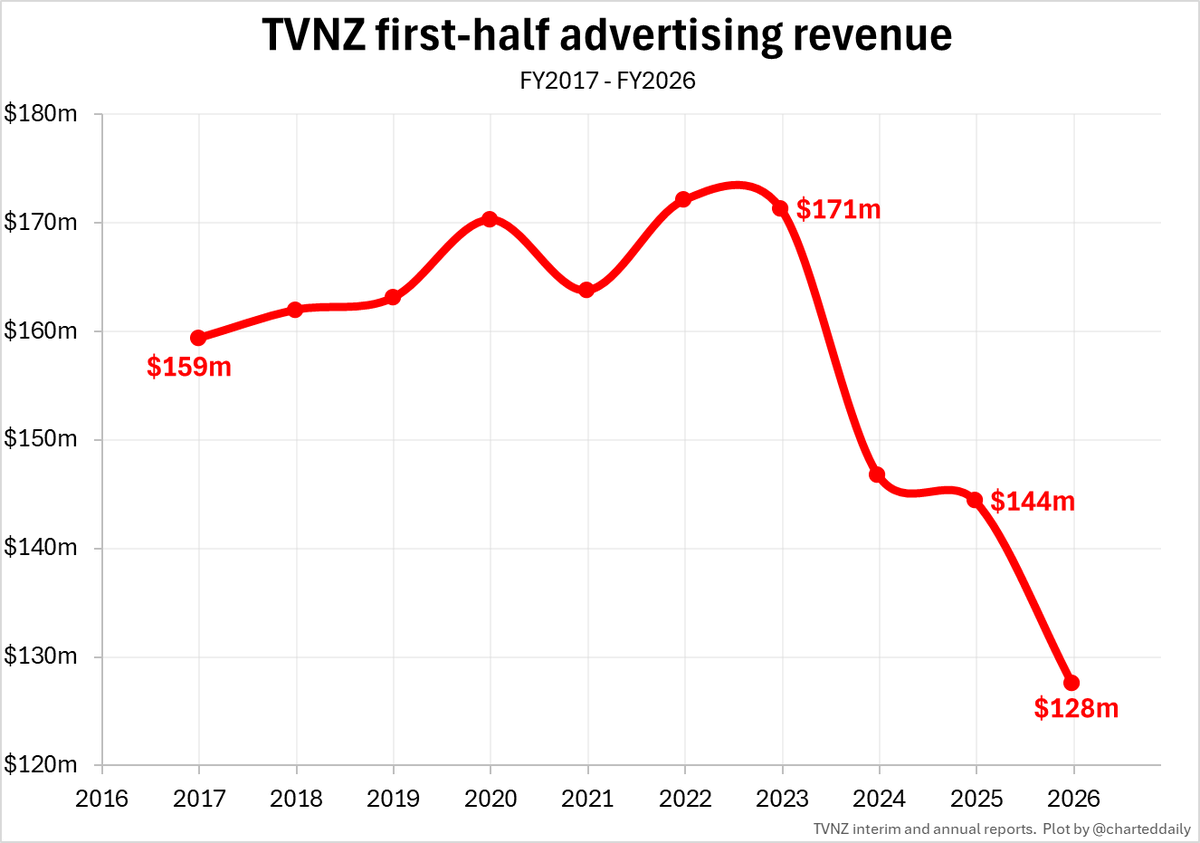
Click graph to view
In short - other stuff that happened
- UK Labour MP Joani Reid has resigned after her husband was arrested on suspicion of spying for China. Reid described it as “the worst week of my life.”
- The High Court has upheld a ruling voiding the 2025 Papatoetoe local board election after a District Court found voting irregularities materially affected the result, including 79 ballot papers cast without the rightful voters’ knowledge. A fresh election will now be held, with voting running from 9 March to 9 April.
- MP for Auckland Central Chloe Swarbrick has made repeated claims about children rough sleeping in Auckland's CBD and how the Government does not care. However, OIA documents posted on X reveal she has not sought any meetings with the Minister for Oranga Tamariki in the last 18 months.
- President Trump has reassigned Homeland Security Secretary Kristi Noem to be special envoy for a new security initiative in the Western Hemisphere called “The Shield of the Americas”. He has nominated Indigenous Republican Senator Markwayne Mullin to replace her.
- Britney Spears has been arrested in California on suspicion of driving under the influence after police pulled her over for allegedly driving erratically at high speed. She is due to appear in Ventura County Superior Court on 4 May.
- Guns N’ Roses is coming back to New Zealand and will perform a show at Auckland’s Eden Park on December 17. Tickets go on sale on Friday March 13.
- More than 2,500 cases of Steinlager Ultra Low Carb beer (around 60,000 bottles) have been recalled after being mistakenly labelled as alcohol-free when they actually contain 4.2% alcohol.
- Pharmac has warned that shortages of ADHD medications, particularly methylphenidate products such as Ritalin and Concerta, are likely to continue throughout 2026 due to rising global demand and manufacturing constraints.
- The chief executive of the Police Federation of England and Wales, Mukund Krishna, has been arrested on suspicion of corruption along with two former board members. Police conducted raids across several locations as part of what they described as a “complex and active” fraud investigation.
- Investigations have revealed that researchers from several Australian universities collaborated with Iranian scientists on drone-related research. The collaborations occurred despite a 2023 directive from Australia’s foreign minister ordering universities to cease partnerships with Iranian institutions.
- China has ordered its largest oil refiners to halt exports of diesel and gasoline as the escalating conflict in the Persian Gulf threatens crude supply from the region.
- The head of the New Zealand Security Intelligence Service, Andrew Hampton, told MPs that the agency’s current list of terror investigations “looks like a year 13 boys’ school,” with most being young men in their late teens or early twenties. Hampton said many are not formally linked to terrorist organisations but have radicalised through consuming violent online content.
- Journalist Paddy Gower has expressed regret over his role in the highly publicised 2021 “Vaxathon” campaign, acknowledging that some of the messaging during the Covid vaccination push was over the top.
- The US House of Representatives voted 357–65 to block a proposal that would have released all internal congressional reports on sexual misconduct and harassment allegations involving lawmakers and staff. The effort was pushed by Republican Representative Nancy Mace.
- Oranga Tamariki will begin its second military-style boot camp for serious youth offenders next week, with ten teenagers volunteering for a four-month residential programme in Palmerston North followed by a year of supervised reintegration.
- Two courier companies, Aramex and GoSweetSpot, have been fined a combined $1.225 million by the Commerce Commission after the Auckland High Court found they engaged in cartel conduct by allocating customers and fixing prices with competitors.
- Brendan O’Neill argues in The Spectator that Morrissey has become one of the last genuinely rebellious figures in popular music, not because of his sound, but because he refuses to conform to the political orthodoxy of the modern cultural elite. Contrasting the politically predictable speeches at the Brit Awards with Morrissey’s sold-out show at London’s O2 Arena, O’Neill claims the former Smiths frontman now represents a rare kind of dissent in an entertainment industry that largely polices ideological conformity. READ IT.
- “Virtue and Violence: The Strategic Logic Behind the Reemergence of Left-Wing Terrorism” by David C. Rapoport examines why left-wing political violence resurfaces even in democratic societies. The authors argue that modern extremists increasingly justify violence not as revolutionary strategy but as a moral obligation, framing sabotage or attacks as necessary to stop injustice when institutions are seen as failing.
The paper situates this within Rapoport’s Four Waves of Modern Terrorism theory and suggests that moralised narratives around issues such as climate, colonialism, or anti-capitalism can create the ideological conditions in which small militant factions emerge. It’s a thought-provoking analysis of how political violence rarely appears suddenly, but often grows out of rhetoric that portrays “extraordinary measures” as ethically justified.
- In another Spectator piece, commentator Alexandra Marshall argues that recent Middle East developments and US strategy under Donald Trump are best understood through the lens of hard geopolitical calculation. The piece suggests Washington’s actions toward Iran are aimed at weakening a potential China–Russia–Iran alignment and preventing a larger global conflict before it can form.
- Marshall also uses the moment to criticise Western governments, particularly Australia, for allowing domestic manufacturing, energy security, and defence readiness to decline, leaving them dangerously dependent in a major conflict. READ IT.
- I haven’t read this one yet, but I will be taking a look this coming week. It is a new report from the New Zealand Taxpayers’ Union called ‘The Myth of Rising Income Inequality’ which argues that claims of worsening income inequality in New Zealand are not supported by the data. Drawing on New Zealand Treasury analysis covering 2007–2023, the report finds inequality peaked around 2012–13 and has since declined, leaving it slightly lower in 2023 than at the start of the period. The briefing paper says this challenges arguments for higher income taxes based on inequality concerns and instead argues that economic stagnation and cost-of-living pressures, not rising inequality, are the real issues facing New Zealand households.


4 comments:
I agree with the positive list of government achievements. And although Luxon wants us to believe it's the economy that is besetting his government, I think that is a smokescreen.
What he does know is National gave the distinct impression there would be a 180 turn on Maori domination on everything to do with government and governance. People hate the racism of this kind of ethno state bullshit where equality ceases to exist. It will be a decent component of why people are quitting NZ. God knows I've thought about it enough. Yet National cling to it. And they've had to be dragged kicking and screaming to change anything and only if there is a public outing. You know where ACT stand and NZF, National though, bury it. And it's overwhelming.
Maurice Williamson pointed out this week that a subsection inserted into the Local Government Act by Nanaia Mahuta gave unelected Maori board members the power to veto the appointment of a Watercare CEO on the basis of tikanga. It took a lot of money in court to get the candidate the council wanted appointed. Ratepayer money spent on nothing useful to satisfy ethno nationalistic legislation. This issue has been raised over 2 years ago and that sneaky hidden subsection remains. National holding the local government ministry are not interested.
We've discovered that National under John Key gave away an awful lot under "Treaty Settlements" including introducing co-governance. Few of us knew this, it was carefully hidden. I'm betting Nationals MP's knew it though and love this shit as much as Labour. Hence Luxon is permanently tongue tied. He's living the lie National are a common sense conservative right of centre government but in reality are barely distinguishable from Labour. Hence he avoids media like The Platform or Duncan Garner like the plague. He can only do patsy interviews. And he knows the legacy media won't mention Maori so although they detest him, they won't go there.
Regardless, I cannot see him going well come election time. His own voters are deserting National and it's goofs like him, embracing woke values, that is the reason.
My word you are an asset to this little country Ani - I guess you don't want to have a go at running it yourself. Thank you very much!
Well said Pete
There is one glaring error in Winston’s English Language bill. It seeks to place the English Language as an official language of New Zealand. My recommendation is to have the English Language set in concrete as THE official language. As in THE, definite article.
Following on from there I would have a repeal of the Maori Language Act (2016). In other words return the Maori language to the Marae and to any interested sections of academia. That is return to sender.
The point here is also to ask if the lingua fascists are really aiming for the elimination of English as we know it.
I would have other legislation amended to see Maori language downgraded to an unofficial language, along with other non-English languages, for optional use by any appropriate communities.
My main issue with the Maori language question is that it is hanging on mainly as a spoken language, and that may have been the original purpose of the Maori Language Act. We now see concentrated and corrupting efforts to make inroads into spoken and written English. Rather than being used as an official language it is becoming an officious language.
We are left with the matter of sign language. My understanding is that the sign language used currently is based on the English language only, with some international signing. Where to, if anywhere, for a Maori sign language?
Post a Comment
Thank you for joining the discussion. Breaking Views welcomes respectful contributions that enrich the debate. Please ensure your comments are not defamatory, derogatory or disruptive. We appreciate your cooperation.