

This is an opinion piece I wrote recently and submitted to the NZ Herald but they have chosen not to publish (which is their right), ironically as they give their front page over to the views of Helen Clark.
We have heard much of the rules-based order and international law since the United States and Israel acted against the Islamic regime in Iran. From Helen Clark to Phil Goff, various academics and commentators, these terms roll of the tongue with an assured certainty.

However, the international rules-based order has been failing for decades now. Whether the Islamic regime’s continual breaches over many years; Russia’s war on Ukraine; or China’s militarisation of various islands in the South China sea – there has barely been a day when these supposedly sacrosanct rules are working. It only seems in the halls of the United Nations or universities, that the delusion of an orderly system exists.
The conundrum we have of course, is that we would like to see a strong international rules-based order. It is in New Zealand and other small nations’ interests. I am under no illusion that recent actions in the Middle East are setting what is left of this order backwards. But we are also confronted with realpolitik. Do we continue engaging in endless rounds of pointless diplomacy to satiate the diplomats and politicians, or do we act to hopefully create an environment where rules and order can function?
For many in the West, we seem to think that concepts such as international law can simply exist by good intentions alone. If the decades past has shown us anything, it is that incessant talk and endless statements have achieved little other than a bloated United Nations bureaucracy and an endless array of academic papers. As with the Islamic regime, decades of negotiation and discussion, diplomatic rounds and sanctions have resulted in nothing but failure. As an earlier opinion writer in the NZ Herald, Samira Taghavi, noted from her reported discussion with Helen Clark, there seems to be those who believe that “only a toothless cycle of failed steps is available – and its inefficacy is just how life is.”
Taghavi is right, and the inefficacy may be novel to the outside observer but of mortal consequence to those experiencing the reality of brutal regimes.
The failure in many Western circles – political and academic – is understanding that regimes such as those controlling Iran (or for that matter, its terrorist proxies such as Hamas and Hezbollah) view concessions and compromise as a weakness. Every time Western governments or moderate Arab countries have sought compromise, the likes of the Islamic regime have agreed in voice but acted contrary and in its own self-interest.
The best example is former President Barack Obama’s Joint Comprehensive Plan of Action (JCPOA) of 2015, often cited by Clark, Goff, and others. For them, this appears a holy totem of engagement with the Islamic republic when in fact it has been an abject failure from day one. It is the key reason why President Trump dumped it. Yet many commentators seek to manipulate people’s understandable distrust of Trump to suggest the agreement’s failure is due to him, and not the fact that it has achieved absolutely nothing other than the Islamic regime enriching uranium for its nuclear weapons programme, and Western diplomats wanting more conversations.
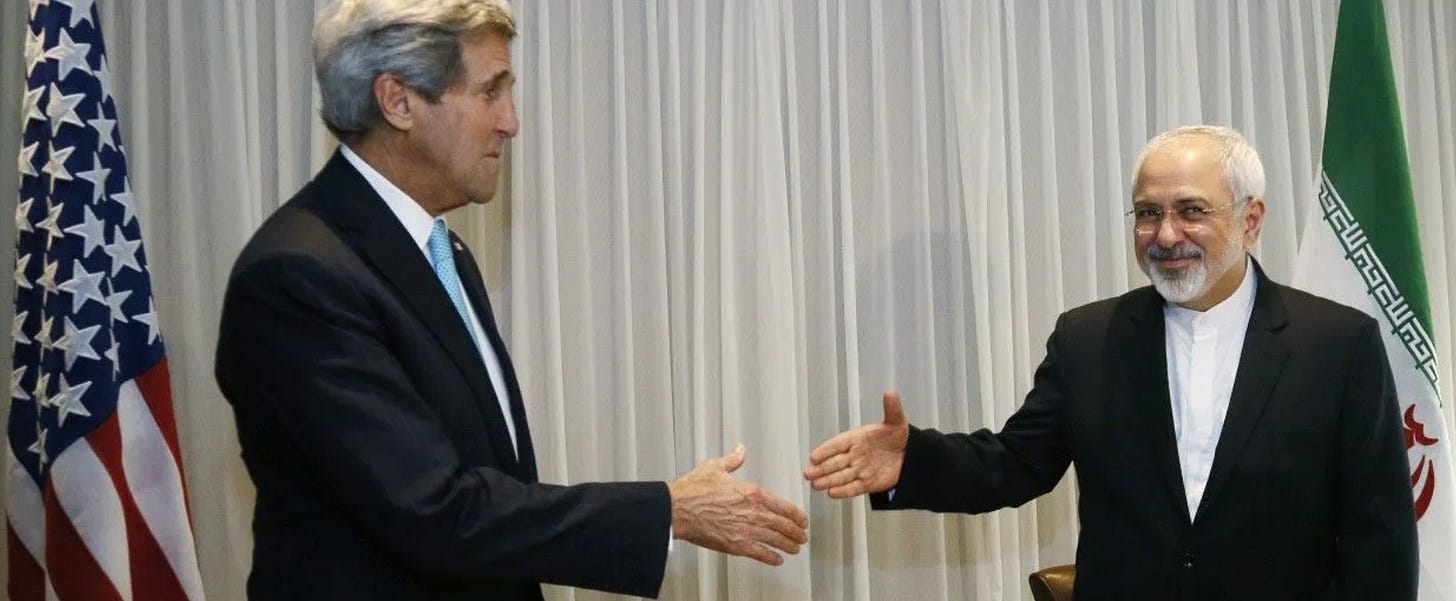
2015 - the US and Iran sign Obama’s JCPOA.
At this point, we should also make mention of the importance of human rights. Human rights derive from Judeo-Christian values and are not universally accepted around the world. It should be of no surprise that the Ayatollah and mullahs of the Islamic regime do not subscribe to them. Women are, at best, second class citizens in Iran; there is no freedom of religion (just try converting); and recently and horrifyingly, over 32,000 Iranians were brutally murdered - in just a few days - by the Islamic regime, and to the complicit silence of the usual activist suspects here in New Zealand.
Yet, as to prove my wider point, the United Nations has recently seen Iran appointed Vice Chair of the United Nations Charter Committee – the committee overseeing the very principles and values of the United Nations.
Ultimately, the international rules-based order needs to function in a real and effective way; in a way that expresses the principles and values that underpin it. As it stands today, it operates as a shield for bad actors and a hollow application of words and academic papers.
If we want an effective rules-based order that does not flail and fail in the face of the evil such as that of the Islamic regime, we need to promote security, democracy, human rights, along with a determination to draw a line in the sand and act when required.
Simon O'Connor a former National MP graduated from the University of Auckland with a Bachelor of Arts in Geography and Political Studies . Simon blogs at On Point - where this article was sourced.
For many in the West, we seem to think that concepts such as international law can simply exist by good intentions alone. If the decades past has shown us anything, it is that incessant talk and endless statements have achieved little other than a bloated United Nations bureaucracy and an endless array of academic papers. As with the Islamic regime, decades of negotiation and discussion, diplomatic rounds and sanctions have resulted in nothing but failure. As an earlier opinion writer in the NZ Herald, Samira Taghavi, noted from her reported discussion with Helen Clark, there seems to be those who believe that “only a toothless cycle of failed steps is available – and its inefficacy is just how life is.”
Taghavi is right, and the inefficacy may be novel to the outside observer but of mortal consequence to those experiencing the reality of brutal regimes.
The failure in many Western circles – political and academic – is understanding that regimes such as those controlling Iran (or for that matter, its terrorist proxies such as Hamas and Hezbollah) view concessions and compromise as a weakness. Every time Western governments or moderate Arab countries have sought compromise, the likes of the Islamic regime have agreed in voice but acted contrary and in its own self-interest.
The best example is former President Barack Obama’s Joint Comprehensive Plan of Action (JCPOA) of 2015, often cited by Clark, Goff, and others. For them, this appears a holy totem of engagement with the Islamic republic when in fact it has been an abject failure from day one. It is the key reason why President Trump dumped it. Yet many commentators seek to manipulate people’s understandable distrust of Trump to suggest the agreement’s failure is due to him, and not the fact that it has achieved absolutely nothing other than the Islamic regime enriching uranium for its nuclear weapons programme, and Western diplomats wanting more conversations.
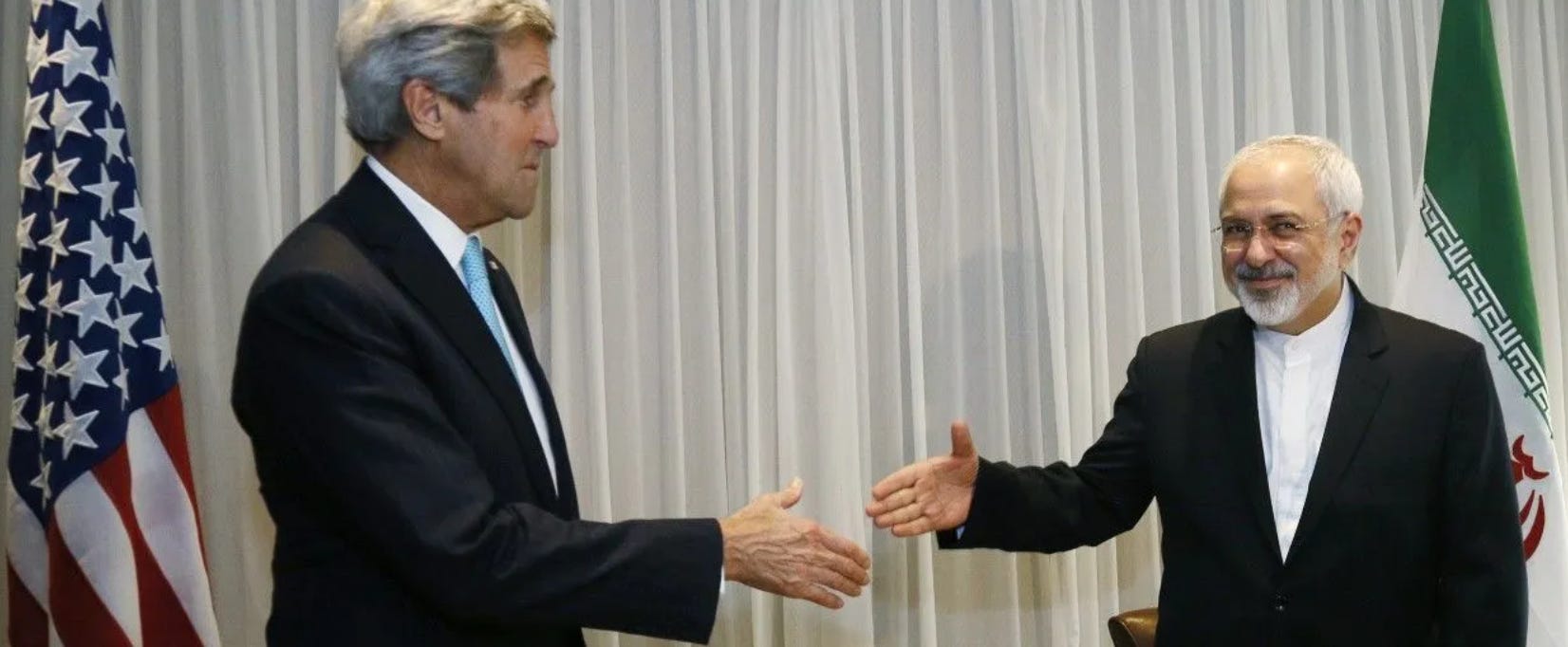
2015 - the US and Iran sign Obama’s JCPOA.
At this point, we should also make mention of the importance of human rights. Human rights derive from Judeo-Christian values and are not universally accepted around the world. It should be of no surprise that the Ayatollah and mullahs of the Islamic regime do not subscribe to them. Women are, at best, second class citizens in Iran; there is no freedom of religion (just try converting); and recently and horrifyingly, over 32,000 Iranians were brutally murdered - in just a few days - by the Islamic regime, and to the complicit silence of the usual activist suspects here in New Zealand.
Yet, as to prove my wider point, the United Nations has recently seen Iran appointed Vice Chair of the United Nations Charter Committee – the committee overseeing the very principles and values of the United Nations.
Ultimately, the international rules-based order needs to function in a real and effective way; in a way that expresses the principles and values that underpin it. As it stands today, it operates as a shield for bad actors and a hollow application of words and academic papers.
If we want an effective rules-based order that does not flail and fail in the face of the evil such as that of the Islamic regime, we need to promote security, democracy, human rights, along with a determination to draw a line in the sand and act when required.
Simon O'Connor a former National MP graduated from the University of Auckland with a Bachelor of Arts in Geography and Political Studies . Simon blogs at On Point - where this article was sourced.


7 comments:
The idea of a rules based world order, has and will always be unachievable.
Those on the left continue with their fantasies of dominantion.
Islam and Christianity are incompatible in many respects . Not the least is that Allah is not the Hebrew God and Muhammad was a warlord while Jesus was quite the opposite. The ethics and morality of both are divergent. The current war is a religious one and Islam is not a religion of peace but domination and conquest. There is therefore no possibility of agreement. It is foolish of Helen Clark to waffle on about human international law when this is a spiritual battle with spiritual laws. Donald Trump recognises this .
Islam's hatred of the Jews and their destruction is comparable to Nazi Germany's regime. Islam sided with Nazi Germany then and its aims have not changed.
mudbayripper is the solution to go back to the 80s where NZ was cut off from the world
"Spiritual battle with spiritual laws", my arse - it is over LAND that each side says it was promised by its god.
Islam and Christianity are both offshoots of Judaism (they belong to the Abrahamic family of religions, as any introductory text on Reli studies will confirm) and both based their god concept on it. However, Muhammed had access only to the OT and it is accordingly little wonder that Mosaic ethics prevail. My favourite verses here are Numbers 31:17-18 "Now therefore, kill every male among the little ones, and kill every woman who has known a man by sleeping with him. But all the young girls who have not known a man by sleeping with him, keep alive for yourselves." Looks like old Mo' had it pretty right, ay?
As for Islam copping it as being the religion of war and conquest, perhaps we should have a wee look at those orgies of pillage, murder and rape euphemistically referred to as the Crusades, and the behaviour of the Spanish in South America, all with the blessing of the Church. People in glass houses need to be very careful when they start throwing stones.
What's "human international law"? - what does its opposite ("inhuman international law"..... ?) look like? Better do a bit of reading on what international law is all about. Admittedly it hasn't worked all that well in settling disputes where powerful military actors are involved but we've done all right in various other areas e.g. regulation of shipping and air transport world-wide, elimination of CFC emissions, protection of endangered species..........
More than three decades ago, the UN - and notably Unesco (much maligned ) as the agency dealing with culture - realized the complexities of multiculturalism would inevitably focus on race, religion/spirituality and language.
Do go on, Anon 209 - this reads like an introductory sentence that you are now going to elaborate upon and make the requisite connections with the topic of the article.
NZ has gone all wishy-washy. Bring back masculinity front and centre.
Post a Comment
Thank you for joining the discussion. Breaking Views welcomes respectful contributions that enrich the debate. Please ensure your comments are not defamatory, derogatory or disruptive. We appreciate your cooperation.