

The Maiki Sherman saga has now expanded well beyond the original “faggot” incident. The TVNZ Political Editor is alleged to have used a homophobic slur toward Lloyd Burr at a ministerial event in 2025, an incident confirmed by Finance Minister Nicola Willis, who said she heard “offensive language” and shut the event down. The story, which had circulated privately for months, became public this week when I wrote about it on this Substack. This has triggered scrutiny not just of the incident itself, but of how it was handled and essentially covered up. The fact that TVNZ issued legal threats to another media outlet who was investigating the matter, raises massive concerns.
Sherman has now also been suspended from Parliament for five days after breaching press gallery rules in another unrelated incident and is not travelling with the press gallery to Singapore.
Meanwhile, I received some confusing legal threats from Stuff too.
Read my first article here and second article here.
🇺🇸 Trump assassination attempt #3
There was a third attempted assassination of President Donald Trump at the White House Correspondents’ Association Dinner this week. Cole Thomas Allen, a 31 year old Californian, attempted to breach security carrying multiple weapons, including a shotgun, handgun, and knives, and moved toward the ballroom where the President was. Allen was detained, but not before shooting one Secret Service agent who is expected to recover.
Allen had a written manifesto and online content that provides clear insight into his motivations and hatred of President Trump, though some media and political figures like Barack Obama have pretended there is ambiguity. This third attempted attack is part of a broader pattern of politically motivated violence. Unfortunately, it is difficult to discuss this serious matter as was demonstrated by the backlash against CNN’s Dana Bash for asking Democratic congressman Jamie Raskin about whether political rhetoric should be reflected on given the amount of violence. Allen’s manifesto reflects a lot of Democratic anti-Trump talking points and in that respect isn’t particularly fringe. For now it appears Democratic leadership is not prepared to confront this fact.
🇺🇸 Reporting on Trump and the King
King Charles III’s visit to the United States has been framed in much of the New Zealand media as tense, awkward, or faintly adversarial, but I’m in Washington DC as I write this and that does not reflect how things are here. Here the visit has been treated as a significant diplomatic and symbolic moment reaffirming the long-standing alliance between the two countries. The King’s address to Congress emphasised shared democratic values, historical ties, and cooperation on global challenges, and was met with bipartisan applause from both Democrats and Republicans. Likewise, Donald Trump publicly praised the King in warm terms, calling him “a great king” and underscoring the strength of the relationship.
What stands out, in contrast, is how New Zealand coverage has consistently searched for tension and highlighted supposed “subtle rebukes,” awkward moments, or breaches of etiquette, even when the broader tone of the visit has been cordial and deliberately statesmanlike. There is an inability, or unwillingness, to report on events involving Trump without injecting a perpetual layer of cynicism or hostility.

Photograph: Alex Brandon/AP
Election 2026: questionable candidates raise eyebrows
The Greens have found themselves again on the defensive over candidate selections, with Māngere candidate Michel Mulipola facing scrutiny over social media posts, including a deleted post celebrating the assassination of Charlie Kirk and earlier video in which he rips up the New Zealand flag. The Greens co-leaders are apparently unbothered, framing this as the messy reality of bringing in outspoken activists. Would he even be willing to take the oath of allegiance if he were to become an MP?
In Tukituki, independent candidate Kaleb Hawkins has attracted attention due to his recent history of serious violent offending. But he argues that his lived experience equips him well to reform the Corrections and justice systems.
Labour’s decision to run Kingi Kiriona against Te Pāti Māori’s Hana-Rawhiti Maipi-Clarke in Hauraki-Waikato signals that the Māori seats will again be a key battleground and Labour aren’t messing around. The Māori Queen Ngā Wai hono i te pō has endorsed both candidates.
And, National is steadily locking in candidates with business and professional backgrounds, such as Matthew Paul in Port Waikato and Matthew Evetts in Kenepuru.
The India Agreement: win, loss, or both?
New Zealand has now signed its free trade agreement with India, with Todd McClay and Piyush Goyal finalising a deal National and Act say will unlock one of the world’s fastest-growing markets.
Around 95% of exports will face reduced or eliminated tariffs, with key sectors like sheep meat, forestry and seafood gaining access to a market that has historically been effectively closed by high costs. Over time, “most favoured nation” provisions also mean New Zealand will benefit from any future improvements India offers to other partners.
But New Zealand First has pointed out that dairy remains largely excluded, meaning the country’s biggest export sector sees only marginal gains. They also criticise that the deal includes immigration pathways. These concerns about worker exploitation and labour market impacts, are shared by the unions.
I have been asked to write more in depth about this deal as a lot of Kiwis are confused by the duelling narratives. I will do my best to do so in the next week or two.
Cracks in the coalition as parties seek to differentiate
The relationship between Christopher Luxon and Winston Peters, and their parties, encountered some turbulence this week. Tensions seemed to spill out publicly with both sides clearly positioning for the election rather than prioritising coalition cohesion.
There was the dramatic release of internal government emails by Peters’ office, showing a disagreement over New Zealand’s stance on the US strikes in Iran, which blindsided the Prime Minister’s office and allegeedly triggered urgent talks between the two leaders. National accused Peters of putting “politics ahead of the national interest.” Peters, for his part, has alternated between calling the release a mistake and defending it as consistent with his long-standing approach to transparency.
As mentioned above, the India Free Trade Agreement has been another fault line, with NZ First even challenging other ministers during Question Time, an unusual departure from coalition norms of soft ball patsy questions. Nicola Willis has also publicly rebuked NZ First rhetoric around immigration calling out comments from Shane Jones as inappropriate.
The underlying dynamic is that both parties are now competing for the same pool of voters and as election pressure builds, differentiation becomes more valuable than discipline. NZ First have been nabbing disaffected National voters and that is concerning the blue team. Former National Minister Chris Finlayson has suggested the party should “declare war” on NZ First and exit the coalition altogether. But he has been a less than helpful commentator for the Nats this term.
NZ First is in a solid, confident position at this stage in the election cycle. They are a party on the rise. Donation returns show they are currently leading the pack in major political donations, sitting ahead of both National and ACT, with nearly half a million dollars declared so far this year. That financial momentum reinforces the political reality that NZ First has a real chance of a record breaking result at the election.
Female-only spaces and council confusion
A new nationwide review by Speak Up For Women has looked into how many genuinely female-only spaces still exist in public facilities. The answer, according to the data, is not many. Never mind that our Human Rights Act provides for sex-segregated spaces. Of all councils surveyed, only eight could clearly confirm that they provide female-only changing and showering facilities, while the overwhelming majority either do not or cannot clearly explain their own policies.
Many councils continue to label facilities as “female” while operating policies that allow access based on gender identity, meaning that in practice those spaces are not female-only. Others appear to rely on vague, case-by-case approaches that leave the public guessing. The result is a patchwork of inconsistent standards across the country, where what “female” means depends entirely on which council you happen to be in.
The report also highlights a deeper issue around how these policies are being set. A significant number of councils are relying on external guidance, rather than clear statutory requirements, to shape access rules, effectively treating activist positions as if they were settled law. You can see what your local council said here.
The bizarre priorities of Wellington City Council
The capital city is dealing with the fallout from the recent severe flooding. The official mayoral relief fund, even after Government support, sits at around $350,000 and is intended to help those affected with essentials like accommodation, food, and basic recovery. But some are pointing out that the council is indulging in tone-deaf and wasteful spending that is difficult to justify when compared to this disaster relief.
It has emerged that $130,000 has been spent on new commissioned artwork for the council’s new offices, part of a broader $40 million office fit-out, at a time when rates are increasing astronomically and nothing seems to be working as it should. Some councillors themselves have described the spending as “gratuitous” and “out of kilter”.
The council is suffering from a wider pattern of dysfunction. Major council projects are already running over budget, while internal tensions have spilled into public view with disputes over office allocations, complaints about lack of oversight, or broader concerns about a culture disconnect between elected members and council staff. The council’s priorities are clearly well out of whack.
Rod Drury facing additional allegations
A second former Xero employee has come forward with allegations of inappropriate conduct by Sir Rod Drury. The new complaint follows earlier claims by ex-staff member Ally Naylor, who alleged unwanted sexual advances and harassment during her time working at Xero.
The second complainant alleges that what was framed as a professional meeting at Drury’s apartment turned into an inappropriate encounter, leaving her distressed. Another former employee has corroborated that she reported the incident at the time.
Drury has consistently denied any wrongdoing, maintaining that his relationships were “consensual and mutual.” Meanwhile, Xero has initiated an external review led by King’s Counsel Maria Dew, which is examining both the original 2017 complaint and the company’s handling of it, with scope to consider additional allegations if relevant.
🇦🇺 Utter horror in Northern Territory
It is impossible to write about what happened to the five year old girl they call Kumanjayi Little Baby without feeling sick and horrified. This was a little girl, non-verbal, vulnerable, and described by her family as “only a little baby”, taken from her home.
She went missing in the early hours of April 26 from the outskirts of Alice Springs. She had been put to bed while a social gathering took place at the residence and her disappearance was reported to police at around 1:30am. Police urgently launched a large-scale search operation involving officers, Aboriginal trackers, volunteers, defence personnel, and aerial support.
Jefferson Lewis (47) had been staying nearby having been released from prison less than a week earlier and was quickly identified as the primary suspect. Police say he was seen with the child shortly before she disappeared. During the search, investigators recovered items including clothing and children’s underwear near the area she went missing. Forensic testing identified DNA profiles linked to both the child and Lewis.
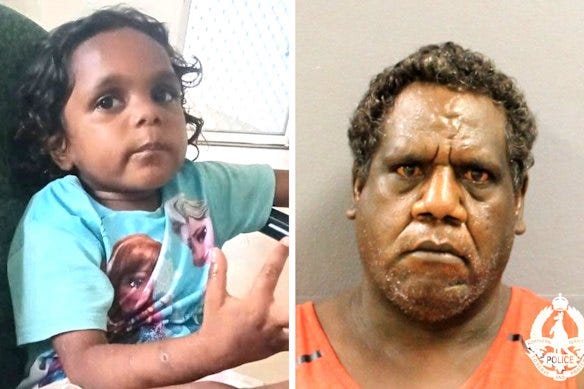
Then, on April 30, her body was found just five kilometres from where she had been taken. Later that night, Jefferson Lewis was located in Alice Springs and taken into custody. Police reported he had been assaulted by members of the community prior to his arrest and was unconscious when officers intervened. He was transported to hospital and later moved to Darwin due to safety concerns as a large crowd gathered outside the hospital, literally baying for his blood. Clashes occurred between members of the public and police outside the hospital and emergency services personnel and vehicles were attacked.
Police have stated that a full homicide investigation is ongoing and charges against Lewis are expected, but formal proceedings are still underway.
🇬🇧 Britain’s assisted dying bill stalled and far from settled
Britain’s long-running debate over assisted dying has hit a major procedural roadblock, with the proposed legislation now set to fall after running out of parliamentary time. The Terminally Ill Adults (End of Life) Bill, introduced by Kim Leadbeater, had already passed the House of Commons, signalling support in principle for allowing terminally ill adults with less than six months to live to seek medical assistance to end their lives under strict safeguards.
However, the bill has been effectively blocked in the House of Lords, where more than 1,000 amendments were proposed and debated at length, slowing progress to the point where it could not complete all stages before the end of the parliamentary session. Because it is a private member’s bill, it cannot be carried over into the next session, meaning it will now fall and would need to be reintroduced from scratch if supporters want to revive it.
Supporters argue the volume of amendments amounted to a de facto filibuster by unelected peers, while opponents insist the scrutiny was necessary to address concerns around coercion, safeguards, and protections for vulnerable people. Public opinion in Britain continues to show majority support for assisted dying in tightly defined circumstances, but deep divisions remain among medical bodies, disability advocates, and religious groups over whether the proposed safeguards are sufficient.
Truancy prosecutions: a last resort the government isn’t afraid to use
A case prosecuting parents is before the courts in the Government’s crackdown on truancy led by David Seymour. A further 16 cases are under active investigation and dozens more have been referred to the Ministry of Education’s prosecutions unit. The approach is deliberately hard-edged, but prosecution is framed as a last resort. However the Government wants to show it is willing to use prosecution where parents are seen as unwilling, rather than unable, to send their children to school.
There is some evidence the threat is having an effect. Of 34 cases referred, 17 have been resolved without needing prosecution, often with children being re-enrolled in school. Attendance rates have also ticked up, with 68.6% of students attending regularly in term one which is the highest since 2020, though still below pre-Covid levels.
There has been some confusion as to what Labour’s policy on this issue is as education spokesperson Ginny Andersen has been emphatic that the party does not support prosecuting parents as a solution to attendance issues, arguing that penalising struggling families risks worsening the problem. Yet Labour leader Chris Hipkins has actually signalled support for the Government’s emphasis on prosecution.
Healthcare pay and union disputes
A deal has now been reached for junior doctors represented by the Specialty Trainees union, delivering a 5% pay rise over two years plus a $3000 lump sum, without the need for industrial action. The agreement also includes improvements to conditions such as better support for parental leave and relocation which the union has described as a significant win.
Nurses, midwives and healthcare assistants represented by the New Zealand Nurses Organisation, on the other hand, have just received their first pay offer after nearly a year of bargaining, with details still under wraps as members consider their response.
Legislation updates: a busy and mixed programme
Parliament has been moving through a wide mix of legislation at a rate of knots. A number of member’s bills have passed first readings including a bill from Jenny Salesa to create a public register of boarding house landlords which has unanimous support. Arena Williams’ member’s bill to make international money transfers cheaper by forcing transparency on fees has broad backing across Parliament, though not from National, which argues existing reforms already address the issue.
There is also a clear law and order thread running through the Government’s programme. Legislation strengthening powers for the Serious Fraud Office has passed its first reading, expanding its ability to access digital evidence and conduct investigations more efficiently. Alongside that, a Corrections amendment bill targeting “extreme risk prisoners” has also cleared its first hurdle, introducing tighter controls on high-risk inmates while explicitly banning prolonged solitary confinement.
The Modern Slavery Bill has passed its first reading after National’s Greg Fleming and Labour’s Camilla Belich secured the support of more than 61 non-executive MPs (MPs who are not ministers), allowing the bill to be introduced directly under Standing Order 288 without going through the usual ballot process. Meanwhile, a Green Party member’s bill to protect people from low-level drug prosecution when seeking help for an overdose has also progressed without support from National and NZ First.
Several major government bills have now passed their final stages including the Online Casino Gambling Bill which introduces a regulated licensing regime and new consumer protections. And Auckland transport reforms have also passed into law, shifting more decision-making power back to elected council representatives.
Finally, new member’s bills have been drawn from the biscuit tin which relate to banning so-called virginity testing and a “no body, no parole” proposal that would deny parole to offenders who refuse to disclose the location of victims’ remains.
🇬🇧 Britain’s Jewish community are rightly terrified
Two Jewish men aged 34 and 76 were stabbed in what police have declared a terrorist attack in Golder’s Green, London. The UK’s terror threat level has risen to “severe,” as a consequence, meaning further attacks are considered highly likely. This follows arson attacks on synagogues, firebombings of Jewish ambulances, and a steady drumbeat of intimidation targeting visibly Jewish people in their own neighbourhoods.
The mood within the British Jewish community is one of proper fear. Parents are asking whether it is safe for their children to even go to school. People are questioning whether they can wear a kippah in public. Others are making plans to leave the country altogether.
Jewish leaders and residents have been warning for years about a “rising tide” of antisemitism. The comparisons to pre-World War II Europe may be uncomfortable, but they are not unreasonable. One resident in Golders Green said “This is like the 1930s… the writing’s on the wall—we need to go”.
And Britain’s institutions are struggling to respond. Police are stretched and politicians are weak. Unsurprisingly Keir Starmer was booed and heckled when he visited the site of the terror attack this week. Conflict has also arisen between Green Party leader Zack Polanski and Metropolitan Police Commissioner Mark Rowley. Polanski shared commentary criticising police for being too rough when apprehending the terrorist, and Rowley responded with unusual bluntness, accusing him of spreading “inaccurate and misinformed” claims that risked undermining officers confronting what they believed to be a terrorist threat. Rowley backed his staff and called out internet armchair experts.
Chart of the week
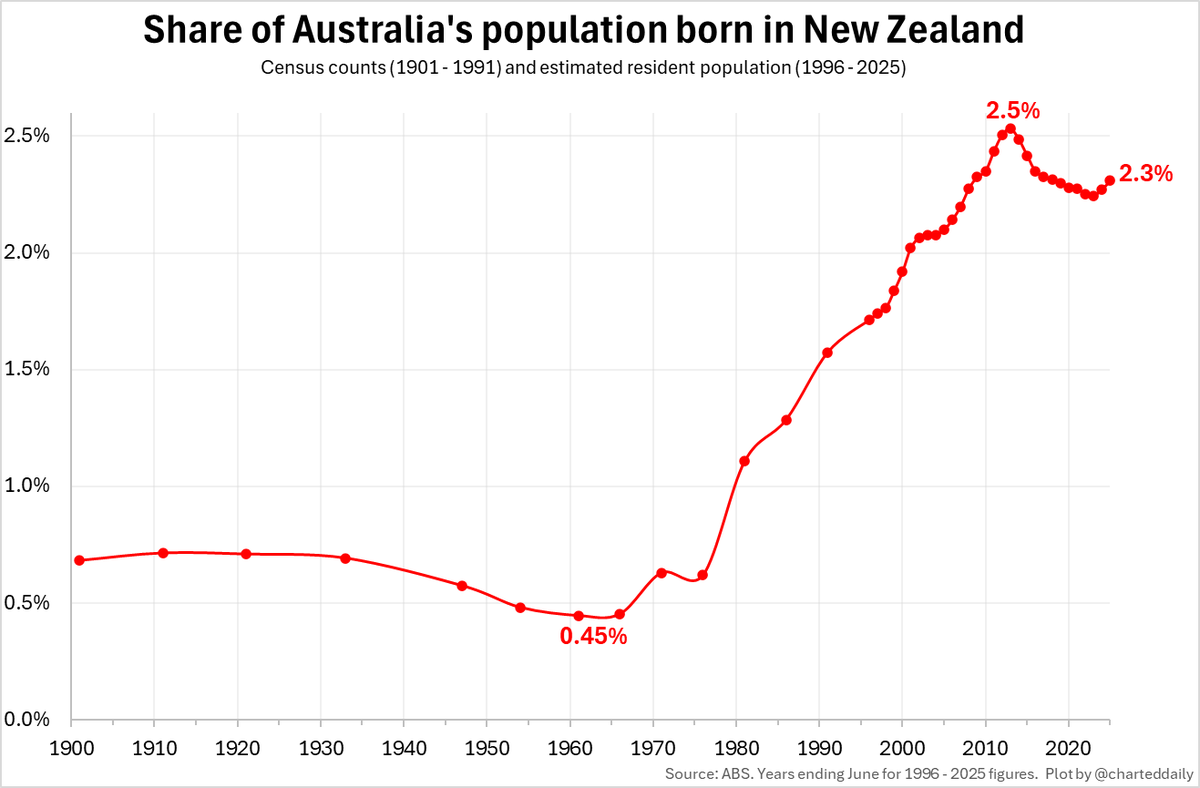
Charteddaily: The share of people living in Australia who were born in New Zealand increased in 2025, but remains below the peak levels seen between 2009 and 2018.
In short - other stuff that happened
The New Zealand Court of Appeal has rejected Brenton Tarrant’s attempt to appeal his convictions for the Christchurch mosque attacks, ruling his application to file an appeal out of time had no merit and that his guilty pleas were voluntary and not affected by his mental state or prison conditions.
🇬🇧 Around 500 police officers raided a Cheshire compound used by the Islamic Ahmadi Religion of Peace and Light, arresting several suspects and safeguarding more than 50 children as part of an investigation into alleged rape, modern slavery, and forced marriage.
The Crusaders are continuing to explore bringing their pre-match horses back to One New Zealand Stadium after initially ruling them out on safety grounds, conducting further on-site testing and planning additional trials.
NZ Herald is reporting that Viv Beck remains employed as CEO of Heart of the City but has been stood down, pending investigation. The board has launched a governance review after concerns raised by Mayor Wayne Brown about oversight, funding, and board turnover.
🇦🇺 Dr Vahid Reza Adib (65) partner of former Queensland premier Annastacia Palaszczuk, has been charged by Queensland Police with three counts of rape, two counts of deprivation of liberty, and one count of sexual assault relating to an alleged incident involving a woman in her 30s at a Gold Coast property on March 30. He is due to appear in Southport Magistrates Court on May 14.
Dunedin councillor Benedict Ong leaked a confidential council email to the media within six minutes of receiving it, despite it being marked “in confidence” and relating to a code of conduct complaint about his previous disclosures of sensitive information.
🇺🇸 Brian Harpole, former security chief to Charlie Kirk, has filed a defamation lawsuit against Candace Owens, alleging she falsely accused him of involvement in Kirk’s 2025 assassination and spread conspiracy theories that damaged his reputation and business opportunities. The actual alleged gunman, 22 year old Tyler Robinson, remains in custody on murder-related charges.
Chris Bishop missed a Hutt Valley Anzac Day dawn service wreath-laying due to a “breakdown in communication,” with his name read out despite not being invited or aware he was expected. He attended two other services at the Hutt Civic Centre and Wainuiomata and later laid a wreath at a third at the Atatürk Memorial. Labour leader Chris Hipkins was also absent from one service but had arranged for a representative to lay a wreath on his behalf while attending another ceremony.
Reopoamo Darklie Tufunga (27) has been sentenced to 35 months’ imprisonment after pleading guilty to charges relating to the distribution and possession of objectionable material, with authorities finding more than 64,000 images and videos of child sexual exploitation on his devices and evidence he shared nearly 18,000 files with others. He will be registered as a child sex offender.
Former Pak’nSave manager Pamela Cossill was sentenced to 11 months’ home detention after admitting to stealing $203,394 over five years through unauthorised staff loans and gift cards and attempting to secure a fraudulent $1.3 million mortgage using forged documents. Her husband, who assisted with the mortgage application, had earlier been sentenced to community detention and community work.
🇺🇸 Everlee Wihongi, a New Zealander who has lived in the United States for more than 25 years, is to remain in ICE detention for at least another six weeks after being detained on April 10 while re-entering the country because she had not declared a historic marijuana conviction. She is awaiting a court hearing set for June 10.
A five month old baby is on life support in Christchurch Hospital with serious unexplained injuries including a brain bleed, bruising and seizures, after being left in the care of family under an Oranga Tamariki safety plan, with police investigating how the injuries occurred.
🇬🇧 Former Bracknell mayor Naheed Ejaz was jailed for three years for perverting the course of justice after helping her son hide a phone containing evidence of his rape of an unconscious 15 year old girl. Her son Diwan Khan was sentenced to 12 years’ imprisonment with additional restrictions including a sexual harm prevention order.
🇬🇧 The University of Sussex has successfully overturned a £585,000 fine in the High Court relating to its treatment of gender-critical academic Kathleen Stock, marking a significant legal development in an ongoing free speech dispute involving her departure from the university.
Stuff I found interesting this week
If you’re looking for something a bit different from the usual health-focused takes on alcohol, this episode of The Coleman Hughes Podcast is well worth your time. Edward Slingerland makes an interesting case that alcohol’s role in human society isn’t just biochemical, it’s social, even civilisational. The conversation digs into why drinking has historically been a communal activity, how it functions as a social lubricant, and whether the modern push toward sobriety might be coming with unintended trade-offs, particularly when it comes to loneliness and connection.
There’s also a fascinating detour into Slingerland’s background in early Chinese philosophy, and how ideas from Daoist texts unexpectedly feed into his thinking on something as everyday as sharing a drink. I really enjoyed this episode.
Ani O'Brien comes from a digital marketing background, she has been heavily involved in women's rights advocacy and is a founding council member of the Free Speech Union. This article was originally published on Ani's Substack Site and is published here with kind permission.



12 comments:
Well done, Ani.
You really are an excellent, hardworking journalist. Your articles are always informative, fair and balanced and well researched.
What a breath of fresh air !!
Desecrating the New Zealand flag is an offence under the Flags, Emblems, and Names Protection Act 1981. No party should be able to present a candidate who has publicly desecrated the NZ flag whether s/he was charged and convicted or not.
To the complaining Unknown: your comment had zero substance. Its sole purpose was to call a featured journalist a "massive hypocrite".
Let me remind you that BV is under no legal or moral obligation to publish every comment submitted.
Is that against free speech? I don’t want to see this site become yet another echo chamber. BV is about supporting debate, not stifling it.
You may speak as you see fit, but that does not mean we have to print it.
We remove material that is libellous or might bring BV or the NZCPR into disrepute.
Supporting debate is what we like too, but some people submit comments that are way off-topic. We don't want BV to become an echo chamber for cranks and charlatans either.
Unknown, there is a world of difference between "X has a lot to answer for" (pertaining to things done while in power) and "Y is a "massive hypocrite" (pure ad hominem). I am applying subtle criteria without fear or favour. Over and OUT.
Wholeheartedly agree that journalists must be held to account for their words and behaviours. It doesn’t take national media to do this - anyone with a voice can do it.
To quote Ani O’Brien, twitter, 04 01 2026: “Who is Carlos? You have no idea of my education, retard.”
Back to the topics. Ani, keep up the great work. Gosh you add massive value to the far left biased reporting.
To anon 12.44, so this guy abused Ani, and you are upset she retaliated? You are a leftie aren't you?
Anon 726: mind providing a list of acceptable slurs and another of unacceptable slurs? Language sure has changed since the 80s, is everyone keeping up I wonder.
To 10.31. Perhaps they shouldn't abuse her, then she would have to tell the truth and call the leftie a retard. Has anyone bothered to check out the chap. Im betting Ani is bang on the money.
Abuse? It’s twitter, and no one was throwing slurs at Ani. Still waiting on the good slur/bad slur list from you.
Post a Comment
Thank you for joining the discussion. Breaking Views welcomes respectful contributions that enrich the debate. Please ensure your comments are not defamatory, derogatory or disruptive. We appreciate your cooperation.