

The biggest political story this week was the Government’s announcement of a public sector overhaul aimed at reducing the number of public servants. There were about 47,250 full-time equivalents in 2017 when Labour took office and that had shot up to 65,700 by 2023 when they left. It is now at 63,657 and the plan is to get it down to 55,000 by 2029. The Government says the reforms will save approximately $2.4 billion over four years and involve agency mergers, spending cuts, and increased use of digitisation and AI across the public service. Departments have been instructed to find 2% savings this year, rising to 5% over the next two years, while ministries are being encouraged to propose merger options and shared-service models.
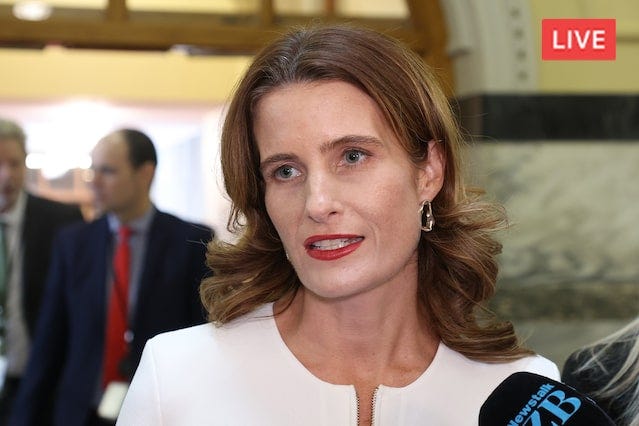
The announced reforms have caused some scratchiness in the Coalition with Foreign Minister Winston Peters making it clear that his Ministry of Foreign Affairs and Trade would not face major cuts, while David Seymour called for teamwork and said no department should be exempt from scrutiny. Nicola Willis then revealed MFAT had sought additional funding for business class travel during Budget negotiations in a moment of frustration.
Meanwhile, the Public Service Association described the reforms as “an act of wilful destruction”, an interesting contrast to the supportive tone they took when Labour pursued significant savings in 2023. And the Greens compared the approach to the United States’ DOGE-style public sector reforms because everything comes back to Trump for them. Read more.
Labour finally gives us another policy
Labour’s election strategy is obviously to keep the policy platform as vague and minimal as possible and hope voters are fed up enough with the Government to vote for them instead. But people are starting to wonder what exactly they are offering. So far, the answer is three “free” GP visits and a vague “Future Fund” that they say we will get the details on when they are in Government. Chris Hipkins told media that Kiwis “don’t really care” about the details and Barbara Edmonds admitted major parts of the policy will only be worked out after the election because of possible Treaty implications.
So it was a surprise this week to see a new policy announcement from Labour. They put out a press release pledging to… “restore Te Tiriti obligations in schools”. At a time when New Zealanders are worried about the cost of living and the fuel crisis, Labour’s instinct is once again to retreat into Treaty politics.
National says no more “Good Bloke” discounts for sex offenders
National announced this week that if re-elected they will change sentencing laws so judges can no longer treat “good character” as a mitigating factor in sexual offending cases. The proposal would still allow character references to be submitted to the court, but judges would be prohibited from using them to reduce sentences.
National says the change will rebalance the justice system toward victims rather than offenders. Justice Minister Paul Goldsmith argued the status quo disproportionately benefits well-connected offenders who can present glowing references from employers, coaches, family members or community figures despite the seriousness of their offending. Luxon was more blunt, saying victims should not have to sit in court and watch a sex offender receive a lighter sentence because someone describes them as “a good bloke”.
Parts of the media moved quickly to shape the narrative around the proposal as a solution in search of a problem. Much of the coverage focused on legal experts downplaying the practical impact of “good character” discounts or suggesting the reform was symbolic. But the concern isn’t really about the impact on sentencing reductions alone. It is about the spectacle of victims sitting through court proceedings where sex offenders are given glowing references after being convicted of horrendous crimes. Those references contribute to a broader perception that the justice system humanises, protects, and empathises with some offenders in ways that are revictimising.
🇬🇧 🇦🇺 🇺🇸 The Gender Wars are global
The gender wars waged internationally this week, with developments across New Zealand, Australia and the United Kingdom as governments and courts are increasingly being forced to confront the tension between gender identity ideology and sex-based rights.
In New Zealand, NZ First’s Legislation (Definitions of Woman and Man) Amendment Bill passed its first reading and select committee submissions are now open. It seeks to define “woman” and “man” in law according to biological sex in order to restore legal clarity around women’s spaces, sport, safeguarding, and sex-based rights. Unsurprisingly, it has triggered immediate outrage from progressive activists and media commentators, but it reflects a broader international trend toward governments backtracking on gender insanity. Read my open letter to the Minister of Women.
In Australia, the federal court ruled against Sall Grover, founder of the female-only app Giggle for Girls, after she “excluded” transgender-identifying male Roxanne Tickle from her platform. The case has become a lightning rod internationally because it cuts directly to the conflict at the heart of the debate about whether women are legally permitted to define boundaries around sex-based spaces at all. Leader of the Opposition Angus Taylor has promised to amend the Sex Discrimination Act.
Meanwhile in the United Kingdom, following last year’s Supreme Court ruling that the terms “woman” and “sex” in the Equality Act refer to biological sex, the government has issued new official guidance clarifying that organisations, businesses and public bodies must protect single-sex toilets, changing rooms and services on the basis of biological sex rather than gender identity.
In the United States, a detransitioner lawsuit reached a multi-million dollar settlement. Camille Kiefel, a woman who previously identified as nonbinary and underwent a double mastectomy in 2020, sued mental health providers who approved the procedure after only brief telehealth assessments despite her significant pre-existing mental health issues. Kiefel detransitioned less than two years later and says she was not given genuine sufficient information before irreversible medical treatment.
The End of Social Housing “Lotto”
Another major shakeup was announced; this one to the social housing system. The changes will see an increase in the rent contribution paid by roughly 84,000 social housing households by around 5% of their income from 2027. The changes are expected to save approximately $387 million, which the Government says will be redirected into boosting the accommodation supplement for low-income New Zealanders in the private rental market.
The current system has created sharp disparities where some people in social housing are paying dramatically less than working families in the private market despite having comparable incomes. The Government argues this has contributed to long waitlists and reduced mobility within the system, with people remaining in subsidised housing long after their circumstances improve because the financial incentives to leave are so weak.
New Zealand’s social housing stock is extremely limited relative to demand, and there is tension between subsidising long-term low rents for existing tenants and extending support to struggling working households locked out of assistance altogether. The reforms appear aimed at redistributing support more broadly across the housing system rather than concentrating it heavily within a fixed pool of social housing tenants.
Opponents are warning the changes would place additional pressure on some of the country’s poorest households during an already difficult economic period. Labour has called the reforms “cruel”.
The Coalition clash over BNZ
NZ First’s proposal to buy back the Bank of New Zealand generated plenty of buzz this week. They also announced plans to automatically enrol every New Zealander into KiwiSaver at birth with government seed funding aimed at building long-term savings and asset ownership. Both policies are part of the party’s broader push for “economic sovereignty”.
NZ First argues New Zealand’s banking system extracts billions from Kiwi households and businesses each year before sending profits offshore to Australian parent companies. They say a state-owned BNZ would keep more capital within New Zealand, create stronger competition in the banking sector, and allow more government banking to remain domestically controlled. The party has likened the proposal to the strategic economic intervention models used in countries like Singapore and Norway.
Christopher Luxon reacted by suggesting the BNZ buyback sounded more like a Labour or Green Party proposal than something from a centre-right coalition party, highlighting the ideological differences between National’s market liberalism and NZ First’s more economically nationalist positioning. David Seymour was highly critical of the buyback proposal too, arguing it represented a return to interventionist economics and excessive state involvement in the market.
Labour’s response was more cautious than National’s or ACT’s outright rejection. Chris Hipkins did not endorse the BNZ buyback proposal, but he also stopped short of attacking it as aggressively as Luxon or Seymour did.
🇦🇺 🇪🇺 From Australia’s failure to Europe’s Digital ID model: Stanford’s internet crackdown
The Government has pulled an abrupt turn in its thinking around the proposed under 16 social media ban. I am hearing from multiple sources that officials and ministers have become increasingly nervous after watching the problems surrounding Australia’s approach, which has exposed just how technically difficult and politically risky these bans become once governments are forced to figure out how exactly you verify everyone’s age online.
Attention now appears to be shifting toward emerging European-style models built around much more centralised digital identity and age-verification systems which would create state-backed infrastructure for online identification rather than simply forcing platforms to “ban children”. That is a very different proposition politically and philosophically, because it moves the debate away from child safety alone and into questions about digital privacy, anonymity, surveillance and state control over internet access.
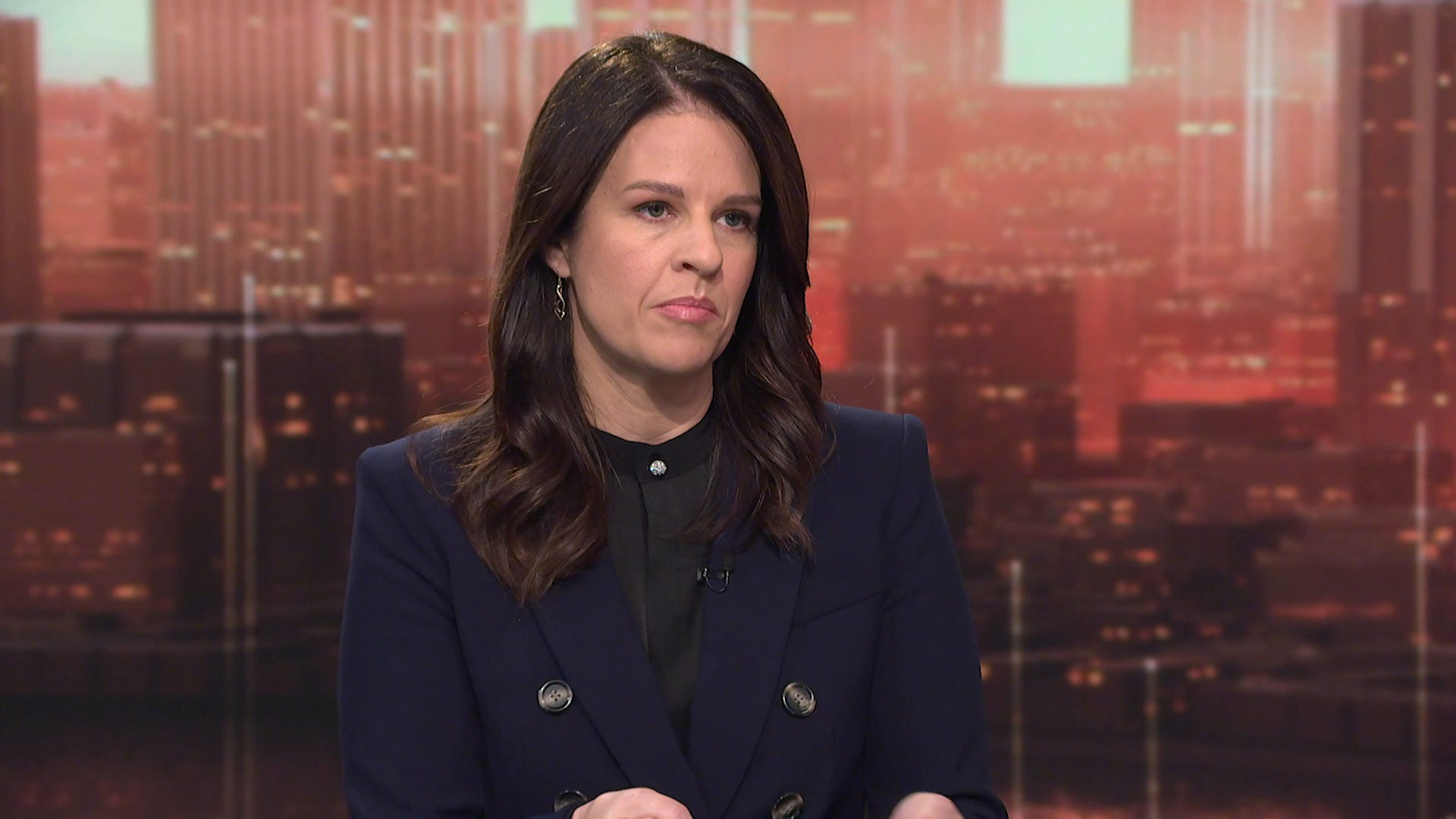
The issue came up during Erica Stanford’s appearance on Q+A last week, where she continued defending the Government’s push for stronger restrictions despite struggling to provide detailed answers around implementation. The central problem to be resolved is that any system robust enough to genuinely prevent under 16s accessing social media inevitably requires some form of age or identity verification for everybody else as well.
It is likely the National sees this kind of operation as a function for the Department of Internal Affairs and with Minister Brooke Van Velden retiring at the election they’ll be wanting someone in that spot to champion the move.
The Government’s $131m Explicit Teaching reset
Education Minister Erica Stanford announced $131 million in Budget funding aimed largely at primary school education; a focused investment into literacy and numeracy. The package includes spending on structured literacy and maths resources, teacher training, targeted intervention support, and the creation of specialist “maths hubs” around the country. The reforms sit alongside the Government’s wider education reset, including the planned replacement of NCEA.
This is another strong step away from the educational philosophy that dominated much of the past decade. Stanford has made explicit teaching, structured learning, measurable outcomes and curriculum clarity central to her reform agenda.
The minister has been exceptionally successful in reforming education over the past few years, but there will inevitably be debate about implementation and whether all of the spending is being directed to the most effective tools. However, after years of alarming declines in educational achievement, particularly in literacy and maths, there is likely to be broad public support.
Operation Jasper exposes rot in Corrections
An alarmingly large scale of alleged corruption has been uncovered inside New Zealand’s prison system following the conclusion of Operation Jasper, a major Police investigation into organised criminal activity operating from within multiple corrections facilities.
Twenty people have been arrested, including Corrections Officers, Reintegration Officers and associates connected to prisoners, with more than 100 charges laid so far. Police say prisoners inside Mt Eden Corrections Facility were coordinating drug importation and distribution operations from behind bars using smuggled mobile phones. Officers and staff are accused of bringing phones, drugs, tobacco and other contraband into facilities in exchange for cash payments.
The investigation eventually expanded to Auckland South Corrections Facility in Wiri and Spring Hill in Waikato, with Police alleging similar corrupt activity involving reintegration staff employed by Serco.
The story reveals the growing sophistication and reach of organised crime networks inside New Zealand prisons. Corrections and Serco have both said they are cooperating with Police, but the scandal is likely to focus scrutiny on the New Zealand’s prison system.
Fury over “Sneaked Through” homeschooling changes
Education Minister Erica Stanford has attracted anger from the homeschooling community after she introduced significant homeschooling changes through amendments added to Education and Training (System Reform) Amendment Bill after the select committee process had already closed. This meant homeschooling families had no opportunity to formally submit on the proposals.
The changes include removing the automatic right to apply for a homeschooling exemption, increasing monitoring requirements, and expanding the regulatory powers of the Ministry of Education over homeschooling families. The Government argues the reforms are necessary following the Tom Phillips case, where Phillips retained a homeschooling exemption despite going on the run with his children.
Critics, however, say the Government is using an extreme case to justify sweeping regulatory changes affecting more than 11,000 homeschooled children nationwide. Much of the backlash focused less on the substance of the changes themselves and more on the process used to introduce them with homeschooling advocates accusing Stanford of bypassing democratic scrutiny.
Wellington Rich List: 34 Council staff paid more than the Mayor
A piece of news that created chatter on the internet but was determinedly ignored by the mainstream media this week is an expose by the Wellington Ratepayers’ Alliance (WRA). The launched their “Wellington Rich List” which is a public breakdown of Wellington City Council bureaucrats earning more than $200,000 per year. The list revealed that 34 council staff are actually paid more than Mayor Andrew Little himself, including Town Clerk (CEO) Matt Prosser who is on more than $530,000 annually, more than the Prime Minister. And multiple senior executives sitting around the $440,000 mark all earning more than Government ministers.

Click to view
Over the last three years Wellington households have faced rates hikes of roughly 47%, yet they continue to deal with infrastructure failures, water leaks, transport woes, and a city perceived as poorly managed despite an enormous bureaucratic apparatus.
The campaign angered some who saw it as intrusive, but the information is publicly available. The WRA estimates the salaries of the officials featured adds up to roughly $9.3 million annually which is the equivalent of the full yearly rates bill of around 1,800 Wellington households.
These are the same bureaucrats who have been in conflict with their elected officials over their new offices and the fact that they gave themselves the top floor offices with sea views while the mayor and councillors get views of the carpark. They also spent approximately $130,000 on four new pieces of art for the new space. A recurring criticism from some elected members has been that Wellington’s bureaucracy has become too powerful and insulated, with councillors sometimes left more like spectators than decision makers.
Later the WRA followed-up with the revelation that Wellington City Council spent nearly $900,000 on catering and hospitality over the past few years while simultaneously cutting funding for Citizens Advice Bureau.
🇺🇸 Terror in San Diego
There was another mass shooting in the US this week with two teenage gunmen attacking the Islamic Center of San Diego, killing three people before later dying from apparent self-inflicted gunshot wounds. The shooters have been identified as Cain Clark (17) and Caleb Vazquez (18). Authorities say the pair met online and appear to have been radicalised through extremist content. Investigators recovered writings expressing hatred toward women, multiple races and religions, including anti-Islamic and antisemitic material, and are treating the attack as a hate crime.
Police say one of the teenagers’ mothers had actually contacted authorities hours before the attack warning that her son was suicidal and had taken firearms from the family home, triggering an urgent search that ultimately failed to prevent the massacre. However, security guard Amin Abdullah reportedly warned teachers and staff to lock down classrooms moments before he was killed and authorities believe his actions likely prevented far greater loss of life.
🇦🇺 The Tragic Tale of the Bondi Beach hero
A bizarre and sad tale out of Australia this week involved the family of Bondi Beach shooting hero Ahmed Al Ahmed. Al Ahmed was widely praised after intervening during the Bondi Beach shooting and later received more than AUD$2.6 million in public donations through a GoFundMe campaign established to support his recovery and medical costs.
According to allegations now before the court, two of his brothers allegedly travelled from the Middle East to Sydney after learning about the fundraising money and soon became embroiled in disputes over access to it. Police allege the relationship deteriorated to the point where the brothers threatened and attempted to extort Ahmed Al Ahmed for $100,000 each, with one allegedly threatening to “break your other arm and smash your face” if he refused. Both men have now been charged with using a carriage service to harass or offend and were granted conditional bail despite reportedly being in Australia on tourist visas.
Chart of the week
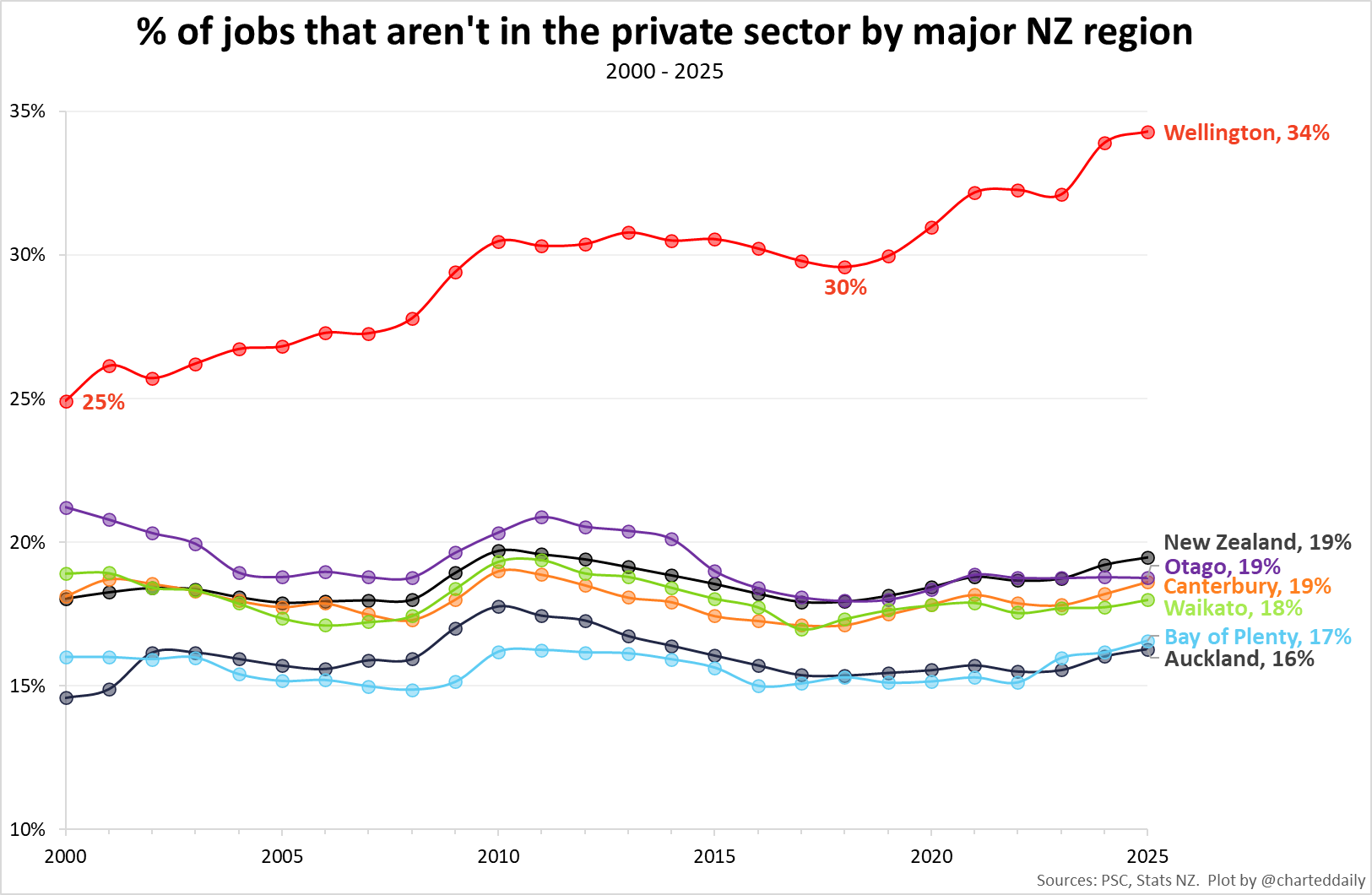
Charteddaily: “Wellington’s increasing reliance on jobs outside the private sector over the past 25 years really stands out compared to the rest of New Zealand.”
Click to view
In short - other stuff that happened
- 🇺🇸 NASA announced this week it will hold a major briefing on 26 May outlining updated plans for its proposed “Moon Base” initiative, a long-term programme aimed at establishing a sustained human presence at the lunar South Pole.
- An Auckland police officer has been charged with assault on a person in a family relationship in October 2025. Auckland City District Commander Superintendent Sunny Patel confirmed the 38 year old officer remains employed but has been placed on restricted duties while the matter proceeds through the courts.
- A Christchurch family is mourning the deaths of Rose-Maree Couch (23) and her daughter Sapphire-Hope (3) after a house fire destroyed their home. Police say the fire is not believed to be suspicious. Four other children survived after being rescued from the burning house by hero Shane Hall.
- Hayden Tasker was found guilty of murdering Nelson Senior Sergeant Lyn Fleming after he deliberately drove his vehicle into police officers in 2025. The jury also convicted Tasker of intentionally causing grievous bodily harm to Senior Sergeant Adam Ramsay.
- Four teenagers aged 15 and 16 appeared in Invercargill Youth Court this week accused of using the gay dating app Scruff to allegedly lure a victim before attempting to force entry by throwing bricks through windows and kicking through a door. The charges emerged amid a wider Southland police investigation into multiple violent assaults allegedly linked to online “predator hunting” trends.
- RNZ chief executive and editor-in-chief Paul Thompson has announced he will resign at the end of 2026 after 13 years in the role. He received recent political criticism from Deputy Prime Minister David Seymour, who questioned RNZ management and board while accusing parts of New Zealand’s state media sector of political bias.
- 🇺🇸 JP Morgan executive Lorna Hajdini has countersued former colleague Chirayu Rana after he accused her of sexual harassment, assault, coercion and drugging in a highly publicised lawsuit. Hajdini denies the allegations and says Rana fabricated the claims as part of an extortion attempt. JP Morgan says its internal investigation found no evidence supporting his accusations.
- Heart of the City CEO Viv Beck secured a significant legal victory this week after the Employment Relations Authority ordered her reinstatement following an attempt by the organisation’s board to suspend her. The ERA found serious procedural issues with how the board handled the process, stating the suspension appeared to have been decided before allegations were properly established, while the dispute itself reportedly centred partly on Beck raising concerns about governance, constitutional eligibility and conflicts of interest.
- Police have launched an investigation into alleged fraud at Pukekohe North School following the mass resignation of more than half the school’s board last week. The Ministry of Education confirmed a limited statutory manager remains overseeing the school while police investigate a complaint made in April.
- Former Commonwealth Games boxer and teacher Kahukura Bentson has avoided deregistration despite multiple criminal convictions, including a 2021 assault in which he admitted grabbing a woman and slamming her head-first into the floor and cannabis cultivation. The Teachers Disciplinary Tribunal censured Bentson but allowed him to keep teaching after considering evidence of rehabilitation, counselling and support from his school.
- Google New Zealand reported $92 million in local revenue and $27.6 million in net profit for 2025, while also paying $1.17 billion in “service fees” to related entities offshore, primarily Google Asia Pacific in Singapore, where corporate tax rates are significantly lower than New Zealand’s 28%. Tax commentators noted roughly 92% of Google NZ’s revenue is transferred offshore.
- A former contractor for property investment coaching firm Wealth Mentor has accused CEO Kyron Gosse of workplace bullying and inappropriate behaviour. She posted a video that shows him slapping her during a filming session in late 2024. Savannah Carter says the incident was one of multiple alleged physical and verbal assaults during her time working with the company.
- Wellington City councillor Ray Chung resigned as chair of the Council Controlled Organisations Review and Appointments Subcommittee following scrutiny over his conduct during Wellington’s severe weather emergency last month. Mayor Andrew Little confirmed he had been contacted by a senior police officer regarding concerns about Chung’s behaviour at the scene of the search for missing Karori man Philip Sutton.
- Former Labour deputy leader Kelvin Davis has been appointed to Education Minister Erica Stanford’s Māori Education Ministerial Advisory Group, which is tasked with helping improve educational outcomes for Māori learners. Davis will join a group advising Stanford directly over the next two years as part of the Government’s Māori Education Action Plan.
- Construction will begin in June on Auckland Transport’s $113 million Carrington Rd upgrade in Mt Albert.
- Deputy PM David Seymour was ordered out of Parliament after clashing with Speaker Gerry Brownlee during Question Time over Brownlee’s handling of an ACT point of order. Seymour accused the Speaker of treating Simon Court unfairly and said members had a right to raise points of order “without the kind of crap that he just got from you”, prompting Brownlee to immediately order Seymour from the House.
- 🇺🇸 Feeding Our Future founder Aimee Bock has been sentenced to nearly 42 years in prison after her conviction in what prosecutors described as the largest Covid-era fraud scheme in the United States. Prosecutors alleged the nonprofit sat at the centre of a US$250 million scheme involving fake meal distribution sites, fraudulent claims, kickbacks and lavish spending, with dozens of people most connected to Minnesota’s large Somali community convicted across multiple related fraud cases.
One of the more interesting pieces I read this week was former judge David Harvey’s LawNews article on the growing problem of ideologically motivated complaints against professionals and the proposed Regulated Professions Neutrality Bill. It uses the Stephen Franks case as a start point to examine how professional regulatory systems are being used not simply to manage competence or misconduct, but to punish ideological dissent and create chilling effects around controversial topics.
Harvey details how six people lodged complaints against Franks over letters he sent regarding gender medicine and the Cass Review, despite none of the actual recipients complaining. Although the misconduct finding was ultimately overturned on appeal, the process still consumed more than a year of time, legal costs and professional stress.
The article raises important questions about freedom of expression, regulatory overreach, and the proper purpose of professional disciplinary systems. It is well worth reading in full.
Ani O'Brien comes from a digital marketing background, she has been heavily involved in women's rights advocacy and is a founding council member of the Free Speech Union. This article was originally published on Ani's Substack Site and is published here with kind permission.


5 comments:
WCC rates hikes: don't forget that WCC playing with percentages. If my rates increase from, say, $9K to $10K, WCC will calculate that $1K increase as a percentage. Will they state the rates % increase as 1/9 = 11% or 1/10 = 10%? Then, of course that $1K increase calculated by adjusting upwards the WCC's own percentage "cut" to "compensate" WCC for falling house prices. So, if a house value drops from $1.5 million to $1 million, WCC would use at least a two-thirds greater % . Effectively a ratepayer now pays $10k tax on a $1 million dollar property whereas before they paid $9K tax on a $1.5 million dollar property.
One of the San Diego killers has been reported as having autism and gender identity problems. The gender issue was quite evident in the photograph of the person. There has been a strong correlation between gender confusion and mass shootings in the US.
The first time I did a subject called 'Mathematics' was in Year 7. Before that, it was called 'arithmetic'. We also did some geometry in Years 5 and 6., including pi.
My teachers in the early 60s were mostly teachers' college trained people who had left school after Form 5. They taught for half a century and did their jobs well, the overwhelming majority of my generation learning to read and write, and 'do sums'.
Given imperial units, calculations involving quantities were much more difficult then. You had to bear in mind that there were 12 pennies in a shilling, 16 ounces in a pound, 8 pints in a gallon, and so on; 27 cubic feet in a cubic yard, 5280 feet in a land mile and 6080 feet in a sea mile........ maybe my Standard 4 (Year 6) teacher had higher standards than most (did he?).
Now they call 1+1=2 'maths'..........
Anon 538am I can tell from your post just how upset you are after voting for Three Waters only to have National sweep it away and replace the idea with the reality of sewage on Wellington beaches. I, too, wish I had a magic wand that fixed decades of underinvestment in infrastructure without costing my council more money. I voted for Three Waters too but the idiots and Russian bot farm marks won out on the day.
I presume Ani isn’t aware of just how well organised and paid the fantastic public service sector is in Singapore. The ratio of public servants is WAY higher in that beacon of efficiency. Doesn’t Ani want good public service? Is she worried that they may have hired trans people in NZ whereas in Singapore maybe things are different? If you wanna know who the bad guy is, look at who is punching down instead of punching up.
Post a Comment
Thank you for joining the discussion. Breaking Views welcomes respectful contributions that enrich the debate. Please ensure your comments are not defamatory, derogatory or disruptive. We appreciate your cooperation.