

New Zealand politics in 2025 was essentially a live-action stress test for MMP, public patience, and the integrity of Parliamentary norms and traditions. The Government started the year promising “growth” but quickly realised that promising things that are in no small part out of your control is a bad idea. The Coalition also discovered that nothing angers New Zealanders more than change, except not changing anything. The tri-party arrangement has stood the test of time though. Ministers might have to carefully explain that they are all on the same page, just reading different paragraphs, in different languages, from entirely different books, at times, but their core shared purposes have been sufficient glue.
Meanwhile, Labour’s core strategy has been to wait for the government to step on a rake, which it has, on occasion, while left wing activists, protesters, and journalists competed to see who could declare the most things a “constitutional crisis”. Every issue was framed as the end of democracy, every protest as unprecedented, and every haka either an unassailable expression of culture or the final nail in Western civilisation, depending on who was yelling on X that day.
The Greens and Te Pāti Māori have tagged in and out providing salacious and stupid dramas with impressive consistency. Led by Chloe Swarbrick, the Greens continued their audacious run of being simultaneously absolutely morally certain and utterly strategically and logically baffling. Te Pāti Māori demonstrated that the fastest way to dominate the political agenda is to be willing to escalate every disagreement into a test of national identity, to stage haka with monotonous regularity, appeal to global (colonial) entities like the UN, and declare every single government action to be explicit racism and hatred for Māori. That was of course going swimmingly well until they turned their (decorative and totally not threatening) guns on each other.
We have seen true colours and bare faced lies. We have been frustrated, relieved, furious, and satisfied. It has been a year quite unlike any other with huge amounts of legislation passed despite maximum disruption to process. And, amongst it all, poll after poll has told us that the upcoming election in 2026 is going to be tight. On the whole, the existing coalition has come out of almost all polls still able to govern, but with a narrower margin. A few, however, have indicated the possibility of a Labour, Greens, Te Pāti Māori coalition. But it is difficult to see this as a viability when Labour are currently professing to want to drive Te Pāti Māori into electoral oblivion… while also refusing to rule them out.
Outside Parliament, protest politics became the background hum of the year. Almost every issue including foreign conflicts, Treaty debates, climate policy, health, and education, was framed as existential, urgent, and beyond compromise. Journalists breathlessly announced democratic breakdowns, the Treaty of Waitangi was declared “under threat” on a weekly basis, and the public gallery at Parliament occasionally felt like it was being run as a performance space rather than a place to observe legislation being made.
By the end of 2025, it feels like New Zealanders are not so much disengaged from politics as exhausted by it. Trust in institutions, media, and anyone with power, remains low, tempers remain high, and on all sides very few people appear to feel happy about much. If the year proved anything, it’s that New Zealand doesn’t lack opinions, passion, or moral certainty. What it lacks, and increasingly craves, is a political class capable of the boldness to rein in unelected powerbrokers, the maturity to lower the temperature a bit, and the willingness to listen to the people whose votes graced them with their seats in Parliament.
With voters on both sides promising to leave the country if the other side wins the election, it feels like 2026 is a big one. Will the global trend of increasing impatience of electorates see a one-term government? Will New Zealanders stick to our historic trend of giving a government two or three terms to have a proper crack? I’ll be here providing my thoughts, despairs, and frankly prayers throughout and I hope you’ll join me.
Best (and Worst) of 2025
Politician of the Year
I have not seen one commentator dispute that Chris Bishop is our politician of the year and I am not about to be the first.
The Greens and Te Pāti Māori have tagged in and out providing salacious and stupid dramas with impressive consistency. Led by Chloe Swarbrick, the Greens continued their audacious run of being simultaneously absolutely morally certain and utterly strategically and logically baffling. Te Pāti Māori demonstrated that the fastest way to dominate the political agenda is to be willing to escalate every disagreement into a test of national identity, to stage haka with monotonous regularity, appeal to global (colonial) entities like the UN, and declare every single government action to be explicit racism and hatred for Māori. That was of course going swimmingly well until they turned their (decorative and totally not threatening) guns on each other.
We have seen true colours and bare faced lies. We have been frustrated, relieved, furious, and satisfied. It has been a year quite unlike any other with huge amounts of legislation passed despite maximum disruption to process. And, amongst it all, poll after poll has told us that the upcoming election in 2026 is going to be tight. On the whole, the existing coalition has come out of almost all polls still able to govern, but with a narrower margin. A few, however, have indicated the possibility of a Labour, Greens, Te Pāti Māori coalition. But it is difficult to see this as a viability when Labour are currently professing to want to drive Te Pāti Māori into electoral oblivion… while also refusing to rule them out.
Outside Parliament, protest politics became the background hum of the year. Almost every issue including foreign conflicts, Treaty debates, climate policy, health, and education, was framed as existential, urgent, and beyond compromise. Journalists breathlessly announced democratic breakdowns, the Treaty of Waitangi was declared “under threat” on a weekly basis, and the public gallery at Parliament occasionally felt like it was being run as a performance space rather than a place to observe legislation being made.
By the end of 2025, it feels like New Zealanders are not so much disengaged from politics as exhausted by it. Trust in institutions, media, and anyone with power, remains low, tempers remain high, and on all sides very few people appear to feel happy about much. If the year proved anything, it’s that New Zealand doesn’t lack opinions, passion, or moral certainty. What it lacks, and increasingly craves, is a political class capable of the boldness to rein in unelected powerbrokers, the maturity to lower the temperature a bit, and the willingness to listen to the people whose votes graced them with their seats in Parliament.
With voters on both sides promising to leave the country if the other side wins the election, it feels like 2026 is a big one. Will the global trend of increasing impatience of electorates see a one-term government? Will New Zealanders stick to our historic trend of giving a government two or three terms to have a proper crack? I’ll be here providing my thoughts, despairs, and frankly prayers throughout and I hope you’ll join me.
Best (and Worst) of 2025
Politician of the Year
I have not seen one commentator dispute that Chris Bishop is our politician of the year and I am not about to be the first.
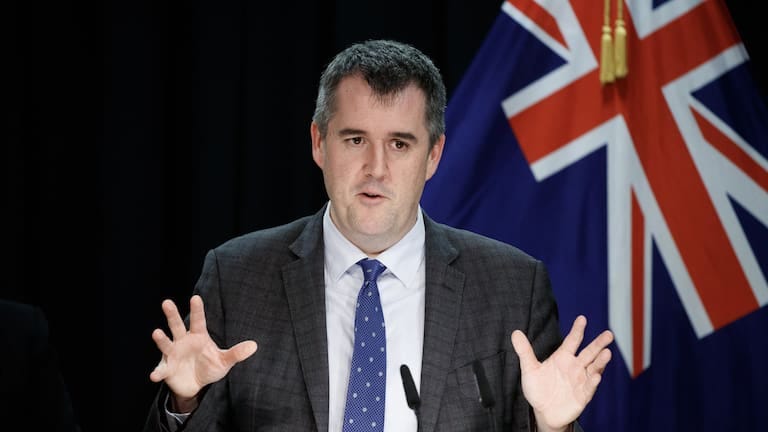
Chris Bishop. Photo/ Mark Mitchell
What Bishop has done in this year of noise, theatrics, and permanent outrage, is boring and rather unfashionable… he has but his head down and governed. Actually more than that, he has embarked on a mammoth process of reform. He has taken on some of the most structurally broken, politically radioactive portfolios in New Zealand in housing, RMA, and infrastructure, and treated them like actual problems to be solved rather than tinkering around the edges and managing the status quo.
Bishop has explained trade-offs plainly, absorbed heat without melodrama, and kept moving while others found themselves tied up in scraps with public servants and frozen by their own cowardice. In a political culture increasingly addicted to symbolism and moral posturing, Bishop stands out by being relentlessly practical, intellectually serious, and visibly across his brief.
What should not be underestimated is how much of a champion Bishop has been for younger generations who’ve been locked out of housing. While housing ministers from both left and right have traditionally glued themselves to the home-owning class quietly protecting rising equity and calling it “stability”, Housing Minister Bishop has been unusually honest about who that system screws and why it has to change. He’s treated housing affordability as a moral and economic crisis, not a property seminar for existing owners, and he’s been willing to take the political hit that comes with that. In a Parliament full of people desperately managing optics, Bishop stood out by picking a side and it wasn’t the one with the nicest capital gains.
This has seen a noticeable easing in housing costs in New Zealand this year as house prices flattened and, in many regions, declined from their early-2020s peaks, bringing some relief for buyers at the more affordable end of the market. Lower mortgage interest rates and modest income growth also helped first-home buyers, with the national value–to–income ratio improving and deposit saving horizons shortening compared with recent years. At the same time, rents, particularly for new tenancies, softened noticeably, reflecting a surge in rental listings and greater choice for tenants. This means many renters are paying less than they were a couple of years ago and, in some cases, saving over $1,400 a year compared with previous peaks.
The criticism from the right that Chris Bishop is “too woke” or “globalist” collapses under even mild scrutiny. Bishop’s actual record as a minister is relentlessly focused on the most stubborn, domestically urgent problems New Zealand faces: housing supply, planning law, infrastructure paralysis. Not importing overseas culture wars. When he travels, it’s to look at how other countries build things and bring back ideas that might help us do the same, not to posture, protest foreign governments, or tut about issues outside his remit.
He responded with calm even when he was hauled into a completely pointless sideshow after 66 year old musician Don McGlashan publicly called him out for saying “what a load of crap” about Stan Walker’s overtly political performance at the Aotearoa Music Awards. This drama said far more about the media’s appetite for Coalition Government blood than about Bishop.
Yes, as a more liberal, libertarian-leaning National MP based in Wellington, he has previously expressed views that brushed up against “woke” culture-war debates. But the point critics miss is that, as a minister, he has been disciplined and deliberately not engaged in scraps outside his responsibilities, staying locked on the hard, grinding work of untangling New Zealand from decades of inertia. If that’s “globalism,” it’s a remarkably dull version. One with fewer slogans, more zoning reform, and a stubborn insistence on making our own country function again.
Runner-up: Erica Stanford
-------------------------------------
Opposition Politician of the Year
I struggled with this one. Labour have played ‘small target’ politics until very recently, and the other two parties have been a rotating cast of catastrophes and clowns. So I did what any deranged and masochistic person does and asked the people of X for their opinions. My favourite answer was: the New Zealand media. Enough said.
Another popular response was a mixture of New Zealand First, Winston Peters, and Shane Jones, recognising that even from within Government they often operate as, and cast themselves as, a check on power.
Ultimately, however, I have been left with one person, and I ain’t happy about it. I consider Chris Hipkins to be one of the most duplicitous members of Parliament. His finger prints are all over the disasters in our key systems as he presided as Education Minister, Police Minister, Health Minister, and Minister for Covid-19 Response during the previous government. He hides behind a ‘goofy’ dad-from-the-Hutt routine that is about as authentic as his claim to still be “best friends” with his ex-wife.
Opposition Politician of the Year
I struggled with this one. Labour have played ‘small target’ politics until very recently, and the other two parties have been a rotating cast of catastrophes and clowns. So I did what any deranged and masochistic person does and asked the people of X for their opinions. My favourite answer was: the New Zealand media. Enough said.
Another popular response was a mixture of New Zealand First, Winston Peters, and Shane Jones, recognising that even from within Government they often operate as, and cast themselves as, a check on power.
Ultimately, however, I have been left with one person, and I ain’t happy about it. I consider Chris Hipkins to be one of the most duplicitous members of Parliament. His finger prints are all over the disasters in our key systems as he presided as Education Minister, Police Minister, Health Minister, and Minister for Covid-19 Response during the previous government. He hides behind a ‘goofy’ dad-from-the-Hutt routine that is about as authentic as his claim to still be “best friends” with his ex-wife.
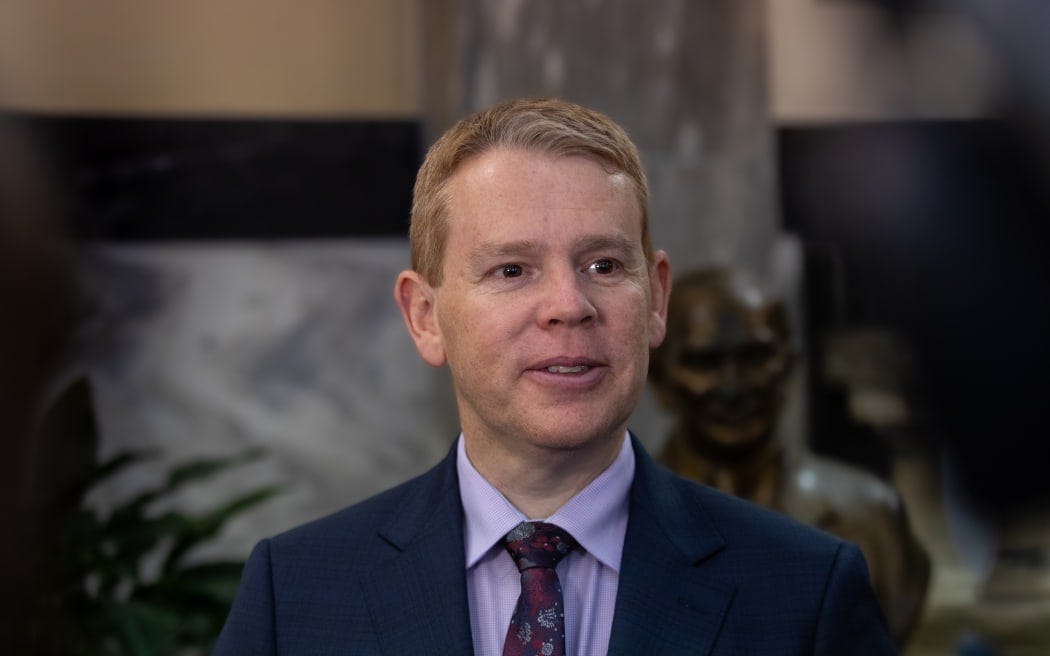
Chris Hipkins. Photo: RNZ / Mark Papalii
However, despite basically leaving a steaming pile of proverbial on our doorstep, a sizeable portion of the electorate is indicating they would vote him and his, by-and-large unchanged, team back into the Beehive. I personally think there must be some kind of collective amnesia going on, but the feat is impressive nonetheless.
He is a man who is able to dodge charges of hypocrisy with skill despite audaciously engaging in it every day. He hides from his own privileged upbringing, pointing at Luxon’s beach house as evidence of wealth as if he hasn’t hidden his own in a trust. He swore he had not ever had a relationship with a staffer when Iain Lees-Galloway was biffed from Cabinet, but he is now marrying his former intern. He attacks the Government for cruelty and not giving into Unions no matter that he told the teacher’s union there was no money for them when he was in charge. And, to use the analogy often used by Luxon, Hipkins commentary on the economy reeks of an arsonist returning to the scene of the crime to criticise how the fire fighters are putting out the fire he lit.
Why am I naming him Opposition Politician of the Year then? Simply because despite all of this he and his crew of misfits are still in with a shout at becoming our government next year. It is truly extraordinary that he has managed to overcome his significant failings as a minister and Prime Minister to present himself as an alternative in 2026.
Much of his success has come from the way he and his Party have prosecuted the current government with the assistance of the media. They have allowed Te Pāti Māori to be their attack dogs and the Greens to engage in hyperbole while they have nodded along sagely saying that while they would not use the same tactics or rhetoric they understand why “New Zealanders are angry”. They have been incredibly successful in laying the fruits of their previous government (inflation, cost-of-living crisis, pressure on the health system) at the feet of the government voted in to clean it up.
Hipkins is certainly ramping up for a fight next year and one that looks to have the trappings of a more traditional, perhaps American, style of campaigning. Having sneered at Christopher Luxon for this very thing, Hipkins is looking set to lean into a statesman-and-his-First-Lady image. His fiancee Toni has left her job and is said to be preparing to be on the road campaigning with her husband-to-be. And she is said to be eager to play her role. Instead of the usual joke gifts politicians give the press gallery for Christmas each year, this year Hipkins gave them hand-written bottles of handmade pōhutukawa and elderflower syrup lovingly prepared by Toni.
So while my compliments are definitely backward, congratulations to Chris Hipkins for being Opposition Politician of the year.
Runner-up: John Tamihere
----------------------------------------
Now for the rest of the awards…
Now for the rest of the awards…
🏆 Elder statesman of the year (while actively serving copious amounts of shade)
Winner: Winston Peters
Sponsored by: Single Malt and SuperGold Card
Awarded for the rare, and frankly impressive, ability to be, at the same time, Parliament’s most dignified elder statesman and its most savage verbal combatant. In 2025, Peters glided around the world in a manner that was measured, formal, almost courtly, before returning to the House to dismember opponents with a single brutal sentence. He is acknowledged for his mastery of the long pause, the devastating aside, and the perfectly timed reminder that he has seen this all before and everyone else is an amateur.
Awarded for the rare, and frankly impressive, ability to be, at the same time, Parliament’s most dignified elder statesman and its most savage verbal combatant. In 2025, Peters glided around the world in a manner that was measured, formal, almost courtly, before returning to the House to dismember opponents with a single brutal sentence. He is acknowledged for his mastery of the long pause, the devastating aside, and the perfectly timed reminder that he has seen this all before and everyone else is an amateur.
🏆 Most impressive transformation from “Future PM” to single-issue psychopath
Winner: Chloe Swarbrick
Sponsored by: New Zealand Keffiyeh distributors
Awarded for an alarming year of sharp decline into deranged ranting, awful media appearances, and frequent “crazy eyes”. Once marketed as a generational talent with breadth, discipline, and leadership potential, Swarbrick’s public profile in 2025 turned into something ugly. Her commentary became more polarised and unhinged, and she demonstrated more and more disrespect for virtually everyone. Her credibility wasn’t blown up through scandal or gaffe, but through clarity, showing her true colours so voters now know exactly where she stands.
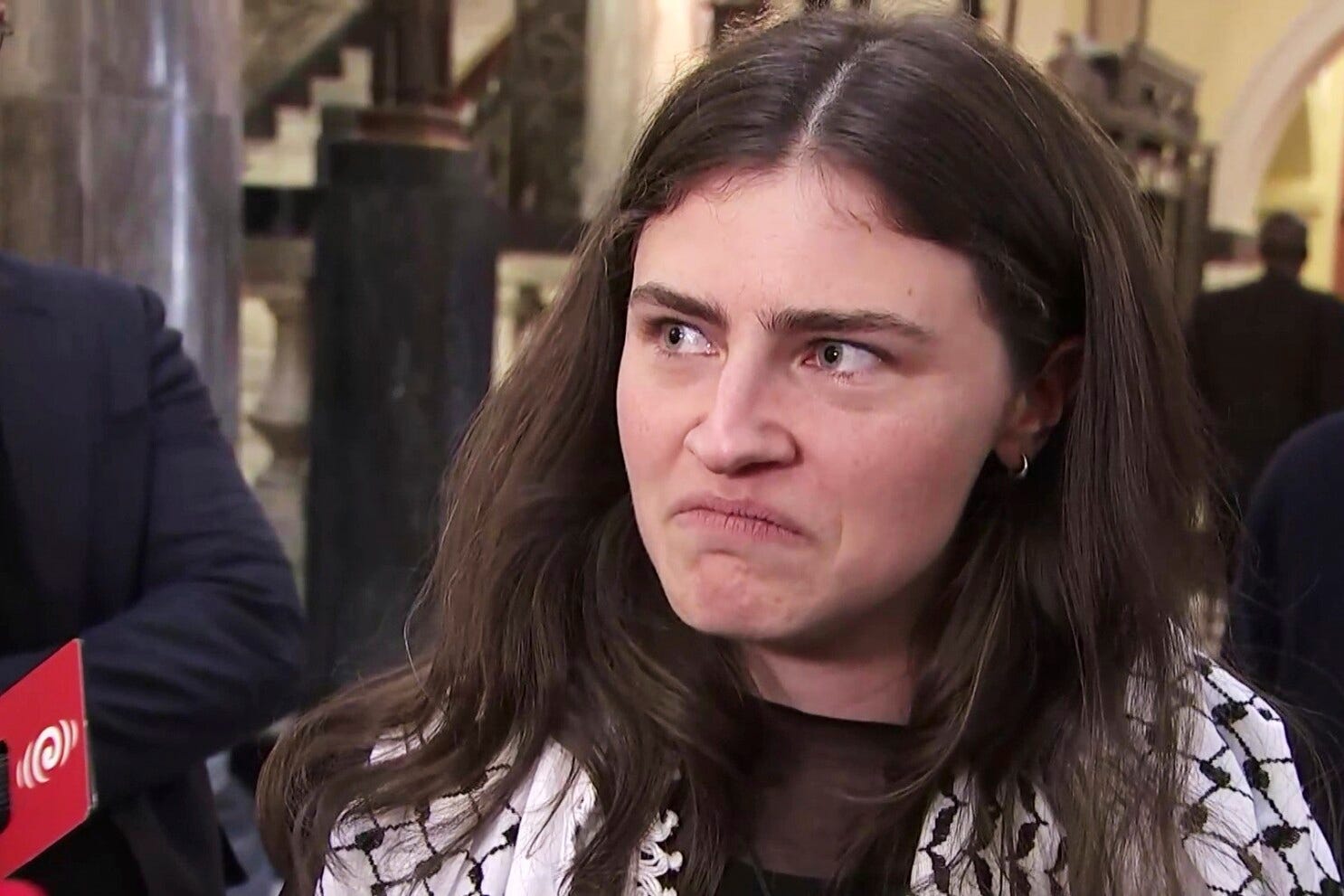
Chloe Swarbrick. Source: Stuff.
🏆 Worst Māori in Parliament (according to internet activists)
Winner: David Seymour
Sponsored by: Waipareira Trust
Awarded for the grave sin of being Māori while refusing to perform the approved oppressor–oppressed script. Seymour narrowly edged out Winston Peters, who has spent decades committing the same offence. Seymour’s failure to adopt the language of grievance politics, Marxist activism, and permanent colonial despair has rendered him the wrong kind of Māori, one whose existence is considered inconvenient and best explained away as “internalised colonialism”. The Treaty Principles Bill and the Regulatory Standards Act saw him labelled Kūpapa.
Awarded for the grave sin of being Māori while refusing to perform the approved oppressor–oppressed script. Seymour narrowly edged out Winston Peters, who has spent decades committing the same offence. Seymour’s failure to adopt the language of grievance politics, Marxist activism, and permanent colonial despair has rendered him the wrong kind of Māori, one whose existence is considered inconvenient and best explained away as “internalised colonialism”. The Treaty Principles Bill and the Regulatory Standards Act saw him labelled Kūpapa.
🏆 Best supporting role in a full-scale meltdown
Winner: Mariameno Kapa-Kingi
Sponsored by: Eru Kapa-Kingi and his less famous brothers
Awarded for sparking the most spectacular internal meltdowns of the year and then calmly declining to participate in the traditional follow-up ritual of resignation. In 2025, Kapa-Kingi was the catalyst for the detonation of Te Pāti Māori and then treated being kicked out as optional feedback taking the party to court and getting a stay of execution. She is acknowledged for her commitment to nepotism, refusal to backdown, and for calling John Tamihere a "f***ing c***".
🏆 Outstanding commitment to digging, drilling, and settling old scores
Winner: Shane Jones
Sponsored by: The estate of Freddy the Frog
Awarded for an unshakeable commitment to extracting gas and oil from beneath New Zealand’s feet while simultaneously exacting revenge on his former coalition partners. In 2025, Jones made it clear that the era of apologetic resource development was over, that our prosperity would not be held back by “Freddy the Frog”, and raised a perpetual finger to the Greens. He is praised also for his rare rhetorical range, effortlessly weaving Shakespeare, the Bible, and te reo Māori into parliamentary heckling.
🏆 Critically-endangered reasonable Green preservation Award
Winner: Teanau Tuiono
Sponsored by: Standing Orders
Awarded for being an even-handed Assistant Speaker and for the genuinely shocking achievement of behaving like a neutral referee rather than a walking manifesto. In 2025, Tuiono distinguished himself by applying the rules consistently, keeping the House moving, and resisting the temptation to turn procedure into performance, an approach so uncharacteristically reasonable for a Green MP that it briefly caused observers to check the seating chart. This combination of competence, restraint, and basic institutional respect renders him an endangered species within his own party, particularly if Chloe Swarbrick ever decides he looks a bit too credible, or heaven forbid, like leadership material.
🏆 Backbencher of the Year
Winner: Tom Rutherford
Sponsored by: His mum
Awarded for doing what a good backbencher is actually supposed to do and with enthusiasm. In 2025, Rutherford distinguished himself by rebranding his constituency as “Boppers”, participating in a cross-party cross-country carpool, rendering aid to a man in distress without a camera crew present, shamelessly dressing up for ministers’ TikToks, and still managing to make contributions to robust parliamentary debate through cheeky interjections. His combination of community presence, institutional respect, and good-humoured service is exactly what we need more of in Parliament.
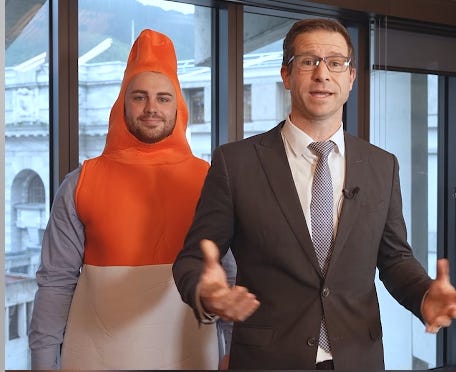
Tom Rutherford featuring in one of Chris Penk’s TikToks.
🏆 Excellence in efficiency while being called a c***
Winner: Brooke van Velden
Sponsored by: The unions’ therapist
Awarded to the minister sometimes called “Brooke GPT”, a title apparently bestowed whenever a woman in politics speaks in complete sentences, sticks to her brief, and declines to perform the approved maternal, soothing, feelings-forward character. In 2025, van Velden delivered a steady stream of legally complex, politically risky, and very necessary reforms, most notably weathering the heat from pay equity law changes that no one wanted to touch but everyone agreed were broken. Van Velden proves competence does not require cosplay, and that governing as a woman doesn’t mean performative empathy.
🏆 The Prime Minister of Right-Wing X
Winner: Chris Penk
Sponsored by: The Algorithm
Despite never campaigning for the job, expressing any interest in it, nor being leader of anything larger than a portfolio, Chris Penk has been repeatedly appointed the next Prime Minister by a highly-motivated subsection of right-wing X. Selection criteria appear to include having a sense of humour, being conservative (by New Zealand standards), not pandering to “the woke”, and occasionally saying things that cause journalists to sigh heavily.
🏆 Prime Minister of Left-Wing X
Winner: Kieran McAnulty
Sponsored by: The Reply Guys
Awarded for being repeatedly, confidently, and enthusiastically installed as Labour’s future Prime Minister by left-wing X, despite no election, caucus vote, or inconvenient interaction with the unions. McAnulty’s elevation rests on a formidable online résumé of strong vibes, fluent indignation, and an impressive ability to sound like the conscience of the nation in a 25second clip. He has perfected the ‘rural man’ voice despite lacking any credentials beyond having lived in Masterton township.
🏆 Excellence in getting the hell out of Dodge
Winner: Benjamin Doyle
Sponsored by: The Catholic Church method of moving personnel along
Awarded for the rare political instinct of recognising when a situation is about to become significantly worse and leaving before it does.
🏆 Lazarus Award for resurrecting a thoroughly deceased political career
Winner: Michael Wood
Sponsored by: The unions
Awarded because despite being sacked, failure to be elected, scandals, apologies, and lengthy periods of political silence, Wood’s career nevertheless persists. Special commendation is given for the psychological impact on Chris Hipkins.
🏆 Outstanding achievement in hanging in there
Winner: Christopher Luxon
Sponsored by: The Seven Habits of Highly Effective People and Who Moved My Cheese
Awarded for surviving a year in which governing often appeared to consist of absorbing criticism from all directions while maintaining a facial expression best described as “corporate calm under fire.” In 2025, Luxon neither collapsed, combusted, nor dramatically reinvented himself, instead opting for the increasingly rare political strategy of turning up, holding the line, and waiting for the noise to exhaust itself.
Ani O'Brien comes from a digital marketing background, she has been heavily involved in women's rights advocacy and is a founding council member of the Free Speech Union. This article was originally published on Ani's Substack Site and is published here with kind permission.


8 comments:
The Maori Party's circular firing squad is a classic of Neo-Marxist Woke identity politics: "we are purer than you" "you're not Maori enough". I laugh my head off when I look at these recent descendants of cannibal savages (who killed 20,000 of each other with savage glee during the Musket Wars -which are NEVER mentioned in the sanitized so-called history of New Zealand) dancing around in stylized jerky movements, sticking out their tongues and rolling their eyes like demented children and egged on by their pathetic woke Green Party "useful fools".
"It has been a year quite unlike any other with huge amounts of legislation passed despite maximum disruption to process." This early observation above is the guts of why I may support this coalition next year. It has done a major amount of legislative and other parliamentary work, targeted at the welfare of everyone. No one I have found but Annie on substack (simply chronicling David Seymour's achievements alone) has done normal journalistic work to illustrate this point - because MSM journalists in the main don't like the direction of effort and are unwilling therefore simply to report actions clearly.
Chris Bishop is making a big difference - already I can see part of that in the new housebuilding in my neighbourhood but I know the major practical, 'living enhancing' outcomes are yet to emerge from his efforts.
Ani churns out these lengthy mature thoughtful comments week afer week yet the whole msm together see incapable of comparable.
Simply brilliant summary.
Top as usual.
But is the gravest problem the gullibility level of the average NZ voter? Even a plank of wood could see through Hipkins.
Perhaps Ani could analyze this factor.
I love that picture of the moment Chloe channelled the spirit of Neil from The Young Ones.
So how did Paul Goldsmith avoid a dishonourable mention? Apart from that minor quibble a brilliant article and I'm looking forward to more of the same in 2026. Thanks Ani.
Would be believable if O'brien didn't orchestrate trashy, below-the-belt muckraking and mitigate actual stats or responsible policy on minorities.
Remember when people were caught up in a week of social media conflict over "Peter Bassett" writing a damning (but factually incorrect piece) blaming the Green party for the Moa Point disaster?
The original copy didn't even involve people on the council at the stated time.
Well, Peter Bassett doesn't exist.
Sometimes, when a bad-faith hit-piece needs to be written, the rather unfortunate Ani O'brien wades in to do this.
Her "level" of media reporting amounts to something like saying an PM (typically opposition) was fired . . . four and half years ago due to terrible BO.
Failing that, she falsely implicates MPs in serious and stigmatizing sex abuse matters which turn out to be entirely untrue.
None of this is even about politics, it's about bad faith tabloid-level attack politics and undermines any convincing credibility or reason the writer claims to dispense.
Post a Comment
Thank you for joining the discussion. Breaking Views welcomes respectful contributions that enrich the debate. Please ensure your comments are not defamatory, derogatory or disruptive. We appreciate your cooperation.