

Education Minister Erica Stanford has confirmed the beginning of the end for NCEA. A system she says had become “fragmented, difficult to understand, and too easy to game”. And that diagnosis will resonate with a lot of parents, teachers, and students who have watched the credibility of the qualification steadily erode. The replacement is set to be more structured with a foundational literacy and numeracy award at Year 11, followed by two subject-based qualifications in Years 12 and 13. It is a shift back toward a system where what you achieve actually signals what you know, rather than how effectively you’ve navigated the credit-collecting maze that NCEA became.
Of course, there is pushback from the very people who presided over the plummeting standard of education in New Zealand. The squawking of the PPTA, NZEI, and various other frankly partisan organisations only serves to validate the necessity of Stanford’s actions.
Prime Minister in waiting? Nicola Willis outshines Luxon in fuel crisis
Nicola Willis’ audition for the role of Prime Minister is going very well indeed. If only the bald press secretary who keeps hanging around would get out of the way! The Finance Minister is leading the response to fuel crisis/shock with the kind of calm, confident competence that engenders public trust. This week she announced that from April 7 around 143,000 working families will receive an extra $50 a week through a boost to the in-work tax credit, with eligibility extended to another 14,000 households. It is temporary, lasting up to a year, or until petrol drops below $3 a litre for four consecutive weeks, and targeted at the “squeezed middle.” At an estimated cost of up to $373 million, she says will be funded within Budget 2026 rather than through additional borrowing.
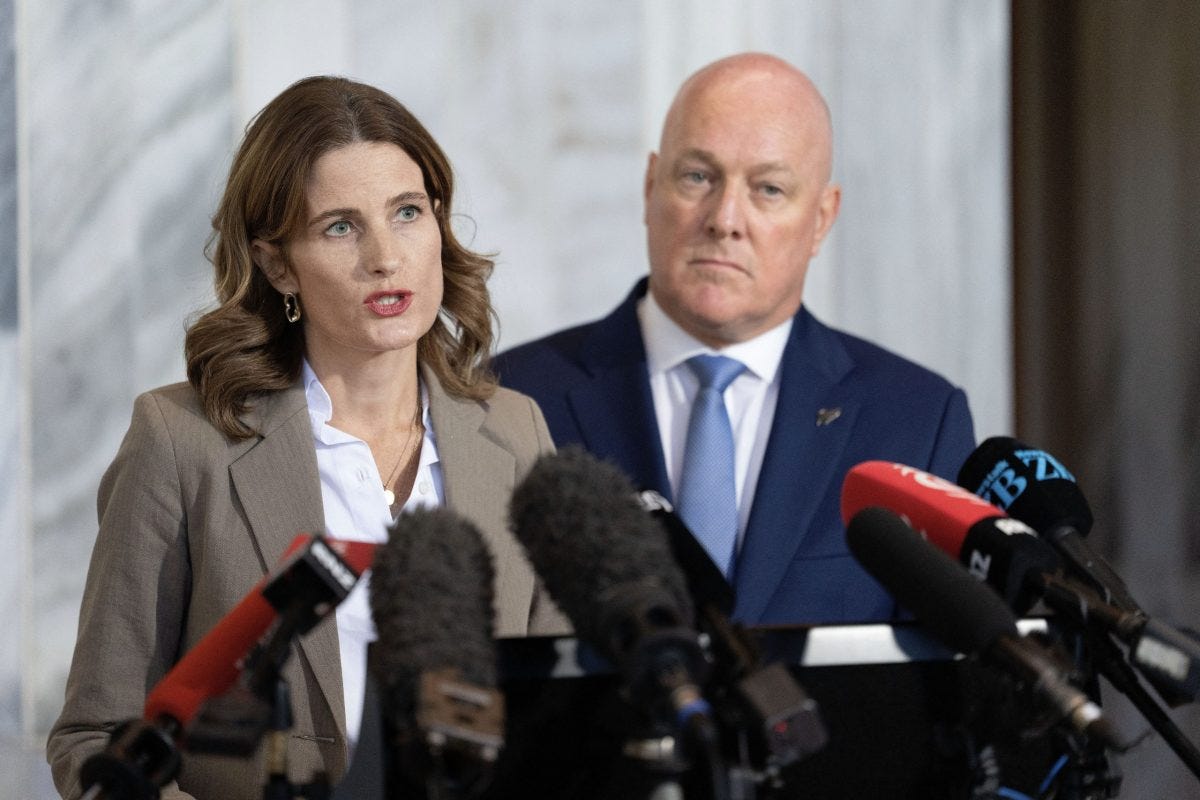
Hon Nicola Willis and Rt Hon Press Secretary. File photo: Getty Images
New Zealand remains in phase one of a four-stage national fuel plan, but officials are now openly preparing for scenarios where supply tightens and rationing becomes necessary. Under the higher phases, fuel would be prioritised for life-preserving and economically critical services like emergency responders, freight, food supply chains, before ordinary consumers. The system is designed to “keep fuel flowing where it matters most” and only step in heavily if supply is genuinely at risk. For now, supply is holding and there is no need for restrictions.
I wrote about the $50 support payment earlier this week:
Slashing taxes won’t fix the Fuel Shock, targeted measures the right move
Ani O’Brien 24 Mar Read full story
Chris Hipkins and the “I don’t recall” defence
For weeks, Labour leader Chris Hipkins leaned on the Royal Commission finding that ministers were never given key advice about myocarditis risk in teenagers. Except now we know that’s not true, or at the very least, not the whole truth.
A Cabinet paper, in Hipkins’ own name, shows that by March 2022 he was explicitly aware of advice that a second dose of the Pfizer vaccine “may add unnecessary risk” of myocarditis in under-18s. This was formal advice from the Covid-19 Vaccine Technical Advisory Group, referenced in material put in front of Cabinet. Hipkins’ claims are now plainly untenable.
His defence has shifted though. First it was we were never told. Now it is I don’t recall the paper, and anyway it didn’t materially change anything. This is either a failure of memory so significant it raises questions about competence, or it is an attempt to rewrite the record after the fact.
He also stated in a media stand-up yesterday that he is “not a health practitioner” and left medical advice to officials. Wasn’t he the guy fronting daily press conferences, setting mandates, locking us down, and requiring us to comply?
Jewish ambulances firebombed in London
In the early hours of Monday morning, four ambulances belonging to Hatzola, a volunteer Jewish emergency service that treats anyone, Jewish or not, were firebombed outside the Machzike Hadath synagogue in Golders Green. Oxygen tanks exploded, nearby buildings were damaged, and residents were forced to flee their homes.
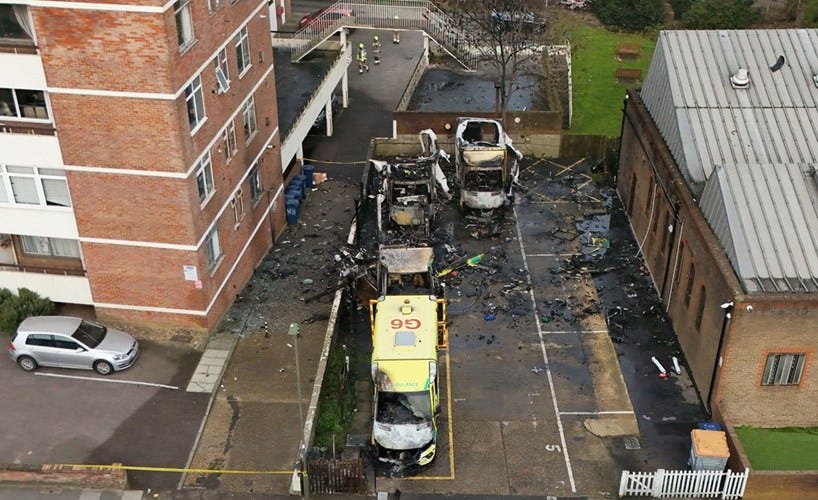
Police are treating the incident as an antisemitic hate crime, with counter-terrorism units leading the investigation. A newly emerged Islamist group linked to Iran has claimed responsibility, and intelligence analysts are actively examining whether this forms part of a wider campaign of attacks on Jewish targets across Europe.
This didn’t come out of nowhere. Jewish communities in the UK have been warning that the climate is deteriorating. People are too afraid to visibly identify as Jewish in public. Islamist terror is being excused and justified. And the UK Labour Government is mustering only a tiny bit more interest than the utterly contemptible Mayor of London.
The midwives’ court win, a decade in the making
The High Court ruled in favour of the College of Midwives this week in a culmination of a very long, very messy story that spans multiple governments. The case was about how lead maternity carer (LMC) midwives (most of whom are self-employed) are funded. Under the current system, the Government sets the terms and fees, but midwives have little to no ability to negotiate those terms, set their own prices, or properly account for the real costs of running what is effectively a 24/7 on-call service. That structure has been in place for years, and concerns about sustainability, workload, and pay have been raised repeatedly over more than a decade.
The legal action dates back to 2015, when the College of Midwives first brought a claim alleging sex-based discrimination and unfair conditions. That case was paused after the Ministry of Health entered mediation and agreed to work toward a new funding model in 2017–2018. But when midwives argued those agreements weren’t properly delivered, the dispute returned to court.
The Court found the Crown breached its contractual obligation to ensure “fair and reasonable” remuneration, failed to act in good faith in its dealings, and that the funding model dating back as far as 2007 resulted in unlawful discrimination on the basis of sex. The Court has effectively said the system remained out of step with both contractual obligations and basic rights.
The current Government has already indicated it will appeal parts of the ruling carrying on the direction set by those before. That means the legal fight isn’t really over.
The great fishing U-turn and the even greater trawl for credit
The Government abruptly scrapped the most controversial part of the Fisheries Amendment Bill after a very public backlash from recreational fishers, environmental groups, and pretty much anyone who has ever thrown a line in the water. The proposal was to allow commercial operators to catch and sell undersized fish. Size limits exist for a reason and the common perspective was that we should let fish reach maturity, let them breed, and we might actually still have a fishery in a decade.
Within minutes of the announcement, both Christopher Luxon and Winston Peters painted entirely different versions of events. Peters said he had listened to “ordinary Kiwis,” spoken to Shane Jones, and decided the clause would go. Christopher Luxon said he too had spoken to Jones that very morning and secured the change. ACT, not to be left out, said it had raised concerns internally and driven the outcome through coalition channels.
Anyone with half a brain knows only Winston Peters can tell Matua Shane Jones what to do.
While the size limit change is gone, the broader bill remains and critics are pointing out that this was just one piece of a much larger package of reforms that still concerns them about sustainability, transparency, and who ultimately benefits.
Brooke van Velden to retire from Parliament at election
Brooke van Velden’s decision to retire from Parliament at just 33 marks the end (pause? hiatus?) of an undeniably high-impact political career, defined by discipline, ideological clarity, and a willingness to take politically difficult decisions. In her six years in Parliament she rose to deputy leader of ACT, secured the Tāmaki electorate, and drove through some of the most consequential workplace reforms in a generation. Most notably she repealed the Fair Pay Agreements, reshaped employment law, tackled the long-running Holidays Act mess and pushed through “controversial” changes to pay equity that she argues helped “save the Budget”. She is a polarising figure in that the unions hate her but she is well regarded by business. The Public Service Association put out a press release simply saying “Good.” in response to her retirement news.
The possibility of a return to politics is not entirely off the table. Van Velden said she wants to go work in the private sector for now, but doesn’t rule out a return in a couple of decades time when she will be in her 50s.
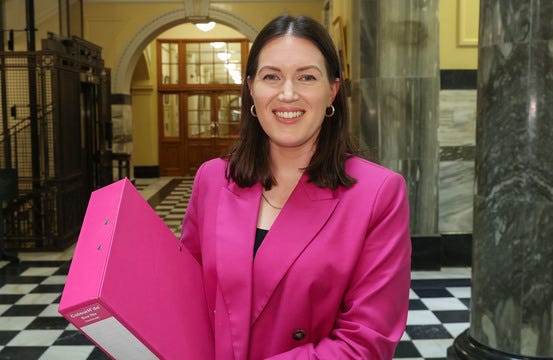
Hon Brooke van Velden. Photo: NZ Herald
Labour’s new candidates either can’t show up or won’t grow up
Labour’s candidate choices this week have raised eyebrows. In the Tāmaki Makaurau electorate they have selected Kerrin Leoni, the former Auckland mayoral candidate whose 2025 mayoral run was marked by campaign stumbles, including pulling out of a scheduled NZ Herald debate at the last minute and forgetting to attend her own policy launch at Avondale Markets. Given she built part of her pitch around the idea that Auckland needed leaders who would “show up” this was a tad ironic. Now she has been redeployed as Labour’s answer to Oriini Kaipara in a seat the party is desperate to win back after losing it at the 2025 by-election.
Then there is Tāmaki, where Labour’s candidate is Max Harris, a barrister, ActionStation campaigner, and former economic policy adviser to John McDonnell in the UK Parliament. McDonnell was the Shadow Chancellor under Jeremy Corbyn’s Labour, the party that suffered a drumming at the ballot box. Harris’s public statements and writing reflects both the antisemitism and economic policies of Corbyn’s Labour.
In the space of one week, Labour has served up a mayoral hopeful who couldn’t reliably front her own campaign obligations and a candidate with direct ties to the hardest-left failed experiment in modern British Labour politics.
The audacity of endometriosis bloke and the Olympics is no longer woke
Terf Island is usually a beacon in the fight against gender identity nonsense, but this week they had a backward step with the surreal case of Steph Richards; the man appointed to a parliamentary engagement role for a charity that represents women with endometriosis. Endometriosis is a condition affecting the female reproductive system. It is chronically underdiagnosed, routinely dismissed, and painfully misunderstood. And somehow, in 2026, women have to put up with a man who “identifies as a woman” speaking for women with a condition he cannot even imagine having.
On the other hand, in a rare outbreak of institutional sanity, the International Olympic Committee has finally announced that women’s sport is for women. Only biological females will be eligible for the women’s category and this will be backed by the introduction of sex testing via a simple cheek swab. Of course, it will be framed as controversial, even cruel. But sex testing in sport is not new and a cheek swab is hardly draconian. It is a once-off, minimally invasive way to verify eligibility in a category defined by biology.
Also in gender ideology news, the US Department of Justice has launched an investigation into policies in California and Maine that allow male prisoners who identify as women to be housed in female prisons, following multiple allegations of sexual assault, harassment, and intimidation.
A rightward shift in Europe and the political class is rattled
The centre is hollowing out in Europe and voters are moving decisively to the right. This week in European Parliament the right-wing factions managed to work together to get wins on migration and border control, rolling back agricultural and environmental Green Deal-style policies, energy realism over climate idealism, and increased defence cooperation and spending. Of course, the European Parliament is a complex beast, and the right is far from unified. There are real divisions between conservative, nationalist, and more hardline factions.
In Denmark, the resignation of Prime Minister Mette Frederiksen is significant. Frederiksen had already hardened her stance on immigration in an attempt to hold ground, but the pressure didn’t dissipate. In France, the municipal elections saw the Greens, who surged in 2020 off the back of climate activism and low-turnout Covid-era voting lose control of several major cities. At the same time, right-leaning and far-right forces are consolidating at the local level including high-profile wins like Eric Ciotti taking Nice.
The political and media establishment continues to frame these shifts as aberrations calling them protest votes, misinformation, “populism.” But at some point, when the same pattern repeats across France, Italy, Germany, the Netherlands, and beyond, they need to acknowledge it is a realignment.
The Tom Phillips documentary and the police who lost the plot
This week we learned more about the astonishing decision by New Zealand Police to effectively collaborate in turning an ongoing case involving vulnerable children into global entertainment. We now know police granted exclusive access to Dame Julie Christie’s production company, with the show set for a global Netflix audience. Police actively tried to keep Netflix’s involvement secret, initially claiming it was to protect Netflix’s “commercial position,” before later admitting that explanation was wrong and apologising for providing misleading information under the Official Information Act.
This is a case where the state has blurred the line between public interest and public spectacle. Police say it offers an “inside view” and promotes crime prevention, but it also hands a global media company access to a deeply sensitive case subject to the strictest of suppression orders. Orders that can’t be enforced overseas.
Chart of the week
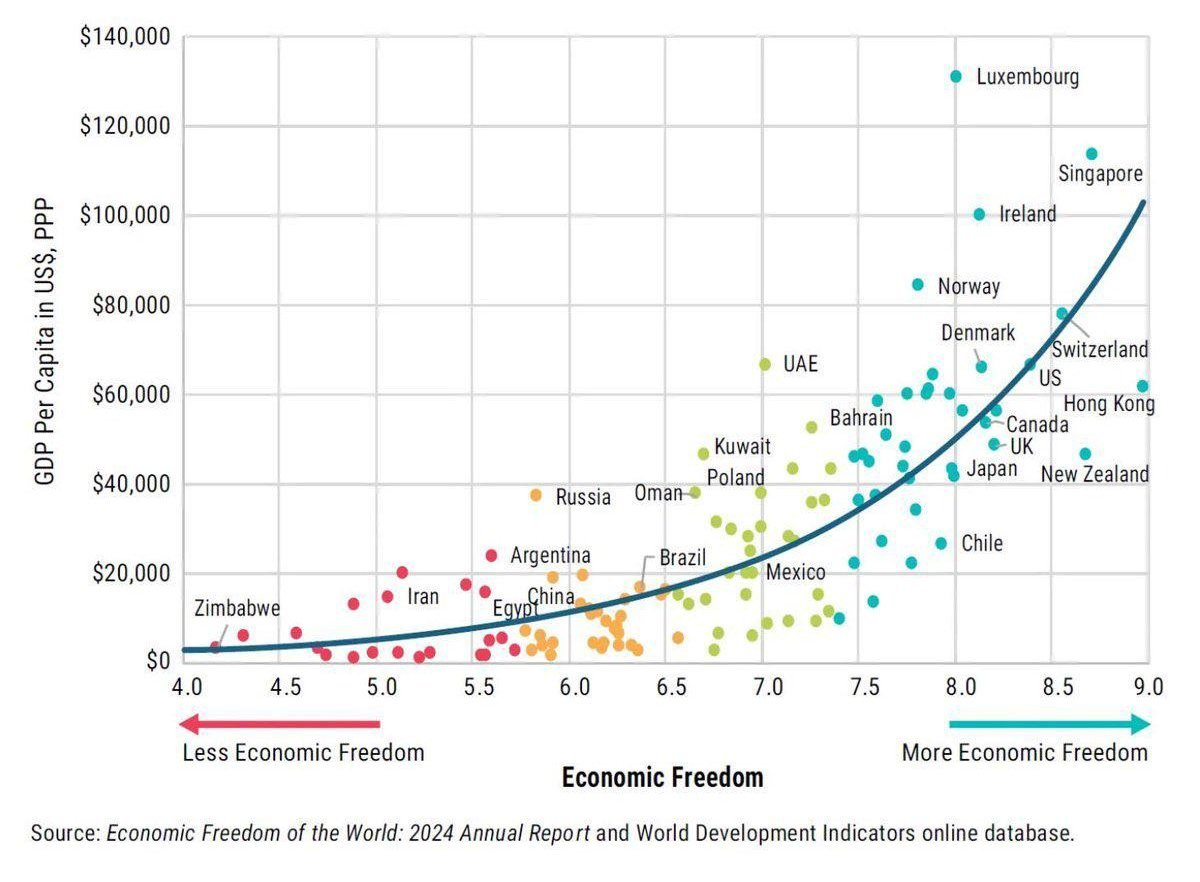
Click to view
In short - other stuff that happened
- Dayton James Webber, 27, has been charged with murder after allegedly shooting another man during an argument inside a car. The accused, a professional cornhole player and quadruple amputee, was later found at a hospital and arrested.
- Heinz Wattie’s has confirmed it will close manufacturing sites in Christchurch, Dunedin and Auckland, and scale back operations in Hastings, resulting in around 300 job losses.
- Tuakau College was placed into lockdown after a student allegedly stabbed a teacher, with emergency services responding and the student taken into custody.
- The teacher was hospitalised with what police later described as minor injuries.
- Canadian billionaire Jim Grenon has become the largest shareholder in NZME, lifting his stake to just under 20%. Under New Zealand law he cannot increase that holding further without triggering a full takeover offer.
- Gerry Brownlee has asked the High Court to revisit part of its ruling in the Mariameno Kapa-Kingi case, arguing that the judgment strayed into directing how Parliament should act. This raises broader constitutional questions about the boundary between the courts and parliamentary privilege.
- A 25-year-old Spanish woman, Noelia Castillo Ramos, has died by euthanasia after a prolonged legal battle with her father who tried to stop it through multiple courts. She was paralysed following a suicide attempt after a sexual assault.
- A man has died in Christchurch after being electrocuted while allegedly attempting to steal copper from a live power transformer, triggering a fire and widespread power outage.
- Former Timaru teacher Sam Bocock has had his registration cancelled after the Teachers Disciplinary Tribunal found he engaged in sexual relationships with two students. This ended his teaching career after just 19 months.
- A Hamilton man has been jailed for 15 years and one month after being convicted of prolonged “sadistic and cruel” sexual abuse of three young children. The judge said the harm was compounded by the children’s mother supporting the offender.
- The Department of Corrections has cancelled its contract with Pūwhakamua reintegration programme following serious sexual allegations against its founder who says the encounter was consensual. The initiative has received around $3.9 million in public funding since 2022.
- Police are investigating an unexplained death onboard a Royal Caribbean cruise ship, Anthem of the Seas, travelling in New Zealand waters.
- $30,000 of taxpayer funding was granted through the Ministry for Ethnic Communities to support a pro-Palestinian political campaign. This intensifies scrutiny on the $4.2 million Ethnic Communities Development Fund as the Ministry has struggled to demonstrate clear outcomes or accountability.
- Whanganui District Council’s rebrand cost nearly $117,000, significantly higher than the $61,800 figure initially presented to ratepayers. Documents suggest the decision was driven by council officials rather than elected councillors.
A Halfling's View offers a sharp, unapologetically critical take on Chris Hipkins and Labour’s current positioning, arguing that in the face of a real-world crisis they’ve defaulted to commentary without offering any alternative plan. Whether you agree with it or not, it’s worth a read for the question it raises about what voters should expect from an opposition. READ IT.

The truth about TOP
Ani O’Brien 26 Mar Read full story
Steve Stewart-Williams argues that “wokeness” is a coherent ideological framework rooted in an oppressor/oppressed worldview that has rapidly reshaped Western culture, institutions, and policy. He draws on psychological and sociological research to claim it is associated with traits like higher anxiety and depression, is more prevalent among women, and often promotes interventions (like DEI, speech restrictions, and “safety” culture) that may not achieve their intended outcomes and can create unintended consequences.
It’s worth reading because it tries to ground a very heated cultural debate in data and research rather than slogans. Even if he overreaches in places, it’s a useful, structured attempt to define what “wokeness” actually is and to interrogate its real-world effects rather than just arguing about it in the abstract. READ IT.
Just a quote from Argentinian President Javier Milei: “When you tell a socialist the truth, they cry, claiming it’s hate speech. No, it’s not hate speech. It’s that you’re useless people who have ruined the planet.”
Ani O'Brien comes from a digital marketing background, she has been heavily involved in women's rights advocacy and is a founding council member of the Free Speech Union. This article was originally published on Ani's Substack Site and is published here with kind permission.


3 comments:
I love Javier Milel. And can someone tell me if we have so much economic freedom why are we so poor? Please explain Nicola.
In this global oil crisis, the US equivalent of an own goal, how did the world get a President like Donald Trump? You need go no further than look at the alternative on offer at the time by the Democrats. Wokeness.
In a two party system the choice was stark. Wokeness or a known extremely imperfect man who ordinarily no voter would go near. They chose the latter and I can see why. Progressivism is so toxic and so insane, it makes a man like Donald look like a Knight in shining armour in a world that has lost its mind. And that is almost as absurd as the woke religion itself.
And even now the Republicans have to be even odds to maintain power later this year
Thanks Ani. I nice wrap-up of the week's news and just proves, who needs a leftist, woke rag like 'The Post' to be kept informed - who, quite frankly, don't.
Post a Comment
Thank you for joining the discussion. Breaking Views welcomes respectful contributions that enrich the debate. Please ensure your comments are not defamatory, derogatory or disruptive. We appreciate your cooperation.