

While much of the political discussion has focused on who won and lost domestically, the Budget documents themselves are heavily framed around geopolitical instability, energy insecurity, ageing demographics, and economic shocks originating beyond New Zealand’s shores. Finance Minister Nicola Willis repeatedly referenced the fuel crisis, while Treasury’s forecasts assume a temporary but significant hit to growth and inflation over the coming year. Treasury now forecasts annual average GDP growth of 1.2% for the year to June 2026 before accelerating to 2.3% in 2027 and 3.2% in 2028. Employment is forecast to grow by 220,000 jobs over the next four years, while wages are expected to increase by an average of 3.1% annually.
The Budget’s fiscal strategy is built around projecting spending discipline while still making targeted investments in areas the Government considers essential. The operating package totals $2.1 billion annually, below the $2.4 billion allowance previously set by the Government. It includes approximately $3.8 billion in new spending offset by $1.7 billion in savings and additional revenue measures. Those savings come from public sector restructuring, the end of the Fees Free programme, and lower than expected Kāinga Ora operating costs. Treasury now forecasts the Government will return to surplus in 2028/29, a year earlier than previously expected, while net core Crown debt is projected to peak at 46.1% of GDP before gradually declining.
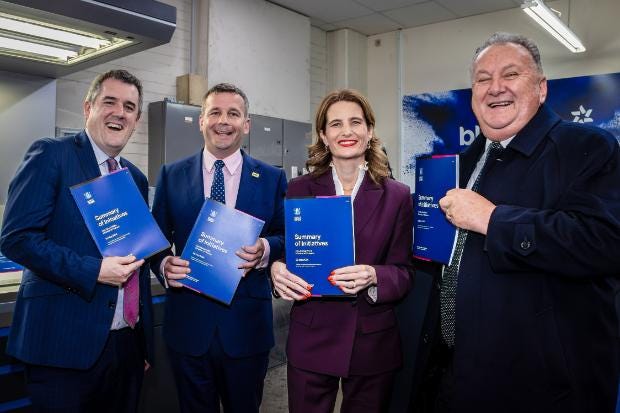
Photo credit: BRUCE MACKAY / The Post
The emphasis on resilience is visible throughout. The Government has established a $450 million fuel contingency fund, allocated $150 million toward increasing strategic fuel reserves, committed $400 million to state highway resilience projects, and provided more than $1 billion for KiwiRail’s network improvement programme. Defence receives another major uplift, including funding for naval upgrades, drones, intelligence services, and military infrastructure. But Health remains the largest area of expenditure, with an additional $5.5 billion allocated to frontline services and a further $682 million in capital spending for hospital redevelopments, including projects in Whangārei, Tauranga, Hawke’s Bay and Palmerston North. Education receives a $1.6 billion operating boost alongside funding for curriculum reform, school redevelopments and expanded trades training.
Read my initial response and find out why I called it the Dead Rabbit Budget.
Leaked audio of Labour MPs practicing avoiding questions
Lost amid Budget Week was what should have been a more damaging story for Labour. With most of the coverage focused on Barbara Edmonds’ unfortunate “duck-faced horse” remark about Nicola Willis, the story generated a few headlines, an apology, and some predictable outrage. But the real story should have been what the leaked recording revealed about Labour’s campaign strategy.
The audio came from a Labour Party workshop in which MPs and candidates were being coached on how to avoid answering difficult questions. As a moderator at the session said, the goal was demonstrating “the political art of answering the question you want to be asked”. Also revealing were comments from senior Labour figures during the session itself. Barbara Edmonds reportedly told attendees that one way to fight political opponents was to “discredit them as a caucus and as a group” and to “knock them down one by one”.
Perhaps that’s just politics. All parties engage in message discipline and most skilled politicians pivot. But voters are entitled to feel a little cynical when the party demanding scrutiny of the Government is simultaneously coaching its own candidates on how to dodge it.
Farewell to a Kiwi icon: Dame Jools Topp dies aged 68
Sadly, Dame Jools Topp has passed away at the age of 68 after a long battle with breast cancer. Whatever your politics, it is difficult to overstate the place the Topp Twins occupy in New Zealand’s cultural history. For more than four decades, Jools and Lynda Topp entertained generations of New Zealanders through music, comedy, television, books, and live performance. Very few entertainers leave behind a legacy as enduring or as widely appreciated as Jools Topp’s.
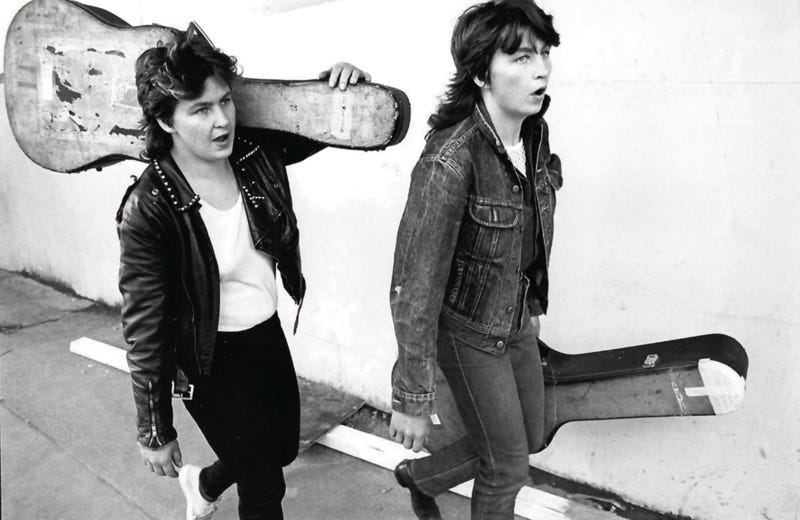
Under normal circumstances I probably would have had more to say about her twin Dame Lynda Topp’s comments at the Aotearoa Music Awards. The suggestion that arts funding should take priority over defence spending is very misguided given the increasingly unstable world we find ourselves living in. And her reference to Arts Minister Paul Goldsmith as “Goldstein” was, at best, an unfortunate choice that distracted from whatever substantive point she was trying to make.
But this week is not a normal circumstance. Lynda Topp has just lost her twin sister. So while I disagree with the comments she made, this isn’t the week to be litigating every remark.
Election 2026: candidate update
Candidate selections continued this week as parties begin finalising their line-ups for November. Labour introduced several new candidates, including Te Pūoho Kātene for Te Tai Hauāuru, Hannah Pia Baral for Upper Harbour, and George Hampton for Christchurch Central. Kātene is a Fulbright Scholar, Stanford graduate, Ngāti Toa leader, and former chief executive of Tapuwae Roa. Hampton previously worked as a New Zealand diplomat and senior United Nations climate official and was involved in Helen Clark’s 2016 campaign for UN Secretary-General.
In Te Tai Tokerau, Labour’s Willow-Jean Prime, Green MP Hūhana Lyndon, Te Pāti Māori’s Aperahama Edwards, and Mariameno Kapa-Kingi’s new Te Tai Tokerau Party will all contest the seat. Meanwhile, Haley Maxwell has been selected as Te Pāti Māori’s candidate for Ikaroa-Rāwhiti. National has confirmed it will be standing candidates in Tāmaki Makaurau and Te Tai Hauāuru, but they are yet to be announced.
The Greens have selected Mark Longworth, a natural medicine grower and former DJ, as their candidate for Tukituki, but lost their Whanganui candidate Awhi Haenga, who withdrew for family reasons.
The Homeschoolers won, forcing the fastest U-Turn of the year
Last week I wrote about the Government’s controversial homeschooling changes, which were inserted into the Education and Training (System Reform) Amendment Bill after the select committee process had closed, denying homeschooling families any opportunity to submit on them.
The backlash was immediate. And Education Minister Erica Stanford swiftly performed a complete U-turn. The Bill was sent back to remove the homeschooling provisions entirely, with Stanford acknowledging that feedback from stakeholders, MPs, coalition partners and the education sector had shown the issue was “more complicated than first thought”.
The speed of the reversal was remarkable. Even more entertaining has been the scramble for credit. ACT declared the reversal a “major victory”, pointing to intervention from education spokesperson Laura McClure and leader David Seymour. New Zealand First insisted it was chiefly responsible, with RNZ reporting that discussions between Stanford and NZ First had preceded the decision. Stanford, meanwhile, attempted to spread the credit around, saying all three coalition parties had effectively “held hands” on the issue.
Labour and the Greens also sought to claim a share of the victory, citing letters and parliamentary opposition to the proposals. Whatever version of events you choose to believe, the outcome is that the homeschooling changes are gone for now.
Rates on hold, for now
The Monetary Policy Committee voted to leave the Official Cash Rate unchanged at 2.25%. The committee was split evenly, with three members voting to hold and three voting to increase the OCR to 2.5% and Reserve Bank Governor Anna Breman ultimately exercised her vote to keep rates unchanged. It was the first publicly disclosed split vote under the Reserve Bank's new transparency rules.
However, the disagreement was not so much over whether rates would rise, but when. The Bank now expects inflation to peak at 4.3% in the September quarter, driven largely by higher fuel and energy costs and disruptions to shipping through the Strait of Hormuz. Annual inflation already sits at 3.1%, just above the Reserve Bank's target range for a second consecutive quarter.
Governor Breman described conditions as "pretty tough out there" and warned that failing to act could allow temporary price shocks to become embedded in wages and business pricing decisions. The Bank's current forecasts suggest the OCR will need to rise toward a "neutral" level of around 3 to 3.25% over the coming year to prevent inflation becoming entrenched.
Snapchat serial offender sentenced
Raveen Saily (25) has been sentenced in the High Court in Rotorua to 17 years and 2 months for sexual offending against three girls aged 11, 13, and 16. He received eight years for the offending against the 11 and 13 year old girls, to be served cumulatively with his existing 9 year, 2 month sentence for the rape and sexual violation of the 16 year old in 2021. A minimum period of imprisonment of 6 and a half years was set before he can be considered for parole.
He met the 16 year old girl at a shopping mall after making contact with her on Snapchat. He took her to a nearby park to the public changing rooms where he threatened and cut her with a knife before raping her.
While on bail and subject to conditions not to contact girls under 16 nor access the internet, Saily added the 13 year old girl on Snapchat in May 2024, claiming he was 16. Over a month, he groomed her and got her to send explicit photographs. In June, he picked her up at night, drove her around, and sexually violated her. He recorded and took photographs of the acts. The offending was detected during a routine traffic stop when police became suspicious of the age gap between Saily and the girl in his car.
It was then discovered that Saily had also groomed an 11 year old girl on Snapchat while awaiting trial. He never met her in person, but pressured her to become his “girlfriend,” told her he loved her, and encouraged her to send sexually explicit images and perform sexual acts on video calls. He sent her explicit images and a video of the 13 year old performing a sexual act on him. The girl’s mother discovered the messages.
Justice Dani Gardiner described the offending as driven by “power and coercion and a desire to demean and degrade” the victims. Psychological reports indicated a longstanding pattern of compulsive consumption of extreme pornography, including paedophilic and violent material, which had distorted his understanding of consent and healthy relationships. He had previous convictions for possession of objectionable images.
The Crown sought preventive detention due to the sustained pattern of predatory offending and high risk of reoffending, but Justice Gardiner ultimately chose to impose a finite sentence, noting Saily’s relative youth and the potential for rehabilitation programmes in prison.
PSA vs Winston Peters: a neutrality problem
Winston Peters posted on X yesterday that the Public Service Association (PSA) leadership are “card carrying members of the Labour Party” and questioned why the media continue to treat the union as an independent voice. He has a point and he isn’t the first to make it. Last week, NZ Herald’s Audrey Young highlighted how when the current Government announced the public sector cuts, the PSA described them as an act of “wilful destruction” and warned that public services would be “decimated”. Yet when the Labour Government sought savings in 2023, the same union responded with remarkable understanding, acknowledging that “savings need to be found” in difficult economic circumstances. She questioned if perhaps the PSA should simply stop pretending to be politically neutral and affiliate formally with Labour.
PSA National Secretary Fleur Fitzsimons was also Labour’s candidate for the Rongotai electorate in 2023. Not only that, but she was given what was widely considered one of the party’s safest seats. She then managed the remarkable feat of losing it to the Greens’ Julie Anne Genter.
There is another layer to this as well. Fitzsimons’ hatred for NZ First runs deep as they have been the party challenging gender ideology and she has been a prominent trans activist for years. Before everyone piles on me again, Fitzsimons has written publicly about raising a “transgender child” and I am not drawing attention to anything she has not publicised herself. In one Stuff article she says of her daughter who now identifies as her son:
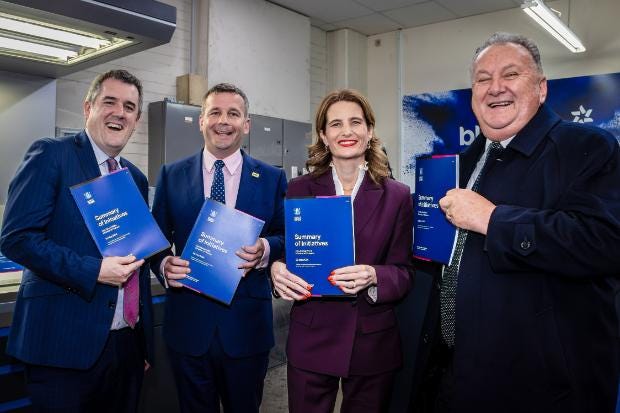
Photo credit: BRUCE MACKAY / The Post
The emphasis on resilience is visible throughout. The Government has established a $450 million fuel contingency fund, allocated $150 million toward increasing strategic fuel reserves, committed $400 million to state highway resilience projects, and provided more than $1 billion for KiwiRail’s network improvement programme. Defence receives another major uplift, including funding for naval upgrades, drones, intelligence services, and military infrastructure. But Health remains the largest area of expenditure, with an additional $5.5 billion allocated to frontline services and a further $682 million in capital spending for hospital redevelopments, including projects in Whangārei, Tauranga, Hawke’s Bay and Palmerston North. Education receives a $1.6 billion operating boost alongside funding for curriculum reform, school redevelopments and expanded trades training.
Read my initial response and find out why I called it the Dead Rabbit Budget.
Leaked audio of Labour MPs practicing avoiding questions
Lost amid Budget Week was what should have been a more damaging story for Labour. With most of the coverage focused on Barbara Edmonds’ unfortunate “duck-faced horse” remark about Nicola Willis, the story generated a few headlines, an apology, and some predictable outrage. But the real story should have been what the leaked recording revealed about Labour’s campaign strategy.
The audio came from a Labour Party workshop in which MPs and candidates were being coached on how to avoid answering difficult questions. As a moderator at the session said, the goal was demonstrating “the political art of answering the question you want to be asked”. Also revealing were comments from senior Labour figures during the session itself. Barbara Edmonds reportedly told attendees that one way to fight political opponents was to “discredit them as a caucus and as a group” and to “knock them down one by one”.
Perhaps that’s just politics. All parties engage in message discipline and most skilled politicians pivot. But voters are entitled to feel a little cynical when the party demanding scrutiny of the Government is simultaneously coaching its own candidates on how to dodge it.
Farewell to a Kiwi icon: Dame Jools Topp dies aged 68
Sadly, Dame Jools Topp has passed away at the age of 68 after a long battle with breast cancer. Whatever your politics, it is difficult to overstate the place the Topp Twins occupy in New Zealand’s cultural history. For more than four decades, Jools and Lynda Topp entertained generations of New Zealanders through music, comedy, television, books, and live performance. Very few entertainers leave behind a legacy as enduring or as widely appreciated as Jools Topp’s.
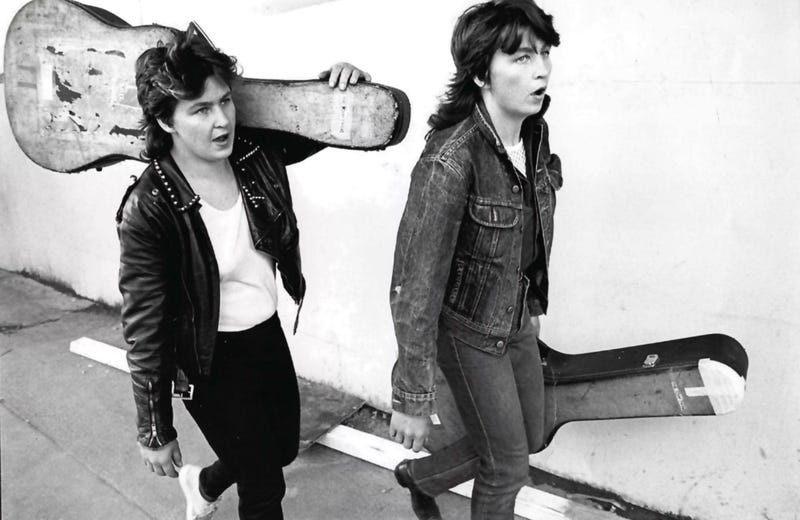
Under normal circumstances I probably would have had more to say about her twin Dame Lynda Topp’s comments at the Aotearoa Music Awards. The suggestion that arts funding should take priority over defence spending is very misguided given the increasingly unstable world we find ourselves living in. And her reference to Arts Minister Paul Goldsmith as “Goldstein” was, at best, an unfortunate choice that distracted from whatever substantive point she was trying to make.
But this week is not a normal circumstance. Lynda Topp has just lost her twin sister. So while I disagree with the comments she made, this isn’t the week to be litigating every remark.
Election 2026: candidate update
Candidate selections continued this week as parties begin finalising their line-ups for November. Labour introduced several new candidates, including Te Pūoho Kātene for Te Tai Hauāuru, Hannah Pia Baral for Upper Harbour, and George Hampton for Christchurch Central. Kātene is a Fulbright Scholar, Stanford graduate, Ngāti Toa leader, and former chief executive of Tapuwae Roa. Hampton previously worked as a New Zealand diplomat and senior United Nations climate official and was involved in Helen Clark’s 2016 campaign for UN Secretary-General.
In Te Tai Tokerau, Labour’s Willow-Jean Prime, Green MP Hūhana Lyndon, Te Pāti Māori’s Aperahama Edwards, and Mariameno Kapa-Kingi’s new Te Tai Tokerau Party will all contest the seat. Meanwhile, Haley Maxwell has been selected as Te Pāti Māori’s candidate for Ikaroa-Rāwhiti. National has confirmed it will be standing candidates in Tāmaki Makaurau and Te Tai Hauāuru, but they are yet to be announced.
The Greens have selected Mark Longworth, a natural medicine grower and former DJ, as their candidate for Tukituki, but lost their Whanganui candidate Awhi Haenga, who withdrew for family reasons.
The Homeschoolers won, forcing the fastest U-Turn of the year
Last week I wrote about the Government’s controversial homeschooling changes, which were inserted into the Education and Training (System Reform) Amendment Bill after the select committee process had closed, denying homeschooling families any opportunity to submit on them.
The backlash was immediate. And Education Minister Erica Stanford swiftly performed a complete U-turn. The Bill was sent back to remove the homeschooling provisions entirely, with Stanford acknowledging that feedback from stakeholders, MPs, coalition partners and the education sector had shown the issue was “more complicated than first thought”.
The speed of the reversal was remarkable. Even more entertaining has been the scramble for credit. ACT declared the reversal a “major victory”, pointing to intervention from education spokesperson Laura McClure and leader David Seymour. New Zealand First insisted it was chiefly responsible, with RNZ reporting that discussions between Stanford and NZ First had preceded the decision. Stanford, meanwhile, attempted to spread the credit around, saying all three coalition parties had effectively “held hands” on the issue.
Labour and the Greens also sought to claim a share of the victory, citing letters and parliamentary opposition to the proposals. Whatever version of events you choose to believe, the outcome is that the homeschooling changes are gone for now.
Rates on hold, for now
The Monetary Policy Committee voted to leave the Official Cash Rate unchanged at 2.25%. The committee was split evenly, with three members voting to hold and three voting to increase the OCR to 2.5% and Reserve Bank Governor Anna Breman ultimately exercised her vote to keep rates unchanged. It was the first publicly disclosed split vote under the Reserve Bank's new transparency rules.
However, the disagreement was not so much over whether rates would rise, but when. The Bank now expects inflation to peak at 4.3% in the September quarter, driven largely by higher fuel and energy costs and disruptions to shipping through the Strait of Hormuz. Annual inflation already sits at 3.1%, just above the Reserve Bank's target range for a second consecutive quarter.
Governor Breman described conditions as "pretty tough out there" and warned that failing to act could allow temporary price shocks to become embedded in wages and business pricing decisions. The Bank's current forecasts suggest the OCR will need to rise toward a "neutral" level of around 3 to 3.25% over the coming year to prevent inflation becoming entrenched.
Snapchat serial offender sentenced
Raveen Saily (25) has been sentenced in the High Court in Rotorua to 17 years and 2 months for sexual offending against three girls aged 11, 13, and 16. He received eight years for the offending against the 11 and 13 year old girls, to be served cumulatively with his existing 9 year, 2 month sentence for the rape and sexual violation of the 16 year old in 2021. A minimum period of imprisonment of 6 and a half years was set before he can be considered for parole.
He met the 16 year old girl at a shopping mall after making contact with her on Snapchat. He took her to a nearby park to the public changing rooms where he threatened and cut her with a knife before raping her.
While on bail and subject to conditions not to contact girls under 16 nor access the internet, Saily added the 13 year old girl on Snapchat in May 2024, claiming he was 16. Over a month, he groomed her and got her to send explicit photographs. In June, he picked her up at night, drove her around, and sexually violated her. He recorded and took photographs of the acts. The offending was detected during a routine traffic stop when police became suspicious of the age gap between Saily and the girl in his car.
It was then discovered that Saily had also groomed an 11 year old girl on Snapchat while awaiting trial. He never met her in person, but pressured her to become his “girlfriend,” told her he loved her, and encouraged her to send sexually explicit images and perform sexual acts on video calls. He sent her explicit images and a video of the 13 year old performing a sexual act on him. The girl’s mother discovered the messages.
Justice Dani Gardiner described the offending as driven by “power and coercion and a desire to demean and degrade” the victims. Psychological reports indicated a longstanding pattern of compulsive consumption of extreme pornography, including paedophilic and violent material, which had distorted his understanding of consent and healthy relationships. He had previous convictions for possession of objectionable images.
The Crown sought preventive detention due to the sustained pattern of predatory offending and high risk of reoffending, but Justice Gardiner ultimately chose to impose a finite sentence, noting Saily’s relative youth and the potential for rehabilitation programmes in prison.
PSA vs Winston Peters: a neutrality problem
Winston Peters posted on X yesterday that the Public Service Association (PSA) leadership are “card carrying members of the Labour Party” and questioned why the media continue to treat the union as an independent voice. He has a point and he isn’t the first to make it. Last week, NZ Herald’s Audrey Young highlighted how when the current Government announced the public sector cuts, the PSA described them as an act of “wilful destruction” and warned that public services would be “decimated”. Yet when the Labour Government sought savings in 2023, the same union responded with remarkable understanding, acknowledging that “savings need to be found” in difficult economic circumstances. She questioned if perhaps the PSA should simply stop pretending to be politically neutral and affiliate formally with Labour.
PSA National Secretary Fleur Fitzsimons was also Labour’s candidate for the Rongotai electorate in 2023. Not only that, but she was given what was widely considered one of the party’s safest seats. She then managed the remarkable feat of losing it to the Greens’ Julie Anne Genter.
There is another layer to this as well. Fitzsimons’ hatred for NZ First runs deep as they have been the party challenging gender ideology and she has been a prominent trans activist for years. Before everyone piles on me again, Fitzsimons has written publicly about raising a “transgender child” and I am not drawing attention to anything she has not publicised herself. In one Stuff article she says of her daughter who now identifies as her son:
“At three years of age, he would say: “I a boy, I a boy”, insisting on boy’s clothes, and keeping his short hair.
Since then, his father and I have navigated being parents of a transgender child and all that means.”
She advocated for sex self-identification laws, and has been an outspoken critic of New Zealand First’s position on women’s sport and sex-based rights. That doesn’t invalidate her views on other matters related to the party. But it does provide important context when the PSA routinely attacks NZ First and the rest of the Government.
Fitzsimons, and other PSA leaders, can have political views. Everyone does. The issue is whether the media should continue to present the PSA as politically neutral when its leadership, rhetoric, history, and personnel suggest otherwise. It is an organisation led by people with deep roots in the Labour Party, and it overtly behaves like one.
Gulf Harbour body trial begins: Lord, Queen and The Ark
The trial of four members of the same family accused over the death of 70 year old woman Shulai Wang began in Auckland this week. It is expected to run for up to six weeks. Wang’s body was discovered in March 2024 after a fisherman pulled a bag of rubbish from the Gulf Harbour. When he opened the bags, he found human remains. However, Wang was not able to be formally identified until more than seven months later.
Kaixiao Liu, his wife Lanyue Xiao, and his parents Jingui Liu and Xiuyun Li have all pleaded not guilty to charges including kidnapping and manslaughter. Kaixiao Liu and Xiao also face charges of attempting to pervert the course of justice, while all four are accused of interfering with Wang’s body. The defendants are representing themselves at trial.
The Crown alleges Wang travelled from China to New Zealand in 2023 to receive religious instruction from Kaixiao Liu, who led a religious group operating from an Orewa property known as “The Ark”. I am sure someone will make a movie about this. Prosecutors say Wang and five other women lived in conditions of “practical servitude” under a strict system of rules and punishments. Kaixiao Liu was allegedly referred to as “Lord”, “Master” or “Teacher”, while his wife was known as “Queen”.
According to the Crown, Wang had fallen out with the group and was subjected to escalating punishment before her death. Food was withheld from her, she was confined in a tent outside the house, and she attempted to escape by climbing over a fence. Prosecutors allege she was subsequently restrained with tape and that audio recordings, diary entries and other evidence recovered from the property documented discussions about her treatment.
Police were led to the defendants by two 10kg SunRice bags that had been attached to Wang’s body and filled with stones. Investigators traced the bags to bulk purchases made by Kaixiao Liu, while CCTV footage placed a white Mercedes van linked to the family at Gulf Harbour Marina shortly before the body was discovered.
The jury also heard evidence about five Chinese women who were living at the Orewa property when police executed a search warrant. The women, who had overstayed their visas, were later deported to China.
🇬🇧 “Unduly lenient,” ten rape convictions but no prison
Three teenage boys in the UK who were convicted of raping two girls and filming the attacks have had their non-custodial sentences referred to the Court of Appeal as “unduly lenient.”
The case involved two separate attacks in late 2024 and early 2025. A 15 year old girl was raped in an underpass by the River Avon in November 2024 and then in January 2025, a 14 year old girl was raped in a field. The boys (then aged 13–14) filmed the assaults on their phones and shared some footage. They were convicted of a total of 10 rape offences (plus indecent image charges) in March 2026.
Then, on 21 May 2026, Judge Nicholas Rowland sentenced the two older boys (now 15) to Youth Rehabilitation Orders (3 years of community supervision) with just 180 days of intensive supervision and surveillance. The youngest boy (now 14) received an 18 month supervision order. They were also given curfews and 10 year restraining orders against the victims. The judge emphasised their young age, low intellectual capacity, ADHD diagnoses, and vulnerability to peer pressure. He stated he wanted to avoid “criminalising these children unnecessarily”.
The decision sparked widespread outrage. The victims were horrified with one saying the sentence felt like “a rock straight in my face” and questioned the point of enduring a trial. Both girls reported ongoing fear, flashbacks, nightmares, school disruption, and feeling unsafe in their own town. One victim’s family called it a “life sentence” for their daughter.
Public and political pressure mounted quickly and Attorney General Lord Richard Hermer has now referred the sentences to the Court of Appeal after multiple complaints under the Unduly Lenient Sentence scheme. He highlighted the victims’ “immense bravery” and an “epidemic of violence against women and girls.”
The Court of Appeal will now determine whether the original sentences should be increased. The case has intensified debate about youth sentencing guidelines which treat custody as a last resort for children, and the balance between rehabilitation and punishment for serious sexual offences.
🇬🇧 Henry Nowak case sparks international outrage
A jury found Vickrum Digwa (23) guilty of murdering Henry Nowak in Southampton in December last year. The court heard that Nowak, an 18 year old finance student, was stabbed multiple times, including a fatal wound to the chest, while walking home after a night out with friends. Digwa was also convicted of carrying a bladed weapon in public, while his mother was convicted of assisting an offender after removing the weapon from the scene.
The case has attracted widespread attention not only because of the murder itself, but because of the police response afterwards. After the stabbing, Digwa repeatedly told police he had been the victim of a racist attack and denied stabbing Nowak. Prosecutors described these claims in court as a “wicked lie”.
When officers arrived at the scene, they handcuffed and arrested Nowak while he was suffering from fatal injuries. Hampshire Police have since publicly apologised, acknowledging that Nowak was handcuffed and arrested in the moments before he lost consciousness. The force referred itself to the Independent Office for Police Conduct, which is now investigating the incident.
The case has become a major political issue in Britain, with MPs from multiple parties questioning how the victim riddled with stab wounds came to be treated as the suspect while the attacker was believed. Calls have been made for the release of police body camera footage, and the handling of the incident has reignited debate about public confidence in policing, race relations, and whether allegations of racism can sometimes distort decision making in high-pressure situations.
🇫🇷 The Pelicot Effect, a second case
When Gisèle Pelicot waived her right to anonymity during the trial of her husband in 2024, she explained that she wanted “shame to change sides”. Rather than taking the anonymity she was entitled to, she insisted that the facts be heard openly. This week, France witnessed the next chapter in that movement.
A French court sentenced 51 year old former bank manager Guillaume Bucci to 25 years in prison for the rape, torture and exploitation of his former partner, Laetitia R. Between 2015 and 2022, Bucci subjected her to physical, sexual and psychological abuse, while coercing her into prostitution with hundreds of men. During the trial, Laetitia told the court she had “stopped counting at 487 men”. Like Pelicot before her, Laetitia chose to waive her anonymity and have the case heard in public. Her lawyer explicitly linked that decision to Pelicot’s example, saying his client was determined not to remain silent after years of abuse and believed that “fear and shame must change sides”.
Laetitia described a relationship that began with what she believed were consensual sexual experiments before escalating into violence, coercion and control. She testified that Bucci strangled her, burned her, threatened her, controlled her movements and forced her into prostitution. She told the court she lived in constant fear and felt as though she was “dying inside”. Unlike Dominique Pelicot, who drugged his wife before arranging for strangers to rape her, Bucci was not accused of drugging Laetitia.
Cuts for RNZ, millions for Māori Broadcasting
Budget 2026 delivered a mixed verdict for New Zealand’s publicly funded media sector. RNZ will face another reduction in funding, with its annual baseline dropping from $65.8 million to $64.4 million. That follows last year’s cut of almost $5 million per year. NZ On Air is also taking a hit. Its annual budget will fall from $104.8 million to $102.7 million over the next four years. The New Zealand Film Commission’s operating budget has also been trimmed.
Yet at the same time, Budget 2026 delivered $48 million over four years for Māori broadcasting. According to the Government, the funding is intended to address what officials described as a looming “fiscal cliff” facing Māori media organisations as temporary funding arrangements were set to expire. The package will support Māori broadcasters to adapt to digital platforms, commission new te reo Māori content, develop talent and strengthen organisational capability.
What makes all of this more interesting is the wider context of scratchiness between the Government and the sector. Over the past month, the Government’s relationship with publicly funded media has been tense. David Seymour publicly criticised RNZ’s management and suggested changes were coming as the Government reshaped the broadcaster’s board. Those comments triggered a highly public dispute with RNZ leadership, media commentators, opposition parties and even coalition partners. Paul Goldsmith later described some of Seymour’s comments as “unhelpful”, while Winston Peters said they were “out of order”.
Within weeks, RNZ chief executive Paul Thompson announced he would step down at the end of the year, although the board made clear the decision had been communicated internally months earlier. Meanwhile a new RNZ chair, Brent Impey, has been appointed as the broadcaster enters what is clearly a period of transition.
Did the ASA just pull a BSA?
One of the more spectacular own goals in New Zealand’s regulatory history came recently when the Broadcasting Standards Authority (BSA) decided to extend its own jurisdiction into podcasts, livestreams, and online content. The result was a political backlash that ultimately put the institution itself in the firing line and now it is awaiting its announced demise.
Just yesterday, there were echoes of that saga in a confrontation between Christchurch property developer Matthew Horncastle and the Advertising Standards Authority (ASA). The dispute began after the ASA received a complaint about a political billboard on Horncastle’s property. The billboard read:
“The New Zealand government takes HALF the money you make if you work really hard. Labour, Greens and Te Pāti Māori want the other half as well.”
The ASA contacted Horncastle in an email that strongly suggested the organisation had the right to demand information from him and the power to punish.
But, Horncastle publicly challenged the ASA’s authority to involve itself at all. In a lengthy reply, he argued that the billboard was not advertising but political speech, noting that he was not selling a product, promoting a service, or running a commercial campaign. He further pointed out that the ASA is not a government agency but an industry-funded self-regulatory body whose rules are voluntarily adopted by its members. He then declined to provide the information requested.
The ASA appears to have quickly concluded that Horncastle had a point as Horncastle later posted a response from the Complaints Board Chair on X. The Chair issued a ruling finding that the ASA had no jurisdiction over the billboard. The complaint was dismissed, but Horncastle was bemused.
Horncastle has now launched a satirical “Advertising Standards Authority Authority” website, complete with mock rulings, governance codes, oversight procedures, and recommendations for keeping the ASA itself under control.
Institutions often accumulate authority gradually, starting with a narrow remit, performing a useful function, and building public trust. The temptation is then to push a little further and test the boundaries. Sometimes that works, but sometimes it ends with an institution discovering that its perceived authority is larger than its actual authority. That was the mistake the BSA made. It transformed itself from a largely uncontroversial standards body into a political target. The ASA may have just stumbled into a similar trap.
🇺🇸 Tulsi Gabbard resigns to care for husband following cancer diagnosis
US Director of National Intelligence Tulsi Gabbard announced her resignation on 22 May, effective 30 June, citing her husband Abraham Williams’ recent diagnosis of an extremely rare form of bone cancer. In a resignation letter released publicly, Gabbard wrote that her husband faces “major challenges in the coming weeks and months” and said she could not “in good conscience” continue in such a demanding role while asking him to face the illness alone.
The letter left little room for ambiguity, but much of the initial media coverage focused on speculation that Gabbard’s departure was linked to disagreements with the Trump administration, particularly over Iran with some outlets suggesting she had been sidelined or pushed out.
President Trump publicly rejected those suggestions, praising Gabbard’s performance and stating that she was leaving because she “rightfully” wanted to be with her husband during his cancer battle. Her deputy, Aaron Lukas, will assume the role in an acting capacity following her departure.
Chart of the week
Charted Daily: “The budget forecasts by NZ Treasury are the first since the 2021 half year update to project an improvement in New Zealand’s net core crown debt in the outer years.
Treasury consistently overestimated debt through most of the 2010s, but lately they’ve tended to do the opposite.”
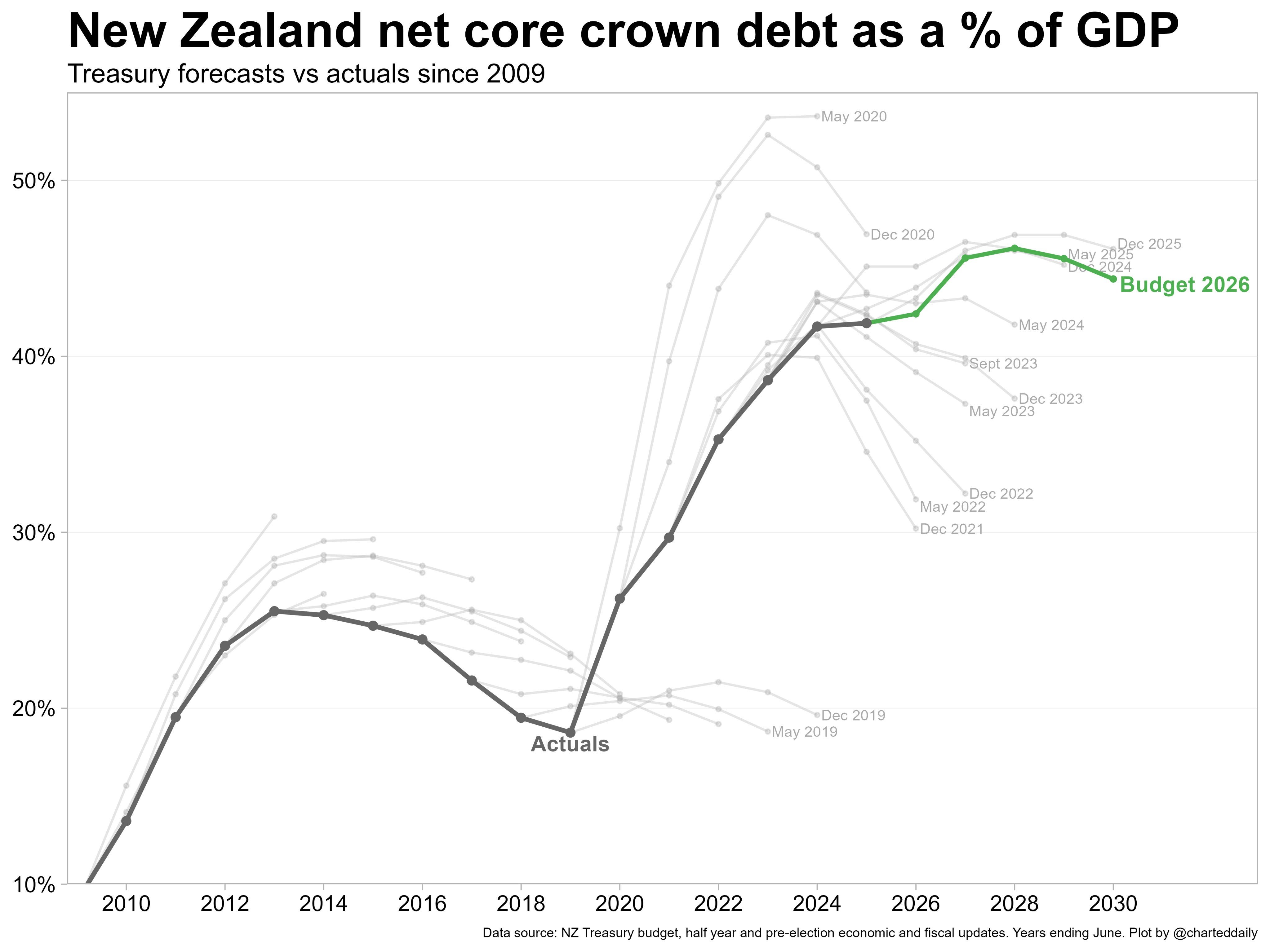
Click to view
In short - other stuff that happened
- Tasman District councillor Mark Greening has apparently embraced the modern vision of local government of governing from the couch. Despite living only minutes from the council chambers, he attended 15 of his 18 meetings this term via Zoom and, in the previous triennium, managed the remarkable feat of attending 73 meetings online while making it to the council chambers just three times.
- The Government will extend minimum English language requirements for Accredited Employer Work Visa holders from 1 June, with workers in ANZSCO skill level 3 occupations, now the largest group of visa holders, required to demonstrate basic English proficiency.
- A few hundred students marched on Parliament to protest Budget 2026's decision to end the Fees Free scheme. The Government argues the move will save approximately $1 billion over four years, with $69 million of funding redirected to double the number of secondary students attending trades academies.
- New Zealand’s new anti-stalking law came into force this week, creating a standalone offence punishable by up to five years in prison. The law covers a range of behaviours including following, surveillance, unwanted contact, doxxing, property interference, and conduct intended to cause fear or distress, with the offence triggered by a pattern of at least two stalking acts within a two year period.
- Auckland Council has referred allegations involving Manurewa Local Board member Marshal Ahluwalia to the Serious Fraud Office after the emergence of a video that shows him asking a contractor for money in exchange for driving work and seeking a donation toward his 2025 election campaign.
- Budget 2026 includes an additional $79 million over three years for wilding pine control, taking the Government's total commitment to $109 million. The funding will target priority infestation areas including Queenstown, the Mackenzie Basin, Molesworth and the Central Plateau, where wilding pines now affect more than two million hectares and are expanding by an estimated 5% each year, threatening farmland, water catchments, biodiversity and increasing wildfire risk.
- Wellington Mayor Andrew Little says he lost confidence in councillor Ray Chung and initiated a disciplinary process that ultimately led to Chung resigning as chair of a council subcommittee. The dispute arose after police raised concerns about Chung’s involvement in an unauthorised volunteer search for missing Wellington man Philip Sutton during April’s flooding emergency.
- Budget 2026 includes $35 million over four years to strengthen ambulance services, funding two new ambulance hubs in Auckland, a national electronic patient record system, and more. It sits alongside increased Health NZ and ACC funding to support more frontline crews and 111 call handlers.
- A Hastings man in his early 20s has been sentenced to 9 years' imprisonment for raping his grandmother. The court heard she awoke to find him attacking her and feared for her life after he put his hand around her throat; the man also pleaded guilty to masturbating in front of another female relative, assaulting prison officers with a pencil while in custody.
- Budget 2026 includes a new Government-backed loan scheme expected to guarantee up to $1.2 billion in bank lending to help businesses reduce their reliance on natural gas, with the Crown underwriting 80 percent of eligible loans and setting aside $48 million to cover potential losses.
- Newstalk ZB host Roman Travers will keep his job after calling Israelis "genocidal maniacs" during a live January talkback show, with NZME upholding a complaint under the discrimination and denigration standard and apologising to listeners. The Broadcasting Standards Authority agreed the comment could reasonably be interpreted as condemning Israeli people rather than their government, but ruled that NZME's response was sufficient and that no further sanctions were warranted.
- A Christchurch prison staff member (73) was seriously injured after being attacked by Mongrel Mob member Sonny Tearamoana Waiti (38) already subject to a rare Public Protection Order. Waiti has now pleaded guilty to wounding with intent to cause grievous bodily harm and threatening to kill.
- Siaosi Meleisea (29) has been sentenced to 5 years and 10 months' imprisonment after a violent attack in Māngere East in which he and another man assaulted a stranger to steal his Black Power patch, before Meleisea stomped on the victim's head and drove a car over his body. The victim suffered life-threatening injuries and the judge noted Meleisea's 55 previous convictions and the fact he had been out of prison for only one month when the attack occurred.
- 🇺🇸 A New York court has sentenced Randy Rodriguez Santos (31) to 40 years to life imprisonment for the 2019 murders of four homeless men and the serious injury of a fifth. Santos, who was also homeless at the time, used a metal bar to attack people sleeping rough in three separate incidents.
Something slightly different this week. Some of you may know that I run the Thought Crimes Book Club. Alongside the books we read together each month, I occasionally share reviews of books I’ve been reading on my own. This week I reviewed Half His Age by Jennette McCurdy and I have made the post publicly available because the book was one of the most painfully relatable books I’ve read in a long time.
It will probably resonate more strongly with female readers than male readers, but I don’t want to pigeonhole anyone! McCurdy gets into subjects that are uncomfortable, messy, and reduced to simplistic moral certainties. The book raises really tricky questions about power, consent, agency, victimhood, exploitation, and the blurry territory that can exist between them. It is not always an easy read, but it is an honest one, and it sparked some interesting discussions both in the comments and in my own head. READ IT HERE.
Ani O'Brien comes from a digital marketing background, she has been heavily involved in women's rights advocacy and is a founding council member of the Free Speech Union. This article was originally published on Ani's Substack Site and is published here with kind permission.


5 comments:
Why does this government not consider our international attractiveness to innovative people? Especially Australia that steals our best and brightest. We've traded manufacturing and industry for internal real estate trading. As a result our hollowed out economy is no longer working.
Its impossible to miss we are not earning enough to pay the bills apart from relying on lines of credit. Nicola's claim of returning to surplus is ridiculous if left to her.
She bet on lowering interest rates and natural rebounding growth, assuming creative innovative Kiwis would remain here and everything would go back to normal, without having to tighten up on spending, whilst not considering the damage Labour's endless lockdowns did to Auckland and their hamfisted fiscal management, overall.
Which begs one of many questions to exemplify the problem, why is the taxpayer and overseas creditors funding broadcasting in NZ? This candidly states, Willis and National are not serious and have no realistic plan out of the quicksand we are in. Is it because Willis is from the Wellington bureaucracy and largesse like this is seen as an entitlement? Or National under Luxon are weak willed, have nothing but corporate clichès and just want to be liked?
Whatever the case, this budget changes nothing and we remain going nowhere, spending money we don't have on crap we don't need and are increasingly uncompetitive globally and increasingly unable to retain the right people to see us out of this malaise we are in. Hence my opening question. When, if ever, will they wake up?
MPs like Willis, Luxon and Upston are so out of touch with regular kiwis that they have no place in getting anywhere near financial levers like the budget.
For most households, buying fuel is a live, weekly exposure to global price swings that dictates whether they can afford to drive to work. For MPs, it is a totally blunted and reimbursed cost. Accommodation top ups? Not for the public, but let’s pile it on for MPs. Let them eat cake!
Nothing in the budget to change incentives for investing in property over real business and innovation that might grow NZs GDP. Clueless and short term thinking. Again.
$5.8 billion for the entirety of the struggling health system.
Separately $1.8
billion (an amount nearly one third of that!) for 16km of one road.
Separately again, $1.1 billion for the entirety of the nation’s rail network.
How much less tax are landlords having to pay again since this economic safe pair of hands came to power 3 years ago?
I suspect with the election looming, and Act prominent, Thompson has figured that he has completed as much of Willie Jackson's maorification itinerary as can reasonably be acheived.The standard maori whingers, Motu, Henry, Moxan etc have all had multiple airings despite their singular rhetorical message, and there can be few maori obscurities remaining for prospective Saturday air time to help further whittle the thinking audience..
Post a Comment
Thank you for joining the discussion. Breaking Views welcomes respectful contributions that enrich the debate. Please ensure your comments are not defamatory, derogatory or disruptive. We appreciate your cooperation.