

If you are a nurse in New Zealand in 2026, the Nursing Council has decided that your clinical competence is no longer enough. It wants to control your character, politics, beliefs, and how you behave when you are off the clock. In its draft Code of Conduct, the Council states that because nurses must have the trust of the public to undertake their professional role, “they must also have an appropriate standard of behaviour in their personal lives.”
Excuse me? Hang on just a minute! We are not talking about theft, violence, or patient abuse. There are laws already well established to deal with that kind of thing. This is about “personal lives.” It is about lawful speech, private beliefs, and the regulator asserting that it may sit in judgment over them if it deems they affect “trust and confidence.”

Photo source: AUT
I know a lot of nurses. None of them have the exact same politics and beliefs. Are they all to abandon independent thought and take up the prescribed political and cultural positions of the Nursing Council? I know a nurse with a wicked sense of humour and often her jokes are dark and inappropriate. She would never speak to a patient in the way she does friends, however this draft code seeks to even police what nurses say in private group chats. How utterly Orwellian is that?!
There is a strange irony in all of this, because nursing has been here before. In the late nineteenth and early twentieth centuries, nurses were not merely trained, they were morally supervised. Many lived in hospital-run dormitories under strict curfews, required to obtain permission to leave the premises, forbidden from marrying, and expected to embody a particular model of feminine virtue. The profession was wrapped in a paternalistic belief that public trust depended on controlling women’s private conduct. That regime was eventually dismantled because it was recognised as infantilising, chauvinistic, and unjust, and that nurses were adults, not wards of the state. Yet here we are again, in softer language but with similar root impulses, watching a regulatory body assert that “personal lives” fall within its remit.
When making “public statements, including on social media,” nurses must ensure they are not making “offensive, abusive, inflammatory or ill-informed statements that may bring discredit to the nursing profession.” This includes posting on a private Instagram, for example, or posting on X on an anonymous account if someone were to identify it was you. The problem is, well one of the many problems, that “offensive, abusive, inflammatory or ill-informed” are totally undefined, elastic terms. What one person deems “offensive” is entirely different to what another does. These are subjective and political lines being drawn.
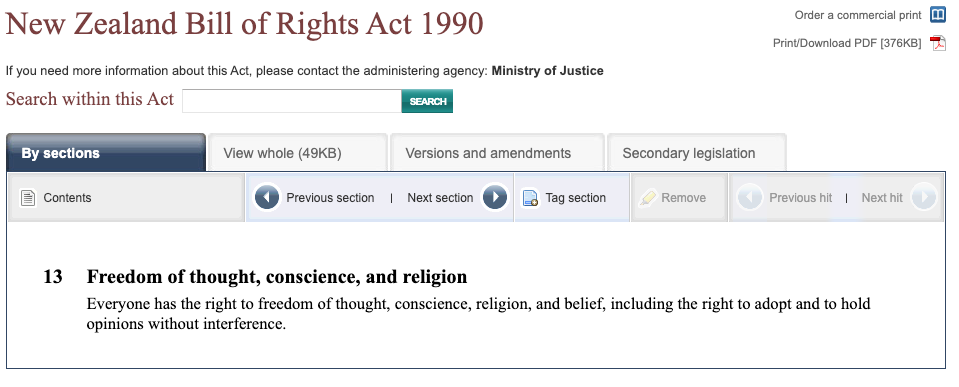
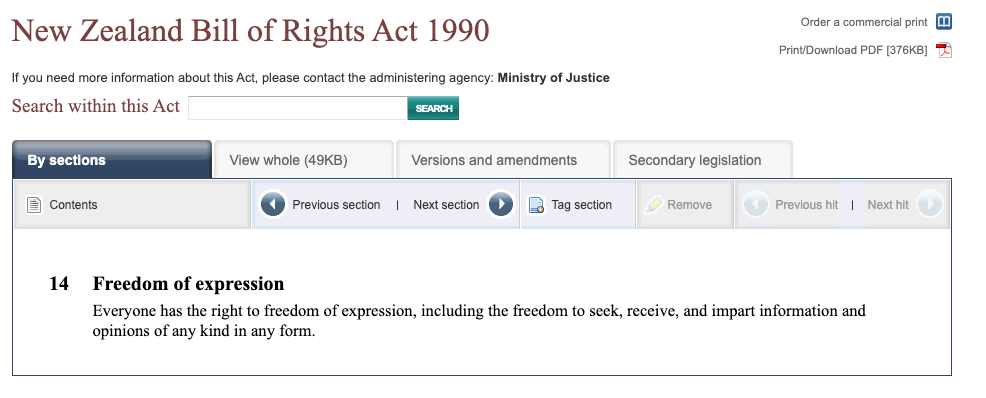
Who decides what counts as offensive? What constitutes ill-informed? Is it the regulator? Anyone who makes a complaint? A tribunal panel reading a screenshot divorced from context? In a country that claims to respect freedom of expression under the New Zealand Bill of Rights Act, this is an outrageous assertion of moral authority by a professional regulatory body. Section 14 of BORA protects the right to impart opinions of any kind. Section 13 protects freedom of thought and conscience. Yet here we have the Nursing Council effectively saying; you may hold those rights, but if we do not like how you exercise them, your registration and career are at risk.
Click to view
Click to view
This is unfortunately not happening in isolation either. The Medical Council is pursuing its own version of a similar project. In its draft statement on cultural competence and cultural safety, it makes clear that these obligations apply to “all aspects of a doctor’s practice,” explicitly including “advocacy and professional behaviour.”
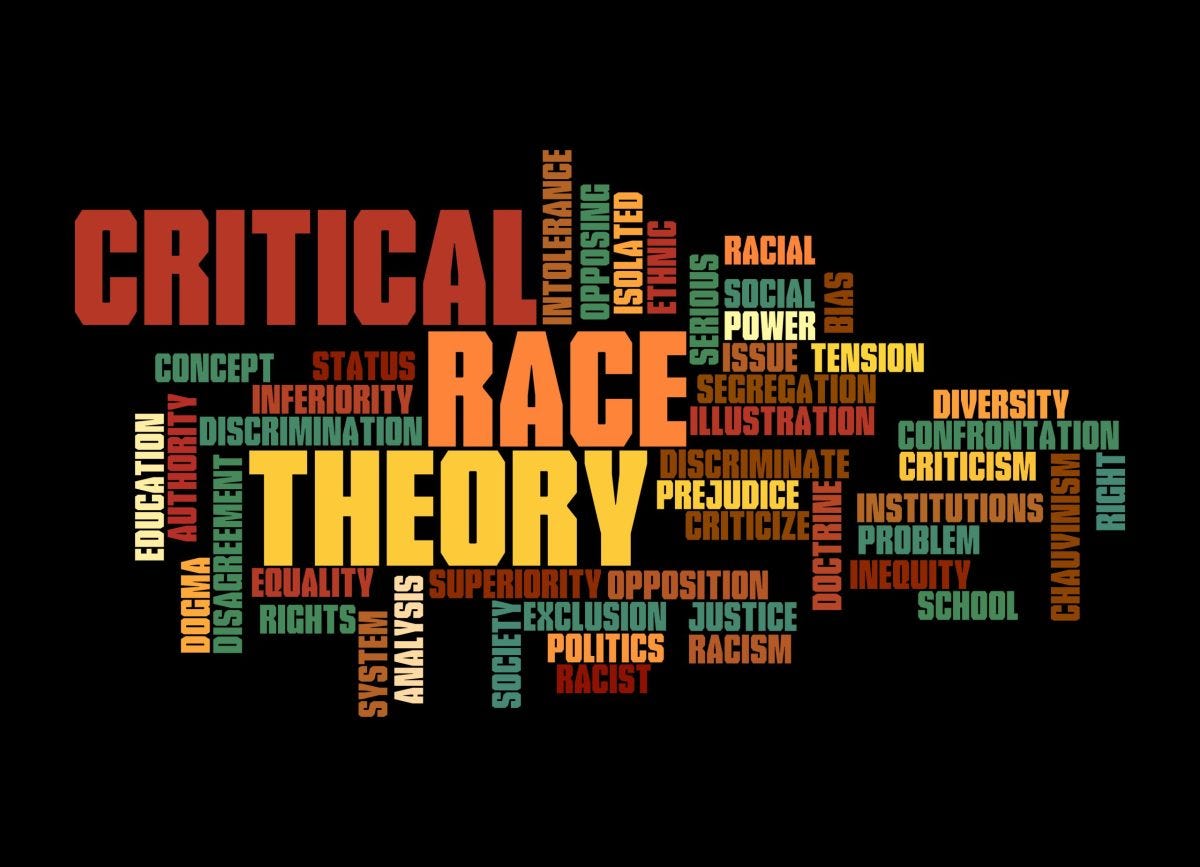
Under the proposed framework, doctors are told they must “actively acknowledge and address” their own “power, privilege, biases, attitudes and assumptions,” must recognise and address power imbalances, and must challenge systemic bias. They are further told that they are required to identify and address these matters in their recertification activities. These are explicitly political concepts with nothing to do with clinical practice. It is the vocabulary of critical race theory (CRT) and its institutional offshoots. CRT is an analytical framework developed in American legal academia that treats racism as systemic, embedded in structures, and sustained through power hierarchies rather than merely a matter of individual prejudice. You can agree with that framework, disagree with it, or take parts of it seriously without embracing it wholesale. My issue with it is not that the framework exists rather the problem is that it is being imported and overlaid onto New Zealand’s already complex Treaty politics as if it were neutral, settled fact.
Te Tiriti o Waitangi is not an American race relations text and we do not need to further complicate our already fractious Treaty politics. Our Treaty is a foundational document of this country with its own contested history, legal status, and evolving interpretation. For decades New Zealand has been negotiating, sometimes constructively, sometimes contentiously, what “partnership”, rangatiratanga, and Crown obligations mean in practice.
What the Nursing and Medical councils are now doing is grafting onto that debate a fully formed theoretical lens that presumes systemic oppression as the primary explanatory story and recasts doctors and nurses as actors within that structure who must actively work to dismantle it. This moves Treaty engagement from being about honouring commitments within a specific constitutional context to being about adopting a broader ideological posture toward “dominant culture,” “privilege,” and “power.”
With that CRT overlay in place, disagreement becomes unacceptable because it is treated as evidence of systemic racism. If power imbalance is the core analytic, then resisting the framework can be interpreted as exercising that very power. In an environment like this, recertification becomes, at least in part, about demonstrating ideological fluency. Doctors do not simply need to understand the Treaty in a practical, patient-centred way, they are required to internalise and perform a particular reading of it that aligns with a critical theory model of society.
While we were all distracted with their draft code of conduct last week, the Nursing Council very quietly released their new cultural safety guidance which makes the CRT-influenced ideological grounding explicit. Te Tiriti o Waitangi is described as “a natural part of nursing practice.” Nurses are told they will be “active Tiriti partners as Crown agents” and will “advocate for systemic change” and “challenge racism.”
Crown agents? Advocating systemic change? This is just bloody weird. Nurses are not agents of the Crown and they should not be burdened with having to take on responsibilities that only should exist at a governance level by the actual representatives of the Crown. And advocating for system change sounds rather revolutionary, like nurses are being groomed to over throw some shadowy overlords. These are definitely not matters of clinical competency.
There are plenty of jobs out there that need to worry about New Zealand’s constitution and which engage with our systems politically. Nursing should not be one of them. The meaning and scope of Te Tiriti is not a settled technical matter like hand hygiene protocols. It is an ongoing political debate in Parliament, the courts, between iwi and hapū, and across dinner tables. Yet the Nursing Council has decided that adherence to a particular Treaty framework is part of being a fit nurse and failure to demonstrate adherence could mean losing your career.
Caveat time. No one is arguing that nurses and doctors should not treat Māori patients with respect, or that relevant cultural literacy is unimportant. The question is whether regulators have the authority to embed a specific ideological interpretation of history, power, and colonisation into professional discipline.
There are, of course, massive free speech issues here and the Free Speech Union is across them. But there are also some health-specific free speech implications that are intrinsically linked to patient safety. Medicine is not a sacred text handed down complete and incontestable. It is, like science more generally, a discipline that corrects itself through hypotheses, testing, failure, and dissent.
There was a time when lobotomies were mainstream practice. A lobotomy (also called a leucotomy) was a surgical procedure that involved severing connections in the brain’s prefrontal cortex, the area associated with personality, decision making, and emotional regulation. The theory, popularised in the 1930s and 1940s, was that by disrupting these neural pathways doctors could relieve severe mental illness, particularly depression, schizophrenia, and what was then described broadly as “hysteria” or “agitation.” In practice, the procedure left patients emotionally blunted, cognitively impaired, incontinent, or profoundly altered in personality.
From the 1940s into the 1960s, hundreds of New Zealanders underwent lobotomies in psychiatric hospitals. It was presented at the time as modern, scientific, even progressive. A humane alternative to lifelong institutionalisation in overcrowded asylums. Surgeons believed they were alleviating suffering and families were told it was for the best. Yet patients were left with permanent damage, their capacity diminished in ways that could never be reversed. It took years, and mounting evidence of harm, before it was abolished.
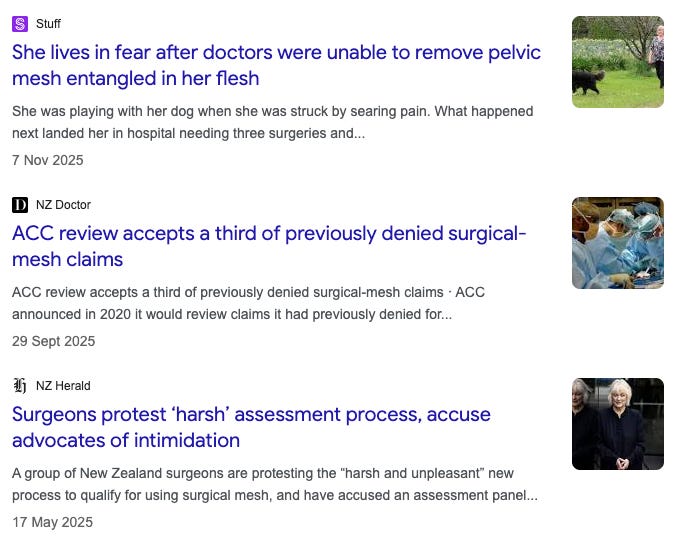
Yesterday’s doctors were convinced they were right on lobotomies just as some doctors support puberty blockers for children today. Lobotomies were not fringe quackery, they were endorsed, taught, funded, and defended by respected professionals. And anyone who publicly challenged them in the early days would not have been praised for courageous dissent. They would have been told they were undermining confidence in the profession. History is littered with examples like this including formaldehyde and surgical mesh. That is why a culture that punishes “ill-informed” or “discrediting” speech is so dangerous. In every era, the heretic sounds unreasonable until the evidence catches up.
Click to view
What happens to the nurse who raises concerns before the consensus shifts? What happens to the doctor who publicly questions a widely accepted but emerging practice? In the early stages of every scandal, dissent sounds inflammatory. It sounds disruptive and discrediting. Only in hindsight does it sound courageous.
Consider gender medicine, a field currently under intense international scrutiny and engaged in a considerable amount of backtracking. Across the USA, Europe, and the UK, reviews and court cases have led to significant policy changes and restrictions, particularly around paediatric interventions. This is happening within the medical mainstream with groundbreaking reports like the Cass Review revealing the terrible way children are being put at risk and being allowed to consent to irreversible treatment. Yet the Nursing Council’s draft code requires nurses to reflect on and address their values in relation to “gender identity” and to ensure that “transphobia… and other forms of identity-based discrimination are not tolerated in any aspect of care.”
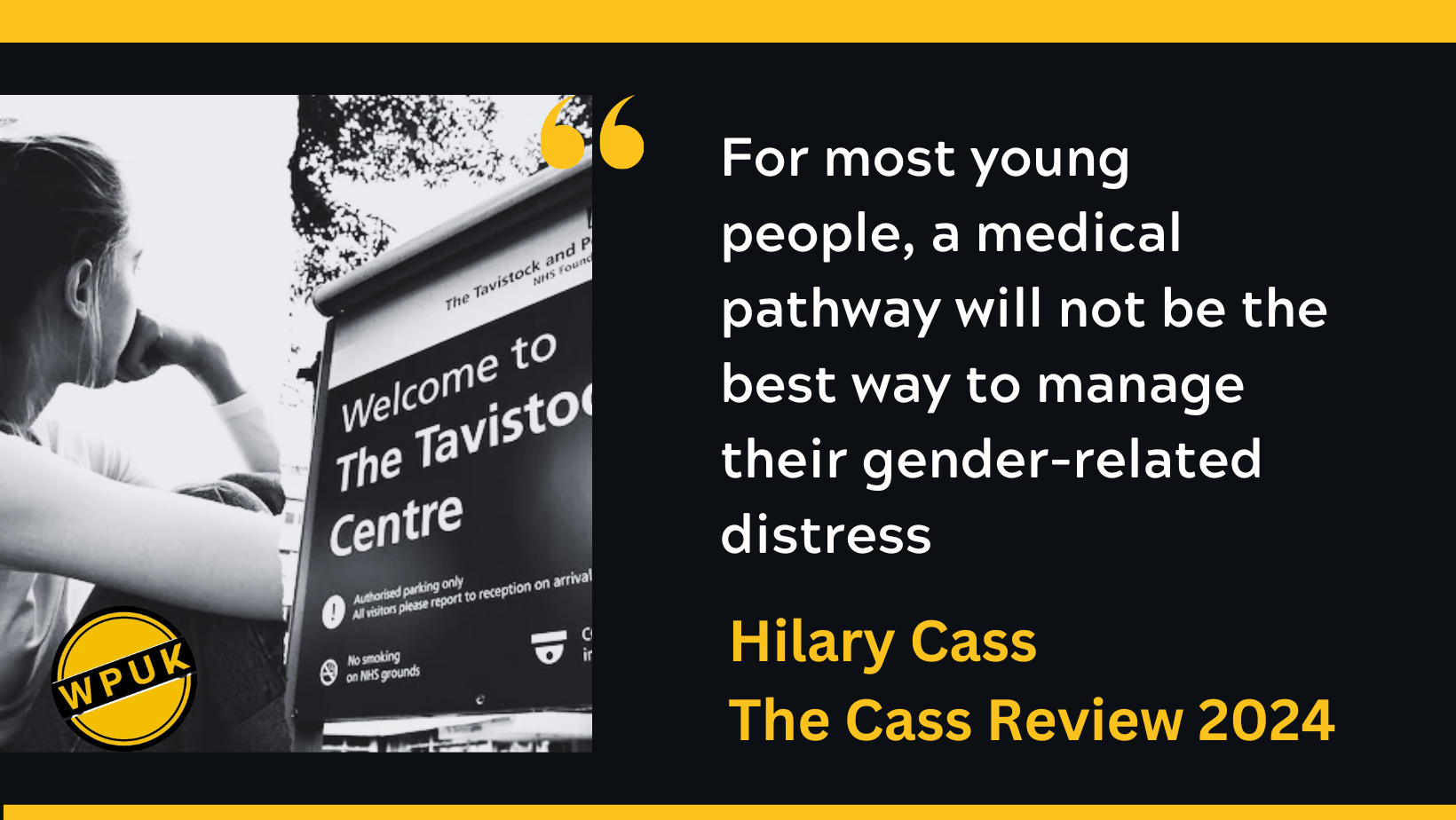
Again, the treatment of patients with dignity is not in dispute. The problem is the scope of “transphobia” as a disciplinary category. In 2026, that label is routinely applied to people who simply state that sex is biological, question puberty blockers for children, or who raise safeguarding concerns. Under a code that disciplines “offensive” or “ill-informed” public statements, the nurse who expresses evidence-based caution could find herself the subject of a complaint not because she harmed a patient, but because she states a biological fact.
The banality of these frameworks and policies is what makes them so dangerous. There will be no dramatic purge of nurses booted out of the profession nor mass deregistrations of doctors. Instead, professionals will internalise the risk and learn the language required for recertification. They will dutifully complete modules about bias and privilege and avoid controversial topics on social media and even in private chats. They will not say what they think about contested areas of practice, not because they are persuaded, but because they have mortgages to pay and children to feed. Over time, a culture of inquiry will give way to a culture of compliance and a workforce who may as well have had a lobotomy.
The statutory purpose of professional regulation in New Zealand is to protect the health and safety of the public by ensuring practitioners are competent and fit to practise. It is not to adjudicate political doctrine or supervise private conscience. When a regulator asserts jurisdiction over “personal lives” and undefined “offensive” speech, it has stepped beyond clinical competence into moral oversight and enforced political mobilisation.
This is also, ironically, a workers’ rights issue. The ability of licensed professionals to hold lawful opinions and express them outside work without risking their careers should be a given. A practising certificate should not function as a leash. Yet many of the institutions, like the unions, are silent because the ideological framework being embedded is one they favour. They want so-called transphobes, racists, and bigots to be punished. There is one union fighting for them and I am on the board of it: the Free Speech Union. We believe that employers do not own their employees’ consciences and that while some restrictions on speech may be appropriate in an explicitly work context, when nurses and doctors are off the clock they should be free to say and do what they like.
It does not matter if a clinically competent nurse or doctor is religious or atheist, likes Donald Trump or has Trump Derangement Syndrome, attends climate marches or pays zero attention to environmental politics, or thinks Māori sovereignty was ceded at Waitangi or gradually over time. None of this has any bearing on their ability to provide excellent medical care to all people no matter their politics or demographics.
The bombastic overreach of the professional regulators has got to the point where the government has to step in. Regulators are supposed to be bound by statute so the legislation needs to be tightened up and made far more prescriptive. Standards must relate directly and demonstrably to clinical competence and patient safety. Lawful off-duty speech and private political belief must be explicitly outside scope unless there is a direct nexus to patient harm.
If Parliament wishes to settle constitutional questions or embed equity frameworks into law, it must do so openly, through democratic debate, not by allowing regulators to smuggle them into competency standards.
The government’s legislative calendar is packed and I have no doubt that this is a real pain in the arse issue ministers would prefer not to deal with. But it is absolutely necessary that they do. It would be nice if Parliament could support a bipartisan Bill that ensured political neutrality and protection of speech rights, but some parties in Parliament are quite content to have bureaucratic thought police ensuring their political perspectives are compulsory.
It would be very simple to get a basic amendment bill drafted up that deals with this and I know that a few of my readers are well placed to assist with this! Sing out if you can help and I would be happy to take the bill to the relevant ministers.
In the meantime, you can submit on both the Nursing Council’s Code of Conduct and the Medical Council’s cultural competence and cultural safety framework. Submitting is one of the most direct interventions available to ordinary citizens and if you believe that nurses should not have their “personal lives” regulated by subjective notions of offence, please say so. If you believe doctors should not be required to adopt a specific political framework to recertify, please say so. And crucially, if you believe dissent in medicine protects patients rather than endangers them, please say so.
Because once it becomes normal that your licence depends not just on what you do, but on what you believe, the scope will not shrink. These things always expand. Give regulators an inch and they will take a mile.
Ani O'Brien comes from a digital marketing background, she has been heavily involved in women's rights advocacy and is a founding council member of the Free Speech Union. This article was originally published on Ani's Substack Site and is published here with kind permission.


14 comments:
Compulsory political views par for the course in many sectors. Hard to attend a university meeting without subtle or outright praise for Labour and derision for ACT. So many at university simply should work for Labour. In other sectors probably the same for National ....
Both the Nurse's and Medical council are literally giving the health sector a virtual lobotomy by forcing control of personality, decision making and emotional regulation.
This is as outrageous as it is egregious and the people behind it need to be fronted by the only people that can stop it, the doctors and nurses themselves.
It is indeed a form of ethno-social-eugenics and no agrees that eugenics is a great idea.
We must find out who these people are who are demanding these changes and sack the lot of them.
No they don’t, Ani. Culture isn’t political, unless you’ve fallen for the “culture wars” distraction. You haven’t fallen for that though, have you?
The case of Lee v Asher's Baking Co 2018 at the UK Supreme Court is worthy of note here. The court found that the bakers, who had refused to endorse a wedding cake for a homosexual couple with pro-same-sex-marriage slogans and consequently been reported to the HRC, had in fact not discriminated against the homosexual couple but against the message they wanted publicised on the cake, and were therefore within their rights to refuse. The UK Constitutional Law Association summarised the outcome as follows:
"In the high-profile decision in Lee v Ashers, the Supreme Court had to consider a customer’s rights against discrimination along with the baker’s right to freedom of expression. In its finding for the baker, the Supreme Court took an important step in developing a domestic doctrine against ‘compelled speech’. While the outcome of the case divides opinion, the reasoning of the Court requires further consideration of when a person has a right not express a particular view."
What is happening here in NZ is "compelled speech" in forcing doctors, nurses, teachers, social workers, etc, to promote a political agenda (Maorification).
While the UKSC's findings are not binding on NZ courts, it has 'persuasive authority' in being the highest court in the parent system of NZ law.
Let battle commence.
Is there anywhere else in the worldthat a Nursing Council organization get away with this ?
Maybe during the Third Reich under Goebbels ?
Here in NZ we have all these dedicated nurses, many of whom are Philippino, or Indian , are being required to bow down to another culture's beliefs, most of which have been made up in recent times.
Such evil people bullying our nurses.
Every government department needs to scrap their existing codes of conduct and policies in general and start again.
Anything supporting critical race theory and other Marxist poison should be deleted.
I was expecting this to happen when new govt formed but they have just sat on their arse.
They were more worried about the retail traders in the CBD than anything else.
Extremely disappointed with their lack of action on this. Shameful neglect.
And the National party cannot understand the most recent poll ????????
I challenge anyone (who supports equality and has an understanding of what the Treaty of Waitangi actually says) to read the Nursing Council's "Guidance for Nursing Education and Practice" and not be outraged at the Maori centric bs this 'guide' represents?
Quite aside from all the 'weaving' and other woke justification, the whole thing is founded on the fundamental lie that the Treaty requires nurses to work "in partnership with Maori and addressing health inequities" and proceeds on it's one-sided ideological mission from there.
Of course, the Treaty says nothing of the sort and I can well appreciate why so many nurses are so disillusioned with their profession and are happy to walk away. It's a disgrace!
I doubt any of this has a bearing on Nats or pm . Outside nursing, folk i talk to are unaware of any of the ,,Maorification, , matters re nursing or anything else and some do not believe it because they believe msm and it is not on there and some would support it including teal type Nats. If Nats became more hardline on race issues they would lose support to Labour. Any drift from Nat to act or Nzf has been small. The race issues and thought control etc is an ethereal thing to them . They do not give a damn. The economy is key
Anon@4.29, perhaps it's a case of birds of a feather? Maybe you need to mix more? But then, there are a lot of stupid, woke people in this country who can't see this mischief until it hits them in the face.
To Anon at 4.29pm: if the economy is the key for National, then why not appoint a stellar and highly experienced Finance Minister? Ms Willis behaves like a front person - her message comes from elsewhere.
To anon at 952...anon 4.29 replying. My background here and abroad (age 70( has been senior journalism (old school) and latterly security and working with mental patients and in a broad range of environments. I do not agree with the ''wokesters'' but I do hear what folk have to say (not all are woke) . I have a wide circle. Many are unaware of agendas in the background, or think it is all exaggerated, or actually agree with said agendas. News is TV One, Three or ''correct'' other channels and a casual look at the propaganda on Stuff (print or online) aor Herald. Over time a constant barrage of one sided columns and spun news does inflitrate thinking. An alternative view is not always welcome (to the point of anger).
Where is the push back ?
What happens if doctors and nurses refuse to comply with this political dictum ?
Post a Comment
Thank you for joining the discussion. Breaking Views welcomes respectful contributions that enrich the debate. Please ensure your comments are not defamatory, derogatory or disruptive. We appreciate your cooperation.