

It is easy in hindsight to forget the atmosphere of early 2020. It felt like COVID-19, Corona Virus as we initially called it, came out of nowhere. China was lying to everyone. No one knew if we were under or overreacting. Whatever Trump said the media said the opposite. Governments across the world were facing a virus that appeared highly contagious, poorly understood, and potentially catastrophic. “Experts” were issuing advice based on incomplete data and information which politicians were then making decisions with.
In that context, there is a broad consensus that New Zealand’s initial response was reasonable and should be commended. The Royal Commission Phase Two report reflects this. Acting cautiously while the world tried to understand the threat is defensible and it is difficult to find fault with Jacinda Ardern’s government’s early approach. Border closures, emergency health planning, and temporary restrictions were taken in an environment where leaders everywhere were trying to buy time. Our Government were attempting to protect New Zealanders against an unknown threat that appeared to be causing havoc overseas.
The Royal Commission’s report is not a document that says the entire response was a disaster. In fact, it is more constructive than it is condemnatory. It repeatedly acknowledges decision makers were operating under pressure, with imperfect information, and trying to make the best of bad choices. But the successes should not provide cover for failings. It is the failings that we should focus on because that is where we can learn. The evenhandedness of the report, as acknowledged by Ardern, Robertson, and Hipkins, should allow us to take the criticisms it does make seriously. Because where the Commission does find serious problems, those findings cannot be dismissed as partisan or hysterical.
The Royal Commission’s report is not a document that says the entire response was a disaster. In fact, it is more constructive than it is condemnatory. It repeatedly acknowledges decision makers were operating under pressure, with imperfect information, and trying to make the best of bad choices. But the successes should not provide cover for failings. It is the failings that we should focus on because that is where we can learn. The evenhandedness of the report, as acknowledged by Ardern, Robertson, and Hipkins, should allow us to take the criticisms it does make seriously. Because where the Commission does find serious problems, those findings cannot be dismissed as partisan or hysterical.
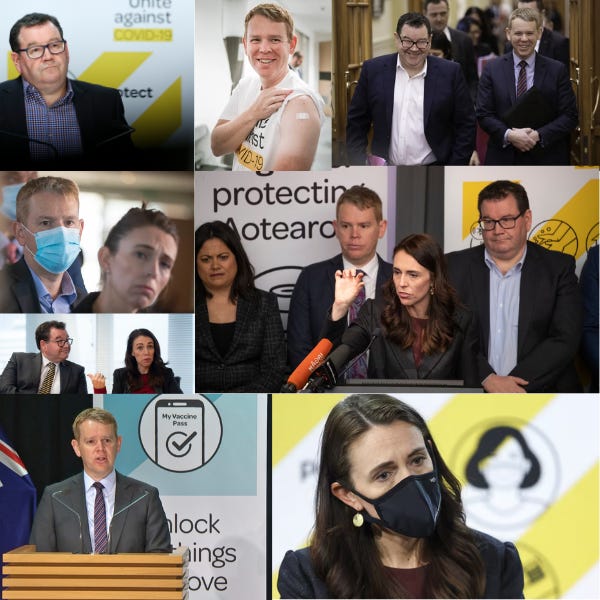
Where the report becomes far more critical is in regards to the later stages of the pandemic, particularly after the 2020 election, when Labour was governing alone with an outright majority. By this stage, the situation had changed dramatically. More data was available and the virus was better understood. Vaccines were also emerging and countries around the world were adjusting their approaches.
The report revisits one of the most widely criticised aspects of New Zealand’s pandemic response in the Phase Two report; the slow procurement and rollout of vaccines. While many comparable countries had begun vaccinating vulnerable populations in late 2020 and early 2021, New Zealand’s programme started later and ramped up slowly, leaving the country well behind other developed nations for much of the first half of 2021. Officials had warned that relying heavily on a limited number of vaccine suppliers carried risk, yet procurement moved cautiously and the rollout infrastructure struggled to scale quickly once doses finally arrived. By the time vaccination became the centrepiece of the government’s COVID strategy, the system was scrambling to catch up, a delay that placed additional pressure on the country to maintain lockdowns and border restrictions longer than might otherwise have been necessary.
Responsibility for the vaccine rollout ultimately sat with Chris Hipkins in his role as Minister for COVID-19 Response. While procurement decisions were spread across Cabinet, Hipkins was responsible for delivering the programme. New Zealand’s rollout moved at a sluggish pace, with a heavily bureaucratic system that struggled to scale quickly. By mid-2021 vaccination rates remained relatively low, leaving the country exposed when the Delta outbreak arrived and forcing the government back into prolonged lockdowns while the rollout accelerated under pressure.
It was at this time, the Commission details, that New Zealand’s decision making increasingly drifted away from expert advice. We were told time and time again from the “Podium of Truth” to “trust the science” and were led to believe that the decisions being made and the immense restrictions we were being put under were informed by expert scientific advice. We now know that was not always the case.
Instead of cautious, evidence-led policy, the report describes a pattern where political leaders overrode advice from officials and pushed ahead with their own preferred decisions. At the centre of that pattern sits Chris Hipkins who repeatedly took papers to Cabinet with expert advice as well as his own alternative recommendations which were inevitably adopted.
Chris Hipkins is not a doctor, an epidemiologist, an immunologist, or a public health specialist. He has no clinical training and no scientific background. Hipkins has a Bachelor of Arts majoring in Politics and Criminology from Victoria University of Wellington (no shade, I have a BA as well). But he is a career politician whose experience before the pandemic was a stint working for an oil company and then working in the office of Trevor Mallard.
Yet during the most significant public health crisis in a century he repeatedly chose to override or depart from the advice of the experts the government employed to guide the response. In a democracy ministers ultimately make the call, but when a politician with no medical training sets aside the advice of doctors, scientists, and emergency planners on decisions affecting millions of people, the public is entitled to ask what exactly made him so certain he knew better?
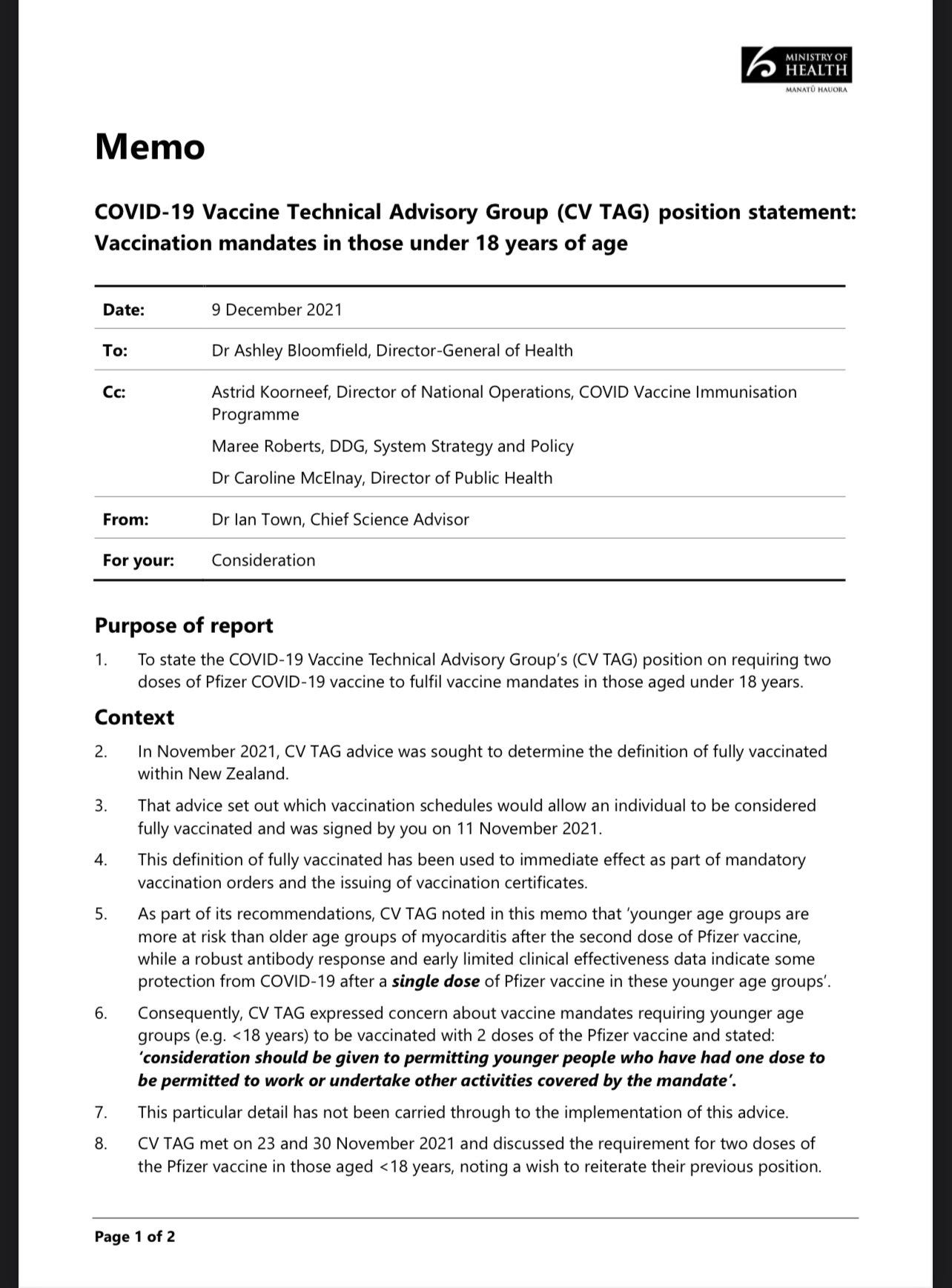
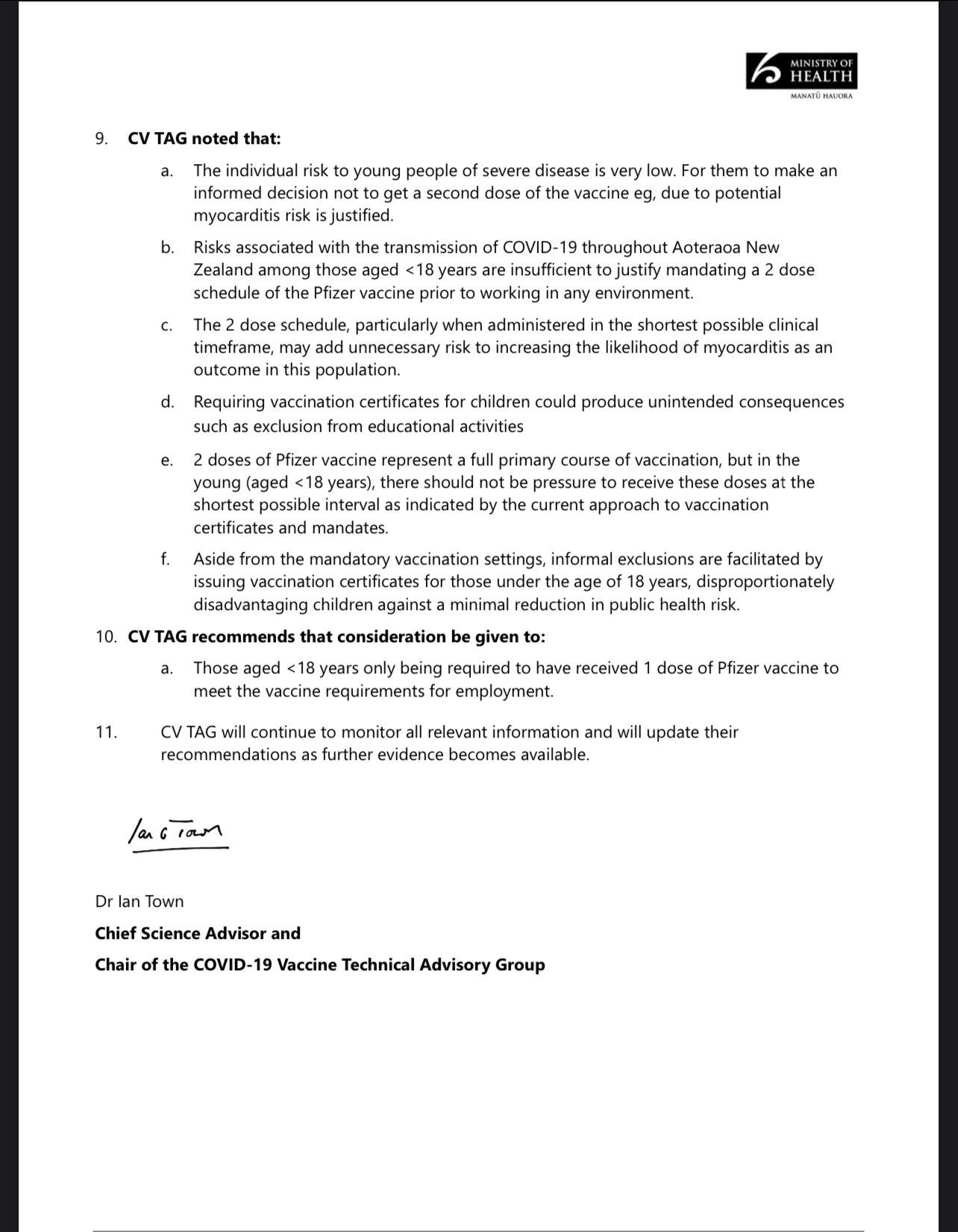
Perhaps the most explosive finding concerns the vaccine mandates applied to 12–17 year olds. The Commission records that the COVID-19 Vaccine Technical Advisory Group had raised concerns about requiring two doses for younger people because of myocarditis risk, and advised against mandating the vaccines for under 18s. There is some equivocating about what the ministers did or did not know. The Post reports that “ministers they interviewed could not recall receiving the advice”. However later goes on to say “Earlier advice raising concerns around mandating vaccines for younger people was provided to then Health Minister Chris Hipkins and then Associate Health Minister Ayesha Verrall.”
Click to view
Click to view
If the advice they received was incomplete on such a consequential issue, the obligation was on the ministers to ask harder questions. Instead, the mandate remained and teenagers were subjected to a two-dose requirement in circumstances where caution had been advised by health professionals.
New Zealanders are entitled to know why this information was not conveyed to Cabinet. However, in declining to go before the Commission Ardern, Robertson, Hipkins, and Verrall deprived us all of the opportunity to understand and seek accountability. New Zealanders are entitled to hear them explain what questions he asked, what risks they weighed, and why a policy with such serious implications for young people remained in place.
Public messaging during this period appeared targeted at young people despite COVID-19 Vaccine Technical Advisory Group having raised concerns that younger people faced a higher risk of myocarditis following a second dose of the Pfizer vaccine than older cohorts. Advisory notes emphasised that the individual risk of severe COVID-19 for teenagers was comparatively low and suggested that the benefits of requiring two doses for those under 18 did not justify the risks. Nonetheless, the Government’s “Two Shots for Summer” campaign encouraged young New Zealanders to complete a two-dose vaccination in order to regain freedoms after months of restrictions. This campaign was heavily youth-coded and designed to create a coercive trade-off of two vaccines in exchange for freedom over summer.
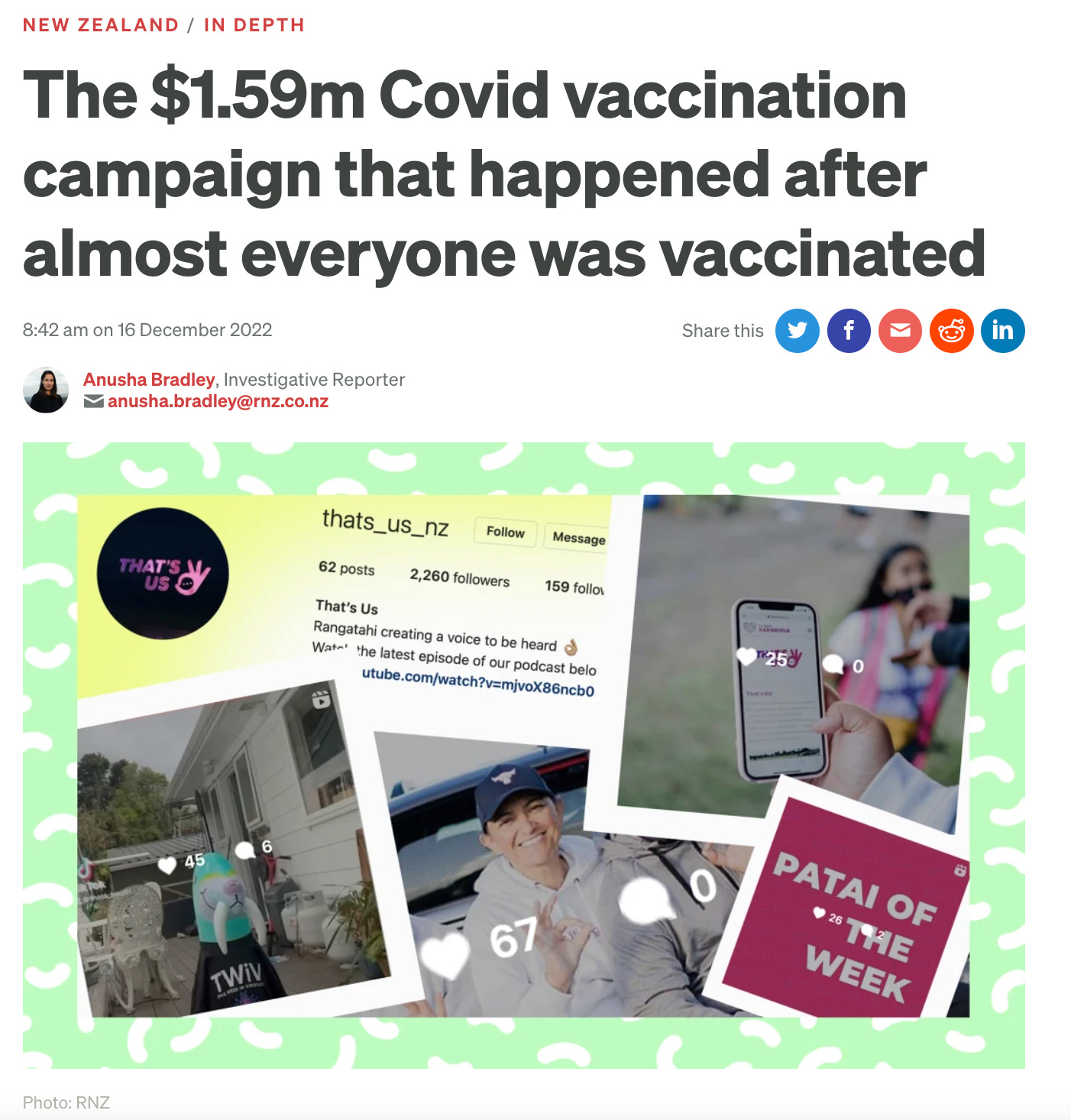
Other youth-focused campaigns followed including Super Saturday, the cringeworthy Vax-a-thon, and the 'That's Us' campaign which wasn’t launched until November 2022.
The decision to mandate vaccines had enormous consequences. Prime Minister Ardern had promised that no one would be forced to take the vaccines, but then they went ahead and made it so impossible to live life without being vaccinated that it is dishonest to say that we weren’t forced. Kiwis lost their jobs, their homes, and the ability to go about their lives if they declined the jab. It is not a choice when the alternative is a ruined life. This intensified already rising public anxiety and mistrust. Parents were forced into decisions under pressure so that their teenagers could attend school and participate in sports. It is especially unconscionable that young people were subjected to mandates that officials themselves had advised against.
When a government compels medical interventions against expert advice, particularly for children, the burden of justification should be extremely high. We have had no such explanation and it is owed to us. What was more compelling than an increased risk of a heart condition in young people? If not expert advice, what exactly was Chris Hipkins basing his decision on?
The same pattern appears elsewhere. The Commission notes that the Auckland lockdown was extended by an additional week despite the Ministry of Health advising it should end earlier. This was again a paper taken to Cabinet by Hipkins. Officials recommended one course of action and he presented another. Since the release of the report Hipkins has claimed that Sir Ashley Bloomfield attended that Cabinet meeting and that he changed the advice in the meeting, verbally, so it wasn’t recorded. Presumably if he had agreed to go before the Commission this would have been able to be discussed.
The key issue is not that a minister disagreed with officials as the report details. Governments can and should weigh an array of factors and be free to make decisions. The problem is that these particular decisions had astronomical impacts on individual lives and the economy. These restrictions were like nothing we had ever seen before. They were heftier even than wartime measures.
The ministers in this case appear to have had a belief that extra time in lockdown would allow for higher vaccination among Māori and Pacific communities, who faced greater risk from COVID-19. If that was their rationale it should be stated plainly and justified. Was it proportionate to hold all Aucklanders under extreme restrictions for longer than officials recommended, with all the economic and psychological damage that entailed, on the basis of a judgement call made in Wellington rather than the public health recommendation put forward by officials?
An additional week in lockdown will very possibly have been the nail in the coffin for some businesses and will have compounded mental strain on a city that was starting to lose its collective mind. Ardern and Hipkins were not living in Auckland and in fact were criticised for not getting on the ground enough to see the reality of the impact of their decisions. The feeling that decisions were being made from the ivory tower in Wellington grew and grew. Ultimately, Labour were punished for it at the 2023 election when Auckland gave them the middle finger.
One of the most important things the Commission captures is that the damage was not only economic. Trust and social cohesion deteriorated badly as the response wore on. Public communications that had worked brilliantly in 2020 became more brittle and less credible in 2021 and 2022. Long lockdowns in Auckland, mandates that fractured workplaces and families, and a growing sense that dissenting concerns were being brushed aside all contributed to a breakdown in social licence that New Zealand is still dealing with.
The report details another unfathomable decision that impacted Auckland; that is the regional boundary around the region over Christmas and New Year 2021. During this period, unvaccinated travellers were required to produce a negative COVID test in order to cross the boundary. We were told, again, that this was a necessary evil to stop the spread of the virus and, again, led to believe this was based on modelling and official advice.
Turns out that was not true and the Ministry of Health had advised against the boundary warning the policy would not be “necessary or practical” and would overwhelm the testing system, particularly during the Christmas–New Year travel rush. Despite those warnings, Jacinda Ardern and Chris Hipkins jointly took a paper to Cabinet advocating for the restrictions. Cabinet approved a 32 day boundary regime based, it seems, on their own reckons.
Today in Parliament Chris Hipkins vehemently denied that there was a boundary over Christmas 2021. He appeared to still be operating under the assumption that because people could travel if they did what he wanted (got vaccinated), there were no restrictions. Choice, human rights, and bodily autonomy are concepts that he has not found more respect for in the time since he ran the response to the pandemic.
The report is also critical of the Government’s testing strategy in general. Its hard-line preference for PCR testing, and slowness in approving alternatives such as RATs, ended up increasing disruption rather than easing it. By the time ministers moved, the global market was saturated and the system was overwhelmed. This undercuts the heroic mythology around the later response as this was not simply a government being too cautious. At points it was rigid, bureaucratic and slow to adapt.
The economic management of the pandemic response deserves its own front page headlines and a “please explain” from Labour’s Covid-19 trio of Ardern, Robertson, and Hipkins. The economic story of New Zealand’s COVID-19 response is not that emergency spending was wrong because there were very good reasons that the Government had to dip into the public purse. However, the Commission found that roughly half of the $60 billion spent under the banner of COVID response, and spread across 821 programmes, was not directly related to the pandemic itself. The Government led by Finance Minister Grant Robertson effectively used the pandemic as a cover to splurge and blew out our national debt astronomically.
Treasury repeatedly raised concerns about the scale and design of spending and those warnings were largely ignored. Instead, Labour used the crisis to normalise fiscal excess. Tens of billions of dollars were pumped into the economy through wage subsidies, grants, and other programmes funded by dramatically increased borrowing by issuing large volumes of bonds. At the same time the Reserve Bank was buying those bonds and injecting liquidity into the financial system through its quantitative easing programme. The combined effect was a huge surge of money flowing through the economy at precisely the moment when global supply chains were disrupted and production was constrained.
As I say, some emergency spending was inevitable. It was reasonable that large amounts were spent attempting to keep businesses afloat and people out of destitution. But the scale of the stimulus continued long after the immediate emergency had passed, and the Royal Commission now suggests that around $30 billion spent was not directly related to the pandemic at all.
The consequences of Labour’s economic strategy soon showed up in household budgets. Inflation surged as the flood of fiscal stimulus and loose monetary conditions collided with the unavoidable global pressures and pushed prices sharply higher across the economy. In 2022, inflation peaked at 7.3%, the highest level New Zealand had experienced in decades. The pain of that spike, higher food prices, rising rents, and rapidly increasing mortgage costs, is still being felt by many families today.
Yet Chris Hipkins, who sat at the Cabinet table throughout the period when these policies were designed and implemented and later became Prime Minister while inflation was at its peak, now deliberately attempts to lay the country’s economic difficulties at the feet of the current government. What’s just as bad is that much of our media is allowing him to do so without any pushback.
The present government has struggled to explain clearly how New Zealand arrived in this position and Christopher Luxon definitely over-promised when the Government changed. But it is deeply disingenuous for Hipkins to rewrite the story of the inflation surge when the policy choices that helped create it were made by the government he helped lead. It is frankly a despicable deception given what New Zealanders have suffered through during and post-pandemic.
The Commission also notes multiple opportunities where the government could have corrected course and improved fiscal discipline based on strongly worded advice from Treasury, but they did not. This is a continuation of the pattern that Ardern, Robertson, and Hipkins clearly believed they knew best. With two BAs, a Comms degree, and very scant life experience beyond politics between them, it is incredible that they did not take the advice of those far more qualified than them.
None of this is to say ministers must be doctors or epidemiologists. Democracies do not work that way. The point is that when politicians without clinical or scientific expertise choose to depart from the advice of those who do have it, the burden on them to explain themselves becomes higher. Hipkins’ record becomes very difficult to defend when you line up his repeated departures from advice.
Taken altogether, the findings paint a troubling picture. In the early stages of the crisis, the Government leaned on expert advice and exercised caution. But after the 2020 election, when Labour held power alone, something shifted. Decision making became more centralised and held predominantly in the hands of the trio of Ardern, Robertson, and Hipkins.
Ardern increasingly sought to consolidate power among the three of them and it is well-known that she trusted very few of her MPs beyond that inner circle. She made Hipkins her ‘Mr Fix-It’ making him minister of just about everything. He accumulated a sprawling list of portfolios, serving as Minister of Education, Leader of the House, and Minister of State Services, while also being responsible for agencies like the Education Review Office and the Government Digital Service, and even niche responsibilities such as Hutt Valley flood protection. After Labour’s 2020 majority victory his influence expanded further and he became Minister for COVID-19 Response and later took on oversight of the country’s intelligence agencies, the SIS and GCSB, as well as the Police portfolio, and Minister of Health. When Ardern resigned in 2023, Hipkins ultimately stepped into the role of Prime Minister while retaining responsibility for national security and intelligence and continuing as Leader of the House.
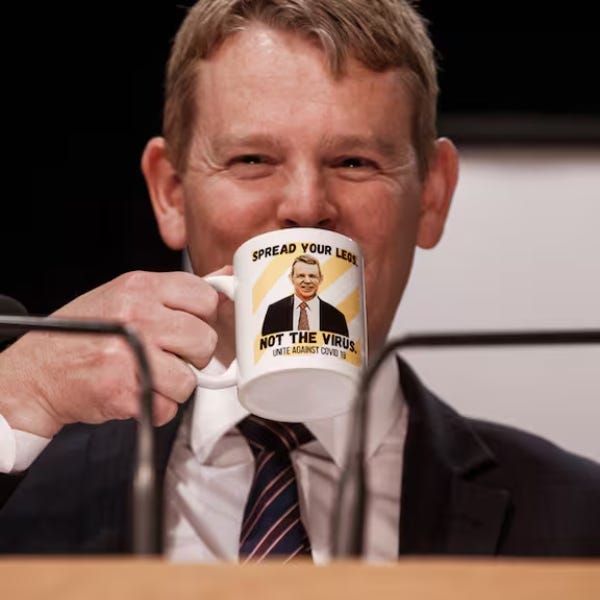
Coincidently, by the time the new government took office in late 2023, several of the country’s most important public services were in deeply troubling shape. Education outcomes had deteriorated sharply, with declining achievement levels and some of the worst school attendance rates seen in decades. In policing, communities were grappling with a surge in violent crime and a wave of ram raids that seemed to dominate headlines almost daily. At the same time the health system was still struggling through a massive structural upheaval, with the government dismantling the old district health boards and replacing them with a new national structure during the middle of a pandemic, including the creation of a parallel Māori health authority that effectively split the system along racial lines. All the responsibility at some stage of Chris Hipkins as minister.
Taken together, the picture confronting the incoming government was not of stable institutions humming along, but of core public services strained, disrupted, and in some cases significantly worse than they had been just a few years earlier. The economy was shot to bits, the bureaucracy bloated, and trust in our institutions had plummeted. This is the truth of the situation. It is the reality that Hipkins has taken zero accountability for. As Luxon has said once or twice, Hipkins is like the arsonist who returns to watch his fire burn while complaining that the fire fighters are not putting the blaze out correctly.
The decision by Labour decision makers to lawyer up and dodge going before the Commission was disappointing. It does not do anything to dispel feelings that the Government at the time thought themselves untouchable. Chris Hipkins even claimed at one stage that he could not speak in a public due to suppression orders, however, “the Covid-19 royal commission says it has no knowledge of a suppression order that would prevent Labour leader Chris Hipkins from appearing at a public hearing to detail his decision-making during the pandemic…”
LawNews reports:
“Asked to give details about where and when the suppression order was issued, and by which court, Hipkins replied: “No, I can’t, because I think that the suppression covers all the details around it… because basically it’s so that the person who’s made the threats isn’t identified, because basically the person who’s been doing it is basically wanting the publicity that comes from it and that is why they that’s all been suppressed.”
Pandemics are scary, unpredictable, and messy. Mistakes were inevitable and we should give the government of the time grace in that regard. But ignoring expert advice, especially when it comes to medical mandates affecting children, is not a small error. It represents a fundamental failure of judgment and indicates a increasing arrogance on the behalf of Ardern, Robertson, and Hipkins as time wore on.
Chris Hipkins was entrusted with one of the most consequential ministerial portfolios in New Zealand’s history. The Royal Commission now makes clear that some of his most significant decisions were made against the advice of the very experts he was supposed to rely on. That raises serious questions and New Zealanders are entitled to expect answers.
And yet in the years since these decisions were made, little accountability has been taken. Jacinda Ardern and Grant Robertson have largely exited frontline politics, moving on to high profile roles, and even fleeing the country, while the consequences of the policies they helped design continue to ripple through the country. Meanwhile Chris Hipkins remains in Parliament but has adopted a different strategy in attempting to recast the economic and social problems New Zealand now faces as if they appeared out of thin air or were created by the government that followed.
However, the Royal Commission’s findings make it increasingly difficult to sustain that narrative. Many of the decisions now under scrutiny, on mandates, lockdowns, spending, and the wider pandemic response, were made by the government he helped lead. Pretending otherwise may be politically convenient, but it does little to answer the questions the Commission has now placed squarely on the public record.
Because if ministers can override expert advice, impose mandates, and spend tens of billions of dollars without real scrutiny, then what is stop another government behaving with little regard for official advice and consequences?
In many of the democracies New Zealand likes to compare itself with, findings like those contained in this report would be politically fatal. A minister shown to have repeatedly overridden expert advice on decisions affecting millions of people would be facing relentless scrutiny and a media environment determined to extract answers. Instead, much of New Zealand’s media coverage has been typically muted with soft questions, selective framing, and a tendency to treat the entire period as an unfortunate blur rather than a sequence of decisions made by identifiable people.
Much of the media coverage has focused on the report’s overall moderation, as though that somehow neutralises the specifics. It does not. A report can conclude that the overall response was broadly reasonable and still contain findings that are politically devastating for particular ministers. This was not a hostile inquiry as Hipkins preempted it would be. The report is a measured one and Jacinda Ardern and Grant Robertson have released a joint statement accepting its findings.
The most damaging thing about the Phase Two report is not that it says every decision was wrong because it clearly does not. It is that it documents a government that, after genuine early success, became too slow to rethink its strategy, too willing to let exceptional powers run on, too casual about the social and economic costs of doing so, and too confident that public trust would hold regardless. There is no evil conspiracy. But there was arrogance, drift, and a political class too convinced of its own brilliance to recognise when it needed to change course.
The result is that Chris Hipkins, who sat at the centre of those decisions and left behind serious problems in portfolio after portfolio, now stands within striking distance of the prime ministership again. Have New Zealanders simply decided to forget what he did to us? The pandemic was exhausting and traumatic for everyone, perhaps there is a collective amnesia borne of the desire to memory hole it all.


9 comments:
Which of the 24 recommends do you think will be put into place first, Ani? We can’t have this happen again, the government of today must act at pace.
Adding in some key facts Brie to flesh out the wider picture. Selective story-telling is misleading, you wouldn’t think it would happen with such a high word count, but it is what it is.
New Zealand (NZ) achieved one of the lowest mortality rates in the Western world. By focusing on an "elimination strategy" until high vaccination levels were reached, the country avoided the massive pre-vaccine death waves seen in Europe and the Americas.
Key Mortality Comparisons:
- Cumulative Deaths: As of 2024, NZ recorded approximately 750–800 deaths per million people. This is significantly lower than the United Kingdom (~3,400) and the United States (~3,600).
- Excess Mortality: NZ was one of the few countries to experience negative excess mortality during the first two years (2020–2021). Because lockdowns and border closures also eliminated seasonal influenza, fewer people died in NZ during those years than would have in a "normal" year.
- OECD Ranking: NZ consistently ranked in the top three for lowest death rates within the OECD throughout the pandemic.
Great summary , Thankyou , I do wonder about the dispensations given , who authorised them and who got them ,and why , did all mps get vaxxed ? So many questions around this .
Is it really a surprise that the media want to brush all this under the carpet. Looking at the points raised would necessitate the media looking in the mirror. Why did they support without question. Why did they vilify any that did question. The compliant media is how the troika got away with it in the first place. The media is why they are not being held to account now.
We already knew Hipkins (and his labour mates) are crooks but...
The inquiry report raises serious questions about the National, NZ First and ACT leaders.
Luxon leads a centre right party which doesn't want to find out where the $30b mis appropriated covid spending, the report identifies, went to?
No wonder so many Kiwis are buying one way plane tickets.
What will it actually take for Goldsmith to review govts involvement in the media, funding, ownership etc?????? I just dont get it. Hipkins should be gone!!!!! The coverage of the bad decisions made should be wall to wall.
Interesting "post" Covid, the requirement to 'uncover', what had taken place.
One question, that I ponder, if asked at the Commission Enquiry, was / should have been -
- "Within the MIn. of Health, allied health professionals at both School[s] of Medicine, any Academic with services to Medicine, etc where did they source their information on this matter, as China had closed the door, denying any and everything.
Europe when it first arose, did not know what they where dealing with, and the assertion that in America there was a group of people who supposedly knew(?) and that drug companies where already testing vaccine potential. So where did they source data that allowed them to proceed.
Also, we had an Academic, based in Wellington, associated with Otago Medical School who appeared nightly on TV to "regale us with...", were was his data coming from??
Here in NZ, ignorance is "bliss", thus we became suspicious and when we asked, were treated in an appalling manner that led many to turn against Labour & Ardern.
Just look at how they treated the protest on the Lawns of Parliament.
Just to clarify, it was Jacinda Ardern as PM then, not Iosef Stalin?
@ Anon 7:46 - Selective story telling indeed - NZ tracking middle of the pack for COVID deaths once the trio let it rip and we had COVID for Christmas - https://www.worldometers.info/coronavirus/
Billions spent on nothing tangible and the country on its knees pursuing the impossible.
High fives all round Jacinda, Grant & Chris.
The following article by Aseem Mulhotra, a world-leading cariologist, shows the extent of corruption of medicine, and by implication governments and media have been bought and paid for by big pharma.
https://www.telegraph.co.uk/news/2026/03/12/fighting-for-medical-licence-after-blowing-covid-whistle/
Ardern, Hipkins, and other politicians are arguably complicit in the deaths of millions, as an increasing number of peer-reviewed scientific papers attest.
Post a Comment
Thank you for joining the discussion. Breaking Views welcomes respectful contributions that enrich the debate. Please ensure your comments are not defamatory, derogatory or disruptive. We appreciate your cooperation.