

They shall grow not old, as we that are left grow old:
Age shall not weary them, nor the years condemn.
At the going down of the sun and in the morning
We will remember them.
Nothing unifies a group like a common enemy, and the National Party have found one. This latest leadership drama now looks less like a genuine crisis and more like a feedback loop between a handful of internal grumblings and a media ecosystem determined to inflate them into something existential. Yes, there was discontent, as there always is, and even Christopher Luxon acknowledged a “small handful” of dissatisfied MPs. But that modest reality was quickly turned into a narrative of impending collapse, fuelled by anonymous briefings and relentless headlines from a press gallery that has spent eighteen months predicting a coup that never comes. The result was Luxon calling a confidence vote on himself, not because there was a credible challenger, but because the noise had to be stopped. He won.
The media focus then shifted from “will he survive?” to “was it unanimous?”, with journalists searching for ambiguity where none meaningfully existed and treating MPs’ public declarations of support with suspicion rather than acceptance.
The media have not come out of this unscathed. MPs accused of leaking have laid media complaints about being named as the leakers without prior contact, right of reply, or substantiation, and have uniformly denied the claims. Then yesterday afternoon, senior minister Simeon Brown posted that National has formally complained about Television New Zealand after political editor Maiki Sherman allegedly followed and harassed chief whip Stuart Smith in a restricted area of Parliament late Tuesday night, banging on his door for around ten minutes and implying he’d receive negative coverage on Breakfast if he refused to engage. TVNZ disputes that account, but Brown says there was another MP present and there is a partial recording of the incident.
The media focus then shifted from “will he survive?” to “was it unanimous?”, with journalists searching for ambiguity where none meaningfully existed and treating MPs’ public declarations of support with suspicion rather than acceptance.
The media have not come out of this unscathed. MPs accused of leaking have laid media complaints about being named as the leakers without prior contact, right of reply, or substantiation, and have uniformly denied the claims. Then yesterday afternoon, senior minister Simeon Brown posted that National has formally complained about Television New Zealand after political editor Maiki Sherman allegedly followed and harassed chief whip Stuart Smith in a restricted area of Parliament late Tuesday night, banging on his door for around ten minutes and implying he’d receive negative coverage on Breakfast if he refused to engage. TVNZ disputes that account, but Brown says there was another MP present and there is a partial recording of the incident.

Following this, Luxon has pulled out of his weekly Monday slot on TVNZ Breakfast. His office says it follows a broader review of media engagements and that he will still be available to TVNZ on a case-by-case basis. But the underlying message is hard to miss.
Before anyone gets too outraged, this is not unprecedented. Both John Key and Jacinda Ardern cancelled regular standing media slots as part of adjusting their media strategy. And he continues to front on RNZ and Newstalk ZB.
Politicians are not obliged to endlessly submit to the same framing and narratives, especially when those narratives have already collapsed under their own weight. After a week in which a non-existent coup was inflated into an all-consuming circus, Luxon has simply decided not to keep playing along. Hard to blame him.
Fuel Shock: Stable supply, new targeted relief
New Zealand’s fuel supply remains stable, but under pressure. As of April 19, the country had around 51 days of petrol, 41 days of diesel, and 47 days of jet fuel either in the country or on the way. Stock levels have dipped slightly but officials say this is normal, with shipments already en route and fuel companies reporting full order books through to the end of May.
The pressure continues to be driven by the Middle East conflict, which has disrupted global supply routes and pushed up prices. The Government is responding with domestic support that it says is timely, temporary, and targeted. The Government has rolled out a series of new targeted support measures this week. For schools, this includes a $2,500 one-off payment to all schools with fewer than 100 students, a 30% increase in conveyance allowances to help families with transport, and a $37 million investment to replace diesel boilers in up to 70 schools which is expected to save around 600,000 litres of fuel annually. Relief teacher travel rates have also been significantly increased, with car reimbursements rising from 37c to 83c per kilometre and motorbike rates from 15c to 31c, in place for up to 12 months or until fuel prices fall below $3 per litre. For veterans, fuel support has been lifted by around 50% for medical treatment-related travel, with rates increasing to 91c per kilometre for shorter trips and 41c for longer distances.
Election 2026: candidates, controversies, and polls
The Green Party has finalised its party list, with some notable reshuffling. Based on current polling they may just rid their party of the pesky white men co-leader Marama Davidson says are responsible for all violence. Activist lawyer Tania Waikato has been ranked at 13, high enough to enter Parliament if the party performs at the upper end of recent polling. Waikato has so far faced very little scrutiny for posting a video to social media in which she said it would be hard not to punch David Seymour and Winston Peters in the face if she gets into Parliament.

James Christmas has now been officially confirmed as an Act’s candidate for Tāmaki. This will be an electorate to watch as National’s candidate Mahesh Muralidhar has hit the ground running. It is also my electorate to expect me to keep a close eye. Meanwhile, in the regions, candidate selections continue to roll in with Federated Farmers Southland President Jason Herrick announced to be standing for New Zealand First in Southland, while popular Rotorua councillor Fisher Wang is Labour’s challenger in National’s Todd McClay’s longterm seat.
This week a Taxpayers’ Union–Curia poll found 45% of voters prefer a National/ACT/NZ First coalition compared to 39% for a Labour/Greens/Te Pāti Māori arrangement, with 16% still undecided.
Winston Peters has reiterated that NZ First will not form a government with Labour and seems bemused that Chris Hipkins has refused to rule NZ First out in return.
Infrastructure Commission and Regulatory Standards Board
The Government has confirmed that the independent Infrastructure Commission will take over responsibility for assessing and monitoring major public projects, a role previously belonging to the Treasury. The shift is designed to bring clearer, more hard-edged scrutiny to multi-billion dollar investment decisions before they are locked in. Ministers say too many projects have been over-scoped, poorly costed, and allowed to gather momentum long after warning signs were evident, resulting in delays and cost blowouts that ultimately fall on taxpayers. By consolidating oversight within the Commission, the aim is to provide what Finance Minister Nicola Willis has described as “clear, frankly expressed ‘go/no go’”. The broader package includes tighter ministerial oversight of high-risk projects and more standardised assessment tools.
There was also the establishment of the new Regulatory Standards Board, a body created under the Regulatory Standards Act 2025 and positioned as a watchdog over the quality of lawmaking itself. Announced by Regulation Minister David Seymour, the Board will assess both new and existing laws against core principles such as necessity, proportionality, transparency, and consistency with the rule of law. It will also scrutinise “Consistency Accountability Statements” which are documents that set out the costs and impacts of proposed legislation and has the power to review existing laws either in response to public complaints or on its own initiative.
🇮🇳 India FTA: Trade Deal, Culture War
The proposed India Free Trade Agreement has quickly become one of the defining policy fights of this election year. The deal itself is said to reduce or eliminate tariffs on roughly 95% of New Zealand exports and open access to a market of 1.4 billion people, with (some of) the Government describing it as a “once-in-a-generation” opportunity. It is due to be signed in New Delhi on April 27, with the full text released shortly after.
After weeks of cat and mouse, Chris Hipkins finally confirmed Labour would support the deal but has warned the $33 billion investment target attached to the agreement is unrealistic. In doing this, Labour has joined National and Act to ensure the agreement can pass through Parliament, breaking what had been a stalemate and restoring a degree of bipartisan support traditionally associated with trade policy.
Standing alone in opposition is NZ First, which has taken an unequivocal stance against the deal. Winston Peters has described it as an “utter unmitigated disaster,” while deputy leader Shane Jones has argued it would drive immigration pressures and strain infrastructure. But it is Jones’ rhetoric that has dominated headlines. His description of the agreement leading to a “butter chicken tsunami” has drawn outrage, but I suspect that was the intention.
Also this week, a kapa haka performance led by former Te Pāti Māori president Che Wilson mocked Indians (in particular Act MP Dr Parmjeet Parmar) and Auckland Mayor Wayne Brown referred to an RNZ staff member of Indian descent as a “Muslim terrorist” in what he later described as a failed attempt at humour. Some community leaders have warned that the cumulative effect of these incidents is a noticeable shift in tone, with rhetoric targeting Indian New Zealanders becoming more normalised in public discourse.
Economy: The Squeeze Tightens
The economic picture is not great. This week, Moody’s shifted New Zealand’s outlook from “stable” to “negative” while retaining its AAA rating, a warning that rising debt and persistent deficits are becoming a real concern. Fitch has already made a similar move. While not an immediate downgrade, the signal is clear that if the fiscal trajectory doesn’t improve, borrowing costs could rise and pressure will flow through to households and businesses.
Finance Minister Nicola Willis has responded by reinforcing a strict line on spending, arguing there is no room for big fiscal giveaways despite cost-of-living pressures. Debt servicing is now one of the Government’s largest expenses, and rising global interest rates are only making that burden heavier.
Complicating matters is global instability which has forced Treasury to reopen its economic forecasts just weeks before the Budget. Current modelling suggests a slowdown rather than a collapse with inflation potentially rising to around 3.9%, growth fall to about 2%, and unemployment edge above 5% in the most likely scenario. More severe scenarios, while considered unlikely, would see inflation spike much higher.
The economic picture is not great. This week, Moody’s shifted New Zealand’s outlook from “stable” to “negative” while retaining its AAA rating, a warning that rising debt and persistent deficits are becoming a real concern. Fitch has already made a similar move. While not an immediate downgrade, the signal is clear that if the fiscal trajectory doesn’t improve, borrowing costs could rise and pressure will flow through to households and businesses.
Finance Minister Nicola Willis has responded by reinforcing a strict line on spending, arguing there is no room for big fiscal giveaways despite cost-of-living pressures. Debt servicing is now one of the Government’s largest expenses, and rising global interest rates are only making that burden heavier.
Complicating matters is global instability which has forced Treasury to reopen its economic forecasts just weeks before the Budget. Current modelling suggests a slowdown rather than a collapse with inflation potentially rising to around 3.9%, growth fall to about 2%, and unemployment edge above 5% in the most likely scenario. More severe scenarios, while considered unlikely, would see inflation spike much higher.
Wellington under water
The flooding in Wellington was destructive with intense rainfall, around 77mm in under an hour in some areas, overwhelming drainage systems and triggering flash flooding, slips, and widespread damage. Streets were submerged, homes flooded, and residents in parts of the city woke to metre-deep water with little warning.
One man, Philip Sutton, died after being swept away when floodwaters tore through a Karori property. A state of emergency remains in place as authorities manage ongoing risks from slips and unstable ground.
The cost is expected to run into the tens or hundreds of millions, with homes gutted, businesses closed, and insurance claims mounting. A $100,000 Mayoral Relief Fund has been established, while the Wellington City Mission and local communities have stepped in to support those affected.
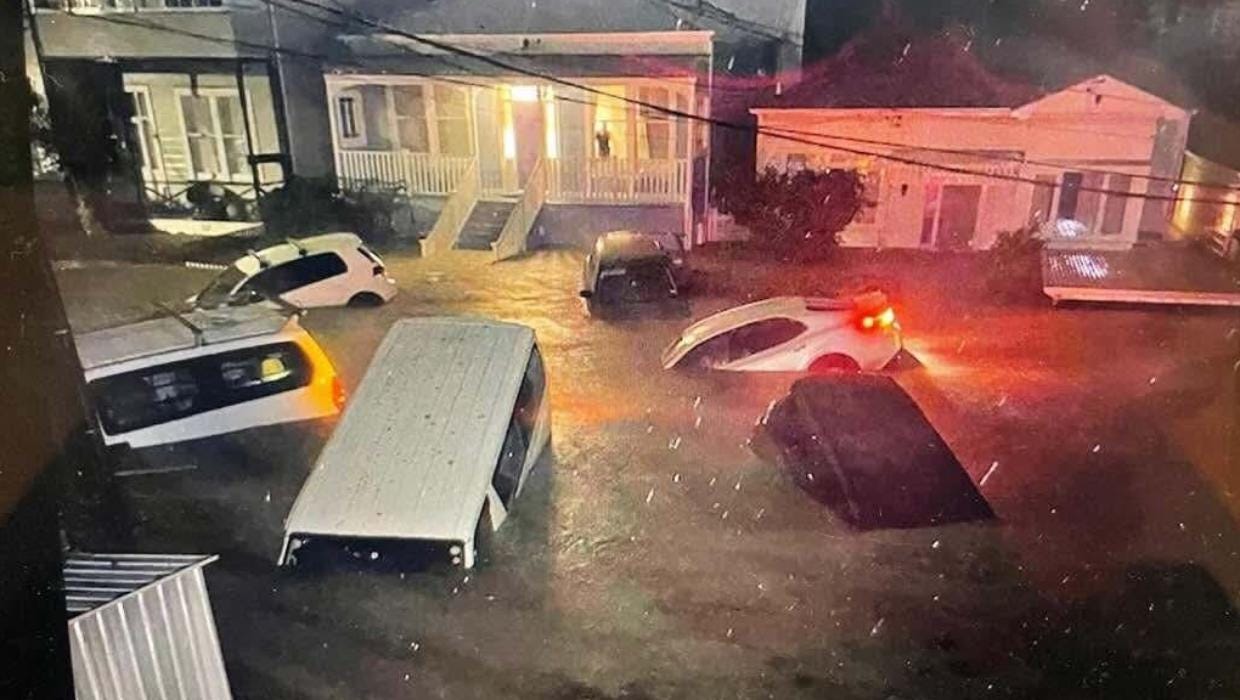
Emerson St. Photo: Bibi Hawkes - Wellington Alive/Supplied.
Bad headlines, good results
Education coverage this week has followed a familiar script of wall-to-wall reporting of criticism, with far less attention paid to actual results. Much of the focus has been on opposition to Erica Stanford’s curriculum reforms, with unions and sector groups issuing open letters demanding a pause and warning of rushed implementation. Headlines have leaned heavily on phrases like “not fit for purpose” and “reckless,” driven largely by organisations such as the NZEI and principals’ associations. There are legitimate debates to be had about pace and execution, but it is interesting how uniform, and uncritically reported, this opposition has been.
What has received far less attention is the data pointing in the opposite direction. School attendance continues to rise, with 68.6% of students now attending regularly, up from 65.9% last year and a dramatic lift from just 46.5% in 2022. That represents around 176,000 more students in class regularly than four years ago. At the same time, targeted interventions in maths are showing strong results. A Year 7–8 acceleration programme saw students make double the progress of their peers in just 12 weeks, with gains largely retained months later. Even students outside the programme made roughly a year’s progress in the same timeframe under the new structured approach (that coincidentally received backlash too).
It is worth being clear-eyed about the incentives at play here… Many of the loudest critics are unions and sector bodies that have historically resisted reform, particularly when it shifts power away from the profession and towards more structured, measurable outcomes. That does not make their concerns invalid, but it does mean they are not neutral actors.
Rod Drury: he said, she said
The situation involving Sir Rod Drury continues to develop, with competing accounts now clearly on record. The former Xero CEO and current New Zealander of the Year is facing allegations of sexual misconduct from a former employee relating to events in 2016–2017. The complainant, Ally Naylor, alleges multiple instances of unwanted sexual contact and has since made a police complaint.
Drury has strongly denied any wrongdoing, describing the relationship as “limited” and “consensual,” and saying he was unaware at the time that it was viewed differently. He has also criticised aspects of the media coverage as selective and misleading, while indicating he does not intend to engage in an extended public dispute.
The matter was previously the subject of an internal complaint and investigation at Xero in 2017, the findings of which have not been publicly released. In response to the renewed attention, Xero has commissioned an independent review into how that complaint was handled at the time.
Rowena Walker missing for eight months
The search for missing 39 year old Rowena Walker continues, with police this week intensifying efforts in Christchurch’s red zone; an area identified as being close to where she was last seen. Walker was reported missing in October and has not been in contact with her family, including her children, since mid-August, which police say is highly unusual.
Search teams, including specialist units, drones, and dog handlers, have been combing the area, and a number of items have been located. Authorities are now working to determine whether those items are connected to Walker. Police say they still do not know what happened to her and are keeping an open mind, though they have acknowledged “grave concerns” for her wellbeing and have not ruled out the possibility of foul play.

If you have information please call 105 or 111.
🇺🇸 Family annihilators in New Zealand and Louisiana
There have been two cases this week of one of the most disturbing forms of violence: family annihilation. In New Zealand, a woman and her two very young daughters (aged just three months and 17 months) were killed inside their home, in what police have described as an isolated, family-related incident. A 36 year old man, understood to be their partner and father, has now been charged with their murders and is being held in a secure facility pending further court proceedings. He was initially taken to hospital after the incident with serious injuries and underwent surgery. The deaths were the result of stab wounds, and while the investigation is ongoing, police have made clear they are not seeking anyone else in connection with the case.
Internationally, a far larger but similar case unfolded in Louisiana, where a father shot dead eight children (seven of them his own) in what authorities have described as a domestic violence incident. The attack, which also left two women (his wife and girlfriend) seriously injured, is the deadliest mass shooting in the United States this year.
What links these cases is not just their brutality, but their intimacy. These are not random acts of violence; they occur within the home, carried out by those who are supposed to be protectors.
🇺🇸 SPLC indicted over alleged payments to KKK
You may have missed this major and highly contentious development out of the United States this week because our media chose to simply ignore it. They did report on media gossip about the Director of the FBI’s drinking habits though so we are being kept informed of the important things.
Anyway, there has been an indictment against the Southern Poverty Law Center, a prominent civil rights group, on federal fraud and money laundering charges. A grand jury has alleged that between 2014 and 2023 the organisation funnelled more than $3 million in donor funds to individuals associated with extremist groups including the Ku Klux Klan, Aryan Nations, and other white supremacist organisations. Yes, you read that right.
Prosecutors allege the payments were concealed using shell entities and misleading financial arrangements. The central claim is not just that funds reached extremist-linked individuals, but that donors were not properly informed about how their money was being used, forming the basis of charges including wire fraud, false statements to banks, and conspiracy to commit money laundering. Law enforcement officials have also alleged that some of the funds were used in ways that enabled further criminal activity. The inference is that in order to keep themselves relevant and ensure donors felt giving them money was crucial, they financially supported the enemy. Like the Cancer Foundation funnelling money to Big Tobacco.
The SPLC has strongly rejected the allegations and says it will defend itself vigorously in court. It maintains that any payments were part of a longstanding intelligence-gathering programme. The case will now proceed through the courts, where the claims will be tested. Given the organisation’s profile and the seriousness of the charges, it is likely to remain a politically charged case in the months ahead.
Chart of the week
I stumbled across these two graphs while doom scrolling. I already knew there is disproportionate mental illness among females and those on the left, but I wasn’t aware of the racial skew.
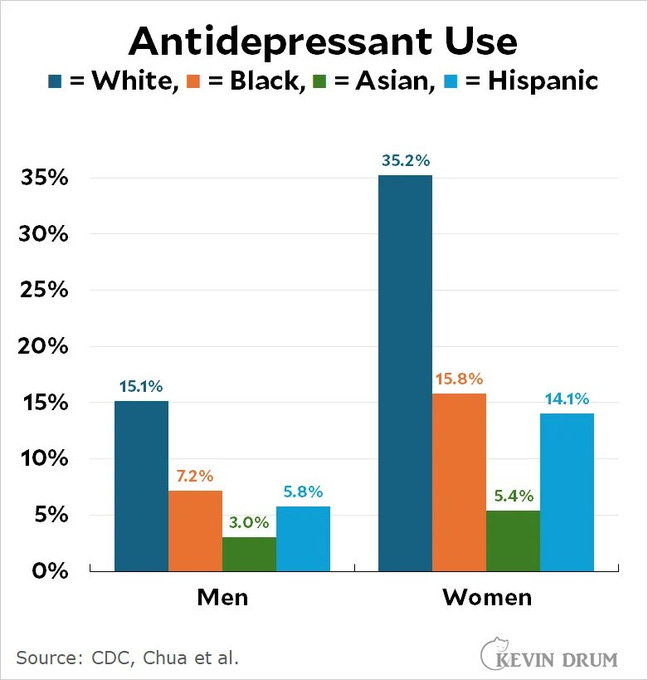
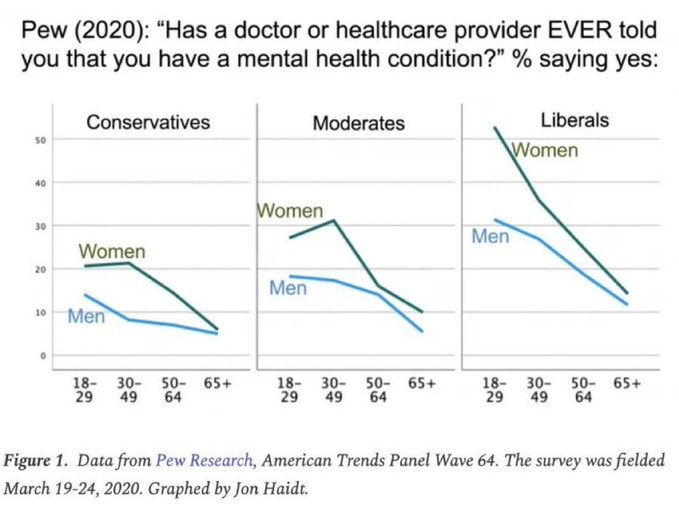
Click charts to view
In short - other stuff that happened
- 🇬🇧 🇦🇺 A British trans doctor calling himself Beth Upton who was at the centre of a major dispute over access to women-only changing facilities in Scotland is now working in Australia after leaving the NHS, following a tribunal in which a long-serving nurse was found to have been harassed by the health board for raising concerns about single-sex spaces.
- A Queenstown farmer has offered to cover a $4,000 shortfall so a Wellington family can install a lift for their disabled teenage daughter, who currently has to be carried up steps into their home. The anonymous donor stepped in after hearing the family’s story in the media.
- 🇺🇸 Apple CEO Tim Cook will step down after more than a decade in the role, transitioning to executive chairman while longtime executive John Ternus takes over as CEO from September.
- New Zealand’s cancer treatment capacity is expanding, including 14 new infusion centres and upgrades to 14 existing sites, so that more patients can receive treatment closer to home. The expansion, supported by a $210 million investment, is expected to deliver around 13,000 additional treatments annually.
- 🇦🇺 An Australian-led proposal for a $3 billion lignite-to-fertiliser plant in Southland aims to produce up to 1.5 million tonnes of urea annually, potentially making New Zealand self-sufficient in fertiliser. The project is expected to seek fast-track approval.
- Sport New Zealand has reappointed Raelene Castle as chief executive for a second term through to 2030 following an open recruitment process, citing her leadership experience and strong sector relationships. I can only assume that no one else applied.
- 🇺🇸 Residents in New York’s East Village have taken legal action to block Mayor Zohran Mamdani’s plan to relocate hundreds of homeless men into a new intake shelter in their neighbourhood. Lower Manhattan districts that vote overwhelmingly (often 80–90%+) for Democratic candidates in general elections.
- The Government has proposed expanding the role of community pharmacists, allowing them to assess patients and provide funded treatment for a range of common conditions such as infections, head lice, and minor illnesses, reducing the need for GP visits in order to improve access to lower-cost care. It will be supported by a $5 million annual fund.
- Reports of abuse toward Napier City Council staff have tripled over the past year, rising from 50 to 152 incidents in a three month period, including verbal abuse, aggression, and rule-breaking at public facilities.
- 🇺🇸 A resurfaced 2006 interview of California Governor Gavin Newsom (then 38) has gone viral, showing him reacting angrily to questions about allegations he provided alcohol to his 19 year old girlfriend. The incident did not result in charges.
- The self-certification scheme for plumbers and drainlayers is expanding, allowing qualified and approved tradespeople to sign off a wider range of jobs without waiting for council inspections. The change is aimed at reducing delays, lowering building costs, and improving productivity.
- 🇨🇦 A Canadian judge has sentenced a man to just six months in prison for choking and kicking a toddler, despite the assaults being caught on camera, citing factors including his Indigenous background and the broader impacts of colonisation as part of the reasoning for a reduced sentence.
- 🇮🇳 A local politician in Maharashtra, India, drove a tractor onto a cricket pitch and damaged it, reportedly in anger at not being invited to the match, forcing the tournament final to be abandoned.
- A person was seriously injured after being stabbed multiple times near Manurewa Railway Station in Auckland in the early hours of Wednesday, in what police say was an attempted robbery by a stranger. A 24 year old man has been charged, and the victim was taken to hospital in serious condition.
- 🇺🇸 A Utah man who identifies as a woman has been charged with international parental kidnapping after allegedly taking his 10 year old child to Cuba without the consent of his mother who had full custody. Prosecutors say the trip was for the child to receive “gender-related medical treatment”.
- Convicted double murderer Mark Lundy remains on strict parole conditions nearly a year after his release, with the Parole Board saying it is too soon to consider removing his electronic monitoring despite full compliance so far. His lawyer has sought clarity on when those restrictions might be eased, but authorities say no timeframe can yet be given.
- 🇺🇸 Florida authorities have launched a criminal investigation into whether ChatGPT played any role in a mass shooting at Florida State University, after reviewing undisclosed exchanges between the suspected gunman and the AI system.
- New Zealand’s revamped Active Investor Plus visa has attracted more than $1.4 billion in its first year, but concerns have emerged that much of the money is not being actively invested, with only a small proportion going directly into businesses while large amounts sit in managed funds or cash. The Government is reviewing the scheme and has already tightened some rules.
- 🇺🇸 Democratic US Congresswoman Sheila Cherfilus-McCormick has resigned just minutes before a House Ethics Committee was set to consider sanctions that could have led to her expulsion over multiple alleged ethics violations, including misuse of pandemic relief funds.
This article from The Conversation challenges a widely accepted assumption that more cultural knowledge automatically leads to better outcomes, particularly in a field as sensitive as healthcare. Instead, the research suggests that too much focus on cultural “facts” can actually hinder performance, highlighting that adaptability and critical thinking may matter more than simply knowing more. READ IT.
From the wonderful Brendan O’Neill for Spiked, this article is a strongly critical perspective on the “anti-extremism” industry, arguing that some organisations may have incentives to exaggerate threats in order to sustain funding and relevance. It explores the allegations against the Southern Poverty Law Center. READ IT.
Ani O'Brien comes from a digital marketing background, she has been heavily involved in women's rights advocacy and is a founding council member of the Free Speech Union. This article was originally published on Ani's Substack Site and is published here with kind permission.


11 comments:
National has held the media portfolio since 2023 (Melissa Lee briefly then Goldsmith). constant bias and denigration has gone
unchallenged. Why is Luxon reacting now so late in the day after so much damage?
Not convincing - more political games ?
Best read of the week!
Fully agree that both Clarke and now Ardern have cast a long shadow over this topic.
Hmm, is switching focus to the messenger really the best strategy here? The election is gonna be a bloodbath for National list MPs. How about Luxon sort the economy out instead? Nah, let’s have a whinge about “journalists being mean”. Yeesh, what a snowflake.
Ani, I'd like know where part-maori "activist lawyer" got her degree. Likely one of NZ's Uber woke universities. Hope the Law Society cancels her registration as a lawyer due to calling the profession into disreputable with her public violent threats against sitting ma's. This is a seriously deranged person that the so called green party is putting foreword as a candidate for public office. And here I thought that all the world's violence was the fault of his White men...
Ani - you started with The Ode in English.
In all my years of attending ANZAC services, it's always been in English.
Until, the woke took over my local Council.
Yesterday, a Maori version was read ahead of the English.
Bloody rude and inappropriate in my opinion.
The SPLC story blew me away, not because it happened but because it's now out in the open. Funding neo nazis and the Klan, literally dragging them out of near dormant states to encourage hatred that wasn't there, to keep the cause alive.
As a left supporter once upon a time I started to notice in blog sites and elsewhere the incredible misuse of statistics. To be fair, it's a strategy that's been around for a long time, I just didn't notice it. Anything from political commentary to public transport blogs and everything in between including all the recent popular causes. It was hammered home however, by the Ardern Hipkins government, especially under the draconian Covid era. Misinformation, diversions, withholding information to outright lies, the manipulation was professional, well practiced and skillful. Arderns government was inherently incompetent but on a whole other level of darkness when it came to the manipulative measures we suffered. I gave up on the left when I concluded, by any means necessary, and, the ends justifies the means, took that politcal movement into deeply dishonest dangerous territory. It had gone from taking people with it, to a cult. Because in their own warped minds, it's for a noble cause.
I am convinced more than a few NGO's in this country will be doing exactly the same. The entire Treaty grievance industry and co-governance is exactly that, a manufactured lie to motivate hate, driving this country into the ground.
Activism underpins the left and it flies on a wind of constant absurdity. The SPLC just confirmed that this be true.
The main problem with descriptive statistics is that most people don't really understand them (although they think they do).
As an example that stayed with me for decades, a big deal was made back in the mid-80s of a study showing that Maori girls got only 6% of teachers' attention in classrooms. How ghastly, pure racism, shock horror......... until one considers the fact that the proportion of the NZ population in the 1986 census was 12%, half of whom were girls; half of 12 makes 6. So if every kid in every classroom received equal teacher attention, Maori girls would take up 6% of a teacher's time.
Try explaining that to one of today's humanities graduates, though........ they haven't got the foggiest clue!
PS That should read "the proportion of the NZ population who were Maori in the 1986 census".
“Nothing unifies a group like a common enemy, and the National Party have found one” - yeah, the economy! And it isn’t just National unified against it, they have allies now in NZ F and ACT. We didn’t stand a chance, to be honest.
Targeted relief for tobacco companies? Oh no, they took care of that already.
Post a Comment
Thank you for joining the discussion. Breaking Views welcomes respectful contributions that enrich the debate. Please ensure your comments are not defamatory, derogatory or disruptive. We appreciate your cooperation.