

The latest Taxpayers’ Union–Curia poll triggered media framing of a crisis for National, languishing below 30% with leadership under pressure. And being stuck under 30% is definitely not a good place for a governing party, but it is also only part of the story and the more interesting part was largely ignored.
While headlines fixated on National’s 29.8%, the underlying movement in the poll tells a completely different story. Every single coalition party went up. Every single opposition party went down. National lifted 1.4 points, New Zealand First surged 3.9 points, and ACT added another 1.5. Taken together, the coalition bloc is now sitting on 65 seats, up six seats on last month, and comfortably able to govern.
Now why didn’t that part that didn’t make the headlines?
Now why didn’t that part that didn’t make the headlines?
And where were the journalists to eulogise the Greens? They dropped 2.7 points to 7.8% which is a loss of a quarter of their support in a single month. No “what’s gone wrong for the Greens?” think pieces. No hand-wringing over leadership and speculation that Julie Anne Genter and Teanau Tuiono might be “doing the numbers”. Nada.
This asymmetry shapes public perception. One side’s weakness is magnified; the other side’s decline is minimised. That doesn’t mean National is in a comfortable position because it clearly isn’t. But under MMP, governments are built by coalitions, and on that measure, this poll was not a disaster for the Government.
This asymmetry shapes public perception. One side’s weakness is magnified; the other side’s decline is minimised. That doesn’t mean National is in a comfortable position because it clearly isn’t. But under MMP, governments are built by coalitions, and on that measure, this poll was not a disaster for the Government.
The Auckland Deal: Big promises, no chequebook
The “landmark,” “adult-to-adult,” Auckland City Deal is meant to be a “new era” in the relationship between central and local government. A 30 year transport strategy, coordination on housing and infrastructure, innovation precincts, even biodiversity commitments. It reads like a comprehensive plan to unlock Auckland’s potential...
But this is, by the Government’s own admission, largely a “deal” about “coordinating” existing work and aligning priorities that were already underway. The big ticket items like the second harbour crossing, major transport links, and large-scale housing growth are discussed and planned, but not actually funded. Even proponents concede the strategy is “a good start” rather than a finished product.
New Zealand doesn’t have a shortage of strategies, but we have got a chronic long term shortage of execution.
There is also a deeper politics at play. Wayne Brown has hardly been subtle about what he thinks about central government. His long-running frustration is not just with one party, but with Wellington itself, repeatedly arguing that Auckland needs “less Wellington”. That helps explain why there is a perception he would prefer dealing with a Labour government, not necessarily out of ideological alignment, but out of a belief they would impose fewer constraints and allow him greater autonomy.
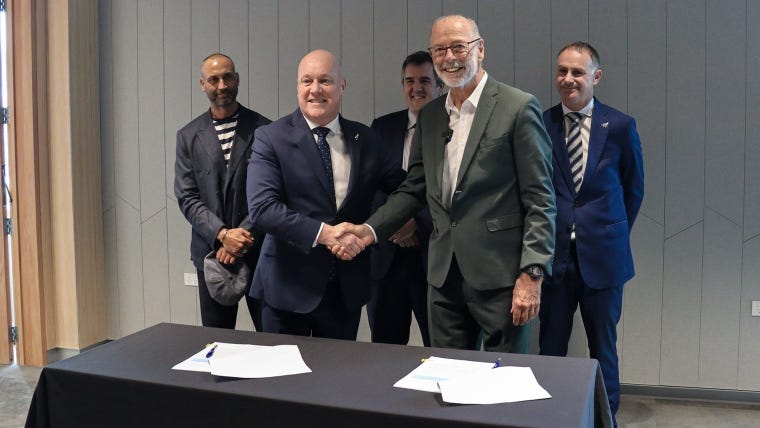
A handshake of bone crushing intensity. Image source: Mandy Te.
In 2023, former Councillor Pippa Coom described how at a Helen Clark Foundation event Mayor Brown was “heartily welcomed as the Mayor to defend the city from the new government (or more specifically Simeon Brown)!” Well, he certainly has made life difficult for the minister and the coalition government.
The Auckland Deal is a new framework, but is also an attempt to reset a strained relationship that has seen some seriously awkward and hostile meetings between the Prime Minister and the Mayor. Even within the announcement, the cracks are visible. The Government and Council openly disagree on key issues like rate caps, there is no consensus on how major infrastructure will be paid for, and some of the most contentious funding ideas, like a bed tax, have been kicked down the road.
Fuel Politics: Labour’s Narrative vs Reality
Labour has seized on the fact that Australian Prime Minister Anthony Albanese is in Singapore negotiating a fuel deal and Christopher Luxon is not. They say he should be. This makes for neat social media content, but it is fundamentally misleading because on this Australia is not leading, it is desperately trying to catch up.
New Zealand has already done much of the groundwork through our relationship with Singapore and the pending Agreement on Trade in Essential Supplies. Luxon has pointed out that Australia is only now moving toward arrangements that New Zealand initiated earlier. More importantly, Australia’s position is materially worse. Its fuel supply disruptions have been more acute than ours.
The announcement of a two-week ceasefire between the United States and Iran, and the reopening of the Strait of Hormuz, has already eased global supply pressures and sent oil prices downward. That doesn’t solve the crisis overnight, but it does demonstrate how quickly conditions can change.
Given this context, some of Labour’s criticism looks pretty performative. Especially when earlier in the week, Helen Clark, who now functions as a de facto Leader of the Opposition, took aim at Winston Peters’ trip to the United States, framing it as an unnecessary distraction. But that trip included meetings with senior figures like Secretary of State Marco Rubio and created opportunities to explore alternative fuel arrangements and broader strategic partnerships.
What this all shows is that we will not be seeing a war of policy this election. It will be a war of narrative. The news that National have employed former journalist Rachel Smalley indicates they may finally be taking this seriously, but ultimately even Smalley won’t be successful if Christopher Luxon doesn’t listen.
An economy walking a tightrope
New Zealand’s economic picture is fragile. The Reserve Bank has made it abundantly clear that our fate continues to be shaped less by domestic decisions than by forces well beyond New Zealand’s control. Inflation is rising again, expected to peak at around 4.2% in the June quarter, driven largely by the Middle East conflict and its effect on fuel and fertiliser prices.
But, the Reserve Bank is holding the line… for now. The Official Cash Rate remains unchanged at 2.25%. The balancing act is a tough one: tighten too early and you choke off already weak growth, but move too late and inflation expectations take hold.
Our dependence on external conditions is a structural reality of our economy. We are small, open, and highly exposed. We are impacted heavily by things like China’s outlook, dairy prices, and global risk sentiment. When variables move, New Zealand moves with them.
We have an economy in limbo. Inflation is too high, growth is too soft, and the path forward depends heavily on events unfolding thousands of kilometres away. Policymakers can tweak interest rates and consult on cash access, but they cannot control oil prices, global conflicts, or the pace of China’s recovery.
The Local Government issue no one wants to touch
There are some issues that the mainstream media just will not touch. No matter how much public interest there is, no matter how big the scoop, stories that would have landed on the front page a decade ago are determinedly ignored. Thank goodness for independent media. This week Duncan Garner interviewed Far North Councillor Davina Smolders and Hastings Councillor Steve Gibson about their concerns about unelected representatives in council decision making structures, and what that means for democratic accountability. Garner attempted to also get an interview with Far North Mayor Moko Te Pania, but the response he received from the mayor was “f*** off”.
Smolders told of one council committee she is on that has 6 elected members, but on any given day they are outnumbered by unelected iwi representatives. At one recent meeting it was 6 elected to 15 unelected.
Following Garner’s coverage, Local Government Minister Simon Watts has asked officials to engage with the Far North Council. However, he has signalled little appetite to actually step in, emphasising that councils are autonomous and that intervention like a Crown Observer is reserved for “extreme circumstances.”
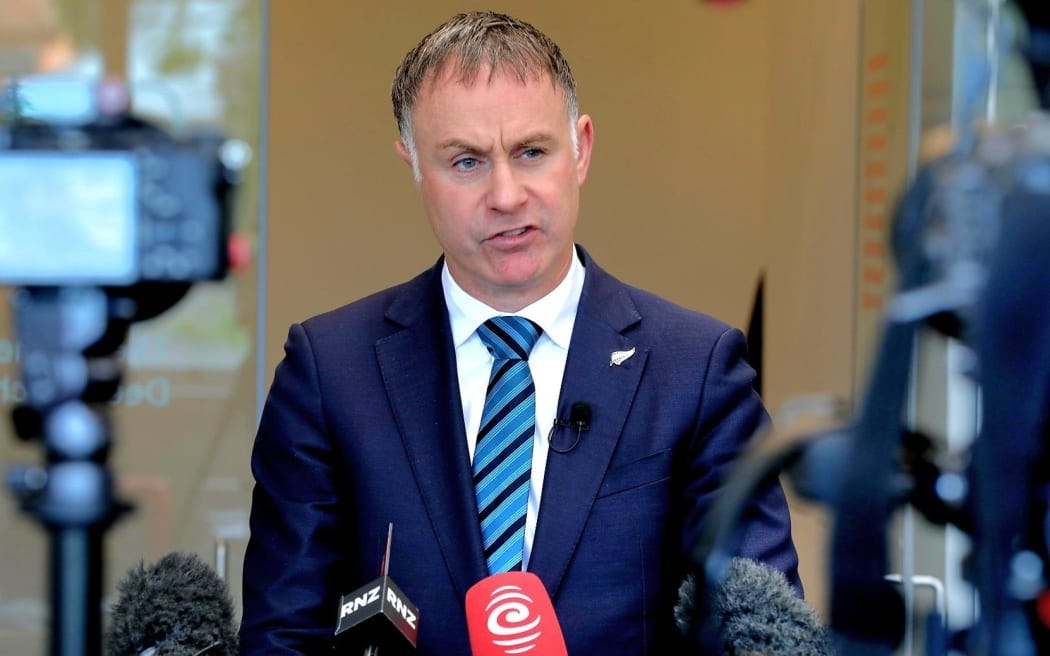
Local Government Minister Simon Watts. Photo: RNZ / Nick Monro
In Hastings, Councillor Steve Gibson attempted to remove a mana whenua representative from a water services forum, not unlike what Councillor Robbie Byars attempted at Otago Regional Council a week or so ago. His argument centred on democratic mandate, but others pushed back, arguing lived experience matters more than democratic process. Gibson’s proposal was overwhelmingly defeated.
These cases demonstrate how incremental change has led to significant changes in local governance. This is not a simple debate and clearly opinion is split. Some will see these arrangements as a necessary evolution of governance. Others will see them as a departure from democracy. What is not acceptable is that simply raising the issue is met with aggression and hostility, and attempts at scrutiny are shut down rather than engaged with.
This is a constitutional question. What does democracy look like in New Zealand today? Who has the authority to make decisions and spend public money? And who are they accountable to? Until we are prepared to have an open, good faith conversation about them, the tension will only grow.
Cuts? What cuts? The Public Service keeps growing and getting paid more
If you listen to the spin, you’d think the public service has been ruthlessly cut back since the change of government. It hasn’t. Official figures show 63,657 full-time equivalent staff as at December 2025 which is 1.1% up on the previous year and up from 2023 (Q2) when it was 63,117. The “cuts” narrative is doing a lot more work politically than it is in reality.
Over the last five years, the public sector workforce has grown by 10.9%, compared to just 3.7% in the private sector. Public servants are now paid, on average, $17,600 more than their private sector counterparts, and that gap is widening. Between 2020 and 2025, public sector salaries grew by 21.37%, compared to 14.49% in the private sector. That means the state, and the people working in it, is increasingly insulated from the pressures facing the people funding it.
Departments across the board are sitting on six-figure average salaries, many well into the $130k–$150k range. This isn’t about a few specialist roles commanding a premium, it’s systemic. At the top end, the problem is almost absurd. The head of the now-defunct Green Investment Finance fund was earning nearly $1 million a year when the fund itself burned through more than $100 million before being wound down.
BSA: A regulator overreaching in a post-broadcast world
Finally Minister Paul Goldsmith has acknowledged the overreach of the Broadcasting Standards Authority (BSA) which has unilaterally decided it is the police of the internet, saying he is “tempted to scrap it,” with the Government now weighing abolition or reform.
ACT MP Laura McClure has warned the BSA is trying to stay relevant by expanding into areas it was never meant to regulate and she has even introduced a member’s bill to abolish it entirely.
New Zealand already has laws for real harm like defamation and incitement, it doesn’t need a regulator extending speech controls into the internet. More broadly, the situation exposes a system that no longer fits reality. Media regulation is fragmented, inconsistent, and built for a world that no longer exists. The BSA’s attempt to adapt may be understandable, but it risks making things worse by blurring the line between legitimate oversight and overreach.
Irish Fuel Protests expose pressure on working economy
What began as a protest over fuel prices has rapidly escalated into a nationwide disruption in Ireland reflecting the mounting pressure on the people who keep the economy moving.
Farmers, truck drivers, and freight transporters have taken to the roads in force, blockading major routes, ports, and fuel depots. Key infrastructure including the Whitegate refinery and terminals in Galway and Limerick have been hit, with up to half of Ireland’s fuel supply unable to move. Some petrol stations are running dry, there is panic buying, and growing concern about access for emergency services.
The scale of disruption is huge. Central Dublin has been brought to a standstill and major motorways like the M50 and M7 are heavily impacted. Public transport has been thrown into chaos, with widespread cancellations and diversions.
Contrary to government and media rhetoric, these are not fringe activists, but core sectors of the economy; people who rely on fuel to earn a living and who say they are being pushed to breaking point.
The government has responded by moving into an “enforcement phase,” with warnings of legal consequences and the army placed on standby to clear blockades from critical infrastructure. Officials have described some actions as crossing into criminal behaviour, even “national sabotage.”
Judge Ema Aitken: A “Serious Breach”… with no consequences
A judicial conduct panel concluded that Judge Ema Aitken’s behaviour at the Northern Club where she disrupted a New Zealand First event and called Winston Peters a liar amounted to a “serious breach of comity.” Comity is the principle that underpins the separation of powers; the idea that judges, politicians, and the executive operate with mutual restraint and respect. And yet, despite this, she will keep her job.
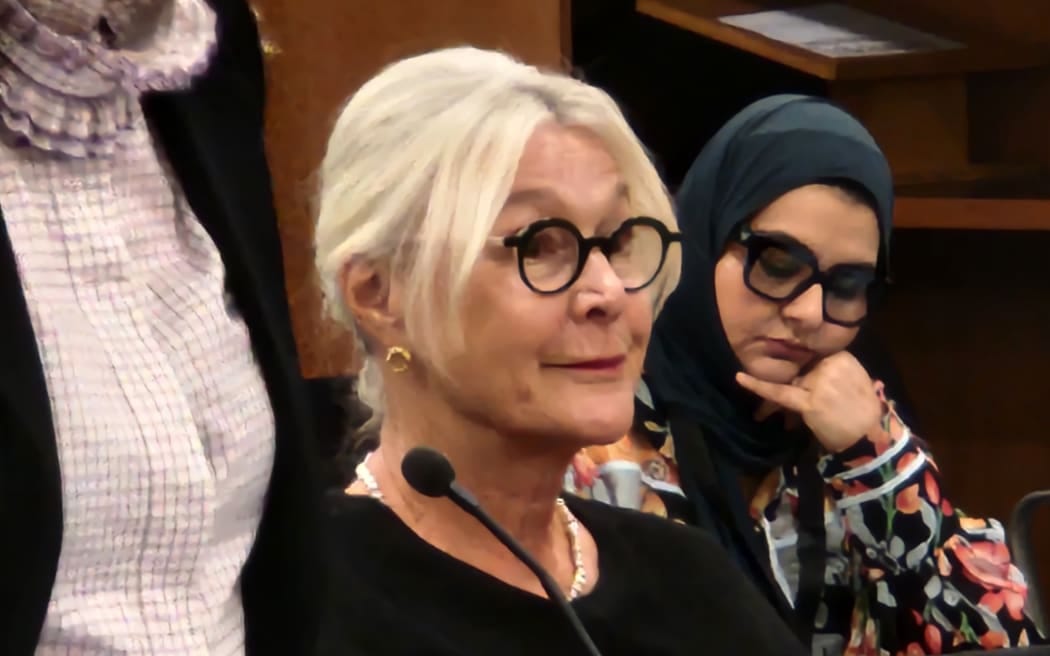
District Court Judge Ema Aitken. Photo: Finn Blackwell / RNZ
The panel’s reasoning rests on a technical distinction that while her conduct was serious, it did not meet the “high threshold of misbehaviour” required to trigger removal.
So, the bar for actually removing a judge is set so high that even behaviour deemed a serious breach of constitutional norms isn’t enough? How is a judge who has been found to have publicly and forcefully intervened in a political context supposed to return to the bench and be seen as impartial?
The panel argues that public confidence has not been sufficiently damaged to make her continued role untenable… I mean, I disagree, but I am just a mere writer.
Judge Aitken will remain on the bench until her warrant expires and face no real consequence beyond reputational damage and an inquiry that has already cost taxpayers close to $1 million.
Interesting precedent.
NZME’s dirty laundry keeps piling up
While all of New Zealand’s media companies are facing their own credibility crises with abysmal trust ratings, NZME is enduring a series of scandals and governance upheavals that go well beyond bias and bullsh*t. The most serious involves former senior executive Greg Hornblow, whose criminal conviction for “paying a 14 year old girl for sex” triggered internal investigations and a broader workplace culture review. I would like to make it clear that I believe he should have been convicted of rape given 14 year olds cannot consent. That review found not only that multiple senior departures were linked to other serious conduct issues, but that there were still “two other specific issues” lingering inside the organisation. No details have been publicly released about what those issues actually are, but they are evidently serious enough to be flagged at a company-wide level and sensitive enough that NZME is not willing (or able) to disclose them publicly.
Rotorua daycare child snatcher assessed as high risk and released from prison
John Tekuru, 20, admitted to taking a three year old girl from a daycare with the intention of raping her. He was assessed as a high risk of reoffending against children. And yet he received just a two year sentence which allowed him to be automatically released after just 12 months, without going before the Parole Board.
Despite saying that Tekuru “lacked insight into his offending” and that his risk of re-offending was high, Judge Bidois reduced the starting sentence of 4 years by half. This took into account a mandatory 25% discount for his guilty plea plus other discounts totalling 25% for his young age, mental health issues, troubled upbringing and the fact he was a first-time offender.
Within a week of his release last month, he was back in custody for breaching his conditions. The NZ Herald reports “the alleged breach related to Tekuru’s condition not to enter areas where children were likely to be present.”
Despite the seriousness of his offending and the acknowledged risk he poses, no application has been made for stronger controls like a Public Protection Order or Extended Supervision Order. The Sensible Sentencing Trust has, however, written directly to the Department of Corrections calling for urgent action to properly monitor and manage him. He is in custody pending his next court date.
Drawing a Line: US states move to block Sharia Law
Several US states are explicitly legislating against parallel Sharia legal systems. In Florida, Governor Ron DeSantis has gone further than most, signing HB 1471 to block courts from applying or enforcing foreign or religious laws that conflict with constitutional rights. The law also strengthens oversight of foreign influence, restricts public funding linked to extremist activity, and expands enforcement tools against organisations deemed to pose a threat. DeSantis says “Our state must operate under one legal system… the Constitution must remain the law of the land.”
This same principle is now being enforced more aggressively in Texas. Attorney General Ken Paxton has launched a formal investigation into what he describes as an alleged attempt by an “Islamic Tribunal” to operate outside the state’s legal framework and impose Sharia-based rulings. He has demanded documents and signalled enforcement action if any organisation is found to be acting as a parallel court, stating bluntly: “This is America, and we will not be governed by Sharia law.”
All of this is unfolding alongside significant demographic change. Texas alone has more than 400,000 Muslims and over 200 mosques, up roughly 35% since 2010. At the same time, resistance to mosque construction and expansion has been rising, with some developments facing legal and political intervention.
Megan Rapinoe is a Vichy feminist and a moron
Following the International Olympic Committee’s decision to reintroduce sex-based eligibility rules for the women’s category ahead of the 2028 Games, former USA professional women’s footballer Megan Rapinoe has emerged as one of the most prominent critics. Speaking on her podcast, she described the policy as “horrible” and “hateful,” arguing that it does not protect women and instead unfairly targets transgender athletes.

Megan Rapinoe. Getty Images.
She also took aim at the requirement for SRY gene testing, calling it invasive and unnecessary, and rejected the IOC’s framing of the policy as grounded in fairness insisting instead that it reflects political pressure rather than genuine concern for women’s sport. A one-off cheek swab is hardly invasive.
Sex categories in sport exist because male physiology confers a consistent performance advantage and safety risks. And that fact is not controversial outside of activist circles.
Rapinoe claims “biology is complex” as if that negates the need for protecting women’s sport. Sport deals in categories because reality is messy. We draw lines to preserve fairness. And Rapinoe has been a significant beneficiary of these policies. Without the female football category she would never have had Olympic and World Cup victories.
“Here’s a view of causes of death by age and sex in New Zealand.It shows how men are more likely to die from suicide, accidents, drowning and heart disease than women.The much higher share of deaths from breast and reproductive cancers among women in middle age is clear too.”
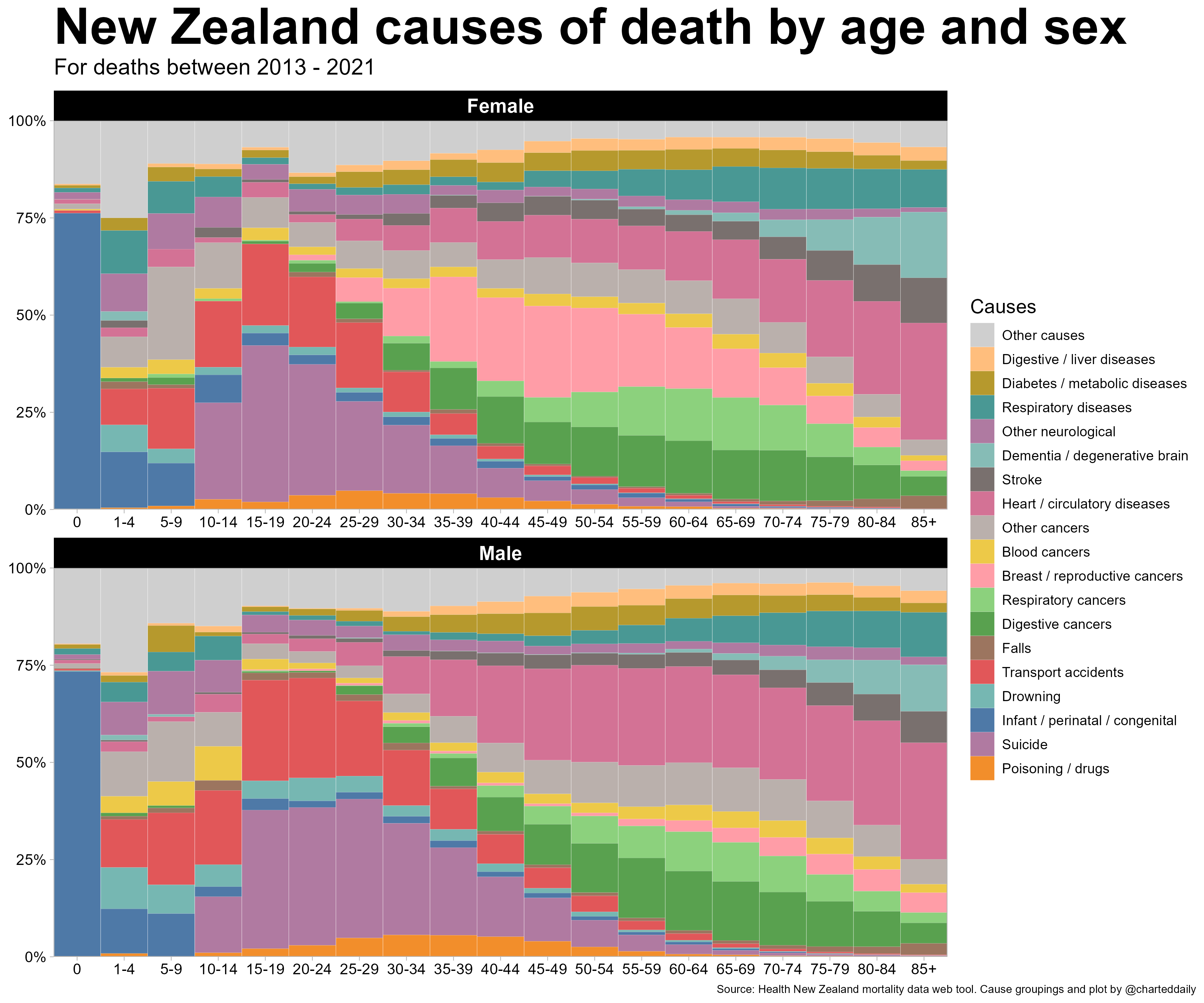
Click to view
In short - other stuff that happened
- A Wellington sushi shop accidentally sold a Coca-Cola bottle that actually contained soy sauce after a staff member mistakenly placed it in the fridge.
- A documentary about Jacinda Ardern has been nominated for two Emmy Awards: Best Documentary and Outstanding Politics and Government Documentary.
- The film covers her five year tenure as prime minister and premiered at the 2025 Sundance Film Festival where it won the Audience Award.
- Former Highlanders rugby player Taumua Lui Naeata has been named as the defendant facing six sexual violation charges after his name suppression lapsed.
- He has pleaded not guilty and remains on bail ahead of a trial expected later this year.
- Ben Roberts-Smith, a former Australian SAS soldier and Victoria Cross recipient, was arrested and charged with five counts of war crime murder over the alleged killing of unarmed Afghan civilians between 2009 and 2012.
- Teacher’s union New Zealand Educational Institute (NZEI) has defended involving primary school children in their protest on Parliament steps. Associate Education Minister David Seymour criticised the event, saying it was inappropriate to involve children in political activity.
- Police in Dumfries, Scotland, gave two schoolgirls personal safety alarms after reports they were being followed and photographed by men housed in a nearby asylum hotel, leaving many girls too afraid to go out alone.
- Kanye West has been blocked from entering the UK, leading to the cancellation of the 2026 Wireless Festival where he was set to headline. The UK government refused his entry on the grounds that his presence was not “conducive to the public good,” due to antisemitic and pro-Nazi comments.
- Christchurch teacher, David Gregory Shaw, 63, was sentenced after masturbating in front of young boys in a public pool changing room, in more than one incident, including following children. He was sentenced to six months of community detention and 15 months of intensive supervision.
- A former New Zealand athlete who admitted a sexual offence involving a 15 year old girl was working at a primary school despite police informing the school about his history. He has now been removed from the school’s staff list, and questions remain about how he was hired.
- The Darts Regulation Authority has banned males from competing in female tournaments, restricting eligibility to biological females following a policy review.
- This means trans-identifying male Noa-Lynn van Leuven, who has won six titles on the women’s tour since joining in 2022, will no longer be able to compete in women’s events.
- Not only is Keir Starmer introducing Digital IDs to the UK, but they are not going to include the sex of the ID holder. This is being seen as an attack on recent wins by women’s rights campaigners acknowledging the existence of a biological female sex.
In this article, Mitchell Hageman sets out to test whether Aucklanders can realistically ditch their cars during a fuel price crunch by personally trialling a range of commuting options from Uber Pool and buses to ferries, walking, and even an electric scooter. Over the course of a week, he measures each option on cost, time, and practicality, finding that while alternatives can work in certain circumstances, none consistently beat the convenience of driving particularly for longer, more complex commutes.
It’s the kind of piece we don’t see enough of anymore; actual reporting that requires getting out from behind a desk and bringing readers along for the ride. READ.
Michael de Percy argues, in The Spectator, that while young Australians have been heavily exposed to progressive or “woke” ideas through education and culture, they are now shifting away from them in response to real-world economic pressures. He points to rising support for populist parties like One Nation particularly among younger voters and women as evidence that cost-of-living pressures, housing stress, and energy issues are cutting through ideological messaging and reshaping political preferences.
It’s a provocative and highly readable piece that ties cultural critique to economic reality, and it’s well worth reading for its clarity and willingness to say what many others won’t. READ.
The New Zealand Initiative’s report Who Runs the Country? argues that power has increasingly shifted away from elected ministers toward an expanding and more autonomous public service. It highlights how institutional practices, advisory systems, and legislative complexity have created a situation where bureaucrats can shape policy direction, sometimes beyond direct democratic accountability, and calls for reforms to restore clearer lines of ministerial control and responsibility.
It’s a serious, detailed piece of work that goes beyond surface-level critique and digs into how the machinery of government actually operates. If you’re interested in how decisions really get made in New Zealand and why elected governments sometimes struggle to deliver on their mandates it’s absolutely worth a read. DOWNLOAD REPORT.
Ani O'Brien comes from a digital marketing background, she has been heavily involved in women's rights advocacy and is a founding council member of the Free Speech Union. This article was originally published on Ani's Substack Site and is published here with kind permission.


4 comments:
The " absence of consequences" - regarding any issue has reached ludicrous proportions. Judge Aitken's inebriated attack on NZF and Minister Watts non- response to the Far North Council fiasco are just 2 examples of many.
Agreed on our woeful left bent media. But they do exist to push their cults narrative.
That National are in descent but their coalition partners are in ascent is good. National are saying vote us because we are National. There's no philosophical reason other than we are in to win, and if, in their warped thinking, that means for being a clone of Labour, then all good by Christopher. But it's a road to nowhere so NZ First and ACT who actually have a vision and are willing to speak to it gives me hope.
Having said that National have got a steep road ahead. The economy will sink into recession, again, not so much their fault yet hardly helped by their bookkeeping attitude toward creativity but we have matched the likes of the semi autocratic Hungary for economic malaise since covid, hardly a vote of confidence. And Luxon, the phantom leader who spends 90% of his time in avoidance in case we realise he's part of the co-governance problem. Fun fact Christopher, we know you are. How he is going to communicate via National is beyond me.
As for the Greens. As long as no one speaks and they lay very low, their vote is safe. When the public are exposed to their collective insanity, their vote sinks. But in this occasion they've barely uttered a syllable. So that they are down makes me think there is hope.
The number of public servants is an interesting case. National and ACT campaigned on lowering the numbers after the blowout by Jacinda. They have obviously failed miserably at this job.
Now the opposition can just lie through its teeth about how cruel the government has been slashing the numbers, without any response. After all, what can the government say - 'they are lying we have actually increased the numbers.' Which would leave them open to failing on their promises. So instead they stay quiet and hope their supporters believe the opposition. It would be hard to make this stuff up.
I have heard this Auckland vs Wellington chat for years, too many years. It means “Wellington” is whichever government is in power. Or it simply refers generally to the Wellington machinery of government. My reply to some Aucklanders who have made the snide remarks over the years is: which part of the country provides the greatest number of politicians?
Is this another version of co-governance (there’s that horrible word again) where Mayor Brown places himself on an equal footing with the elected government of the day? Are there plans to make deals with other NZ regions? Oh, I have just reminded myself, this is election year.
Post a Comment
Thank you for joining the discussion. Breaking Views welcomes respectful contributions that enrich the debate. Please ensure your comments are not defamatory, derogatory or disruptive. We appreciate your cooperation.