

Danyl McLachlan is a self-described “Wellington based writer and the author of two novels”. Dude Danyl has recently produced two articles on the Whys & Wherefores of Wellington’s Woes, for The Listener (re-printed in The Herald). You can hopefully read them below.
Out of control: How to absolutely, positively kill a well-resourced capital city - NZ Herald
Former Labour leader Andrew Little has stepped into one of the worst jobs in politics - NZ Herald
Danyl projects as a fair enough fellow.
Former Labour leader Andrew Little has stepped into one of the worst jobs in politics - NZ Herald
Danyl projects as a fair enough fellow.

In his first article, Danyl blames Wellington’s decline on:
Danyl’s follow-on article is sympathetic to newly minted Mayor Andrew Little, on whom I’ve previously commented:
LITTLE ON OFFER
John McLean 14 April 2025
- a lack of private businesses generating genuine wealth
- over-reliance on central Government spending in the Wellington region
- the 2016 Kaikoura earthquake’s damage to buildings (e.g., Wellington Town Hall) and infrastructure
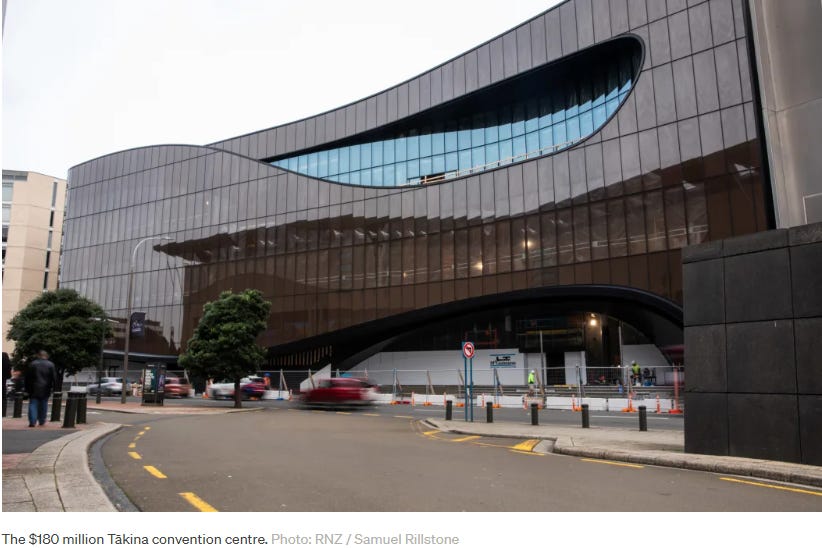
- underinvestment in civic infrastructure such as sewage treatment, in favour of vanity projects such as the Council’s white elephant Tākina convention centre
Danyl’s follow-on article is sympathetic to newly minted Mayor Andrew Little, on whom I’ve previously commented:
LITTLE ON OFFER
John McLean 14 April 2025

Andrew Little is considering standing to be Mayor of Wellington, in the upcoming October 2025 local body election. Little is a former leader of the Labour Party and Labour Government Minister.
Read full story
Danyl asserts that Wellingtonians can’t reasonably expect Little to do much about Wellington’s slide. Danyl argues that the Mayor is only one vote at Council meetings and can’t correct Council management’s failure to properly monitor the performance of “outsourced” functions:
“But part of the problem is that many residents think of the mayor as an executive – that they run the city. But the chief executive runs the city; the mayor is one voice on the governance body.”
“And the management, he [Little] says, is where the system failed. Outsourcing was treated as a way to make problems disappear.”
Unfortunately, Danyl comes across as simply making excusing for Mayor Little. Based on Danyl’s articles, neither he nor Andrew Little understands much about how a Council ought to be governed and what Little can do to arrest Wellington’s slide.
But in fact, Little, who clearly enjoys the support of a majority of fellow Councillors, wields all the democratic power he needs to put Wellington back on the road to recovery.
Wellington’s problems are certainly solvable. Here’s Fix Wellington 101.
Hold Prosser to account
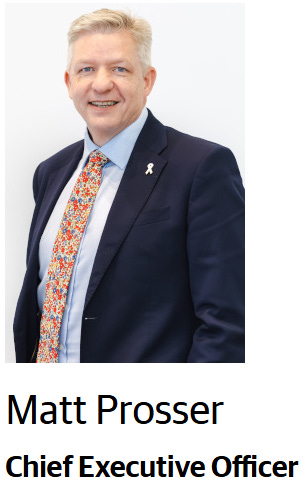
Matt Prosser was appointed chief executive of the Wellington City Council about a year ago. He’s English and comes from three decades in British local government.
Shortly after his appointment, when questioned by Post journalist Tom Hunt on whether he’d identified any changes he wanted to make at the Council, Prosser the Pom responded, “My job is to deliver what the elected members want to see delivered”. Which was an appropriate and exemplary promise, and one which Little and his fellow Councillors must hold Prosser to. Ideally, that promise should be enshrined in Prosser’s employment contract.
So when Council management withhold requested information from Councillors, fail to do what the Councillors tell them to do, enter into unauthorised arrangements with local iwi, and otherwise subvert the Councillors’ democratic mandate, the Councillors should ask Prosser to ensure the Rabbiteers do what they’re supposed to do. If Prosser doesn’t ensure exactly that, the Councillors should give Prosser a formal & final warning. And if he continues to fail to “deliver what the elected members want to see delivered”, Councillors should simply fire Prosser and hire a new chief executive who’ll do the right thing and toe the line.
Sell non-core assets
The Council should sell all non-core assets, including the multitude of properties it holds in Wellington’s central business district, the Council’s 34% shareholding in Wellington airport, the Ngauranga Gorge Quarry and the Tākina conference centre (which the Council currently subsidises to the tune of about $10 million per year). Selling non-core assets would reduce debt and rates, by providing immediate revenue and eliminating the cost of running non-core assets.
Revisit outsourcing arrangements
The Council should critically evaluate all its outsourcing arrangements, in terms of their cost and whether the relevant functions could be more economically performed by the Council itself. Sub-optimal outsourcing arrangements should be axed, with each relevant function either outsourced to others, or brought in-house.
Admittedly, some of this evaluation will be tricky. Wellington Water Limited is owned jointly by the Wellington, Hutt City, Porirua, Upper Hutt, South Wairarapa and Wtgn Regional Councils. So forcing Wellington Water to evaluate its outsourcing arrangements must necessarily require the Councils (by concerted exercise of shareholder rights) to force the Wellington Water directors to compel the Wellington Water chief executive to evaluate the performance of who’s doing the water works.
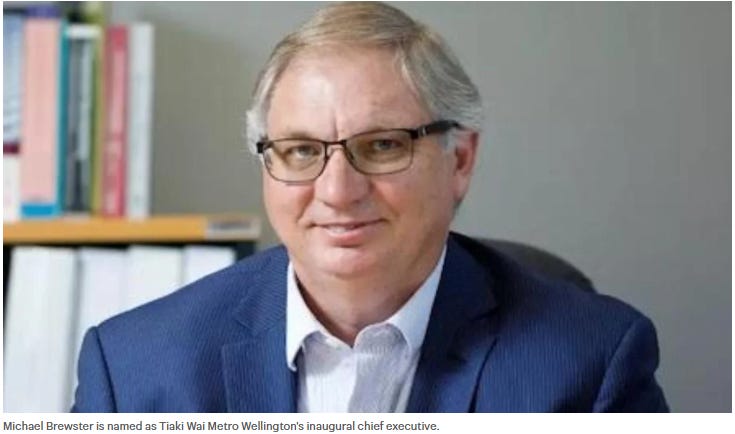
Further complicating this is the fact that, from 1 July 2026, Wellington Water’s functions, together with the water assets themselves, will transfer to a new Wellington Water entity, Tiaki Wai Metro Water. Tiaki Wai will be headed by an Aussie named Michael Brewster who looks a bit like Austen Powers and who’ll be on a salary of $645,000 p.a. The Brewmeister worked for Internal Affairs on Labour’s race-based “Three Waters” national water regime.
Some of Wellington’s water services outsourcing is decidedly dubious. Civil engineering and construction firm Fulton Hogan does most of the Wellington region’s water-reticulation work (drinking water, wastewater, stormwater), under a long-term “alliance” with Wellington Water. Fulton Hogan staff are embedded inside Wellington Water. There is little competition and transparency, and Wellingtonians pay roughly three times more than other regions for water pipe repairs on a per‑network‑length basis. Something stinks. Wellington Water’s love affair with Fulton Hogan should be investigated. If it’s toxic, then it should be end, with Wellington Water asking Parliament for legislative intervention and impunity if necessary.
Conflicts of interests
Andrew Little’s Council should investigate conflicts of interest affecting Wellingtonians, with a view to avoiding them in future.
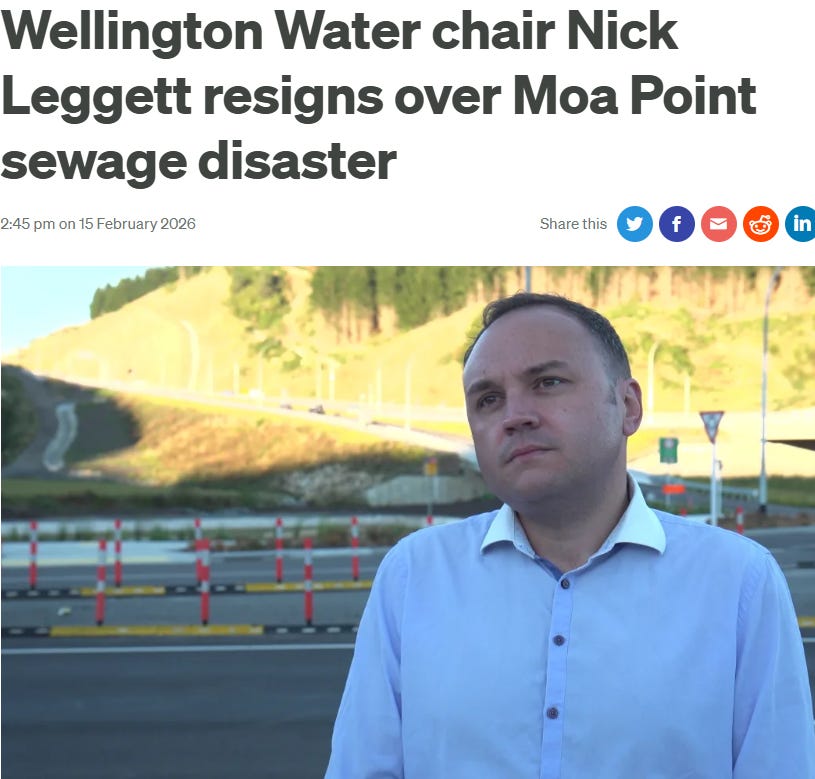
Ex-Porirua Mayor Nick Leggett resigned as chair of Wellington Water following the Moa Point sewerage disaster. At the same time as Leggett legged it from W.W., Nick was (and still is) chief executive of Infrastructure New Zealand, New Zealand’s leading infrastructure lobbying organisation whose bigtime members include – you guessed it – Fulton Hogan. Leggett’s appointment as chair of Wellington Water in May 2023 came only a month after he’d been appointed chief executive of Infrastructure NZ. How Wellington Water convinced itself that it was appropriate to put Leggett into W.W.’s chair - when he’d just become chief executive of Fulton Hogan’s industry lobbyist - is anybody’s guess.
Lobby Government to curtail local governments’ powers
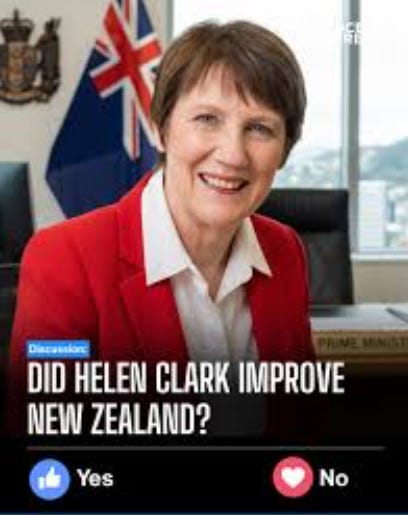
In 2003, Helen Clark’s Labour Government radically changed the legislation governing local authorities. Before 2003, the law only allowed local authorities to do what Parliament, under the legislation, specifically allowed them to do (roads, waste water etc. – not vanity projects). After, 2003, local authorities were all handed a legislated “general power of competence”. That legislative gift opened the floodgates to disastrous, incompetent local government spending and fiscal ruin. If Little were worth his salt, he’d lobby the Government to restore the pre-2003 legislative constraint on Council profligacy. But of course he won’t.
Wellington’s problems are deep. But, with determined application of basic principles of prudent governance, they can be resolved.
John McLean is a citizen typist and enthusiastic amateur who blogs at John's Substack where this article was sourced


2 comments:
John, you've got it all wrong, firstly more cycleways are required. We want everyone on cycles. Biking up those welly hills is good for you. Everyone who votes left parties, its mandatory. You have to lead by example. Plus you are not using dirty fuel.
Again I agree, all assets should be sold and more rainbow toilets and pedestrian crossings built immediately. Any monies left over from assets have to be spent on lgbqt promotion and Palestine.
Dont fix the sewerage problem....infact what problem? That money is better spent on Palestine promotion also.
It should be a priority to bring Tory whanau back and pay her millions as a consultant to continue with her vision. She is the best of the lefts best. The lefts leading light.
The city is heading in the right direction under years of far left rule and management, why change it? Wgtn has got what it voted for.
I voted for three waters. There was a way forward. The NZ electorate said no to solutions and here we are.
Post a Comment
Thank you for joining the discussion. Breaking Views welcomes respectful contributions that enrich the debate. Please ensure your comments are not defamatory, derogatory or disruptive. We appreciate your cooperation.