

Please note, events are moving very fast in the Middle East and changing almost as fast as I can write a paragraph. The ceasefire, for example, has already been breached as Iran continues to fire ordinance at Gulf States and the Strait of Hormuz is once again blocked. To that end, be aware some aspects of this Substack may soon be out of date.
There’s a ceasefire in the Middle East, somewhat. The details are sketchy and only time will tell if it holds for two weeks or longer.
Before we discuss the wider issues around this ceasefire, it is important to address Donald Trump’s social media posts including how a “whole civilization will die tonight” and his threats to destroy infrastructure such as bridges and power stations. These comments are totally unbecoming of the President, unhinged even. Instead of holding the moral high ground, President Trump effectively vented his frustration that things have not gone as effortlessly as he hoped. Even if his supporters argue the ‘civilisation’ he was referring to was that of the Islamic regime, the choice of words was very clumsy and risks isolating the many proud Persians who support the destruction of the regime. An earlier message mocking Allah was also unnecessary but again point to a man becoming increasingly frustrated by circumstances.
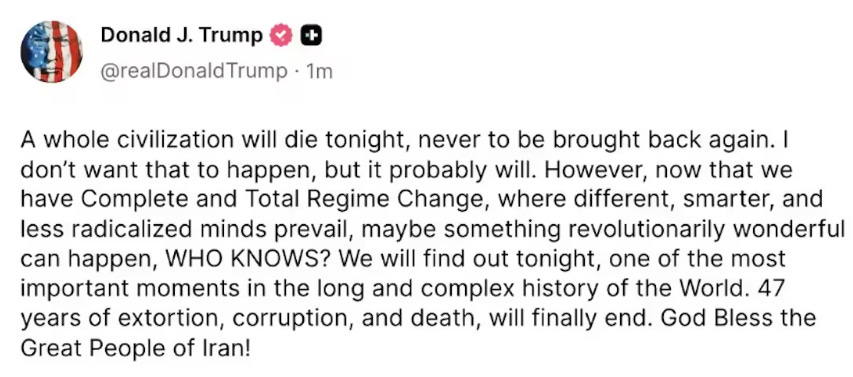
Trump’s totally inappropriate ‘unhinged’ social media post.
We also need to appreciate how Trump operates. He is very good at deflecting and distracting; saying one thing while doing something else. As the outrage class are getting outraged again, he’s doing something else. The ceasefire being a perfect example, coming hours after his outrageous social media posts. This doesn’t condone his words, but we also need to factor in how he consistently operates.
Trump and others do appear to have underestimated the Islamic regime. These are not individuals influenced by Western values or reason. They are adherents of a death cult. They are people not only prepared to kill any who they disagree with but also embrace death for themselves as well. The Islamic regime is responsible for innumerable deaths around the Middle East and beyond since they took power in 1979, including the horrific events in Israel on October 7th. They are responsible for murdering almost 40,000 civilians in Iran a few weeks back, when those protesting the economic situation were massacred – to the predictable yet complicit silence of the usual Western activists. Let’s also not forget, this is also the regime that was more than happy to beat a woman to death – Mahsa Amini – for not wearing her oppressive hijab correctly.
It is all too easy to think every religion is the same, but this is a deeply flawed notion. It is perhaps a notion that Trump and others have fallen into. The leaders and adherents of the Islamic regime in Iran are obsessed with death. Their eschatology (which means ‘end times’ and how the world will end) involves facilitating and embracing death. They believe they need to actively attack their enemies to prepare the way for a new utopia. We don’t need to go into depth here, for all we need to understand is that the Islamic regime loves death as much as we love life (to borrow an expression from Douglas Murray). If people cannot appreciate this, then there is no way to appropriately appreciate how to engage the regime controlling Iran.
The details of the proposed ceasefire are unclear. Worryingly, some in media are playing fast and loose around Iran’s proposed ten point plan, suggesting erroneously these are the conditions accepted. Some commentators also seem determined to suggest Iran is the victim of some grave injustice. For example, one reporter on TV One news talked of this “as a war of America’s own making”, implying that America and Israel just arose one morning and decided to attack Iran for the fun of it. No mention of the nuclear programme or brutal repression of civilians; no mention of Iran firing missiles, cluster munitions, and drones at civilian targets across the various Gulf States; no mention of the treatment of women and other minority groups; no suggestion there might be some wider context to be considered. All of these are an inconvenience to the progressive narrative that requires there be an agreed and unchanging ‘victim’ and ‘oppressor’ dialectic, and to which all the usual activists in New Zealand and elsewhere have been shamefully beholden too, leading to their silence about the horrors happening within in Iran.
The path ahead though is unclear. What is clear is that the United States underestimated the religious resolve of the Islamic regime, believing that military might would be sufficient to bring about regime change. There may still be an uprising by the Iranian people, but it is also beyond doubt that the killing of around 40,000 civilians by the regime has had a profound impact.
The ceasefire will allow oil to flow through the Strait of Hormuz, but it will also allow the Islamic regime to re-consolidate, re-arm, and oppress internal opponents. For those who might celebrate a potentially lower petrol price here in New Zealand, understand that thousands of Iranians will die at the hands of regime over these next two weeks alone.
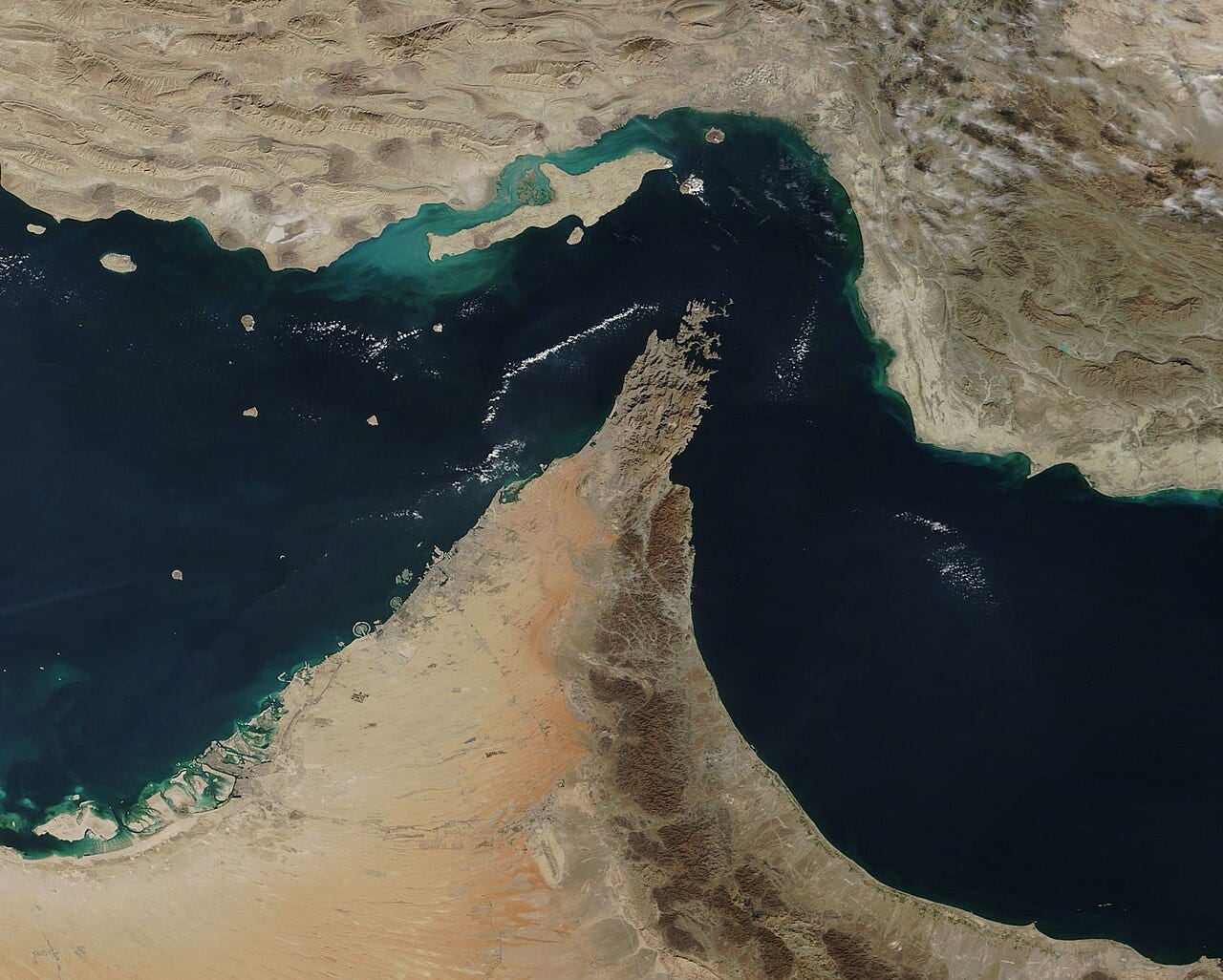
Satellite imager of the Strait of Hormuz
The ceasefire will also be intensely fragile. Both sides will seek any excuse to show the other side has not kept the deal. We also have the uncomfortable reality of what the situation looks like post the ceasefire.
A few final reflections. Take a moment to ponder how Iranians both here in New Zealand and abroad feel about the possible survival of the Islamic regime that has brutalised, humiliated, and terrorised them for nearly 50 years. We can also rightly reject Trump’s calls to target infrastructure such as bridges and power stations yet also note how the Islamic regime was more than happy to put civilians around them as a shield.
Perhaps this is the last observation around such a complex situation. It is more than possible to hold multiple and sometimes competing views around what is happening in the Middle East. We can say that war is bad yet also see why an Islamic regime such as that in Iran needs to go. We can say a ceasefire is welcome but also appreciate that many will suffer regardless. We can want peace yet also understand that a regime obsessed with death will never stop until itself is stopped.
In Media
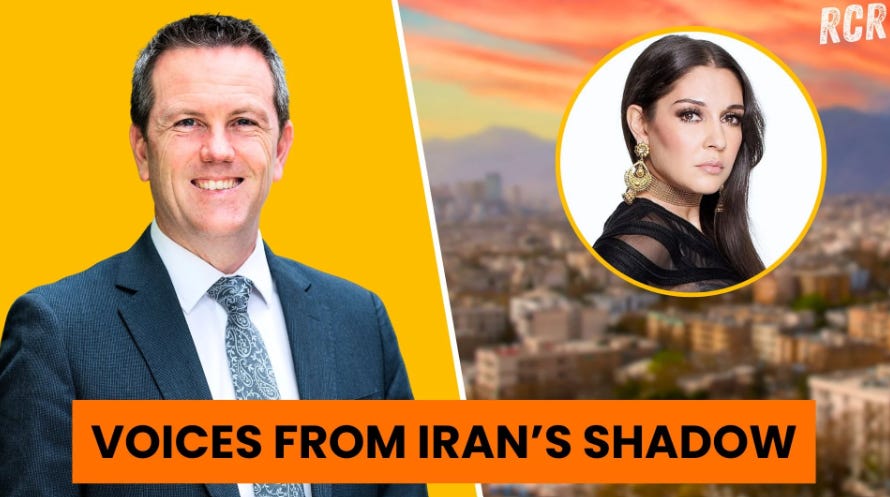
Following on from the discussion above, a few days back I interviewed Gilda Kirkpatrick - a New Zealand Iranian - to get her perspective on events happening in Iran. She urges kiwis to understand the situation more deeply and how many Iranians want to see an end to the Islamic republic that has oppressed Iran for decades. You can check out the interview here.
I’ve also recently sat down with Sarah McLaughlin from FIRE.org - the Foundation for Individual Rights and Expression, one of the United States' foremost advocacy groups for freedom of speech and free thought. Check out their Substack, Expression.
Sarah is FIRE's Senior Scholar, focusing on the dynamics of free speech around the globe. We discuss the growing challenges to free speech happening globally, with Sarah noting that if free speech was a hospital patient, it’s in pretty poor condition.
Click to view
Sarah is touring New Zealand courtesy of the Free Speech Union later in April, so head over to www.fsu.nz/events to find all the details.
Simon O'Connor a former National MP graduated from the University of Auckland with a Bachelor of Arts in Geography and Political Studies . Simon blogs at On Point - where this article was sourced.
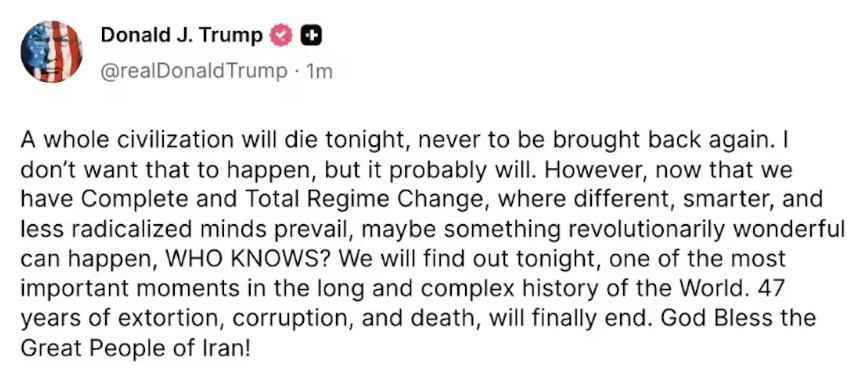
Trump’s totally inappropriate ‘unhinged’ social media post.
We also need to appreciate how Trump operates. He is very good at deflecting and distracting; saying one thing while doing something else. As the outrage class are getting outraged again, he’s doing something else. The ceasefire being a perfect example, coming hours after his outrageous social media posts. This doesn’t condone his words, but we also need to factor in how he consistently operates.
Trump and others do appear to have underestimated the Islamic regime. These are not individuals influenced by Western values or reason. They are adherents of a death cult. They are people not only prepared to kill any who they disagree with but also embrace death for themselves as well. The Islamic regime is responsible for innumerable deaths around the Middle East and beyond since they took power in 1979, including the horrific events in Israel on October 7th. They are responsible for murdering almost 40,000 civilians in Iran a few weeks back, when those protesting the economic situation were massacred – to the predictable yet complicit silence of the usual Western activists. Let’s also not forget, this is also the regime that was more than happy to beat a woman to death – Mahsa Amini – for not wearing her oppressive hijab correctly.
It is all too easy to think every religion is the same, but this is a deeply flawed notion. It is perhaps a notion that Trump and others have fallen into. The leaders and adherents of the Islamic regime in Iran are obsessed with death. Their eschatology (which means ‘end times’ and how the world will end) involves facilitating and embracing death. They believe they need to actively attack their enemies to prepare the way for a new utopia. We don’t need to go into depth here, for all we need to understand is that the Islamic regime loves death as much as we love life (to borrow an expression from Douglas Murray). If people cannot appreciate this, then there is no way to appropriately appreciate how to engage the regime controlling Iran.
The details of the proposed ceasefire are unclear. Worryingly, some in media are playing fast and loose around Iran’s proposed ten point plan, suggesting erroneously these are the conditions accepted. Some commentators also seem determined to suggest Iran is the victim of some grave injustice. For example, one reporter on TV One news talked of this “as a war of America’s own making”, implying that America and Israel just arose one morning and decided to attack Iran for the fun of it. No mention of the nuclear programme or brutal repression of civilians; no mention of Iran firing missiles, cluster munitions, and drones at civilian targets across the various Gulf States; no mention of the treatment of women and other minority groups; no suggestion there might be some wider context to be considered. All of these are an inconvenience to the progressive narrative that requires there be an agreed and unchanging ‘victim’ and ‘oppressor’ dialectic, and to which all the usual activists in New Zealand and elsewhere have been shamefully beholden too, leading to their silence about the horrors happening within in Iran.
The path ahead though is unclear. What is clear is that the United States underestimated the religious resolve of the Islamic regime, believing that military might would be sufficient to bring about regime change. There may still be an uprising by the Iranian people, but it is also beyond doubt that the killing of around 40,000 civilians by the regime has had a profound impact.
The ceasefire will allow oil to flow through the Strait of Hormuz, but it will also allow the Islamic regime to re-consolidate, re-arm, and oppress internal opponents. For those who might celebrate a potentially lower petrol price here in New Zealand, understand that thousands of Iranians will die at the hands of regime over these next two weeks alone.
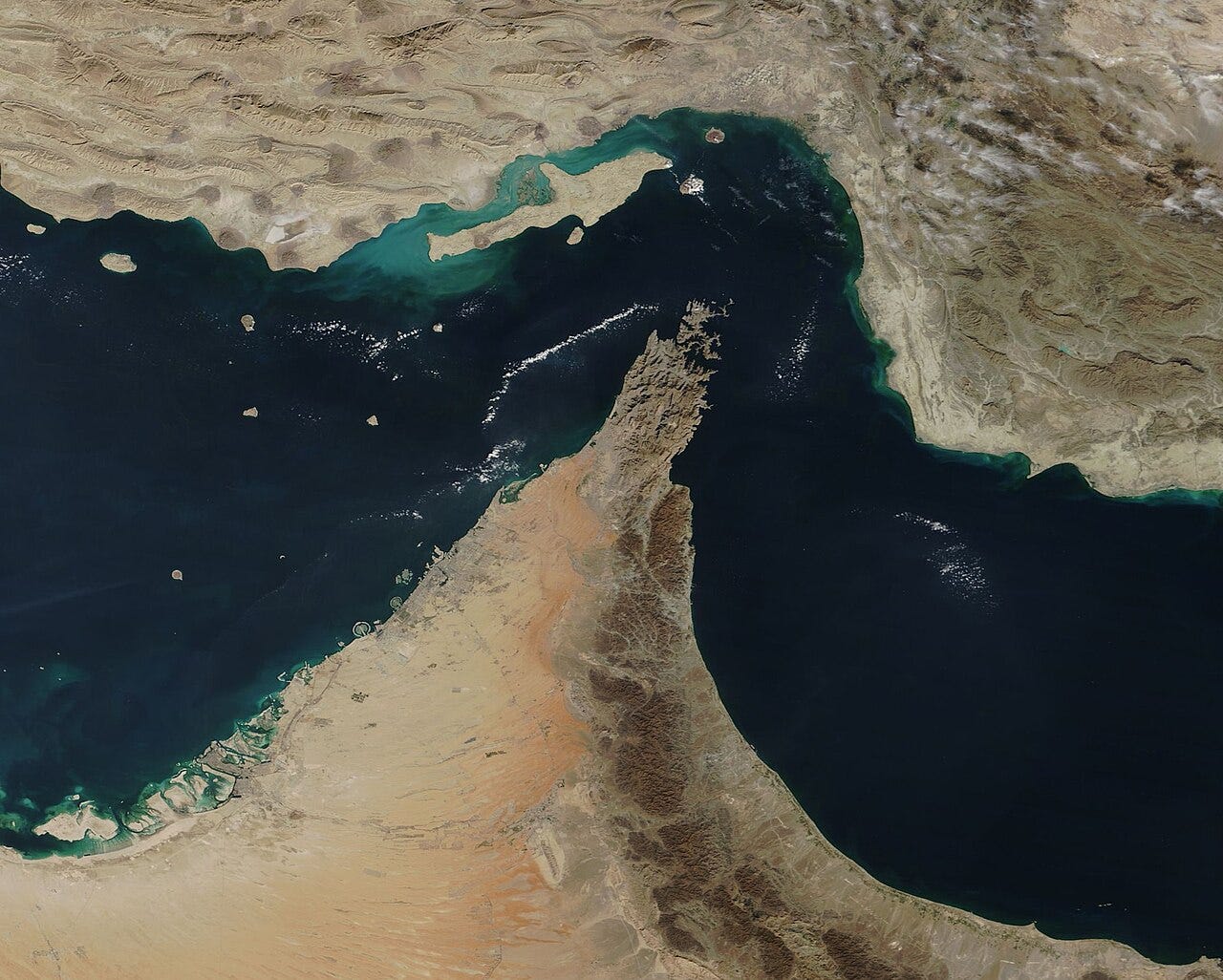
Satellite imager of the Strait of Hormuz
The ceasefire will also be intensely fragile. Both sides will seek any excuse to show the other side has not kept the deal. We also have the uncomfortable reality of what the situation looks like post the ceasefire.
A few final reflections. Take a moment to ponder how Iranians both here in New Zealand and abroad feel about the possible survival of the Islamic regime that has brutalised, humiliated, and terrorised them for nearly 50 years. We can also rightly reject Trump’s calls to target infrastructure such as bridges and power stations yet also note how the Islamic regime was more than happy to put civilians around them as a shield.
Perhaps this is the last observation around such a complex situation. It is more than possible to hold multiple and sometimes competing views around what is happening in the Middle East. We can say that war is bad yet also see why an Islamic regime such as that in Iran needs to go. We can say a ceasefire is welcome but also appreciate that many will suffer regardless. We can want peace yet also understand that a regime obsessed with death will never stop until itself is stopped.
In Media
Following on from the discussion above, a few days back I interviewed Gilda Kirkpatrick - a New Zealand Iranian - to get her perspective on events happening in Iran. She urges kiwis to understand the situation more deeply and how many Iranians want to see an end to the Islamic republic that has oppressed Iran for decades. You can check out the interview here.
I’ve also recently sat down with Sarah McLaughlin from FIRE.org - the Foundation for Individual Rights and Expression, one of the United States' foremost advocacy groups for freedom of speech and free thought. Check out their Substack, Expression.
Sarah is FIRE's Senior Scholar, focusing on the dynamics of free speech around the globe. We discuss the growing challenges to free speech happening globally, with Sarah noting that if free speech was a hospital patient, it’s in pretty poor condition.
Sarah is touring New Zealand courtesy of the Free Speech Union later in April, so head over to www.fsu.nz/events to find all the details.
Simon O'Connor a former National MP graduated from the University of Auckland with a Bachelor of Arts in Geography and Political Studies . Simon blogs at On Point - where this article was sourced.


1 comment:
>"The leaders and adherents of the Islamic regime in Iran are obsessed with death. Their eschatology (which means ‘end times’ and how the world will end) involves facilitating and embracing death."
You do realise, of course, that these comments apply equally to Christian apocalypticist sects who are desperate to see their Armageddon coming to pass.
As the BBC pointed out in a brief doco recently, these beliefs are not at all uncommon in the US where the fundamentalist lobby has considerable political clout.
It is unsettling to think that the fate of humanity may be in the hands of religious lunatics on both sides.
Post a Comment
Thank you for joining the discussion. Breaking Views welcomes respectful contributions that enrich the debate. Please ensure your comments are not defamatory, derogatory or disruptive. We appreciate your cooperation.