

Here we are in an election year and the pledges continue to arrive, often with only the vaguest account of what will be cut, taxed, or borrowed to pay for them.
Labour has entered the solar-policy contest with long-term loans, Crown-underwritten finance through electricity lines companies, community batteries, and subsidies of up to $3000. Renters would also be permitted to use plug-in solar systems, which would require regulatory change. The central loan scheme is remarkably similar to National’s recently announced Home Energy Fund, with both parties proposing finance secured against a property and repaid through council rates. Chris Hipkins claims his version is more comprehensive while National argues that it is the same idea with a larger taxpayer bill. Both major parties want almost the same financing mechanism, so the Greens have offered National their votes for Parliament to get on with implementing the areas of agreement before the election.
The Greens are also proposing phasing out bottom trawling on seamounts, expanding marine protection, tightening wastewater rules, lowering nitrate limits in drinking water, phasing out synthetic nitrogen fertiliser, and reducing livestock numbers on a catchment-by-catchment basis. The environmental ambition is clear, but so are the economic consequences. Any programme that deliberately constrains fertiliser use and stocking rates needs to confront the resulting effects on production, food prices, rural employment, and export earnings. Labour has already distanced itself from reducing herd numbers, while National and ACT say the policy package as proof that a Labour-Green government would resume what they describe as a war on farming.
ACT has proposed requiring every applicant for a sickness or disability benefit to be approved by a Ministry of Social Development-appointed doctor rather than the applicant’s own GP. The party argues that a culture of soft sign-offs from doctors is driving the numbers on welfare up. The numbers receiving sickness or disability support have risen from 141,465 to 194,157 over the past decade, with mental health conditions driving much of the recent increase.
ACT has also announced they want anyone convicted of burglary three times to face at least three years in prison without parole, home detention, or early release. Nicole McKee said that the policy is less about deterrence than incapacitation because offenders cannot burgle another house while they are behind bars.
The Greens are also proposing phasing out bottom trawling on seamounts, expanding marine protection, tightening wastewater rules, lowering nitrate limits in drinking water, phasing out synthetic nitrogen fertiliser, and reducing livestock numbers on a catchment-by-catchment basis. The environmental ambition is clear, but so are the economic consequences. Any programme that deliberately constrains fertiliser use and stocking rates needs to confront the resulting effects on production, food prices, rural employment, and export earnings. Labour has already distanced itself from reducing herd numbers, while National and ACT say the policy package as proof that a Labour-Green government would resume what they describe as a war on farming.
ACT has proposed requiring every applicant for a sickness or disability benefit to be approved by a Ministry of Social Development-appointed doctor rather than the applicant’s own GP. The party argues that a culture of soft sign-offs from doctors is driving the numbers on welfare up. The numbers receiving sickness or disability support have risen from 141,465 to 194,157 over the past decade, with mental health conditions driving much of the recent increase.
ACT has also announced they want anyone convicted of burglary three times to face at least three years in prison without parole, home detention, or early release. Nicole McKee said that the policy is less about deterrence than incapacitation because offenders cannot burgle another house while they are behind bars.
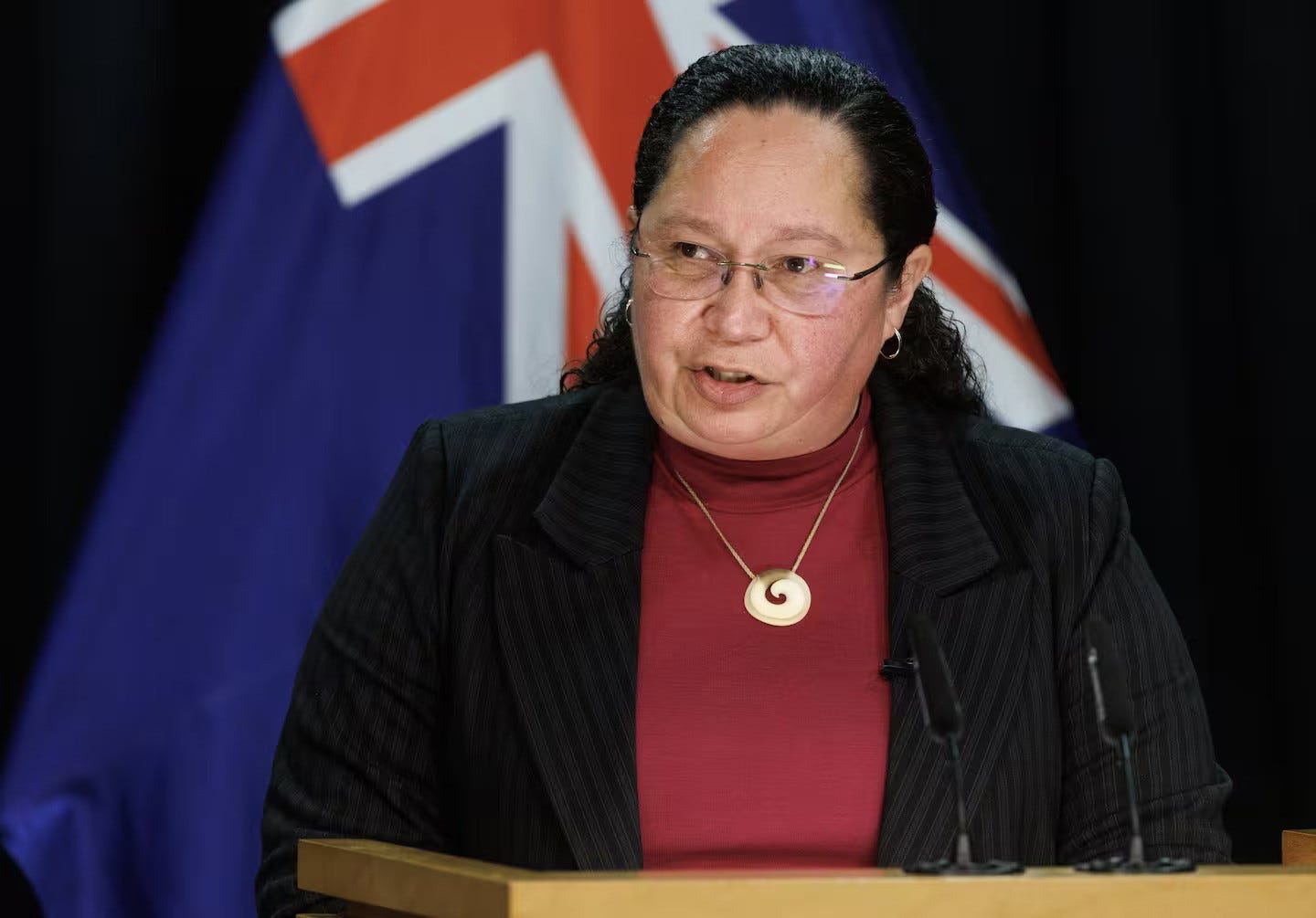
Minister Nicole McKee. Photo / Mark Mitchell
Another ACT proposal would make it an offence to abuse or threaten a companion animal as a means of coercive control, strengthening protection orders so offenders cannot sell or withhold pets, requiring police to record animals on family-harm reports, and allowing officers to remove endangered pets to safety. Abusers frequently use animals to trap victims in violent homes.
Last Sunday, New Zealand First announced only New Zealand citizens should be entitled to vote in parliamentary and local elections. At present, people who have been lawfully resident in New Zealand for a year may enrol, even without citizenship or permanent-resident status. This is vastly different from how most of the world works.
New Zealand First is continuing to build an intriguing candidate list. Former National MP Harete Hipango-Brownlie will contest Whanganui, joining other former MPs Stuart Nash, Alfred Ngaro, and Michael Laws. The latest announcement also includes Napier councillor Te Kira Lawrence in East Cape, Western Bay of Plenty councillor Tracey Coxhead in Mount Maunganui, former nurse and union representative Kym McDonald-King in Dunedin, and infrastructure executive (and social media personality) Billy Brown in Rotorua.
Te Pāti Māori, meanwhile, produced the week’s most farcical campaign story without announcing any policy at all. Its party website was found to be linking visitors to an offshore casino after a former campaign domain expired and was acquired by someone overseas. The party claimed that the gambling operator had “exploited” its website.
The minor parties had announcements too with the Conservative Party proposing a flat personal and company tax, a reduction in GST to 12.5%, closer trade relations with China, a review of existing trade agreements, and a more neutral foreign policy.
🇨🇳 China fires a warning shot across the Pacific
A Chinese nuclear-powered submarine launched a long-range, nuclear-capable ballistic missile into the South Pacific. The missile carried a dummy warhead, but it sent an explosive message, splashing down near Tuvalu and Kiribati, inside the wider South Pacific Nuclear Free Zone. China gave New Zealand only a few hours’ warning and then proceeded despite knowing full well that Pacific countries regard the region as an Ocean of Peace.
Beijing has insisted that this was merely a routine training exercise, consistent with international law, and directed at no particular country. To call that disingenuous would be an understatement. This was the first known Chinese submarine-launched intercontinental ballistic missile test into the Pacific and it deliberately demonstrated that China can project military force far beyond its immediate neighbourhood. It follows the 2024 land-based missile launch into the region and the Chinese naval flotilla that conducted poorly notified live-fire exercises in the Tasman Sea last year.
The timing was particularly provocative as the missile was launched on the same day that Australia and Fiji announced a new defence pact. China knew how the event would be interpreted, especially after positioning tracking ships across the region and whether the intended audience was Australia, the United States, or the Pacific generally, the message was that China has the ability to place nuclear-capable weapons into this region. Christopher Luxon has since indicated New Zealand is open to joining the defence pact with Australia and Fiji.
New Zealand’s response was firm, but aware of our reliance on China as a trade partner. Foreign Minister Winston Peters described the launch as unwelcome, concerning, and contrary to the spirit and intent of the Treaty of Rarotonga. He rejected China’s attempt to normalise the exercise. Pacific countries have repeatedly said that they do not want their region turned into a theatre for military competition between great powers. Christopher Luxon called the test unacceptable, Defence Minister Chris Penk said plainly “this is not normal”, and David Seymour described it as the kind of behaviour a friend would not engage in. Labour has backed the Government’s response.
Social Media Ban: more tomorrow
National and Labour have joined forces again, this time to promise to send the prospective under 16 social media ban legislation to select committee, while ACT, New Zealand First, and the Greens remain opposed. We’ve seen proposals floated that would have pushed New Zealand into deeply uncomfortable territory, including potential VPN restrictions, before the Government rapidly backed away.
I’m keeping this brief because this issue deserves more than a few paragraphs. Tomorrow I’ll publish a full piece on the topic.
Who exactly was Rural Women NZ speaking for?
Rural Women New Zealand has lodged a submission opposing the Definitions of Woman and Man Bill. They have since confirmed the submission was a “board-led process” and that members were never consulted before the organisation purported to speak on their behalf. Membership organisations derive their legitimacy from representing the views of their members, not the personal opinions of a handful of board members and executives and the organisation has now acknowledged that members hold a range of views and says it is now reviewing its processes.
North Canterbury farmer and Rural Women member Emmy Maxwell has called the organisation out. In an open letter, she detailed repeated attempts to persuade Rural Women New Zealand to either support the bill or, at the very least, consult its membership before taking a public position. Instead, she says she received little more than polite brush-offs while the board forged ahead regardless.
Waikato PC1: the Government is listening…kinda
Last week I wrote about the looming clash between Waikato’s Plan Change 1 and very unhappy farmers in the region. This week, that collision became impossible for ministers to ignore.
New Zealand First was first off the mark in formally backing the farmers’ call for a pause on PC1. Shane Jones described PC1 as a “14-year-old regulatory taniwha” created under a planning system the Government is already abolishing. His party wants implementation halted until the replacement RMA framework is operating, existing lawful farming activity is protected, and future rules are tested against the viability of primary production.
Then, a couple of days later, around 350 farmers gathered at Mystery Creek to confront Agriculture Minister Todd McClay and RMA Reform Minister Chris Bishop with the practical consequences of allowing PC1 to proceed.
Farmers told ministers that the uncertainty is already threatening land values, bank lending, succession plans, and food production. One Whangamarino farmer estimated that meeting potential consent conditions could cost his operation more than $1 million. Vegetable growers warned that the rules would affect supply to supermarkets and greengrocers across the country.
National’s ministers were supportive and accepted many of the arguments being made. Bishop said PC1 and the new planning system were on a “collision course”, would not “mesh together particularly well”, and that allowing one regime to be introduced only to be superseded shortly afterwards would be ridiculous. But he stopped short of committing to a pause. He said anything was on the table and that the Government was taking advice about what intervention was possible. McClay similarly called the years of litigation and expenditure surrounding PC1 a travesty.
Waikato Regional Council has until July 21 to make the Environment Court’s required amendments before the plan moves toward finalisation. The clock is ticking. The Government seems to accept that the present course is irrational, but whether they will act remains to be seen.
OCR goes up, but panic should not
The Reserve Bank have lifted the Official Cash Rate (OCR) from 2.25% to 2.5% which is the first increase in three years. The headlines sounded dramatic, but in reality, fixed mortgage rates have been creeping up for months as banks anticipated this decision and markets had largely priced in a rate hike. So if you’re about to refix your mortgage, you’ve probably already been looking at the new reality.
Nobody enjoys higher interest rates, but inflation is far worse. The encouraging part of this week’s decision is what it signals. The economy appears to be recovering. But that obviously doesn’t mean we’re back to boom times. Far from it.
The recovery progresses, but remains uneven. Retailers and construction are still on struggle street. Unemployment is still higher than we’d like and plenty of families still don’t feel any sense of recovery when they look at what’s in the bank account.
Yet beneath that, there are genuine signs of improvement. The economy is growing again with GDP numbers nudging up. Business and consumer confidence have strengthened. The housing market is unlikely to return to the frenzy of years gone by. There is far more housing stock available, migration has cooled considerably, and buyers once again have the upper hand. And, importantly, fuel prices have eased!
We are in a very different spot from the one we were in 18 months ago. The bigger risk now isn’t that we’re heading back into recession, but that policymakers mistake a fragile recovery for a finished job.
Chris Bishop’s very bad week
The Government’s long-awaited transport pipeline arrived this week, and it was a substantial retreat from National’s 2023 promises. Only six Roads of National Significance are now in construction or procurement with credible start dates. Several others have been pushed into “preparing for construction” categories, while five major projects (including the East-West Link, parts of Mill Road, Petone to Grenada, Hope Bypass Stage 2 and sections of the Northland corridor) have been relegated to the slow lane with no clear construction timetable and progress dependent on funding that does not currently exist.
Chris Bishop says this is not a backdown but a “recalibration of expectations”. The Government could either admit the programme was impossible or continue pretending the money would materialise. Bishop chose the former, albeit with a bit of spin.
The Post’s coverage of this went beyond the policy failure and appeared to strongly suggest tensions between Bishop and former transport minister Simeon Brown. Its political editor described Bishop as “cleaning up Simeon Brown’s mess”, arguing that Brown had committed National to an implausibly expensive package, promised construction dates that now look unrealistic, delayed the fuel-tax increases needed to pay for it, and made state highways the centrepiece of transport policy. Bishop, The Post say, is now the public face of dismantling a programme he did not principally design. That framing is probably a little too generous to Bishop. He was National’s 2023 campaign chair and infrastructure spokesman, and happily campaigned on the same promises.
It is interesting that The Post chose to frame the story in those terms and frankly the suggestion of tension between the pair is believable as transport is not their first area of divergence. The pair were on the opposing sides of the housing intensification debates, where Bishop’s more liberal approach ran into resistance from Brown, Luxon, ACT, and National’s Auckland MPs.
Bishop is carrying a large ministerial workload while standing on increasingly unstable political ground. Alongside transport, he is responsible for housing, infrastructure, and the replacement of the Resource Management Act which is perhaps the most consequential domestic reform project of the term. Bishop is trying to complete it at breakneck speed while managing the consequences of his other portfolios. His hold on Hutt South is precarious, and Labour’s Ginny Andersen has a realistic prospect of winning the seat back.
Normally a senior minister ranked near the top of the party list would have little reason to worry, but National’s list is dangerously congested. The party won so many electorates in 2023, while ACT and New Zealand First absorbed a large share of the coalition vote without winning electorate seats, so National secured only a handful of list MPs. Current polling would produce even fewer list places in 2026. One projection suggested National might return only a single list MP, meaning even someone ranked as highly as Bishop could be out of Parliament entirely.
Marsden Point gets a second life
The first shipment arrived in Marsden Point this week for New Zealand’s new strategic diesel reserve. Two former refinery tanks have been refurbished to hold about 93 million litres of diesel, roughly nine days of average national consumption. The rapid delivery of this project follows the recent fuel crisis and fears that further disruption in the Middle East would choke global supply routes. The Government contributed up to $21.6 million from the Regional Infrastructure Fund, while Z Energy procured and owns the fuel. The Crown will control when it is released to the market.

Christopher Luxon and Channel Infrastructure team. Photo / Dean Purcell
The speed of the project is genuinely impressive. Work that would ordinarily take 18 months or more was completed in about three months, including cleaning the enormous tanks and installing hundreds of metres of new piping. The first shipment has already arrived and the second is expected before August. A separate $30 million jet-fuel project has also added another 30 million litres of storage, enough for around 10,000 flights between Auckland and Wellington.
There are technical details to be worked through about longterm logistics and what the Government will require from fuel companies going forward. Even so, this is an example of a tangible response to the fuel crisis. Marsden Point is not once again refining New Zealand’s fuel, despite the hopes of those who still regard its closure as a profound strategic mistake. But after several years in which the site symbolised lost capability, it is at least being put back to work as an insurance policy against the next global shock.
The Electoral Commission’s double standards
Christchurch developer Matthew Horncastle was been referred to police because a political billboard did not include his contact details in its promoter statement. This billboard was not funded by a shadowy organisation or anonymous donor. In fact, it appeared on a digital billboard that Horncastle owns, at no cost, and expressed his own plainly identified political opinion. It explicitly said “Approved by Matthew Horncastle”.
The Electoral Commission emailed Horncastle twice, but the messages went to his junk folder. Rather than making another reasonable attempt to contact him, phoning him, or treating an obvious technical issue as something capable of immediate correction, it referred him to police. It then publicly announced that the advertisements “did not contain promoter statements”, even though its own referral reportedly acknowledged that they carried Horncastle’s name.
Election rules requiring promoter statements ensure voters know who is paying for political advertising, particularly where money is being channelled through lobby groups, front organisations, or anonymous campaigns. But Horncastle did not disguise his involvement. He put his own name on a billboard he owned himself and spoke in his own voice. He has also taken photos of himself standing in front of it for social media. Referring him to police over missing contact details is the equivalent of sending in SWAT to remove an elderly woman who wandered into the neighbours home by accident.
The contrast with the Electoral Commission’s treatment of Jordan Rivers makes this more egregious. Rivers had a large personal social media audience while being employed in the Labour leader’s office as a taxpayer-funded adviser of some kind. His platforms did not ever disclose that employment, despite regularly carrying anti-Government and pro-Labour political content. During the local elections he posted material encouraging particular voting action without telling his audience that he was being paid by the Labour leader’s parliamentary office. The Electoral Commission’s response was not to refer Rivers or Labour to police. They just had a quiet word to Rivers and Labour.
Auckland Pride claims victory. Reality says otherwise.
Auckland Pride nearly fooled me when they declared victory over Sports Minister Mark Mitchell this week. But it turns out the celebration was... optimistic. Hyperbolic. Bizarre.
After filing proceedings for a judicial review against Sport Minister Mark Mitchell some months ago over his decision to instruct Sport NZ to chuck their trans guidelines in the bin, Auckland Pride announced this week that it would discontinue the case because the Government had agreed to restart its decision-making process. According to its press release, this was a “meaningful win” for trans rights.
Except it really wasn’t. Given they withdrew the case, there was no judgment. No finding that the Minister’s decision was unlawful and no order requiring the Government to reinstate the guidance. Instead, the Government did what governments often do when confronted with a procedural challenge. Crown Law will have advised there was a legal process that should have been followed more carefully. So the Minister went back, corrected the process, and made sure the decision would rest on firmer legal foundations.
Crucially, the policy itself has not changed. If anything, it has been reinforced now that processes were taken care of. Mark Mitchell has now formally directed Sport New Zealand that Government policy is that publicly funded sporting bodies should support fair competition that is not compromised by gender-related rules, while decisions about participation should ultimately be left to sporting organisations themselves.
Now, that wording is not ideal in the slightest. If I could wave my magic wand I would have a red pen out in second. But it is based on the coalition agreement that precipitated it. It will do the trick, but those of us who care about girls and women having access to fair and safe sport will not be able to get complacent.
🇬🇧 This week’s examples of why single-sex spaces matter
Staying on the topic of women’s rights, J.K. Rowling highlighted a case this week that cuts through every stupid argument for making spaces “inclusive”. An orphaned 13 year old girl was placed in a secure accommodation block with male offenders aged between 15 and 17. She was the only girl, said she felt unsafe because of previous bad experiences, and asked to be moved to an empty block. Her pleas were denied.
Rowling offered to support legal action through her women’s fund and asked the question: who is harmed when every space becomes mixed-sex? The answer is rarely the powerful, well-connected adults congratulating themselves on their enlightened policies. It is the people with the least power to object like women in prison, girls in care, elderly women in residential facilities, traumatised women in refuges, and patients dependent on intimate care.
There will inevitably be people who respond that this case involved boys who did not identify as girls. That entirely misses the point. We are arguing for single-sex spaces, not merely spaces that exclude some categories of men. A space cannot remain single-sex when any male may gain access through his own declaration of an internal gender identity. Once admission is based on feelings, pronouns or self-identification rather than sex, the boundary has ceased to exist.
Another example of why this is so important came out in New Zealand this week. Christchurch caregiver Nilushan Jayanga Silva Ginthota Vidhanage was jailed for 10 years and six months after being convicted of raping one elderly resident and sexually assaulting another at a residential care facility where he worked. Both women were highly vulnerable, and the court heard that one victim, who suffered from vascular dementia, was raped during a night shift, while another was sexually assaulted after Vidhanage falsely claimed he needed to conduct a medical examination.
Judge Jane Farish described the offending as an extraordinary breach of trust, saying the women were “incredibly fragile” and entitled to feel safe in the facility entrusted with their care. Vidhanage continued to deny the offending and received no discount for remorse, while the court also noted he had separately pleaded guilty to intimidating an 11 year old girl after attempting to force her into his car. He will be deported to Sri Lanka after serving the custodial portion of his sentence.
The residential care facility was granted permanent name suppression after the court accepted that identifying it would cause undue hardship to vulnerable residents, staff and families. Nevertheless, the victims’ family have questioned how the abuse went undetected and have called for stronger safeguards to better protect elderly residents in care. Safeguards that are routinely undermined by a refusal to acknowledge the relevance of sex in how we manage these spaces and roles.
🇬🇧 Farage calls everyone's bluff, but could it be a miscalculation?
Nigel Farage has resigned as the MP for Clacton in order to stand again in the by-election that his resignation has triggered. It is an extraordinary manoeuvre and, depending on how it lands, either an audacious and genius move or self-inflicted humiliation. Farage says the people of Clacton, rather than hostile journalists, rival politicians, or a parliamentary committee, should decide whether he remains fit to represent them. Reform has also said it will cover the public cost of holding the by-election.
The immediate controversy that has triggered all the drama concerns a £5 million gift from crypto investor Christopher Harborne and assistance Farage received from George Cottrell before the 2024 election, including security, accommodation, and social media support. Farage maintains that the money was a personal gift made before he became an MP and was not required to be declared.
There is also a personal-security context that some coverage treats as an kind of joke. Farage has faced years of death threats, physical assaults, objects thrown at him, and intimidation directed at his family. He says his state-funded protection was dramatically reduced and that much of the money given to him was intended to secure his safety.
Farage illuminated how he is harassed when he accused Sky News of sending a camera crew to his daughter’s home and intimidating her. Sky News initially said they did not go to his home, then admitted they attended an address they say was connected to his electoral registration, but the address was his daughter’s and he is registered to vote in Clacton…as he is the MP there.
Former Chief Adviser to Boris Johnson, Dominic Cummings, warned months ago that the wider establishment will go to extreme lengths to prevent Reform taking power. He predicted leaked tax records, leaked medical information, intercepted communications, and a strategy of striking early before Farage can get close to Downing Street. That does not prove current allegations against Farage are invented, and it would be foolish to grant any politician immunity from scrutiny merely because he has enemies. But Cummings’ warning describes precisely the atmosphere now surrounding Reform and the open belief in influential circles that ordinary political competition is insufficient and that Farage must be neutralised by other means.
The parties that have spent years describing Farage as a fascist and an existential threat to British democracy, eg Labour, the Conservatives, the Liberal Democrats and even Restore Britain, have declined to contest the byelection. Apparently, the man who must be stopped at all costs is not dangerous enough for them to put up a candidate and ask the voters of Clacton to stop him. They are content to leave the salvation of British democracy to Count Binface.
The argument is that refusing to participate exposes the exercise as a farce. Tactically, that may be true. But it also reveals they do not believe they can beat him. In any case, Labour’s complaints about an unnecessary or “fake” byelection are particularly shameless. Labour has only just arranged for one of its MPs to resign so Andy Burnham could return to Parliament via a safe-seat byelection, contest the Labour leadership, and be helicoptered into Number 10 without facing a general election.
It may nevertheless be a major miscalculation by Farage. The other parties’ refusal to stand deprives him of the meaningful victory he wanted. Beating Count Binface proves little, while a low turnout or reduced majority would be presented as humiliation. Worse, the spectacle risks Reform being insufficiently focused on demonstrating that it is ready to govern.
Yet the establishment may also be making its own miscalculation. If he returns with a larger majority, he will claim not only vindication but proof that the established parties were too frightened to confront him democratically.
One Detective Inspector. Fifty-Four reopened cases.
New Zealand Police are undertaking one of the most extraordinary reviews of criminal investigations in memory. The investigation began after supervisors discovered a historical sexual abuse complaint that had sat for years without any investigative work being carried out. This triggered a wider review, which uncovered another 13 problematic cases before police widened the search to almost 1,000 files that had all been under Detective Inspector Kevan Verry’s oversight.
Now 54 investigations have been reopened, including 40 child protection cases and 12 adult sexual assault investigations. None of these cases had proceeded to prosecution and police have concluded they failed to meet their own investigative standards.
Victims have been denied justice and Police have acknowledged they cannot rule out the possibility that alleged offenders committed further offences while the original complaints sat unresolved. Oranga Tamariki has now launched its own review into every case where it may have been involved.
Police have moved unusually quickly with specialist investigators reassigned to every reopened file, all identified victims contacted, and the matter referred to the Independent Police Conduct Authority. An external review panel has been established too, and police have undertaken a nationwide assurance audit which they say found no evidence of similar systemic problems elsewhere.
Verry was not a junior detective making investigative decisions on the ground, his role was as a second-level supervisor, reviewing investigations and approving recommendations after frontline investigators had completed their work. That means the questions extend beyond individual investigative errors to whether supervisory safeguards were also failed.
And this is not the first time Verry’s conduct has attracted scrutiny. Earlier this year the Employment Relations Authority upheld aspects of a bullying claim brought by Detective Inspector Bridget Doell, who previously lead Northland’s Criminal Investigation Branch. The Authority found there had been a coordinated pattern of resistance to her leadership and criticised police for failing to adequately respond. Evidence before the Authority included private group chats in which Verry and other senior detectives mocked Doell and undermined her authority. The Authority also criticised police for failing to properly investigate an email from Verry attacking Doell’s leadership, finding police had already been “on notice” about his behaviour before later incidents occurred.
In short - other stuff that happened
- 🏴 Welsh singer Bonnie Tyler has died in hospital in Portugal aged 75.
- 🇦🇺 A 32 year old woman in Australia has been charged with the murder of her four year old son after she showed up at Wyong Police Station, prompting officers to discover the child's body in her home. There are reports that cannibalism is being investigated.
- A 46 year old man from a wealthy family (the one who sparked rampant speculation about his identity last year) has been granted parole after serving less than 11 months of a 2 year, 5 month sentence for importing and possessing 11,775 child sexual abuse files. He remains permanently name suppressed.
- A Wellington healthcare worker has been sentenced to 250 hours of community work and 12 months' supervision after unlawfully accessing the medical records of her ex-partner and his new girlfriend, and repeatedly breaching a protection order by sending abusive communications. The court found she had deliberately accessed confidential health records to obtain information she could use against the couple.
- A High Court judge has found Charles Edward Wharton (38) unfit to stand trial over the September 2024 killing of Zahquiel Taipeti (8) in Hamilton after accepting medical evidence that he suffers from schizophrenia and is unable to adequately participate in his defence. The court heard Wharton fatally attacked the sleeping boy with a hammer before assaulting the child's father and uncle, later telling police he believed the boy was a demon.
- 16 NZ Transport Agency driver testing officers have been suspended and another 7 stood down after an investigation into abnormal testing results, with about 650 drivers now required to re-sit their practical tests because their results cannot be relied upon. NZTA says the investigation is examining whether officers accepted payments to pass drivers or worked together to improperly conduct tests, with police involved and criminal charges possible.
- 5 people suffered minor injuries after a Shotover Jet carrying 14 passengers and staff struck rocks on the Kawarau River, with 2 people taken to hospital. Emergency services responded to the incident and Ngāi Tahu Tourism said it was working with authorities as they investigate the circumstances of the crash.
- 🇦🇺 Australian Prime Minister Anthony Albanese has apologised after saying he would “shag” Kylie Minogue during a “shag, marry, date” game on a podcast. The remarks, along with other sexually suggestive comments made during the interview, were condemned as disrespectful and unbecoming of the office of prime minister.
- 🇬🇧 UK Labour deputy leader Lucy Powell has proposed amending the Representation of the People Bill to impose legal duties on social media platforms during election campaigns, arguing they should face regulation. Powell said the measures would aim to limit the spread of false information, deepfakes, and coordinated disinformation on platforms such as X and Facebook.
- A New Zealand Teachers Disciplinary Tribunal cancelled the registration of a learning support coordinator after finding he engaged in an inappropriate relationship with a vulnerable 16 year old student, including sending persistent after-hours messages expressing romantic and physical interest despite warnings from the school principal. The tribunal found the student repeatedly tried to set boundaries before eventually blocking him and reporting the behaviour, but police did not lay grooming charges.
- Waikato businessman David Fredric Anderson (64) was sentenced to 3 years’ imprisonment after pleading guilty to sexual offending. In June 2024 he picked up a 13 year old female patient from outside Starship Children’s Hospital, took her to a motel, got her drunk and raped her for $400. Two months later he met a 15 year old via a sugar daddy website, paid her for an agreed sex act but raped her after she told him to stop; she self-harmed hours later and was admitted to hospital.
- A Wellington police officer charged with 10 counts of possessing objectionable material has been further remanded while the Classification Office determines the status of the images, with 8 already classified as objectionable.
- 🏴 4 Highland councillors have resigned from the council’s licensing committee after they voted to let convicted rapist David Brown retain his taxi operator’s licence despite his conviction for raping a passenger in 2023. The decision prompted widespread criticism, with Police Scotland opposing the licence, and Highland Council has confirmed it will now be reconsidered.
- 🇬🇧 Prince Harry and 6 other claimants lost their High Court case against Associated Newspapers after a judge dismissed all 97 claims, finding there was insufficient evidence of unlawful information gathering and accepting the publisher’s explanations for how the stories were sourced. Harry and co now face a costs hearing over an estimated £50 million in legal fees.
- 🇬🇧 A Daily Mail journalist claimed Prince Harry placed a white pill on her tongue during a 2011 dinner party, it has emerged via evidence in his failed privacy lawsuit against Associated Newspapers. In her account, published after the High Court dismissed Harry's claim, she also revealed she was the source of reports on other scandals.
- 🇺🇸 A female inmate at New Jersey’s Edna Mahan Correctional Facility is appealing the dismissal of a lawsuit alleging she was raped twice in 2022 by trans-identified male inmate Quagee Gibbons, claiming prison officials failed to protect female prisoners despite previous complaints and earlier pregnancies involving another male inmate housed in the women’s prison. The lawsuit was dismissed in May 2026 despite DNA evidence linking Gibbons to the alleged assault, and the woman’s lawyer has confirmed an appeal will be filed.
- 🇦🇷 An experienced flight instructor (42) died after jumping from a plane during a training flight over central Argentina, leaving his 22 year old student pilot to land the aircraft safely. Argentine authorities are investigating the incident, with the student telling investigators the instructor removed his headset and seatbelt, told him to "carry on", and exited the aircraft mid-flight.
You might remember a few weeks ago I told you I was fascinated/horrified by a diabolical character trying to get elected to the US Senate. Well, Graham Platner’s political career has finally collapsed. Imploded.
For months, senior Democrats, progressive organisations, and media figures were willing to rationalise an extraordinary catalogue of warning signs because Platner looked like the candidate they desperately wanted him to be. He was the bearded Marine veteran and supposed oyster farmer who chopped wood, swore convincingly, and spoke about oligarchs in a gravelly voice. For a party panicking about its loss of working class men, he was irresistible.
The red flags were substantial. Platner had spent years with a tattoo of the Nazi Totenkopf on his chest, before claiming he had not understood its meaning and covering it once it became politically inconvenient. His old Reddit history included calling himself a communist, branding police “bastards”, making racist comments, and suggesting women should take responsibility for becoming so intoxicated that they ended up raped. He was in his 30s when he wrote this. His wife had warned campaign staff that he had exchanged sexual messages with around a dozen women during their marriage via the app Kik. Former girlfriends then alleged that he could be misogynistic, volatile, and physically threatening. And then ex-girlfriend Lyndsey Fifield said he grabbed her hard enough to leave marks, twisted her arm behind her back, shoved her into a room and held the door closed. But she was a Republican so did not matter.
None of it was enough. Elizabeth Warren urged voters to regard his story as one of redemption. Bernie Sanders said there were “no saints” in the Senate. Pod Save America’s Jon Favreau called him a good and decent man. Planned Parenthood endorsed him. Democrats who would diagnose fascism from a poorly worded Facebook post decided that a literal Nazi tattoo was an unfortunate youthful misunderstanding. The party of “believe women” discovered an elaborate system of footnotes once the woman making allegations had worked in Republican politics.
Then finally Jenny Racicot came forward. Racicot, a Democrat, alleged that in 2021 Platner entered her home uninvited while heavily intoxicated and raped her despite her repeatedly telling him to stop. Politico reported corroborating material predating Platner’s political campaign, including messages in which Racicot warned another woman about becoming involved with him and accounts she had given to a former partner, a friend, and her therapist.
Suddenly, the moral scales fell from Democratic eyes. Warren, Sanders, the Pod Save America Obama Bros and many others withdrew their support. Platner then suspended his campaign in a self-pitying video in which he blamed powerful interests, the political establishment, and the corporate media while accepting almost no responsibility for the predicament in which he had placed his party.
Fifield says she trusted New York Times reporters despite warnings from friends, gave them evidence, supplied corroborating witnesses, and agreed not to speak to other outlets. She says the eventual story devoted extensive space to her conservative employment history, omitted corroboration she had offered, and softened the accounts of other women, including allegations of sexual abuse. She accused the paper of methodically turning her disclosures into “a gift to the Platner campaign”. The Times has said it accurately reported the accounts provided to its journalists and stands by its work. But Racicot says she told its reporters off the record that Platner had assaulted her, but the published article merely said she regarded his conduct as “reckless” and “unsettling” and that she had declined to elaborate.
Tara Reade, who accused Joe Biden of sexual assault in 2020, says the same Times reporter subjected her to a similar process of gaining her trust, investigating her entire personal history, discouraging her from speaking to other reporters, and ultimately producing coverage she believed was designed to discredit rather than fairly examine her claim.
Once Politico reported Racicot’s full allegation, the entire Democratic establishment changed course almost overnight and the New York Times, which had possessed at least some knowledge of the seriousness of her account, then published an autopsy of Platner’s campaign describing it as a “slow-rolling disaster”, as though it had merely watched events unfold.
Ani O'Brien comes from a digital marketing background, she has been heavily involved in women's rights advocacy and is a founding council member of the Free Speech Union. This article was originally published on Ani's Substack Site and is published here with kind permission.


5 comments:
The Greens banning bottom trawling, vs NZ First who are bottom trawling for their latest batch of MPs.
"Nobody enjoys higher interest rates" Sorry Ani, with respect I look forward to higher interest rates because I am that rare breed, a person with no debt. I'm 82, have lived frugally all my life, own a modest mortgage-free home, and I live on the interest from my term deposits + superannuation. At the same time, I am the perfect target of the Commie Green "wealth tax". So easy for these neo-Marxist, poitics of envy, activists to raid my hard-earned savings. When I die, my money goes to charities I CHOSE, not to crazy schemes dreamed up by Chloe.
Nationals intentional staus quo over the last 3 years they've insisted on has got us to Nicola Willis explanation times. The economy is so strong, interest rates will go up, ahh... No. No it's not. And wages shrinking for the last 5 years is Labours fault. Probably, but you chose the fiddle whilst Rome burns strategy Nicky, so bumbling along has got us.... not much.
But...I expect the economy to start pick up regardless, as Iran is now part of the furniture with fuel prices settling and not being Labour does have many advantages. Well done Marsden Point, keep it going. New car sales are doing well, a genuine sensitive weather vane to how the economy is really going at the coal face.
The Greens, ban it, punish it, oppose it, thwart, break it, does not inspire us ladies. But then a bunch of angry irrational activists on lithium and fat public funded salaries with expenses will never feel anything related to outcomes of their mental ideology.
Labour. Still trying to make shit up on the fly, unable to factor in the serious shock of abandoning a semi constitutional democracy with critical theory co-governance with no idea what will happen subsequent to that. But just assume very bad. So it's cheaper bus fares, light rail to Mt Albert by 2021 type fluff and whatevers.
ACT's mandatory prison terms for repeat burglars is good, but will get Luxon'ed into a watered down loop hole ridden get out of jail free card, like the pointless 3 Strikes compromise. So is there any point?
I like some of NZF's candidates, especially Michael Laws. So far, nothing too controversial.
TOP are left of woke.
TPM, hateful and bare faced racist but will be embraced into government by Willie Jackson should Labour win government. He runs Labour truth be known.
We need the Nats to find a defibrillator like jump start. Is there anyone in there that can shock this horribly mediocre happy christians party back into life and lead instead of belated trying to please all reaction?
PM Luxon still has not read the memo that you "can't please all of the people all of the time". But he desperately keeps trying, thus pleasing no-one
Post a Comment
Thank you for joining the discussion. Breaking Views welcomes respectful contributions that enrich the debate. Please ensure your comments are not defamatory, derogatory or disruptive. We appreciate your cooperation.