

Multiculturalism has failed. In fact, multiculturalism will – by definition – always fail. A society cannot indefinitely sustain competing cultural norms on fundamental questions of law, rights, and social order.
This is not a new observation. Leaders and commentators as diverse as David Cameron, Angela Merkel, Tony Abbott, Suella Braverman, and Ayaan Hirsi Ali have all raised concerns about multiculturalism’s limitations.
We can happily live in multi-ethnic societies. We can also enjoy, learn, and be challenged by other cultures. But a nation cannot successfully operate with competing cultural norms on its most fundamental questions.
We cannot be a nation that believes in equal rights while simultaneously treating women and girls differently. We cannot hold to the principle of free speech while selectively introducing blasphemy laws. Nor can we believe in the rule of law that we have inherited while also saying there’s another system of law that trumps it.
As the biblical axiom says, a city divided will fall.
The question of multiculturalism was front and centre at two conferences I recently attended in London. The Alliance of Responsible Citizenship (ARC) Forum and Spiked Conference. It was also very present to me as I travelled after these events, particularly to Morocco.
I must say, Morocco was amazing. A stunning and varied landscape, from the Sahara Desert to the shores of Casablanca, dry and rocky plains to the verdant Dades Valley. Wonderful people and delicious food. As you would expect as well, a rich culture and history, stunning artistry and architecture – all the things I love to take in, learn from, and engage with.
We can happily live in multi-ethnic societies. We can also enjoy, learn, and be challenged by other cultures. But a nation cannot successfully operate with competing cultural norms on its most fundamental questions.
We cannot be a nation that believes in equal rights while simultaneously treating women and girls differently. We cannot hold to the principle of free speech while selectively introducing blasphemy laws. Nor can we believe in the rule of law that we have inherited while also saying there’s another system of law that trumps it.
As the biblical axiom says, a city divided will fall.
The question of multiculturalism was front and centre at two conferences I recently attended in London. The Alliance of Responsible Citizenship (ARC) Forum and Spiked Conference. It was also very present to me as I travelled after these events, particularly to Morocco.
I must say, Morocco was amazing. A stunning and varied landscape, from the Sahara Desert to the shores of Casablanca, dry and rocky plains to the verdant Dades Valley. Wonderful people and delicious food. As you would expect as well, a rich culture and history, stunning artistry and architecture – all the things I love to take in, learn from, and engage with.
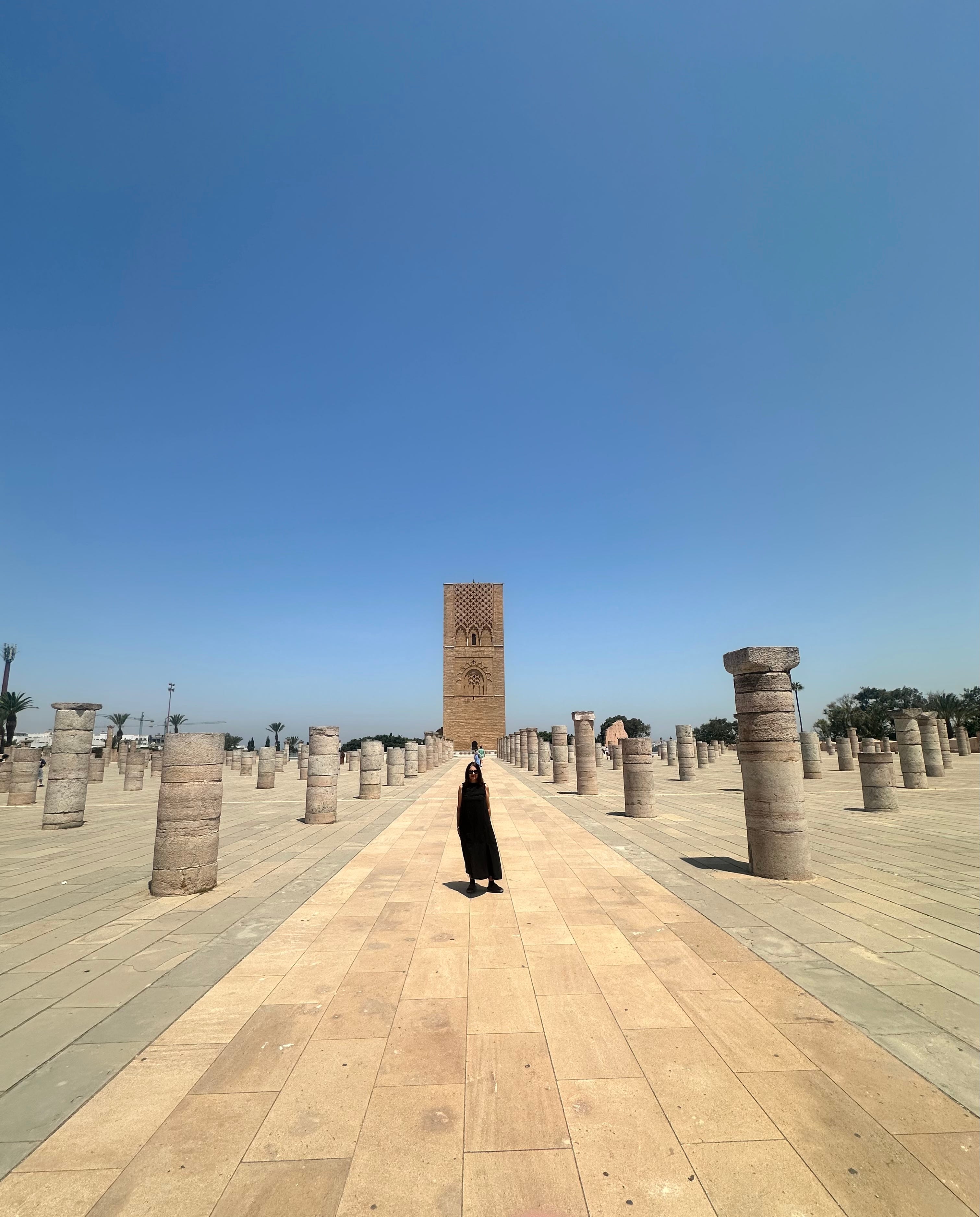
Hassan Tower in Rabat, a minaret and the
associated mosque, both never fully completed.
Yet alongside the beauty and hospitality, there were cultural differences that left me uneasy. You would always see young boys riding bikes or kicking footballs on the streets, but never girls. Men would sit drinking tea on the roadside cafes, but never women. On the beaches, the men dressed as they liked but as you will anticipate, even in the 45 degree heat, the women were fully covered.
These cultural decisions are, of course, for Moroccans to make in Morocco. In the same vein, here in New Zealand, we must make our own cultural decisions. Either our women and girls are as free to ride bikes and kick soccer balls as boys, or swim at the beach as they choose – or not.
Yet alongside the beauty and hospitality, there were cultural differences that left me uneasy. You would always see young boys riding bikes or kicking footballs on the streets, but never girls. Men would sit drinking tea on the roadside cafes, but never women. On the beaches, the men dressed as they liked but as you will anticipate, even in the 45 degree heat, the women were fully covered.
These cultural decisions are, of course, for Moroccans to make in Morocco. In the same vein, here in New Zealand, we must make our own cultural decisions. Either our women and girls are as free to ride bikes and kick soccer balls as boys, or swim at the beach as they choose – or not.
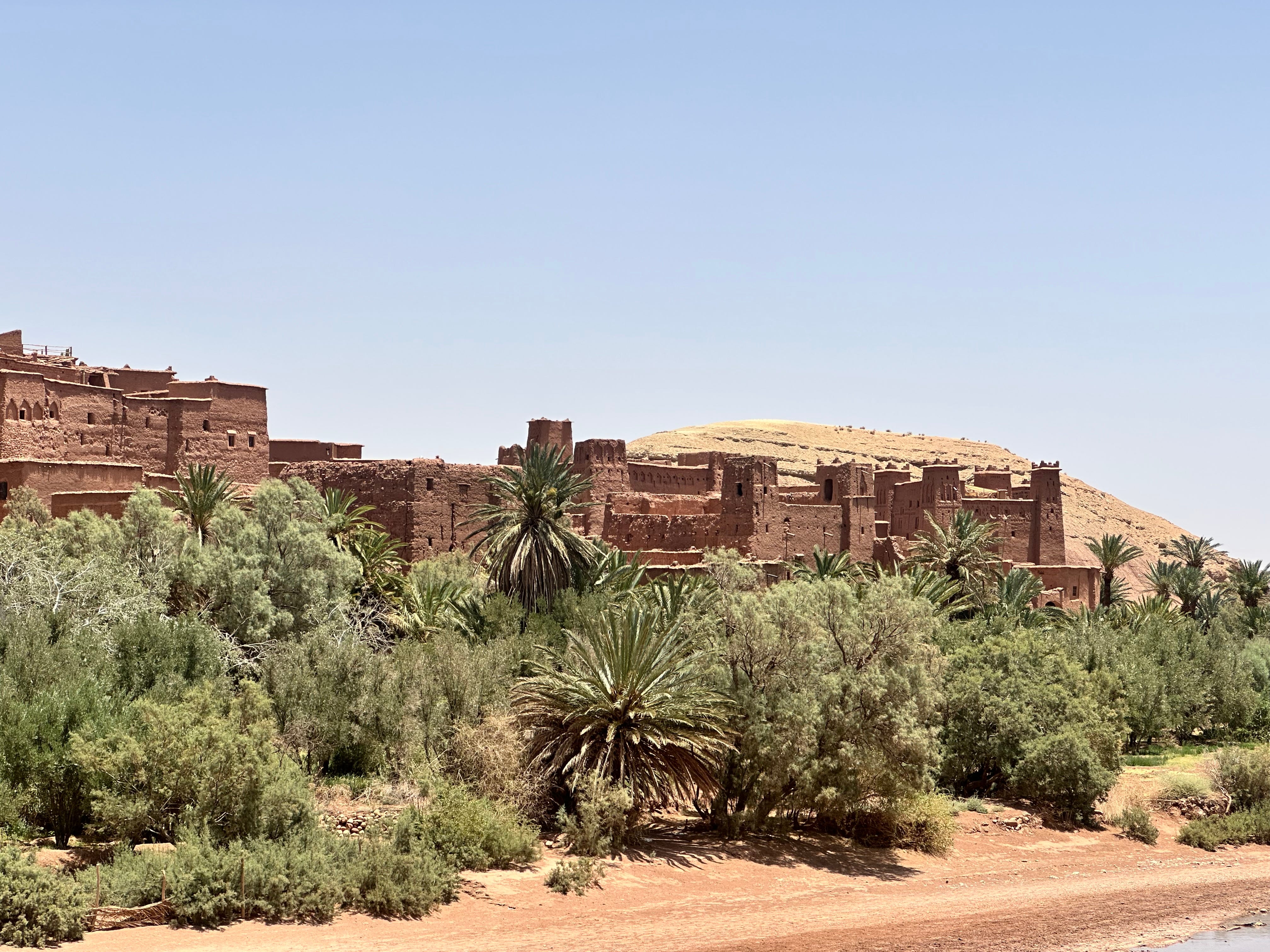
One of the many and wonderfully varied landscapes of Morocco. This is Ait Benhaddou - a fortified village and also the location for films such as Lawrence of Arabia and Gladiator. Stunning beautiful, but hard touring when it was 45 degrees!
Even more important is that we understand that when we have a culture, it is because we believe the attributes of that culture to be right. Here in New Zealand - as too the UK, USA, and Portugal where I also visited - we possess institutions such as democracy, free speech, and equal rights because previous generations judged them to be good and worth preserving. These are not simply arbitrary concepts that we just happened upon or would consider swapping out on a whim. As Leo Strauss famously quipped, “if all cultures are equal, then cannibalism is just a matter of culinary taste.”
Which leads me to two concepts of multiculturalism that were discussed at these conferences - soft and hard multiculturalism. I will also add a third, that I call muddled multiculturalism.
Soft multiculturalism is where the various cultures, religions, and traditions of citizens are welcome so long as they sit within – and under – a single cultural norm of laws and national identity. Individual beliefs are welcome, provided they operate within the framework of the nation’s laws and civic norms. For example, a culture may not tolerate someone choosing to change their religion, but in New Zealand, our cultural norm is one of religious freedom – individuals can believe what they want; can change what they believe; or not believe at all.
Hard multiculturalism in contrast seeks to embrace and balance every culture as equal. We are hearing this from various political leaders all the time – our societies have no single culture or identity, and that each distinct culture is to be celebrated, supported, and actively promoted even if there are contradictions between them. This approach is commonly found among progressive political movements and leaders, including the likes of Sir Keir Starmer and now Andy Burnham, and certainly Jacinda Ardern and Justin Trudeau.
I would add a third category: muddled multiculturalism. Unlike hard multiculturalism, which seeks to treat cultures equally, muddled multiculturalism privileges other cultures while downplaying or disparaging one’s own.
It is where those in positions of leadership – be it political, academia, corporate, or media – outwardly reject their own culture while enthusiastically embracing ‘foreign’ ones. It is increasingly common to see political and corporate leaders enthusiastically celebrate non-Western cultural and religious festivals while showing noticeably less enthusiasm for traditions rooted in their own heritage.
In the UK, many on the left resile against Britian’s flying their own Union Jack or the flag of St George yet happily wave the flags of foreign nations, or even worse, parade with the flags of terrorist groups!
While hard multiculturalism tries to put competing and often contradictory cultures on equal footing, this third category of muddled multiculturalism sees the destructive and deliberate undermining of one’s own culture to pander to new ones. Worse still, this pandering is rarely due to a genuine belief that these new cultures are better or superior, but rather the pandering is for cheap performance, virtue signalling, and sectarian votes.
For those embracing this muddled multiculturalism, one explanation may be a loss of confidence in their own cultural inheritance. This in turn is born from a deficient appreciation of history or an ideological adherence to the relativistic ‘all cultures are equal’ maxim. The absurdity of this latter maxim becomes immediately clear by the muddled types themselves, for they immediately reject their own culture and certainly do not treat it as equal with others.
Here in New Zealand, my stepchildren, boys and girls, can both play in our streets because of the norms of our Judeo-Christian inspired culture. We have inherited this culture because successive generations regarded its principles as both beneficial and morally sound.
This should be self-evident but sadly it is not to the muddled. They seem to believe that we can simultaneously have a society that allows some girls to play outside, for example, and for others to be locked up at home.
Whether New Zealand is a Christian country or not is up for debate, but our culture – our sense of human rights, laws, and moral norms – are all founded on Judeo-Christian values. We have the sad irony of many deliberately ignoring and undermining the underlying culture of our nation, while simultaneously embracing warmly cultures that are in direct conflict with it.
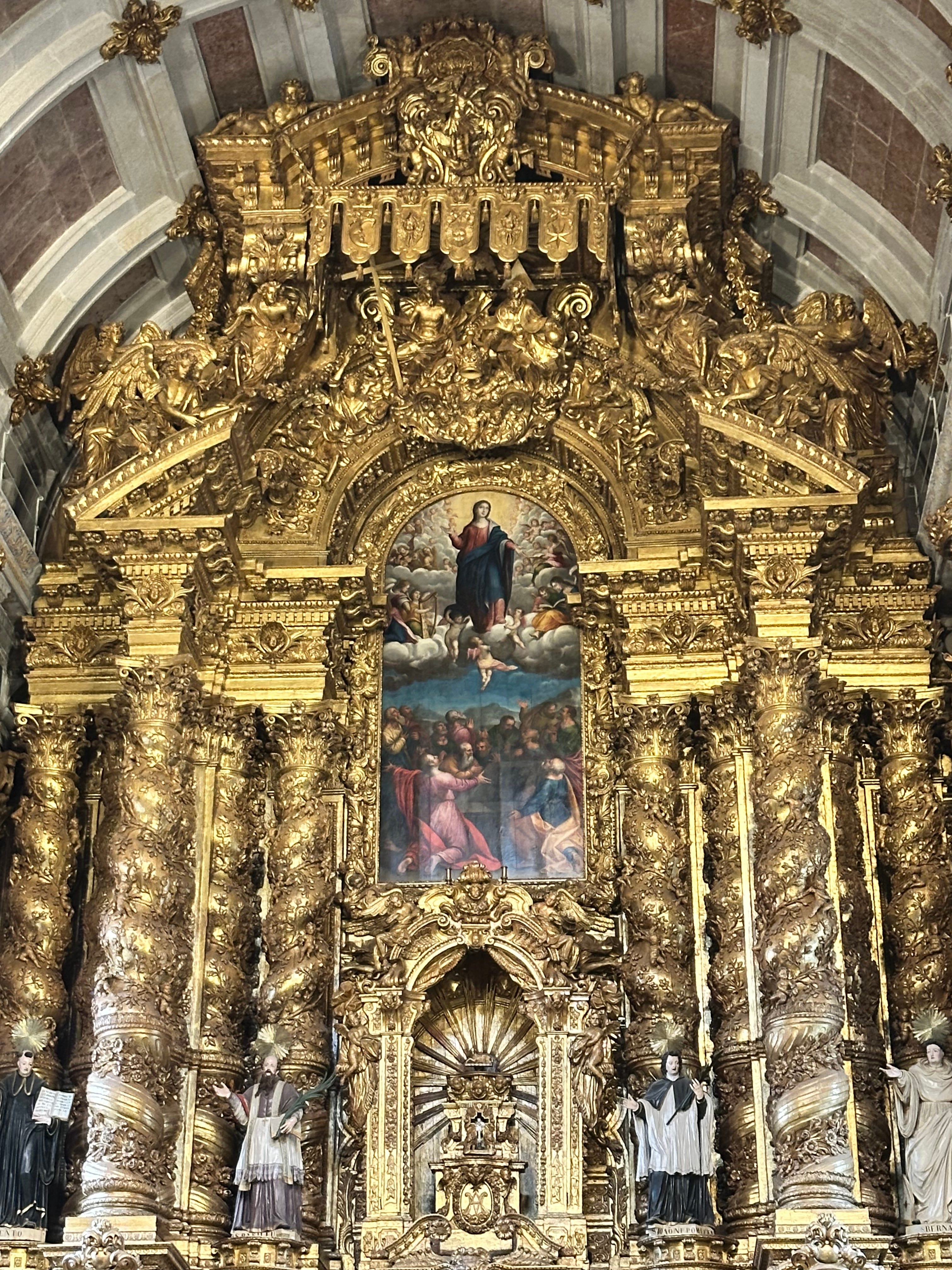
Just one of the extraordinary altarpieces within churches in Portugal.
Just as I felt a sadness noting the absence of young girls not being able to play outside as the boys were, I also feel a sadness for the muddled multiculturalists. To be that muddled and confused; to undermine one’s own culture by the very virtue that our Western culture allows freedom of thought, conscience, and speech so as to then embrace alternative cultures which have never accorded the same equality of rights.
As I noted at the start, our trip took us to both Morocco and Portugal. I loved visiting Morocco and learning from its culture. Yet if asked where I would choose to live, raise a family, and build a future, I would choose Portugal. That preference reflects not geography or ethnicity, but the cultural values embodied in each society.
Click to view
Simon O'Connor a former National MP graduated from the University of Auckland with a Bachelor of Arts in Geography and Political Studies . Simon blogs at On Point - where this article was sourced.


5 comments:
We have seen this in NZ too. Historically this was a mono culture. Some time ago, the immigration floodgates were opened, and a new, alternative culture started leaking in. Things became confused, mashed up, mixed up, blended. I looked around me in the 70s and there was barely any semblances of our original mono culture remaining. Why did the Maori let our culture get swamped and washed away by the European multicultural ideology? History will tell, I’m sure. New Zealand doesn’t resemble anything like it looked like in the early 1800s. Terrible that we have gone down the route that Simon abhors in his article.
The first and biggest multicultural experiment is the world. Always has been and always will be (unless Islam gets its way). Not the most peaceful place.
Good insights but wrong comparison. In state context NZ state is in its infancy and comparing it with counties that count their history in millennia is meaningless. Building NZ culture - looking ahead and not behind - will be the difference between having a prosperous country or a small tribal island at the bottom of the world.
Colonisation has pros and cons. The world in this country was brutal in 1800 not the whitewashed noble savage narrative. Romans improved the British islands but left. Unfortunately. For thousands of years people have been invading, migrating, colonising and inter marrying and it has not been just us bad white folks.
Simon - whilst in the UK, did you ever "venture" onto the streets of London, walk around, not looking at "things Historical" (as associated with English history & the proud History of London) - so I wonder if you paused to look at who/whom walked the streets?
You and all others who read your article will either -
- like your 'views' of the Countries you visited
- agree and/or disagree with your opinions
but the point of view (?) I am coming from, is the change within the UK, which can also be see seen in London.
Examples -
1. the 'people' who walk the streets and abuse the History of London
2. those who hassle & heckle the Guards Units on daily parades - there is videos & cell phone footage, taken of these actions and posted to You Tube
3. that the Muslim Community hold prayer meetings in Public space, but when Christian Groups do likewise, the Police forcefully (also can be seen on film posted to You Tube) move them on, if they do not they are arrested
4. there are streets in London that are now "hostile territory'" to any one who is NOT Muslim.
Also across the UK you will see groupings of Muslim men, but not females - children are usually in a school.
Multiculturalism, multi ethnicity, the mixing of Races, creeds, has not nor will it work as those whom Society wished to embrace, offer a new home & hope will quickly find that those " to whom they opened their arms" are not what they seem.
Again the UK and greater Europe is seeing this.
Oh and please keep in mind Simon, Angela Merkel was the 'person' responsible to change in Immigration into Germany, when that occurred many -
- "asked why" ?
- now ponder the rational of said change (it has done nothing for Germany who now face major financial & economic issues)
- European Govts are now rebelling against what has happened
and to "cap" it all off Ms Merkel now decries those actions, for which people ask -
" Who encouraged her to carry out this action" - certainly not her Govt of the day.
Post a Comment
Thank you for joining the discussion. Breaking Views welcomes respectful contributions that enrich the debate. Please ensure your comments are not defamatory, derogatory or disruptive. We appreciate your cooperation.