

Te Pāti Māori has formally announced that it wants the electorate vote in the Māori seats, but supporters can give their party vote to Labour or the Greens. If Te Pāti Māori wins more electorate seats than its tiny party vote would entitle it to, those electorate MPs become overhang seats. Parliament gets bigger and, depending on the final numbers, the left bloc potentially gets a small mathematical advantage.
MMP has always allowed voters to split their votes and parties have always tried to exploit the distinction between electorate and party votes. What is unusual is a political party openly telling supporters not to party vote for it. Te Pāti Māori is effectively saying its primary purpose this election is no longer to maximise Te Pāti Māori representation according to the party vote, but to maximise the number of seats available to the anti-coalition bloc.
Willie Jackson says this strategy risks provoking a backlash against the Māori seats, but Debbie Ngarewa-Packer accused him of hypocrisy because Labour removed its Māori-seat candidates from the list in 2017 to pressure voters. Of course, Labour still asked for two ticks.
A similar strategy has been suggested by Don Brash for the centre-right. He has observed that if voters give National electorate votes while directing their party votes to ACT or New Zealand First, a large overhang could be created. There is a cost, though. If National’s electorate candidates romp home while its party vote is cannibalised by ACT and New Zealand First, its list will be wiped out. That means the end of the road for some senior National figures who rely on list placement e.g. Nicola Willis, Gerry Brownlee, Paul Goldsmith, and Chris Bishop.

Don Brash & Te Pāti Māori agree on a strategy
Ani O’Brien 19 Aug Read full story
Willie Jackson says this strategy risks provoking a backlash against the Māori seats, but Debbie Ngarewa-Packer accused him of hypocrisy because Labour removed its Māori-seat candidates from the list in 2017 to pressure voters. Of course, Labour still asked for two ticks.
A similar strategy has been suggested by Don Brash for the centre-right. He has observed that if voters give National electorate votes while directing their party votes to ACT or New Zealand First, a large overhang could be created. There is a cost, though. If National’s electorate candidates romp home while its party vote is cannibalised by ACT and New Zealand First, its list will be wiped out. That means the end of the road for some senior National figures who rely on list placement e.g. Nicola Willis, Gerry Brownlee, Paul Goldsmith, and Chris Bishop.
Don Brash & Te Pāti Māori agree on a strategy
Ani O’Brien 19 Aug Read full story
The media’s Luxon brain worms are getting worse
Christopher Luxon has a unique ability to make otherwise normal people lose their minds and no, I am not talking about his own caucus. This is also not an argument that Luxon is a brilliant Prime Minister. He certainly has an almost supernatural ability to turn an ordinary sentence into several days of political media crisis and there are perfectly legitimate reasons to dislike him. But some of the coverage about him is just bizarre as if the media are on a mission to portray him in the worst light possible.
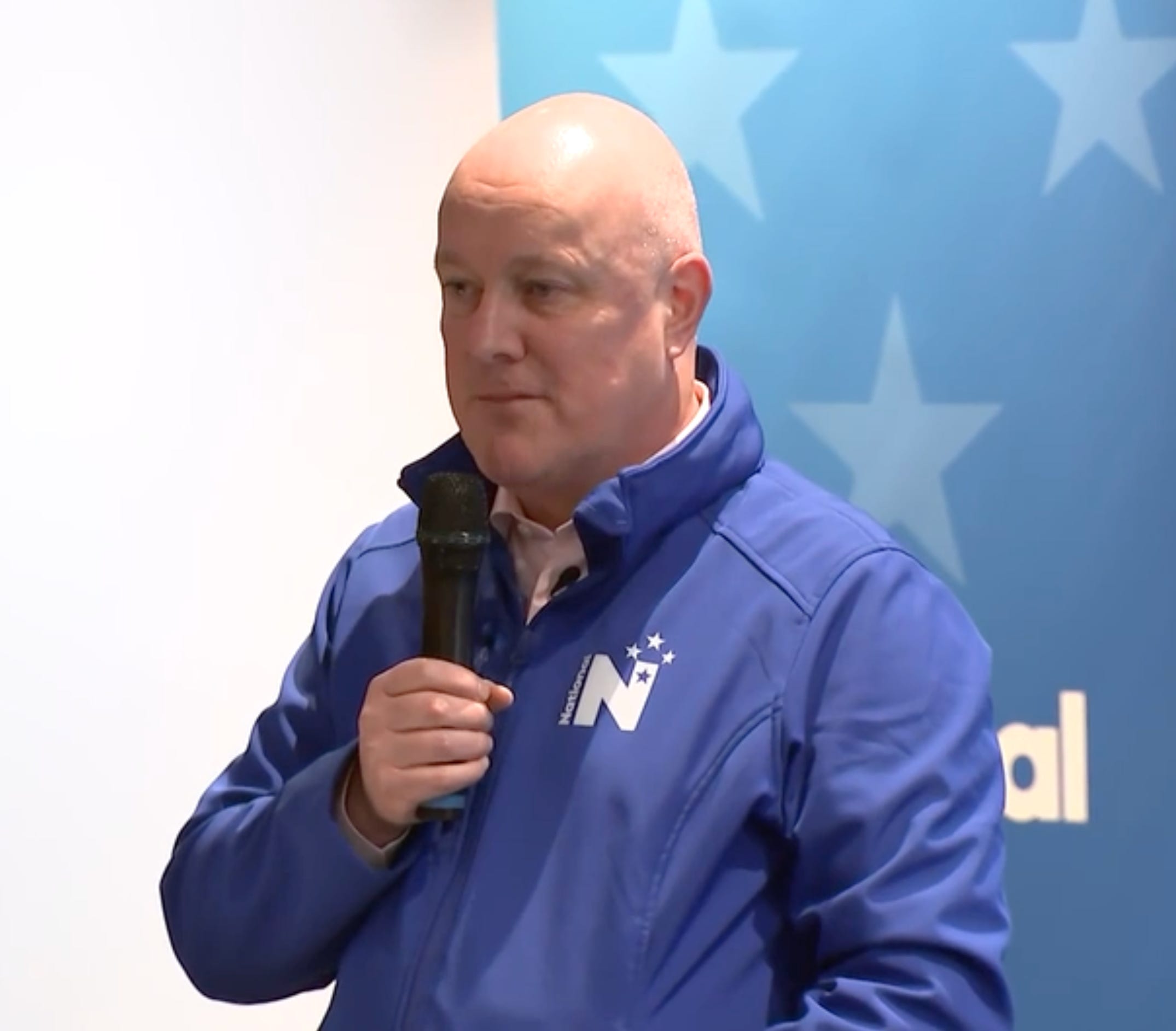
In Lower Hutt this week, Luxon was asked about Wellington’s decline and the influence of Labour and Green councillors. He reminisced about living there in the early 1990s, complained about the Molesworth Street cycleway, and told people that if they do not bother voting in local elections, “you kinda get what you deserve”.
Screenshot
Stuff initially headlined this as Luxon telling Wellington “You get what you deserve” as if he thought Wellington just deserves a hard time. It later restored the rather important “kinda” and added the context of the full question he had been answering. Stuff also corrected another error around the timeframe he lived in Wellington as a young man, but not before the private investigators of Grey Lynn began accusing the PM of lying about the circumstances of buying his first house.
Then, because after those corrections it needed another “gotcha” angle, Stuff produced a video investigation: “Is it ‘very difficult’ to cross Molesworth St as Luxon says? We check.”
Meanwhile, at his next public meeting in Christchurch, six separate protesters interrupted proceedings, including one with the chant: “We are Mordor, build our Mordor brand”. Luxon remained remarkably calm throughout, but it was the protesters who received very sympathetic treatment from the media. They were largely presented through the grievances that motivated them rather than the obnoxiousness of repeatedly preventing everyone else from hearing the answers to questions.
Stuff and The Post are quite transparent in their hunger for Luxon to be rolled even though their own polling following National’s latest failed coup disaster found Luxon was still comfortably the preferred Prime Minister for National voters with 57% choosing him, compared with Erica Stanford on 9%, Nicola Willis on 6%, and Chris Bishop on 4%.
Mount Maunganui: everybody knew, nobody owned it
Six people died on January 22 of this year after a landslide hit the Beachside Holiday Park at the base of Mount Maunganui and retired High Court judge Paul Davison’s independent review concluded that the tragedy was preventable. The hazard was not newly discovered and consultants had repeatedly identified it for more than two decades.
As far back as 1999, Dr Laurie Richards warned that putting fragile holiday accommodation beneath those slopes was imprudent and that the danger to sleeping occupants was high. In 2006, modelling estimated that a debris flow could put roughly 30 people in its path and kill 21. Trigger Action Response Plans were recommended in late 2023 and again in mid 2025. Nothing meaningful was done and now it is too late.
The report also revealed that just 7 months before the landslide, another report assessed a high risk to life. It appeared in the agenda for a meeting involving Ngā Poutiriao ō Mauao and the Mauao Trust. But unfortunately, the meeting was cancelled and Tauranga City Council says the councillors therefore did not read the report. Despite the chief executive’s name appearing on the agenda cover, the council says that does not mean he read it either. Information was received, filed, (perhaps) discussed, forwarded, and then left. Everybody touched the information and nobody owned the consequences.
There is no single obvious villain here. Instead, a bureaucracy became very good at generating reports, circulating warnings, forming committees, and recording risk while never quite producing a decision to do anything about it.
WorkSafe is now investigating and could possibly prosecute. While councillors are excluded from criminal liability under the relevant law, the council as an organisation and potentially its chief executive could face it.
The court would like your pronouns, please
The judiciary has issued new Guidelines for Courtroom Conduct for Counsel, endorsed by the Chief Justice and Heads of Bench. Much of it is perfectly sensible and extraordinarily detailed. Lawyers should be punctual, dress formally, silence their phones, and should not swear at each other. All very common sense. Then we reach paragraph 38.
Counsel are told it is their responsibility to know the correct spelling and pronunciation of their clients’ and witnesses’ names, as well as “the titles and pronouns they use”, and where possible this information should be given to the registrar in advance. Later the guidelines state that witnesses should usually be referred to using their formal name, title “and their pronouns”. You can probably guess where I am going with this.
There is no exception to pronoun policy for the difficult situation where someone accused of a sexual offence is male but “identifies as a woman”, and the victim believes his sex matters to what happened to her. Nor does the guidance deal with what happens when one person’s preferred identity conflicts with another person’s beliefs or their need to describe what happened accurately. The guidelines simply assume that using someone's requested pronouns is an uncomplicated courtesy. In a courtroom, it isn't always.
British courts have already had to deal with cases where female complainants and witnesses were expected to describe male offenders as women and the guidance in England and Wales was eventually changed to recognise the problem. The current Equal Treatment Bench Book acknowledges that a woman describing a traumatic sexual assault may find it deeply confusing or distressing to hear her male attacker referred to as “she”. It also recognises that making victims change the language they naturally use could make it harder for them to give clear and accurate evidence. New Zealand’s brand new guidance has not taken this into consideration.
Labour finds another tax behind the sofa
National spent the beginning of the week accusing Labour of planning a streaming tax. A levy on streaming companies like Netflix, Disney+, etc that they argue would result in higher fees for Kiwi customers.
Chris Hipkins indignantly fronted media to exasperatedly say there was no streaming tax and National was up to mischief. The problem was that senior Labour MP Willie Jackson had a Bill in the biscuit tin proposing just that and it had been endorsed by Hipkins himself. Now to be fair, it had been there for 2 years so perhaps, Hipkins forgot, but he did recommit in January to the policy.
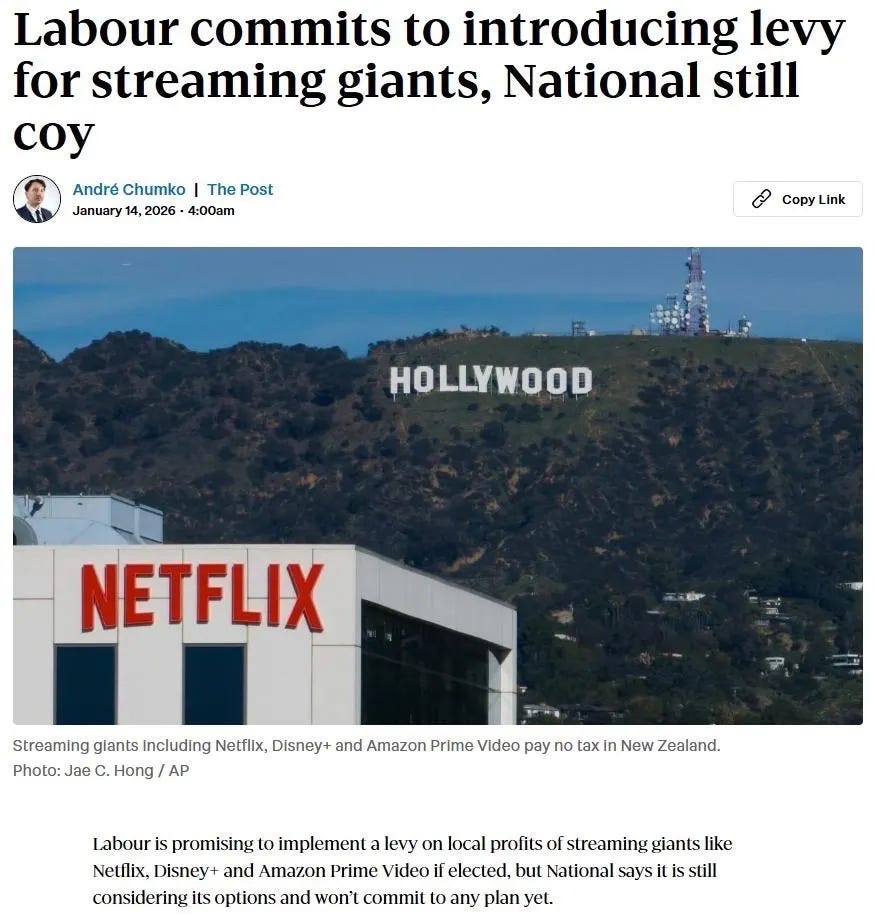
After Simeon Brown drew attention to the Bill, it rapidly disappeared from Parliament’s website and Hipkins said continuing to have it in the ballot had been an “administrative oversight” and that Labour was now going through its members’ bills to ensure they all match their election manifesto.
Parties change policy from time to time, but Labour is already on shaking ground when it comes to tax given Hipkins promised there would not be a Capital Gains Tax while he was leader and they are now saying they will introduce one to pay for their election promises. National is already repeating the line that “you cannot trust Labour on tax” and desperately needed a distraction after the Penk leadership debacle. Labour handed them this one gift-wrapped.
Opportunity finally gets asked some actual questions
Opportunity is finally being taken seriously and realising that unfortunately that comes with a certain degree of scrutiny. Up until now the party could publish ambitious policies safe in the knowledge that almost nobody expected them to have to implement them. However, now it is flirting with the threshold and journalists are finally audaciously doing their job.
Jack Tame’s Q+A interview last weekend with leader Qiulae Wong was the toughest test she has had so far. Former Prime Minister Helen Clark called the interview a “train wreck” and appeared to launch Labour’s attack campaign on the smaller party. Tame grilled Wong on Opportunity’s plan to make us all beneficiaries by giving us pocket money after they tax the heck out of us. He pointed out that there were few incentives for Kiwis overseas to return home and plenty of people who would be hit hard in the pocket by their policies.
Opportunity wants a 1.75% tax on urban land and 0.5% on rural land, alongside higher income tax settings, and the Citizen’s Income of $19,400 per adult. A property sitting on $500,000 of urban land value could therefore attract an $8750 annual land tax.
Wong told viewers they needed to “look at the bigger picture” and said she would be happy to pay much higher taxes. She also acknowledged the party had not modelled for capital flight. Even the Greens modelled for capital flight even if it was undercooked!
Then Tame raised the matter of the party’s largest donor and party board member Alan Wilderland. He has given more than $221,000, donates another $5000 each month, sits on the party’s strategy team, and was one of the five people involved in selecting Wong as leader. Tame asked Wong if Wilderland supports Opportunity’s proposed cap on political donations at $30,000. She said he does.
And Tame actually managed to get a constitutional change out of them. He pointed out that Opportunity's constitution gave its board the power to overrule its parliamentary caucus with a 75% vote. The party has now sensibly decided to get rid of it, subject to a special meeting.
Breaking: defence lawyer defends client
LawNews published a fairly savage piece this week from criminal defence barrister Samira Taghavi responding to Labour Health spokesperson Dr Ayesha Verrall’s questioning of Health Minister Simeon Brown’s appointment of Roderick Mulgan to the Medical Council.
Verrall had suggested in Question Time that Dr Mulgan is some kind of sex offender advocate. She did not make it clear to anyone that he is both a doctor and a barrister and that his involvement with sex offenders was in the course of doing his job as a lawyer.
In her article, Taghavi reminds Verral that the entire justice system depends upon people accused of appalling things having lawyers prepared to represent them. Defence counsel act for murderers, rapists, domestic abusers, and people accused of every other form of human awfulness imaginable. The fact that a lawyer acts for a sex offender is not a declaration of his personal approval of the alleged behaviour.
Taghavi described Verrall’s questioning as displaying an “egregious lack of understanding” of the distinction between advocate and adjudicator.
🇬🇧 Jason Arday and the posthumous rewrite
The Jason Arday story has become a lot uglier since his death. The former Cambridge professor whose extraordinary biography and academic record had come under intense scrutiny, was found dead not long after resigning from his position. There has been a huge amount of rewriting of recent history. Allegations about plagiarism, dubious academic affiliations, extraordinary charity claims, and other parts of his public biography rapidly disappeared to make way for claims that a brilliant Black professor had essentially been hounded to death by racists.
There were undoubtedly racists cheering his downfall. There are racists on the internet cheering almost everything. But they didn't invent the problems with Arday's story. Arday lied and lied and lied, and those lies caught up with him. The fact that he deceived so many people does not disappear because he took his own life and, in fact, deifying or martyring him as many are doing contradicts every bit of advice around how to talk about suicide so as not to encourage copycat behaviour.
Nathan Cofnas, who kicked off the scrutiny into Arday, has now been suspended by Ghent University while it conducts a preliminary disciplinary investigation. The university said it was shocked by Arday’s death and stressed that academic freedom comes with responsibilities and can be restricted to protect others. This is quite incredible. No matter any other facts surrounding the matter, Cofnas only revealed the inconvenient truth about Arday. He was not wrong to do so. Suicide cannot be weaponised to stop journalists doing their jobs.
🇺🇸 The Lindsay Clancy rabbit hole
I have fallen down the Lindsay Clancy trial rabbit hole, and I am warning you that it is extremely deep. Clancy is currently on trial in Massachusetts for killing her three young children in January 2023. Nobody (except hordes of really convincing women on TikTok) disputes that she strangled them. The question for the jury is whether she was criminally responsible (sane) at the time. Her defence says she was suffering from postpartum psychosis and heard a male voice commanding her to kill the children and herself. Prosecutors argue that she planned the killings and deliberately engineered an opportunity to be alone with them.
Everyone let her down. Her former mother-in-law testified that Lindsay was “begging for help” before the killings and her own mother and sister described escalating paranoia, suicidal thoughts, and fears about her medication. A psychologist testified that there is no evidence she was faking or exaggerating psychiatric symptoms and a hospital chaplain testified that Lindsay said she heard a voice commanding her to act. Meanwhile, hundreds of women dressed in pink have gathered outside the courthouse this week in support of her, arguing that her case represents a catastrophic failure to take women’s postpartum mental health seriously.
And then there is an enormous parallel investigation taking place on TikTok, Reddit, and elsewhere in which people are dissecting Lindsay’s ex-husband Patrick Clancy’s movements, testimony, phone records, clothing, behaviour after the murders, subsequent move to New York, and remarriage. The New Yorker has called it the “Lindsay Clancy Conspiracy Spiral” and is unequivocal that there is no evidence Patrick killed the children.
However, I have now consumed enough of the conspiracy content to understand why it has taken off. Some of it is deranged for sure, but some of the questions being raised about Patrick’s timeline and testimony are sufficiently odd that I have caught myself going, “hang on, what?” And it is relatively safe to say he was possibly having an affair with his now wife (which doesn't make him a murderer, just a scumbag).
It is intriguing how a case in which the identity of the killer is not actually disputed has nevertheless mutated into an enormous online whodunnit. Which is probably why I cannot stop reading about it.
🇬🇧 Britain is now handing out “rape is illegal” leaflets
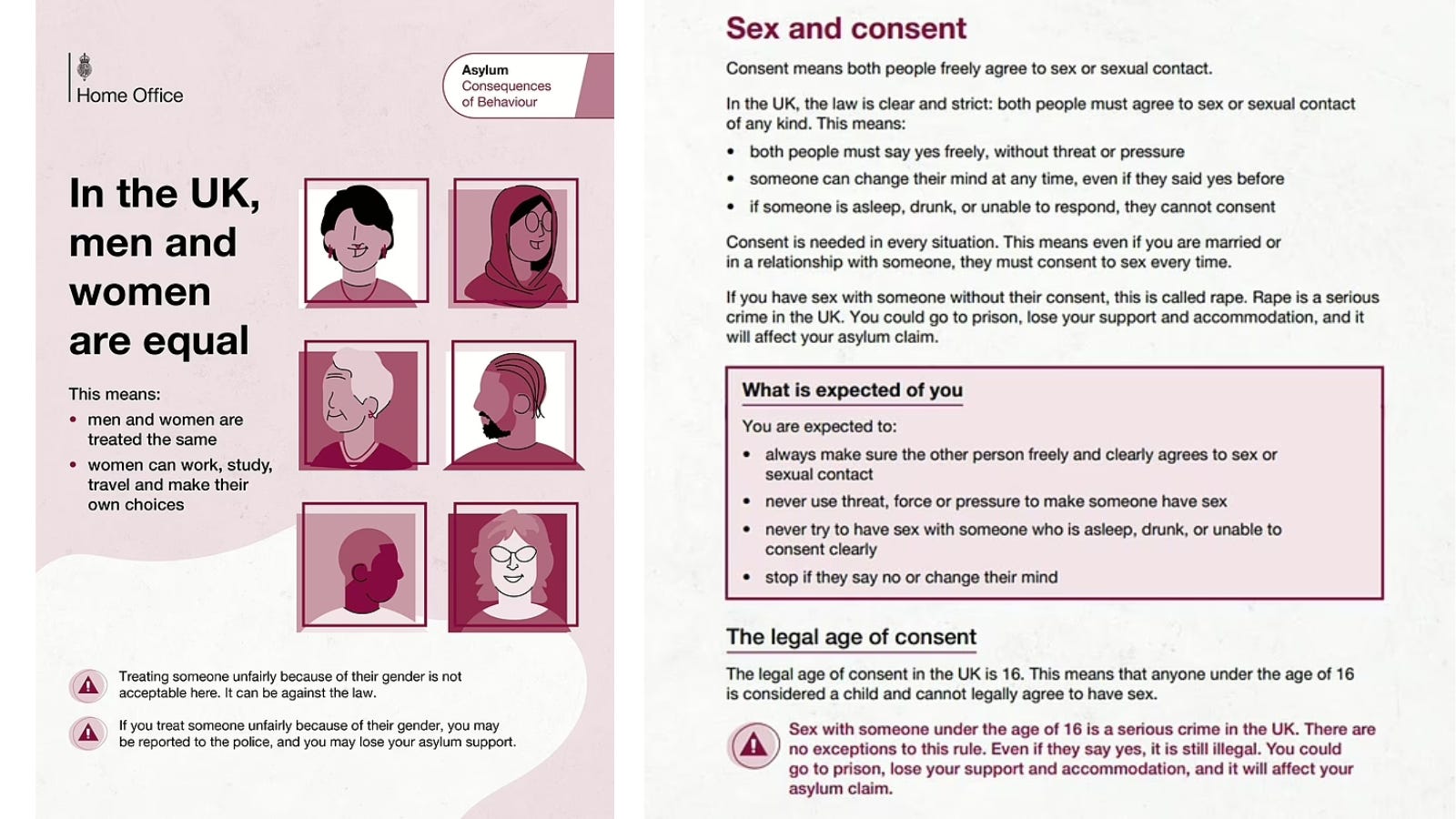
The British Home Office has produced new guidance for asylum seekers explaining, among other things, that men and women are equal, women may work and study, domestic abuse is illegal, sex with children under 16 is illegal, and sex without consent is rape. Yes, really. I double checked. They have produced a leaflet that basically says “don’t do rapes please”.
The guidance also states that consent is required every time, including within marriage, and warns that somebody who rapes another person could go to prison, lose asylum support, and have the offending affect their claim. Yeeeeeaaaaaap.
Britain has spent years insisting that concerns about integration are little more than xenophobia. Women who raise the clash between liberal British norms and deeply patriarchal cultures are regularly accused of racism. Yet the Home Office itself is now producing illustrated instructions informing new arrivals that wives are allowed to leave the house and marital rape exists. You cannot simultaneously argue that cultural differences around women’s status are a racist invention and print government leaflets explaining those differences.
The most Wellington workplace dispute imaginable
The Taxpayers’ Union has calculated that waiata and karakia practice across 9 public agencies could be costing about $3.48 million a year in staff time. The Union used an average public service hourly salary of $49.66 and used the assumption that only 10% of agency staff attend the relevant sessions. That is deliberately conservative in participation terms.
Most departments seem to offer one paid 30 minute waiata session per week and then there is MBIE. In 2024, MBIE confirmed that its main office had waiata sessions from 9-9.30am every weekday. Senior management later tried to reduce the frequency but staff responded with an 8 page argument for retaining the sessions, invoking tikanga, Te Tiriti obligations, cultural capability, staff wellbeing, and fears that moving the singing into enclosed rooms could amount to symbolic marginalisation.
Senior executives then held meetings about this highly important matter and eventually a compromise was reached of three 30 minute sessions a week. I have never heard something so Wellington in my life… A government department entering an extended negotiation over whether staff should be paid to sing three times a week or five.
ACT wants public agencies to be prohibited from initiating or resourcing cultural or spiritual practices during work unless there is a genuine occupational reason and this is being called an “attack” on Māori culture.
If workers want to sing waiata together, wonderful. The issue is whether taxpayers should be expected to pay for it. Most New Zealanders have cultural interests and our employers generally expect us to pursue those interests in our own time.
The Winter Energy Payment disaster
Nearly 15,000 superannuitants and veterans did not receive their Winter Energy Payments as they should. The error came from last year’s Social Security Amendment Bill, which was passed through all stages under urgency and therefore never went through a select committee. The legislation required people receiving various supplementary payments to periodically review their circumstances and the Winter Energy Payment should have been excluded because it is automatic and not means-tested for superannuitants. But it was not.
Between May 1-August 7, 14,862 people were affected, but MSD has now backpaid them and Minister Louise Upston has apologised.
Luxon initially described it as an IT issue. Upston rather more accurately said it began as a policy omission which became a legislative error. Computers are wonderfully useful political scapegoats, but the IT system appears to have simply implemented the law it was given.
The news audience is moving
The latest Nielsen figures show Stuff remains comfortably in first place with 2.2 million monthly unique users in July, up 3% on June, with The Herald second on 1.85 million, down 4.4%. But RNZ is now on 1.79 million, up 8.4% in a single month, and 25.7% year-on-year.
That means our publicly funded broadcaster is now breathing down the Herald’s neck for second place. This seems fair given that RNZ does a significant amount of the detailed reporting that other news media then reproduce. They have made noticeable improvements to the quality of their written news media.
Following the top three, 1News had 742,000 monthly uniques, The Spinoff 478,000, The Press 461,000, and The Post 456,000. Stuff and the Herald still dominate daily engagement, each regularly producing four to five million page views a day while the smaller sites remain under one million.
In short - other stuff that happened
- 🇺🇸 Actress Hayden Panettiere has died aged 36 after being found unresponsive at a South Carolina apartment. She went into cardiac arrest and was pronounced dead by emergency services and the investigation is ongoing.
- ACT has proposed a Working with Children Card that would follow workers between employers and be continuously monitored rather than relying solely on the existing 3-yearly safety check cycle. Criminal convictions and disciplinary information could trigger suspension or revocation, with employers and regulators notified. It could cost up to $20 million to establish.
- Gore District Council spent $8200 +GST investigating a councillor for calling a staff presentation “gay”. Donna Bruce apologised, and the investigator concluded it was a one-off incident that was neither significant nor serious. The council has spent more than $22,000 on code-of-conduct complaints in just 2 years. Gaaaay!
- The Serious Fraud Office has charged a former council manager and two associates over an alleged scheme that funnelled more than $12 million of council work to an engineering firm they controlled. The SFO alleges the manager used roles at Auckland Council and Kāpiti Coast District Council to manipulate procurement. All 3 have pleaded not guilty and have interim name suppression.
- 🇬🇧 Prince Harry and Meghan are moving back to the UK later this month, six years after leaving royal duties and settling in California. Their children, Archie and Lilibet, are enrolled to start at a British school in September. After six years of insisting Britain was intolerable, they are coming home.
- 🇺🇸 McKenna West, a surrogate carrying a California couple’s biological child, initially agreed to an abortion after the baby was diagnosed with severe heart defect hypoplastic left heart syndrome, but changed her mind, travelled to Texas and gave birth there. The baby has since undergone major heart surgery, and West is now fighting the biological parents for custody.
- Suspended Financial Markets Authority chief executive Samantha Barrass is seeking an urgent Employment Relations Authority determination overturning her suspension and reinstating her to the top job. Barrass was placed on leave after staff raised workplace conduct concerns, while former staff have described a dysfunctional culture involving favouritism and bullying.
- The Public Service Commission has commissioned another independent review of an MBIE technology programme, this time Immigration New Zealand’s $336 million Our Future Services programme. This follows the ongoing investigation into the failed biometric project that wasted at least $40 million and involved ministers being misled about viability and costs.
- 🇨🇦 New Statistics Canada data shows support for unrestricted gender expression has fallen noticeably since 2018. Among women, agreement dropped from 85% to 77%; among men, from 78% to 70%. CBC’s experts mostly blamed conservative politicians, Trump and “hate”. Another possibility is that after years of being told every objection was bigotry, quite a few people are simply fed up.
- 🇺🇸 This week’s Indiana Fever–Atlanta Dream game drew 2.6 million viewers on ESPN, reportedly the most-watched WNBA game ever on cable.
- Former Alliance Party candidate Mary O’Neill has been sentenced to 2 years of intensive supervision after what a judge described as a “cynical act of harassment” against her former Napier neighbours. O’Neill had hired a contractor to cut trees on their property and has a longer history of harassing the same family, including breaches of a protection order and making false allegations of sexual misconduct.
- 🇬🇧 Snowsport England has restored a sex-based female category for its Parallel Lines Race Series. Its new system defines the female category as female sex at birth, while the open category includes males, transgender, and non-binary competitors. In other words, they have managed to protect women’s sport while calling it something other than men’s and women’s sport.
- A 37 year old woman has pleaded guilty to concealing the body of her newborn son after giving birth alone in a central Auckland hotel bath last August. She told police she later wrapped the baby in a towel, placed him in a handbag and left it in an Albert Park rubbish bin and his cause of death could not be determined.
- 🇺🇸 Seattle Times sports columnist Matt Calkins resigned after 11 years when the paper declined to publish his column arguing that supporting sex-based categories in women’s sport does not make someone transphobic. Calkins said several of his previous columns challenging prevailing newsroom views had also been spiked, and concluded he could no longer do his job properly.
The First Social-Media Babies Are Growing Up And They’re Horrified by Kate Lindsay, The Atlantic
This is from 2023, but I stumbled across it this week and it is worth reading. We are now getting the first generation of adults who had their childhoods documented on social media before they were old enough to have any say in the matter, and some of them are furious about it. Lindsay talks to young adults whose parents posted everything from bath photos and medical diagnoses to tantrums and deeply personal family information. One woman describes being recognised and followed home by a stranger at 12 and being bullied at school using information her mother had put online. It is interesting because we are debating children’s own access to social media while giving little thought to the enormous digital footprints parents were creating for them.
Here’s why so many people are struggling to find love by Jack Rear, The Telegraph
Will Darbyshire collected nearly 16,000 accounts of people’s romantic lives in 2016, has repeated the exercise a decade later, and the comparison is fascinating. Dating apps have vastly increased the number of people we can theoretically meet while apparently making us less willing to take a chance on any particular one. People hold out for somebody better, agree to a 20 minute coffee rather than an actual date, struggle to compromise, and treat politics and attitudes towards children as non-negotiable compatibility tests. Encouragingly though, underneath all this dysfunction, Darbyshire found oddly little cynicism. People still desperately want to fall in love. We have just constructed a rather terrible system for doing it.
Top GP: ‘I would ban the label ADHD’ by Helen Brown, The Telegraph
The article is a lot more nuanced than the headline! Dr Iona Heath, a former president of the Royal College of General Practitioners, argues that ADHD is a social construct rather than a medical condition and that the explosion in diagnoses may tell us as much about schools and society as it does about children. Brown’s own son was diagnosed at seven and she writes about the impossible trade-off between medication that made him a successful student and the sense that it also made him a sadder child. Heath’s argument is essentially that we have designed schools increasingly hostile to children who need movement, sport, creativity, and practical activity, and then medicalised their failure to fit into them.
Status Defines Friendship for Too Many Americans by Christine Emba, The New York Times
Bleak, but very good. “I don’t have anybody that I feel like I matter to,” said one of the interviewees. Christine Emba looks particularly at working-class men without university degrees, almost half of whom in one small qualitative study reported having no close friends at all. She explores that university doesn’t merely provide qualifications; for many people it supplies several years of ready-made community, friendships, clubs, mentors, and social networks. Those who don’t go increasingly enter an adult world in which churches, unions, clubs, stable workplaces, and affordable third places have also declined.
Ani O'Brien comes from a digital marketing background, she has been heavily involved in women's rights advocacy and is a founding council member of the Free Speech Union. This article was originally published on Ani's Substack Site and is published here with kind permission.


2 comments:
On Luxon Derangement Syndrome
As you've said, for once it was reported at least that he said something candid and relevant. Wellington gets what it votes for and it's progressive nirvana dysfunction. Bike lane obsession stuffs your city. It was faithfully reported because the woke at Stuff thought it such blasphemy it had to be outed. Instead he went up in my rating from barely noticeable to barely noticeable +.
But as reported by the Taxpayer Union, National have bigger problems. Focus groups don't see National as credible managers of the economy.
It's not helped by Chris Bishop not knowing why he's in parliament, much less government. Just when people's memories are healing after imbecile Michael Wood's tenure, Bishop has blown a lazy $100 mill on a second Auckland harbour crossing scoping exercise, and abandoned it, then left the half arsed idiotic Ute tax in place. The dishevelled look doesn't stop at his ill fitting suits, clearly.
But on the fiscal credibility implosion, (and Donald Trump aside), I squarely blame this on the utter timidity and sheer lack of imagination of Nicola Willis. Her underwhelming rural gas station bookkeepers approach to the NZ economy has the economy firing on about 3 out of 6 cylinders. And worse, she's got all these wonderful taxes just waiting for us, along with the rest of the left ideological parties.
Luxon would further go up in ratings if he ditched her for someone with tenacity and imagination to do better than muddling along. Under National, in 3 years GDP growth has staggered to about 1.4%. The economy barely has a perceptible pulse.
And let's be honest, she's likely to exit parliament at this rate anyway so why not? National have got nothing to lose and everything to gain.
“You get what you deserve” - we could say that to Luxon regarding his abject dereliction regarding co-governance and Maorification.
Post a Comment
Thank you for joining the discussion. Breaking Views welcomes respectful contributions that enrich the debate. Please ensure your comments are not defamatory, derogatory or disruptive. We appreciate your cooperation.