

Duncan Garner kicked a hornet’s nest this week by reporting that Māori staff at Oranga Tamariki can take “discretionary” paid leave that other staff can’t, and that it’s effectively unlimited in practice.
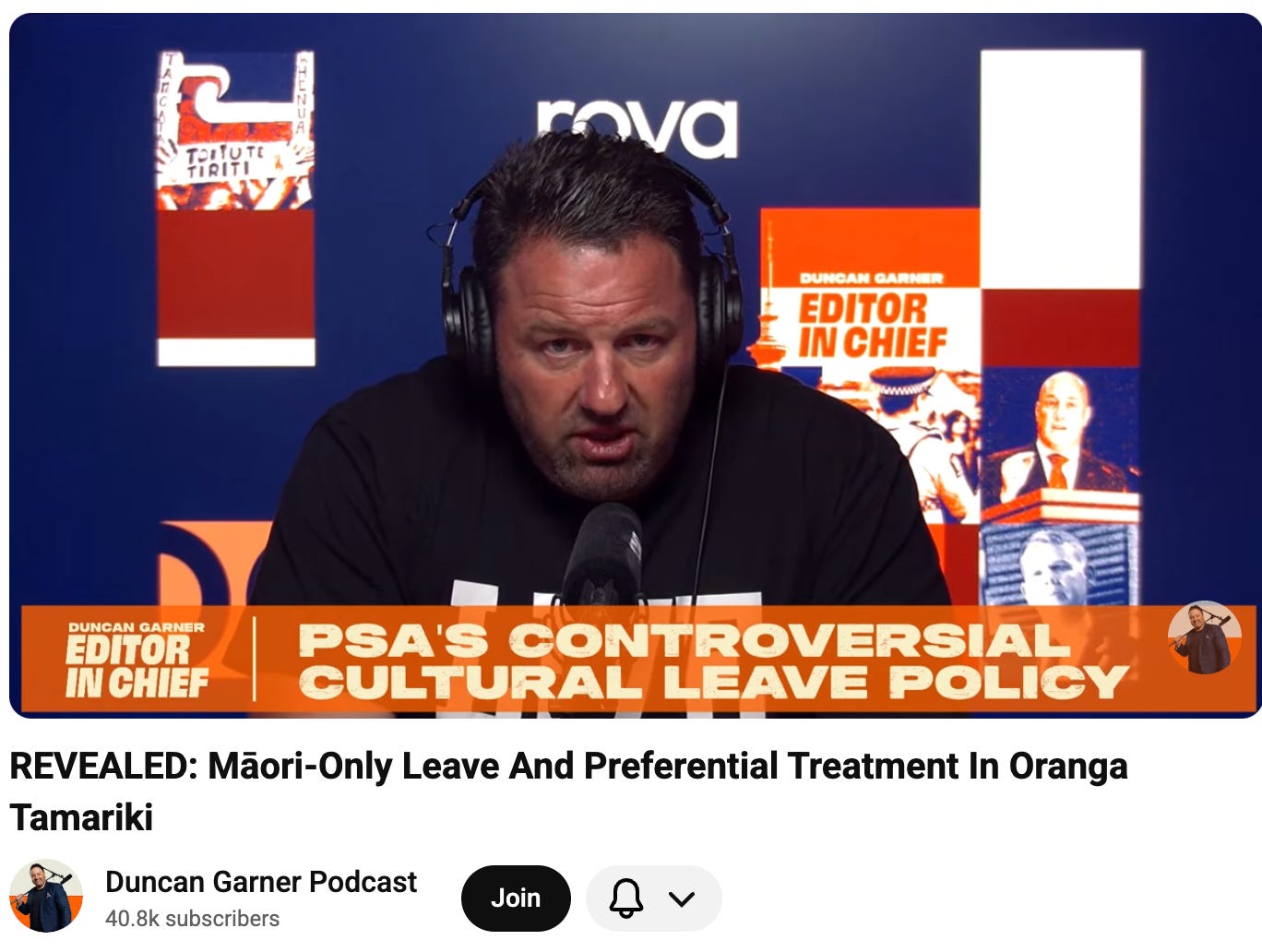
I have appeared on Duncan’s show several times and think he is great, but even so I went looking for the paperwork. It just seemed a step. beyond the other racial policies we see regularly in our systems and I didn’t quite believe it could be true. Surely our public service isn’t giving staff different entitlements based solely on their race?
Well, they are.
In the Oranga Tamariki + APEX collective agreement, there is a specific clause titled:
“6.14.1 Discretionary paid leave for Kaimahi Māori.”
It states that Oranga Tamariki will provide “providing all Māori members with access to paid discretionary leave for the purpose of cultural obligations” and then gives examples (Land Court hearings, obligatory marae roles, raupatu hui, iwi/hapū/marae/trust meetings or elections, cultural performances like Matatini).
There three main issues I take with this:
1.This is an entitlement based explicitly on race therefore I oppose it on principle.
2. Our taxes, which have been assigned to fund our child protection agency, are paying for this entitlement.
3.There is no annual cap in the clause. It’s framed as “discretionary” (manager-approved), but it is open-ended on its face because the agreement doesn’t define a maximum number of days. It is therefore, impossible to budget for.
The Oranga Tamariki + APEX collective agreement was signed on 21 June 2023 under the previous Labour government. It formally expired on 1 December 2024. But, there is, as of now, no replacement and collective agreements in the public sector don’t simply vanish on expiry. Under standard employment law practice, their terms typically roll over and continue to apply until replaced by a new agreement, unless the parties agree otherwise. That means the Māori discretionary leave provision is still operating in practice inside Oranga Tamariki.
Some will point to this expiration date to allege that it is a lapsed practice, but there has been no communication from the agency or government declaring a change of policy and there is no replacement agreement. It remains in effect.
Now let’s examine “unlimited” versus “discretionary”. It is being reported that both are true in practice. The Māori paid leave is discretionary in that a manager has to sign it off, but insiders say that managers have been told not to question cultural leave so it never gets declined. In fact, a Public Service Association memo read out by Garner on his podcast says:
“Importantly, the clause does not provide an exhaustive list nor does it define or narrow the definition of “cultural obligation.” Instead, it recognises that cultural obligations arise from tikanga Māori, whakapapa, and the inherited and entrusted roles and responsibilities Māori hold within their own whānau, hapū and iwi. It is the PSA’s firm view that these obligations are therefore best understood and articulated by kaimahi Māori themselves, guided by their own tikanga, kawa and lived experience, rather than being determined or prescribed by your employer, or limited by a one-size-fits-all interpretation.”
If you create a paid leave category with no defined limit, with a purpose determined by staff themselves, you are functionally inviting staff to take “as much as you can get away with” and you’re daring managers to risk being called racist if they say “no”.
The discretionary cultural leave clause doesn’t sit in isolation either. The same Oranga Tamariki + APEX agreement embeds Māori-specific entitlements into bereavement leave itself, in a way that departs quite sharply from how leave is usually treated in employment agreements. Under a section titled “He Wā Pouri”, the agreement states that bereavement is “not time bound” and “does not have to be taken all at once or within a specified time after the bereavement.” In other words, the normal employment logic that bereavement leave is tied to a death and taken within a defined, immediate period, is deliberately loosened when Māori cultural entitlements are invoked.
I am not questioning the existence of tikanga or the reality that grief can be complex and ongoing. The issue I see is with governance and consistency. It is also dismissive of the cultural contexts of literally every other employee who also might not grieve in a linear and timebound fashion.
In a child-protection agency already struggling with workload, accountability, and performance, both of these Māori-specific paid leave clauses are reckless and indefensible. It makes leave harder to predict, harder to compare across staff, and harder for the public to understand what we are paying for… all while the agency continues to insist it is chronically under-resourced at the frontline.
As I looked into Oranga Tamariki it occurred to me that perhaps the agency is not an outlier in our public service. I wondered if this is happening elsewhere in government.
I prioritised looking at other big public agencies and the agreements that are publicly available.
Department of Conservation (DOC)
I actually worked for DOC for a couple of years and can attest that while it is very into embedding tikanga, te reo, Te Ao Māori, and Mātauranga Māori, I was never aware of my Māori colleagues having different entitlements.
DOC’s PSA collective agreement (PSA10) is full of Te Tiriti language, te reo aspirations, and allowances, but I could not find a Māori-only paid leave category like Oranga Tamariki.
At Department of Conservation, the tikanga and Te Tiriti recognition sections in the PSA collective agreement are normative and organisational, not financial. Some might call them performative. They set out values, expectations, and ways of working, not pay or leave entitlements.
Where money does come into it at DOC is only when it’s tied to something concrete and measurable. Staff can receive additional remuneration for things like te reo Māori proficiency allowances, which are skill-based, assessed, and relevant to the role, or for acting positions, secondments, or formally recognised additional responsibilities. In other words, DOC pays for skills and duties, not identity or race.
Ministry of Education
In Ministry of Education/NZEI collective agreements, Sports & Cultural Leave does exist, and it can be up to four weeks with pay per year. However, this leave is intended for staff who are representing New Zealand in sporting or cultural events, such as international competitions, performances, or officially recognised activities. It is not based on ethnicity or race.
It appears the Education system is similar to DOC in that it embeds Māori language, culture, and Te Tiriti obligations deeply into how the system operates, but does not give special privileges.
Te Puni Kōkiri / Ministry of Māori Development
Despite its strong cultural framing, Te Puni Kōkiri does not appear to have race-based employment entitlements of the kind seen at Oranga Tamariki. What TPK does have is a heavy emphasis on tikanga Māori, Te Tiriti commitments, and cultural capability, including support for te reo Māori learning and a te reo proficiency allowance. But, again, that allowance is skill-based and assessed, tied to the demonstrated use of te reo in the role, rather than an automatic benefit for being Māori.
I could not find any publicly available collective agreement or employment policy that creates Māori-only paid leave entitlements or automatic pay privileges based solely on ethnicity. In other words, even at an agency whose core purpose is Māori development, cultural recognition has not been translated into open-ended, identity leave or remuneration.
Ministry for the Environment
But Oranga Tamariki isn’t the only government agency basing entitlements on race. MfE’s Te Whakaaetanga Mahi Tōpū Collective Employment Agreement states that “all Māori employees are entitled to apply for paid special leave or flexible working arrangements.”
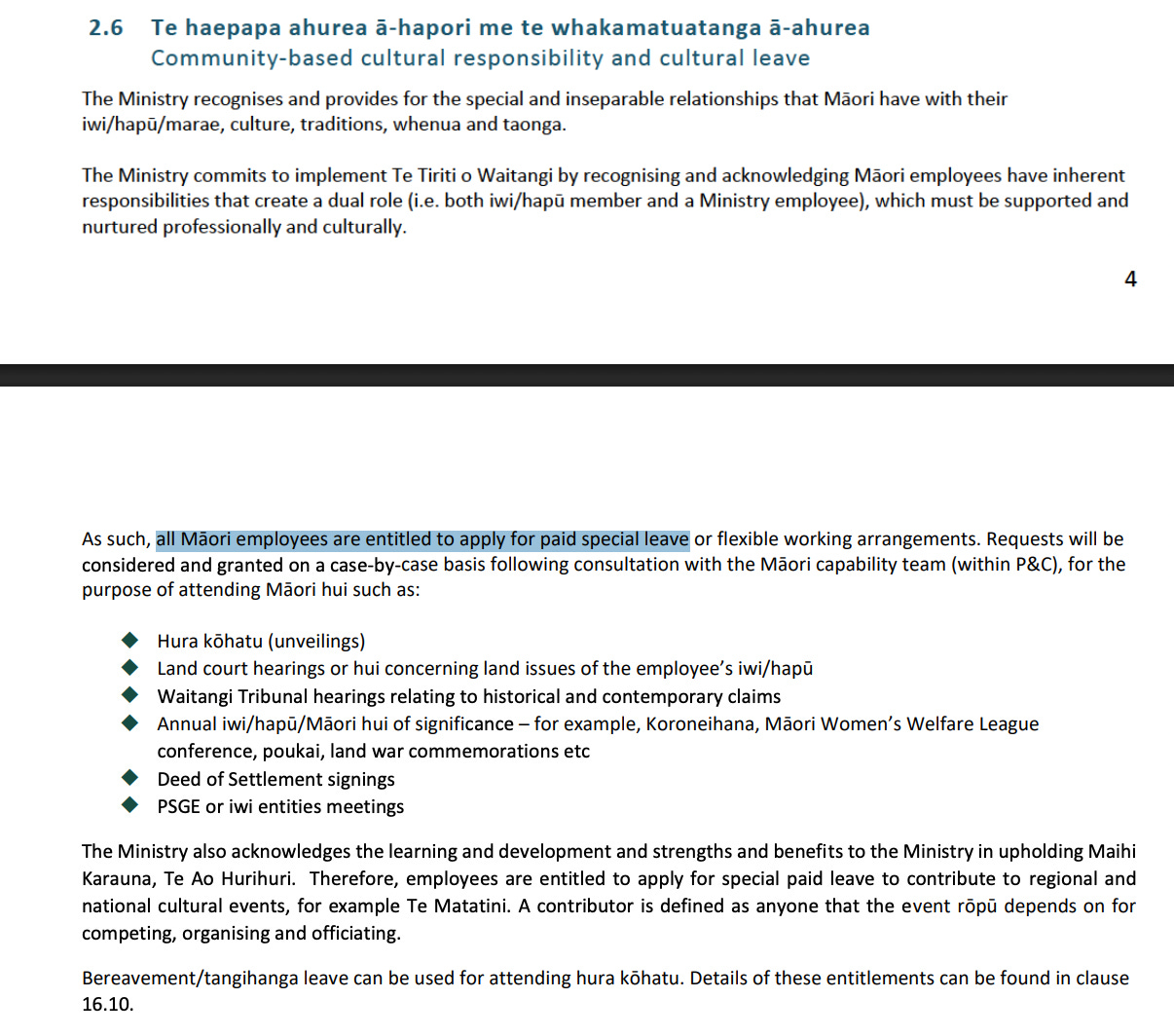
Click to view
This is an entirely race-specific entitlement. It doesn’t set a defined cap, doesn’t clearly limit the purpose of the leave, and doesn’t explain how often it can be used. That creates the same governance problems discussed in relation to Oranga Tamariki, as eligibility is based on identity rather than function, and even if managers technically retain approval power, the cultural and political pressure to say “yes” is obvious.
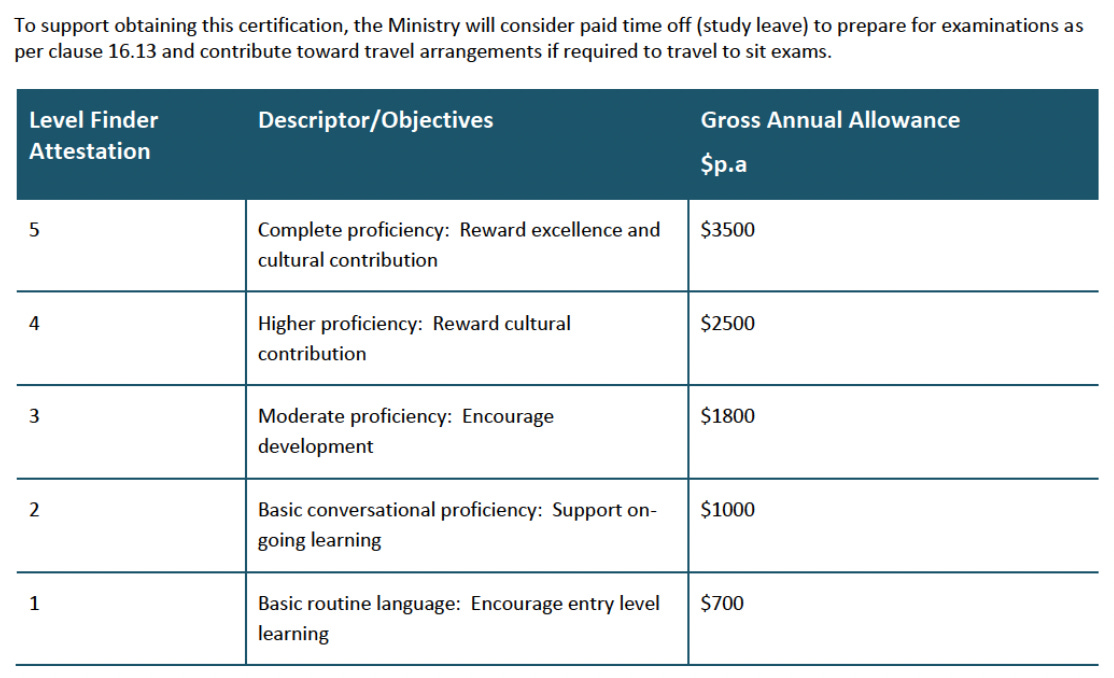
As an aside, learning te reo at MfE gets you a tidy bonus. The strange thing is that if you role requires proficiency in te reo you are considered to be already remunerated in your salary package so are not able to claim the te reo allowance. That means only people who don’t really need to speak te reo but choose to learn it get the bonus.
Click to view
The agreement also allows employees to be covered for the cost of tuition fees, study related resources, carparking, Wānanga travel and expenses, and koha, if they choose to study te reo Māori or tikanga.
The conclusion to my wondering is that it is likely there are other government agencies with race-based policies around leave and renumeration, but it is certainly not all.
So what does this cost? This is hard to answer because it depends on who is taking the leave and how much. There are varying numbers of Māori staff at different agencies and they will be on a variety of salaries. But we can do some modelling. I have shown my working below:
Assumptions
- Oranga Tamariki headcount: 4,904 staff
- Number of Māori staff reported: 20% = approx 981 staff
- Average salary at OT: $68,669
- Working days: 260
- Cost per day: $68,669 ÷ 260 = $264/day
- Backfill cost: if someone’s away, OT often still has to cover the work (overtime, temp cover, shifting caseloads). I modelled a 30% backfill overhead as a middle ground (not perfect).
- 5 days each: approx $1.68m
- 10 days each: approx $3.37m
- 15 days each: approx $5.05m
- 20 days each: approx $6.74m
- 25 days each: approx $8.42m
- 30 days each: approx $10.10m
It is also worth noting that there will be many Māori staff on much more than the average salary I used so their cost to the taxpayer will be higher.
The next question is then: what is the opportunity cost? What does $10m buy for vulnerable kids?
Oranga Tamariki will tell you this policy is about connection, belonging, values, Te Tiriti obligations and I’m sure the comms team has a PowerPoint that makes it look like a the best initiative ever and anyone who disagrees is a racist.
But taxpayers fund Oranga Tamariki to protect children who are being harmed.
So I did some rough calculations on how many additional social workers we could employ if Oranga Tamariki were not giving one race special leave entitlements.
According to publicly available information, a frontline social worker costs the taxpayer roughly $81k–$97k for their entire salary package plus various staffing costs.
If we were to save $3.37m (conservative model) we could employ roughly 35–40 additional social workers. If we were to save $6.74m (moderate model) it would be roughly 70–80 additional social workers. And if we saved $10.10m (high model) we could get roughly 100–120 additional social workers.
This would fund entire teams. It is extra placement support, smaller caseloads, more home visits, and many more hands on deck to help vulnerable kids. Instead, the money is potentially going into a discretionary, culturally-protected leave bucket that non-Māori staff don’t have access to.
And I think it is fair to assume that if you’re a non-Māori OT staffer watching colleagues disappear for iwi/hapū meetings and kapa haka tournaments on full pay while you’re covering their caseload, that is going to breed resentment, burnout, and a toxic workplace rot. There is also the question of how this explicitly race-based employment entitlement sits with the Human Rights Act, which prohibits discrimination on the basis of race?
Perhaps it is time for everyone working at Oranga Tamariki to “identify as” Māori.
Now, Duncan Garner invited Minister for Children Karen Chhour onto his show to discuss the matter. She initially declined and then had to delay another appearance. Naturally that has triggered unhappiness with ACT for allowing this to continue on their watch, but the situation is much more complex than that. Karen Chhour can’t simply wave a wand and fix this by tearing up the agreement and that is why it is so egregious that Labour signed it in the first place. It is like trying to put a genie back in the bottle.
The Minister inherited this agreement, she did not negotiate it. Re-opening a live collective agreement to strip out race-based clauses would mean triggering a full renegotiation with the union, at which point the Government would have no leverage at all. The union would have the Minister over a barrel, and anyone who’s watched public-sector bargaining knows that ends in higher costs, more concessions, and a worse deal for taxpayers.
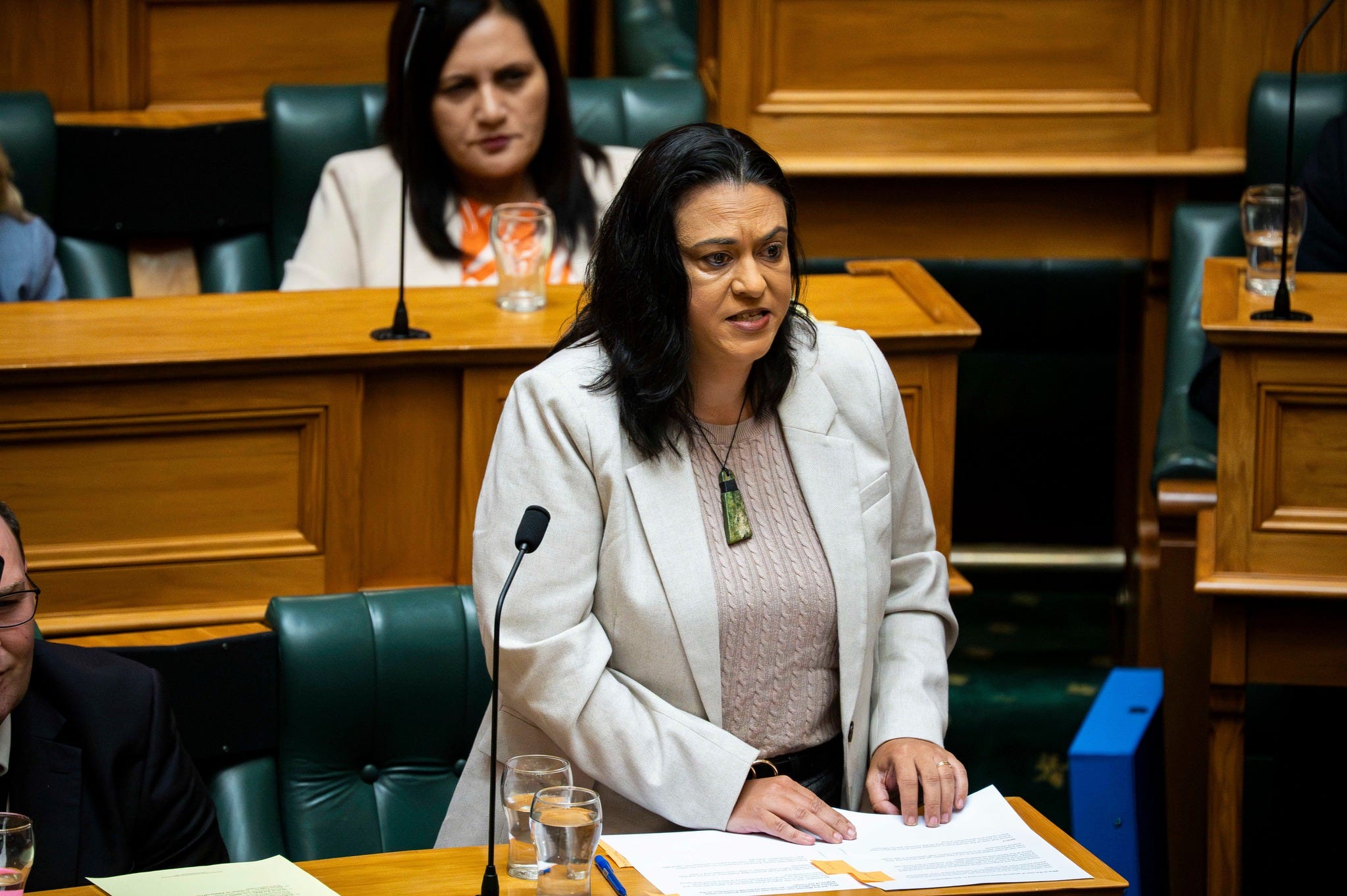
Duncan Garner shared that the Minister relayed through a spokesperson that she can confirm that the cultural entitlements do exist and she has asked the ministry for a please explain. She also emphasised that it is not something that she as an ACT MP agrees with and says it doesn’t sit comfortably with her.
Chhour shouldn’t theatrically pick a fight she can’t win, but we need to get an acknowledgement that these clauses should never have been allowed into any agreement in the first place. Once they’re embedded, they become politically radioactive and financially untouchable. When it comes time to renegotiate the clause must be removed, but more importantly it seems we need to look at how we can legislate to prevent future governments from signing racial discrimination into collective agreements.
Ani O'Brien comes from a digital marketing background, she has been heavily involved in women's rights advocacy and is a founding council member of the Free Speech Union. This article was originally published on Ani's Substack Site and is published here with kind permission.


15 comments:
All taxpayer funded units, whether ministries or universities or hospitals etc should be required to release detailed revenues and expenditures to actually see where taxpayer money is going, who is earning what, where leave entitlements go.... But those data would reveal giant workload disparities in which somebody earns twice as much money as a colleague (in the same job) but is paid half as much--a multiple of four.
Another great effort, Ani, and putting our msm again to shame. How this ever got approved beggars belief, but just goes to show how ideologically corrupt and perverted our public service has become.
This just makes my blood boil, so early on a saturday morning.
The people who are responsible for these types of laws/contracts are ruining this country.
The question is : Can it be stopped??, have we gone past the point of no return?????
The government and ACT do need to pick this fight. This clause is simply taking the p*s*. The public servants need to know they are here to serve the public; and we pay for them.
Would the Treaty Principles Bill fix this?
I suspect so.
Yet there is an article in The Post today saying PM Luxon has "called time on the divisive political theatre of ACT’s Treaty Principles Bill, and “totally ruled out” a second run."
I'm thinking it is time to rule out a second run for Mr Luxon.
It should be We the people who decide what we will consider at the next election.
Oh for an Executive Order.
It is no wonder kiwis are furious with these situations. The Coalition needs to root out and deal with privilege now. It is unacceptable that it carries on.
Labour and Chipkins should front up and explain.
AI tells me that this agreement is actually illegal under NZ Law, so surely it can just be unwound? "The Human Rights Act 1993 makes it unlawful to discriminate against people on the basis of their race, colour, or ethnic or national origins in specific areas of public". This is discrimination against people of all ethnic or national origins other than Maori, so one would think that an illegal article in an agreement would have to be removed immediately rather than be adhered to. The fact that we have smart people with legal minds dilly-dallying over this presents more questions that need to be answered.
Luxon is a dictator.
No question of it.
Again ignoring the mandate given by the voters to stop and remove the extraordinary rights to micro Maori granted by Parliament and other government bodies.
Your statement ruling out another attempt to get the Treaty Principles Bill through is going to cost you voters who will not be fooled twice.
The Labour govt of the time must have known that discriminatory provisions were both illegal and guaranteed to generate anger and resentment within the public service. The deliberate wedge being driven through the heart of our society is clearly an ongoing strategy, designed to serve their Marxist ideology. Treason of this nature will assuredly be punished, one way or another.
Barrie, that editorial you mention also (par for the 'leftie' course) ends with the view that Maori voters should be the ones making the call on the continuance of Maori seats. They are lazy, but not so stupid to be like a turkeys voting for Xmas. I'm sure you'll agree that it's the wider public that pays for those seats and it is 'they' who should decide if they go, which they most certainly should - just like that invertebrate you also mention.
Well said (again) Ani.
Let's get this clear:-
This is a RACIST policy. I repeat, RACIST !!
Imagine the outcry if there was a similar policy allowing "pakeha" staff to have discretionary leave !
After all the official criticism of Oranga Tamariki performance, I am incredulous that such a statement found its way past top management. Clearly as with so many maori dominated organisations, they do not see thmselves as part of an integrated NZ. Are leave breakdown statistics available through the OIA? What staggers me is that this has taken so long to come to light. Either the non maori staff of OT are uncommonly dim or especially fearful of cancellation.
This year it appears that there will be four race based options for electors - The Labour Maori Party, The National Maori Party, The Maori Seats and Te Pati Maori. NZ is stuff*d!
Having watched the Duncan G items and digested all this, what is needed now is a full and very public expose as to who was involved in the contracts which apparently occurred on Labour's inept and corrupt watch. Salt must be rubbed in these open wounds until they bleed. By that I mean that the Public Service Commissioner needs to be hauled in front of Parliament and made to explain precisely why he has been allowing the contracts to be let in clear violation of the provisions of the Human Rights Act. There is no point in involving the Human Rights Commissioner as his perceptions of equality for all are completely skewed. So, as a start, both these commissioners need to be stripped of their portfolios and put out to grass. Then, this nonsense which prevents Ministers from directing operations within their Ministries must be dealt with. Let's face it, Jackson and Mahuta did not seem to have any problem twisting things to meet their dubious activities like the PIJF and Maori Wards. All of this needs to happen very publicly with no sweeping under mats in order to obtain the maximum disinfection.
Well done Ani.
Any newsroom chief-of-staff would be instructing a political journalist on the questions to ask in a follow-up of the Garner disclosures:
Do other government agencies have similar deals?
How many staff have claimed this allowance?
What has it cost taxpayers?
All legitimate questions which in an earlier age we would have expected our media to answer.
But from the “legacy media” - nothing. Not so much as a matching mention. It is as though it never happened.
From Ani we have answers. Plus a reasonable, albeit conservative, estimate of the cost to taxpayers.
Meanwhile, legacy media wonder why their audience continues to dwindle and trust evaporates.
This story is a good example of why.
Keep up the good work Ani.
Post a Comment
Thank you for joining the discussion. Breaking Views welcomes respectful contributions that enrich the debate. Please ensure your comments are not defamatory, derogatory or disruptive. We appreciate your cooperation.