

Contrary to the breathless reporting we have seen this week from The Post and Stuff, it’s both natural and necessary for ministers to staff statutory boards with people who are willing and able to contribute to the objectives of the current government. By law and custom, ministerial appointees must have “appropriate knowledge, skills and experience” to fulfil the board’s functions and inevitably that also means picking individuals who support the government’s policy agenda.
After all, as official guidance bluntly notes, “board appointments are your most important way to influence the performance and strategic direction of a Crown entity”. In other words, ministers influence policy by choosing who sits on these boards. This is not a dirty trick or some nefarious conspiracy. It is how representative democracy is supposed to work.
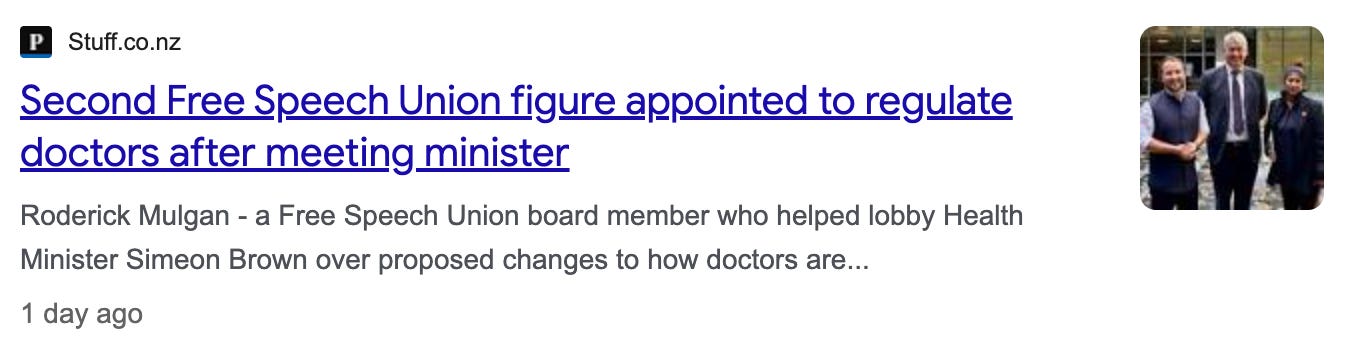
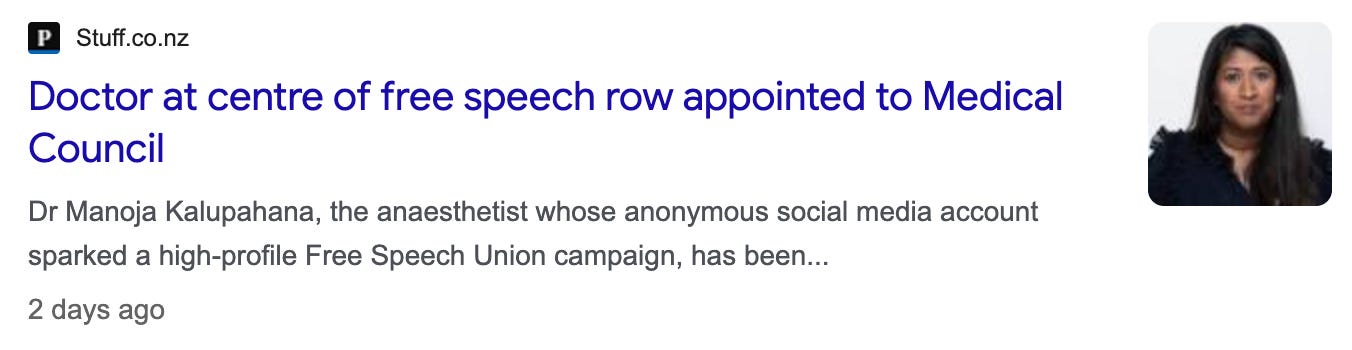
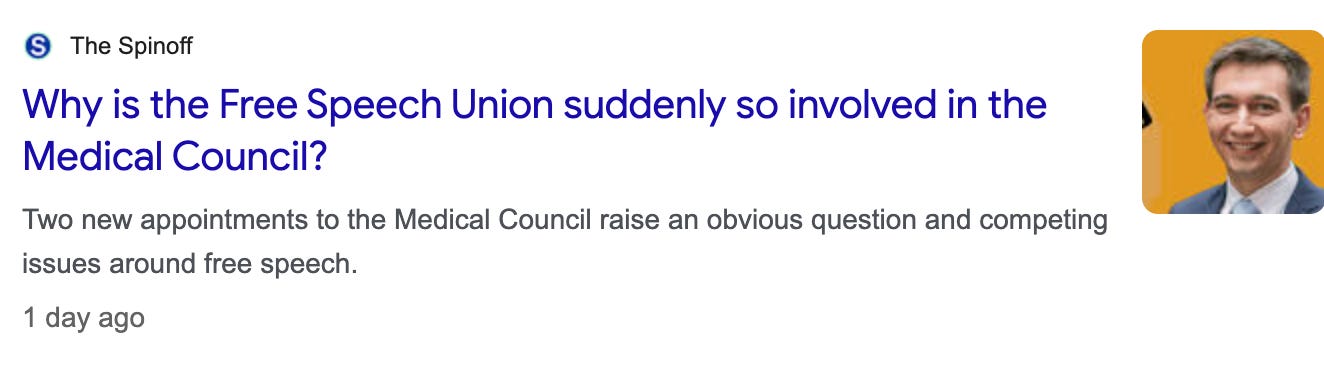
This week’s headlines tell the tale of what happens when an utterly ideological media decides to act astonished at this process. As if no minister in the history of our democracy has ever appointed people who he or she knows will enact the agenda the people of New Zealand voted for. The story “uncovered” or “exposed” Health Minister Simeon Brown’s recent appointments to the Medical Council. Among four new members, he named Dr Manoja Kalupahana, a veteran Auckland anaesthetist who the Free Speech Union defended previously and Dr Roderick Mulgan, a specialist GP and barrister who is on the board of the Free Speech Union. I must disclose here that I am also on the board of FSU and both of these appointees are friends of mine.
Click to view
Click to view
Click to view
Almost instantly, Labour and the media leapt on the appointments as if Brown had appointed unqualified criminals who advocate for witch doctoring to the Council. When the Free Speech Union challenged the narrative being set up by Andrea Vance and pals, The Post doubled down and Opposition leader Chris Hipkins declared that Brown was setting up the Free Speech Union and the Taxpayers’ Union as “his own personal troll farm” targeting journalists. Labour’s narrative from the opposition benches is that any ideological comrade placed on a regulatory board is inherently sinister, even corrupt. But this is a terrible case of throwing stones from glass houses.
Ministers do not, and should not, appoint strangers with alien agendas and no will to prioritise what voters have mandated at the election. The government is meant to pursue the political programme that they promised voters and they need their appointees to be on board with that.
In any case, it is frankly worrying that the fact that Kalupahana and Mulgan have a particular interest in upholding key democratic and civil rights that are present in our Bill of Rights Act (BORA), is seen as sinister. Every elected official should actively uphold our rights under BORA. One could argue that the principled stances of the two doctors is going to be an asset to the Medical Council which should support BORA rights being up held in our healthcare system.
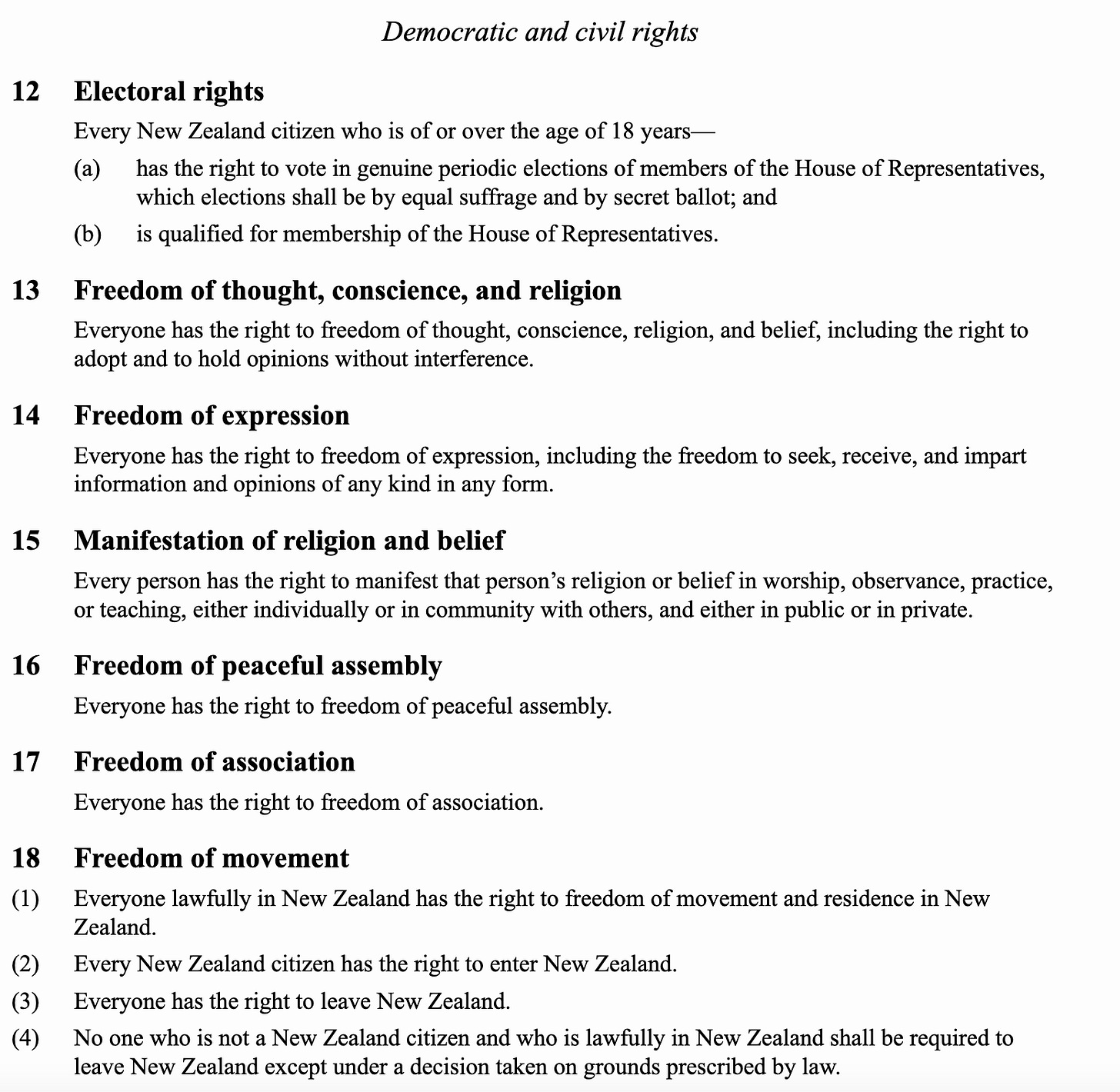
New Zealand Bill of Rights Act. - Click to view
Additionally, a minister “may only appoint those who have the appropriate skills and background” to help the entity do its job and with these appointments Brown has nailed the brief. Dr Kalupahana isn’t some random activist, she’s a highly regarded anaesthetist with nearly two decades experience and is the lead for Paediatric Anaesthesia for Health New Zealand Waitematā. She is on the Southern Cross Brightside Hospital Clinical Governance Committee and a member of the New Zealand Paediatric Network. And she is the Waitematā Branch President of the Association of Salaried Medical Specialists union. In other words, she’s a highly experienced clinician with governance experience whose appointment to the Medical Council makes perfect sense.
Dr Mulgan is also extremely qualified. He begun training to be a General Practitioner before I was born (he will hate me pointing this out). Then he must have got bored or something because he went back to university and studied law. He now practises as a both a barrister and a doctor. He’s perfectly credentialed for a doctors’ regulatory body, and actually told the media that he believes regulators should avoid “picking sides in a contested ideological debate”.
In short, both appointees have the competence required for their roles on the Council. Any suggestion that their personal beliefs should disqualify them is exactly the kind of ideological litmus test that falls outside the law. Ministerial guidebooks expressly say that appointments should be judged on qualification and performance, not one’s politics.
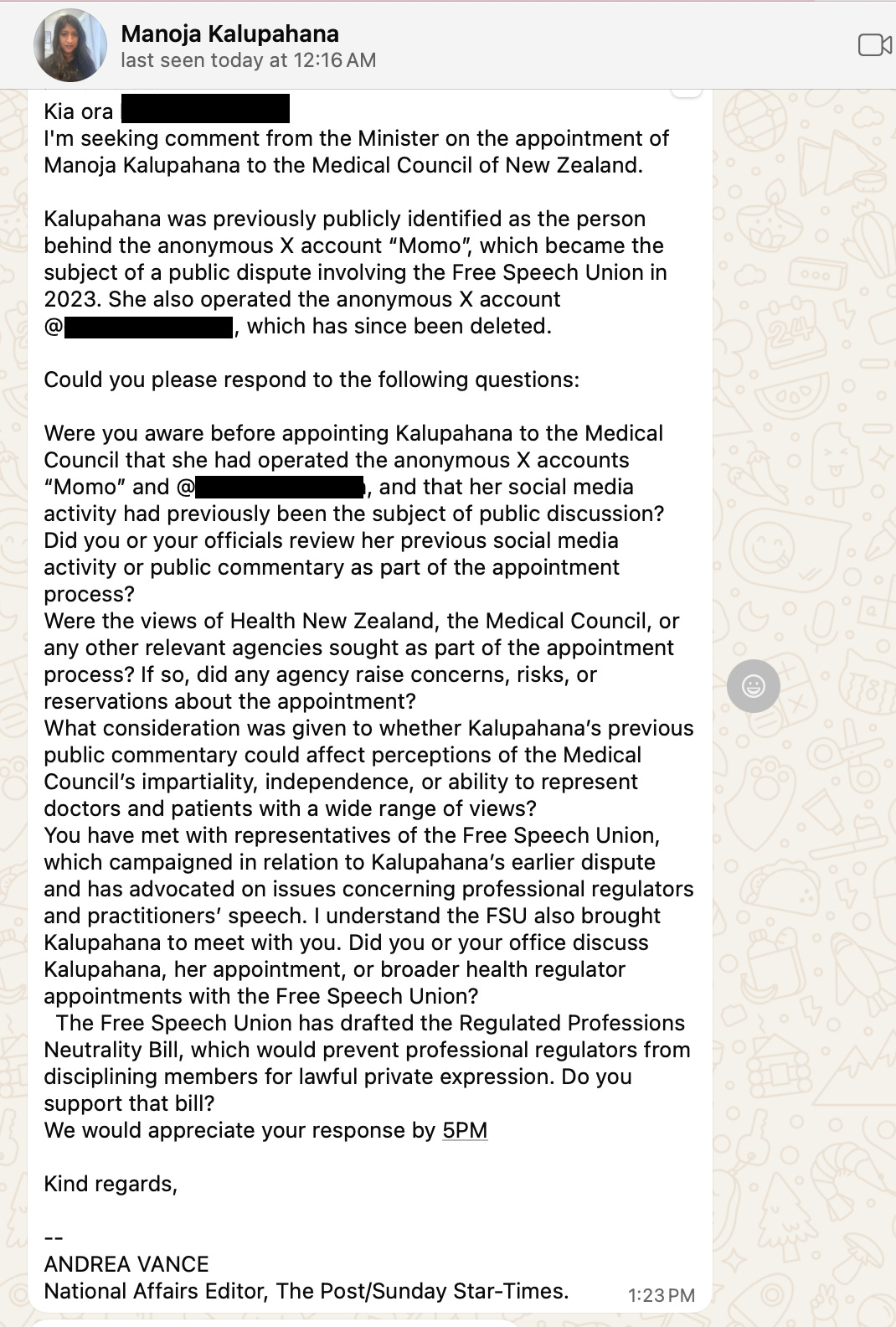
It’s telling how angrily the media have inverted this. The Post’s political editor Andrea Vance sent a bunch of leading questions to Minister Brown’s office following the annoouncement of the appointments and Brown’s office then forwarded this on to Dr Kalupahana as is appropriate given it concerns her. Then she sent to me as **shock horror** she is my friend and the Free Speech Union, of which I am a board member, is mentioned several times in the request for comment. She also called and spoke to our Executive Director Jillaine Heather.
Click to view
In her reporting, Vance focused on the fact that the Free Speech Union quickly put out a press release on the matter strongly insinuating that the minister's office had sent the questions to us. She never contacted our Communications Manager whose details are on all of our press releases to verify this nor did she contact our Executive Director.
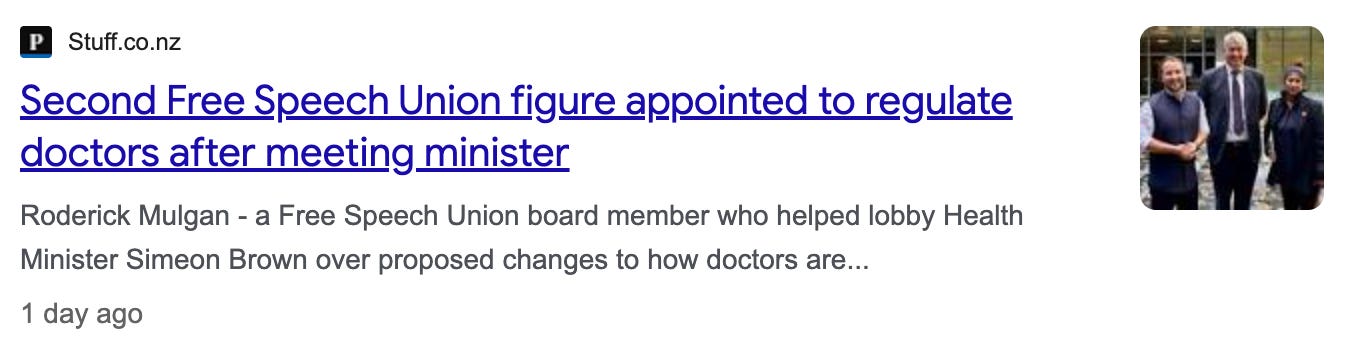
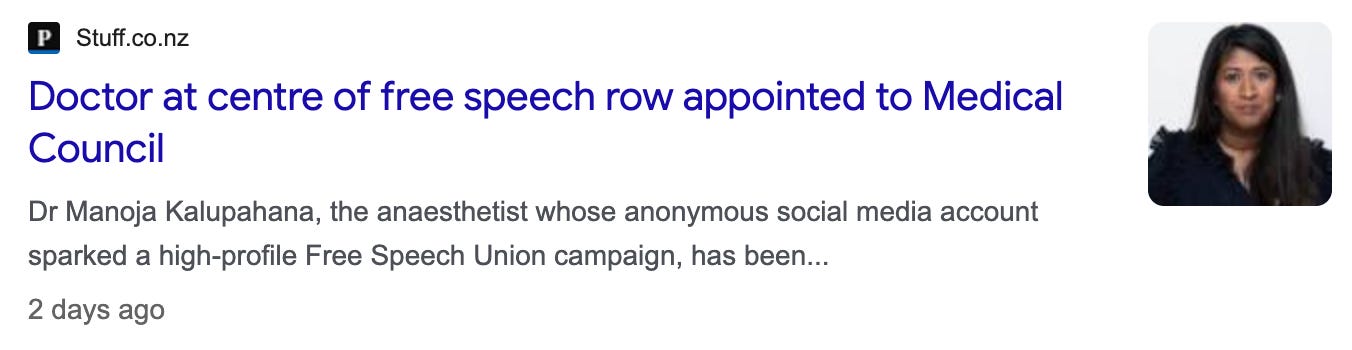
This week’s headlines tell the tale of what happens when an utterly ideological media decides to act astonished at this process. As if no minister in the history of our democracy has ever appointed people who he or she knows will enact the agenda the people of New Zealand voted for. The story “uncovered” or “exposed” Health Minister Simeon Brown’s recent appointments to the Medical Council. Among four new members, he named Dr Manoja Kalupahana, a veteran Auckland anaesthetist who the Free Speech Union defended previously and Dr Roderick Mulgan, a specialist GP and barrister who is on the board of the Free Speech Union. I must disclose here that I am also on the board of FSU and both of these appointees are friends of mine.
Click to view
Click to view
Click to view
Almost instantly, Labour and the media leapt on the appointments as if Brown had appointed unqualified criminals who advocate for witch doctoring to the Council. When the Free Speech Union challenged the narrative being set up by Andrea Vance and pals, The Post doubled down and Opposition leader Chris Hipkins declared that Brown was setting up the Free Speech Union and the Taxpayers’ Union as “his own personal troll farm” targeting journalists. Labour’s narrative from the opposition benches is that any ideological comrade placed on a regulatory board is inherently sinister, even corrupt. But this is a terrible case of throwing stones from glass houses.
Ministers do not, and should not, appoint strangers with alien agendas and no will to prioritise what voters have mandated at the election. The government is meant to pursue the political programme that they promised voters and they need their appointees to be on board with that.
In any case, it is frankly worrying that the fact that Kalupahana and Mulgan have a particular interest in upholding key democratic and civil rights that are present in our Bill of Rights Act (BORA), is seen as sinister. Every elected official should actively uphold our rights under BORA. One could argue that the principled stances of the two doctors is going to be an asset to the Medical Council which should support BORA rights being up held in our healthcare system.
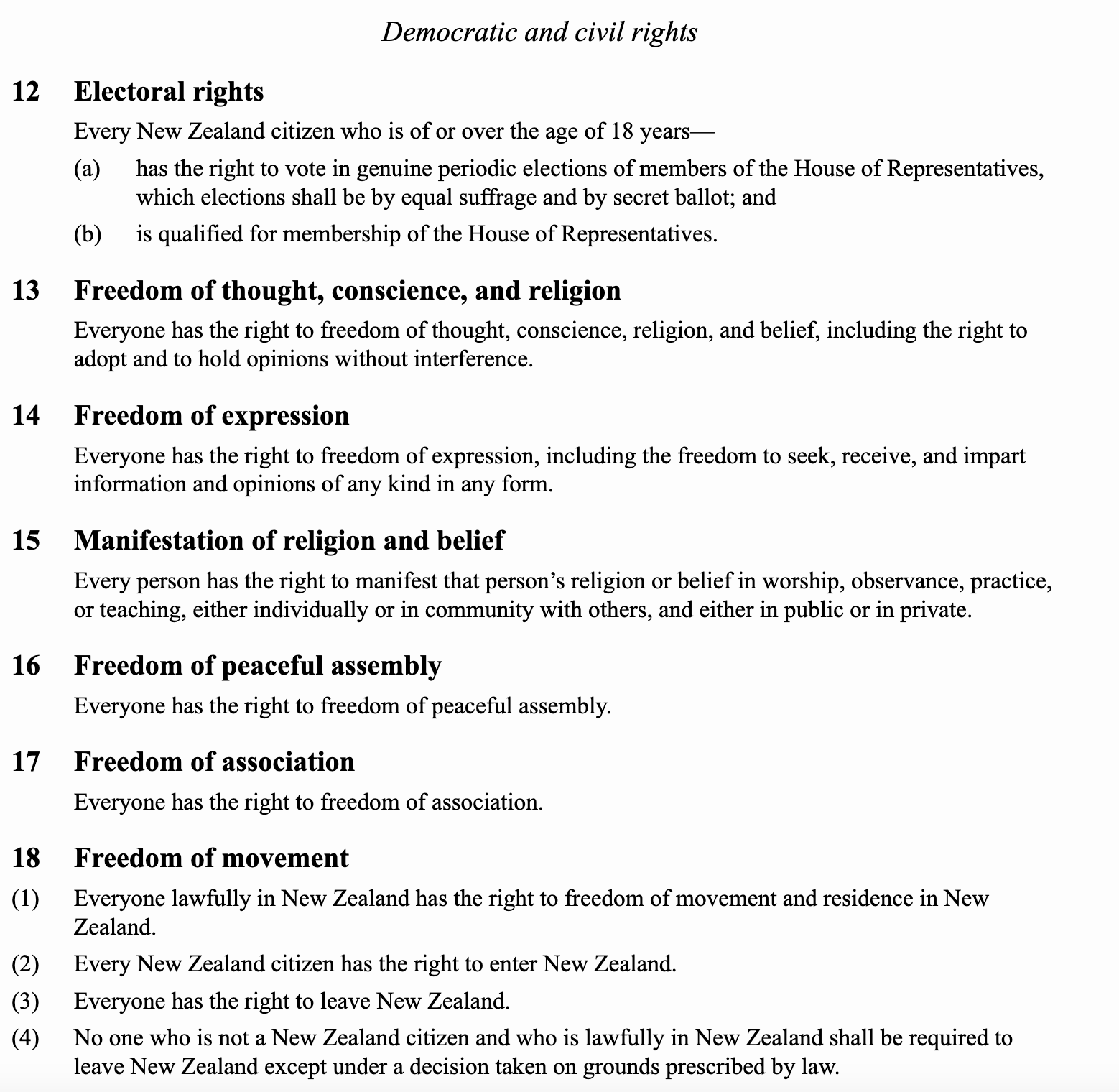
New Zealand Bill of Rights Act. - Click to view
Additionally, a minister “may only appoint those who have the appropriate skills and background” to help the entity do its job and with these appointments Brown has nailed the brief. Dr Kalupahana isn’t some random activist, she’s a highly regarded anaesthetist with nearly two decades experience and is the lead for Paediatric Anaesthesia for Health New Zealand Waitematā. She is on the Southern Cross Brightside Hospital Clinical Governance Committee and a member of the New Zealand Paediatric Network. And she is the Waitematā Branch President of the Association of Salaried Medical Specialists union. In other words, she’s a highly experienced clinician with governance experience whose appointment to the Medical Council makes perfect sense.
Dr Mulgan is also extremely qualified. He begun training to be a General Practitioner before I was born (he will hate me pointing this out). Then he must have got bored or something because he went back to university and studied law. He now practises as a both a barrister and a doctor. He’s perfectly credentialed for a doctors’ regulatory body, and actually told the media that he believes regulators should avoid “picking sides in a contested ideological debate”.
In short, both appointees have the competence required for their roles on the Council. Any suggestion that their personal beliefs should disqualify them is exactly the kind of ideological litmus test that falls outside the law. Ministerial guidebooks expressly say that appointments should be judged on qualification and performance, not one’s politics.
It’s telling how angrily the media have inverted this. The Post’s political editor Andrea Vance sent a bunch of leading questions to Minister Brown’s office following the annoouncement of the appointments and Brown’s office then forwarded this on to Dr Kalupahana as is appropriate given it concerns her. Then she sent to me as **shock horror** she is my friend and the Free Speech Union, of which I am a board member, is mentioned several times in the request for comment. She also called and spoke to our Executive Director Jillaine Heather.
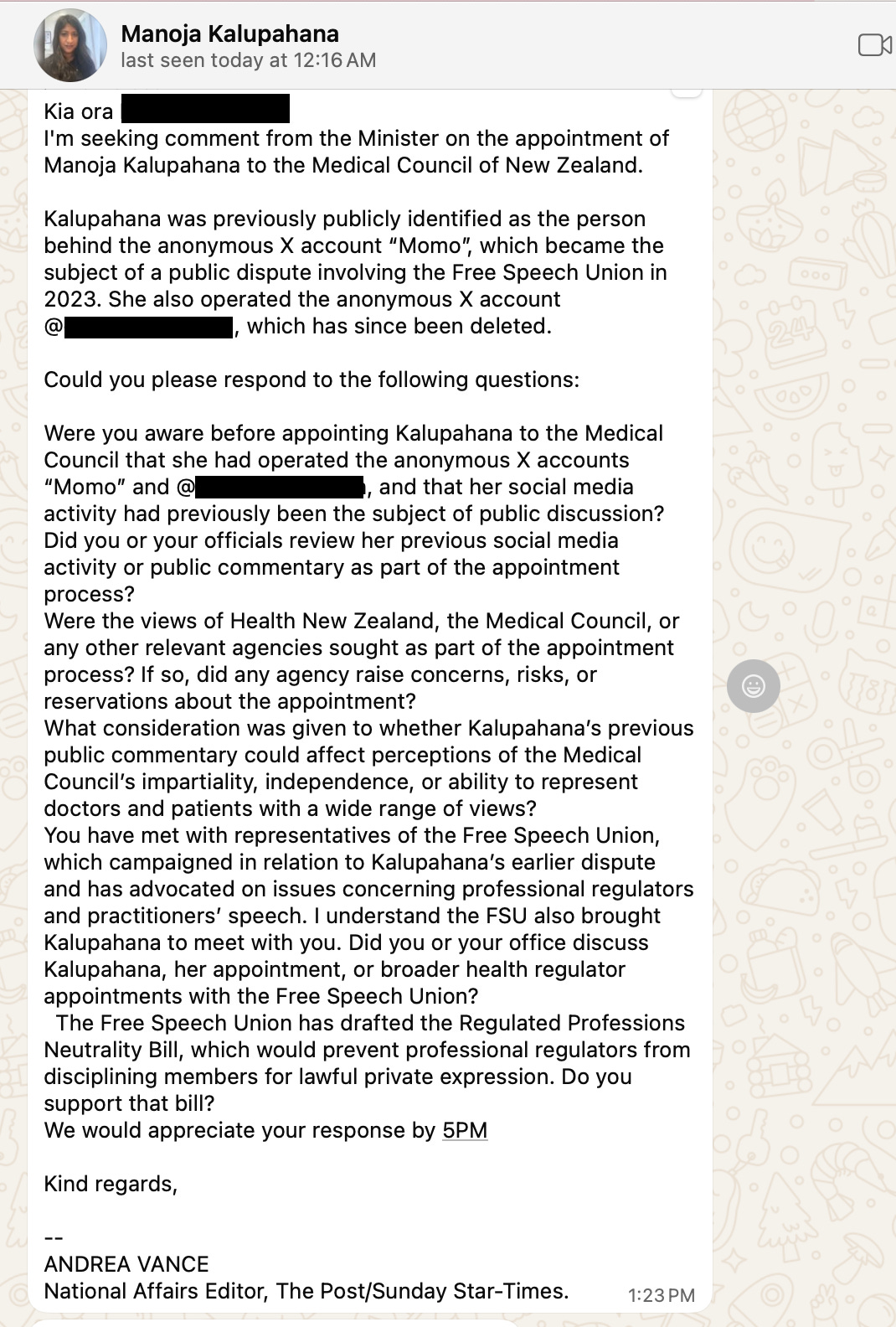
Click to view
In her reporting, Vance focused on the fact that the Free Speech Union quickly put out a press release on the matter strongly insinuating that the minister's office had sent the questions to us. She never contacted our Communications Manager whose details are on all of our press releases to verify this nor did she contact our Executive Director.
“FSU issued its press release two hours and 16 minutes after the questions were emailed to Brown’s office.” Andrea Vance
She also focused on the fact that Jonathan Ayling previously worked in Simeon Brown’s office, but he has not been involved with the Free Speech Union for about a year.
Our press release was sent out quickly because our chair former MP Stephen Franks instructed us to get ahead of the inevitable hitjob by the journalist notorious for calling women she disagrees with politically “c***s”. The media seems to think that they are entitled to set the agenda and we are meant to sit back and wait for them to publish pieces so politically spun that Pravda would ask them to tone it down. We decided we weren’t going to play their game and our Executive Director Jillaine Heather accused Vance of “muckraking” of applying an “ideological litmus test” to public appointments. Our chair Stephen Franks warned that journalists shouldn’t be the ones deciding which opinions disqualify someone from public service and appointments. He said “competence, not conformity, should decide who is entrusted with public responsibility”.
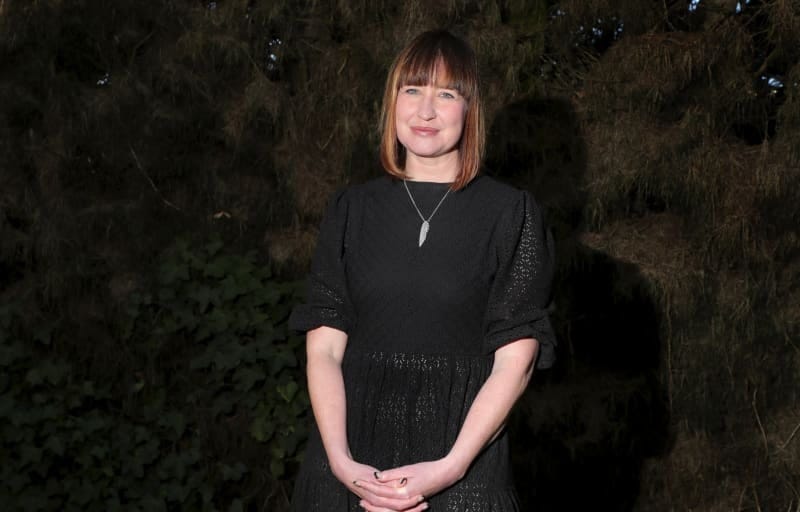
Andrea Vance. Photo credit:Robyn Edie
And as I say, Vance took exception to us calling her out and soon Labour MPs were parroting her spin, crying that Brown had unleashed a “personal troll farm” on a poor unsuspecting journalist whose hitjobs are notorious.
The press gallery then picked up the slack and questioned Prime Minister Luxon about the appointments they were determined to portray as corrupt. He responded that he was “completely relaxed” about how Brown’s office handled things.
The framing of these appointments as some kind of snub to propriety is fundamentally dishonest and Labour’s pearl clutching is, as I said, a case of chucking stones in a glass house. Under the last Labour government, ministers routinely populated boards with close ideological allies with zero finger-wagging from the press at the time.
No one complained when Jacinda Ardern’s Government backed a new Medical Council that was perfectly ideologically aligned to dutifully roll out a co-governed health care system with a separate Māori Health Authority. Dr Rachelle Love was appointed in 2020 by the Labour Government and was elected Chair in February 2024. Her bio on the Medical Council website says “Dr Love’s research interests are in Māori health, particularly cultural competency and cultural safety in surgical education…”
Dr Love’s CV is impressive and I am not arguing that she should not have been appointed. I am merely demonstrating that Labour selected her for her competence and the fact that she was politically aligned and well placed to further their vision for healthcare in New Zealand.
Under Dr Love’s leadership, the Council focused on “cultural safety” measures putting out documents that asked doctors to examine their own “privilege,” challenge the “dominant culture” of the health system, study cultural appreciation versus appropriation and even help “dismantle” structural inequities. Where was Vance to report on this crystal clear example of a ministerial appointee focusing on what her appointers deemed important? If Brown’s appointees have strong personal views, the previous council was nothing if not overtly driven by political concepts. The difference is that the media treated their politicisation as acceptable because it is a politics favoured by them. Only after a National minister decided not to renew Dr Love and her deputy Simon Watt because they were clearly incompatible with his prioritisation of reducing wait times and providing quality healthcare over identity politics, was it suddenly an “agenda.”
There are countless examples beyond health where Labour ministers made plainly partisan picks and again I stress that this is entirely normal. Broadcasting, energy, education, and other regulators gained members who were on the same page as Jacinda’s ministers, yet I challenge anyone to recall an op‑ed whining about it. Former Labour Ministers Steve Maharey and Ruth Dyson were appointed to roles under Labour. Maharey has held one of the most extensive portfolios of Crown governance appointments ever chairing Pharmac, ACC, Education New Zealand, and UCOL. He also sat on the boards of Health New Zealand, WellingtonNZ, and was Vice-Chancellor of Massey University from 2008–2016. Ruth Dyson was appointed to Fire and Emergency New Zealand, Earthquake Commission, and Toka Tū Ake EQC. She was deputy chair in all of them.
Labour has also made a habit of giving ex-Labour ministers cushy ambassador roles post-Parliament. Annette King was made High Commissioner to Australia, Trevor Mallard was Ambassador to Ireland, and Phil Goff was High Commissioner to the United Kingdom.
Then there are the unionists. Former President of the New Zealand Council of Trade Unions Richard Wagstaff was appointed to the Health New Zealand board. Another former NZCTU President, Ross Wilson, was appointed to the Climate Change Commision. Long time employment lawyer, who has acted extensively for unions, Paul Tolich KC was reappointed Chair of the Employment Relations Authority. Former Policy Director and Chief Economist of the New Zealand Council of Trade Unions Bill Rosenberg was appointed to be a Commissioner on the New Zealand Productivity Commission and as a member of Sir Michael Cullen's Tax Working Group.
Why were these union appointments fine, but appointing someone affiliated to the Free Speech Union is not? The unions are completely aligned with Labour. We all know this.
And, moving in to territory that is less acceptable, Labour also indulged in a bit of good ol’ keep-it-in-the-family. Then-Labour minister Nanaia Mahuta’s sister Tipa Mahuta was appointed chair of the Te Aka Whai Ora (Māori Health Authority) and Taumata Arowai (the Crown entity in charge of water services regulation). She was also a board member of Health New Zealand. Again, she may well have been ideally qualified, but the family connection is not one that can be dismissed.
Complaining that Brown is choosing “ideological” people only exposes the ideology of the complainers. If Kalupahana and Mulgan were objectively unqualified or corrupt, then public debate and scrutiny would be entirely warranted. But neither is the case. They are plainly up to the job, and their views are lawful and widely held.
This kerfuffle isn’t about rooting out some nefarious influence, it’s about media and opposition parties refusing to accept that, a centre-right government has the right to appoint political allies as regulators. The real outrage in it all is the pettiness in the reporting. The scoring cheap political points by suggesting quite normal appointments are scandalous. Governments are elected to govern. That includes appointing people they trust to implement the programme voters elected them to deliver.
Ani O'Brien comes from a digital marketing background, she has been heavily involved in women's rights advocacy and is a founding council member of the Free Speech Union. This article was originally published on Ani's Substack Site and is published here with kind permission.


13 comments:
Methinks poor Ani doth protest a little too much. Of course she would say it isn’t corruption - she’s a member of the network involved in it! My 3 year old nephew also throws tantrums when he gets caught out, he just doesn’t have access to the internet to write an essay about it.
Thank goodness for independent journalism. It really is the fourth estate.
Dr Love's CV is impressive. Really? Judge it against international standards. Difficult to find a complete CV on the web.
"...had appointed unqualified criminals who advocate for witch doctoring to the Council". Which was A-OK for Labour and their academic interpretation of science, whilst in government.
It is almost beyond comprehension that under Arderns Labour, somehow the political narrative twisted so far backwards that NZ had legislated a racially segregated health system. Like the public drinking fountains in the US Southern states well into the 1960's, one for whites, one for coloured, not only were we getting an almost* fully seperate Maori health system, one assumes buildings, bureaucrats, doctors, nurses, orderlies, surgeons, specialists and I assume ambulance system, but priority in funding and a points system to ensure Maori got first preference, everytime.
*Almost, because non maori were paying for it, nepotism and all. And none in the woke sphere could see the irony of their progressiveism.
Somehow, our media and woke clergy like Vance thought racial segregation just fine and dandy, despite the repulsive and down right wrong nature of apartheid that, super ironically, the left fought against. But now rail against meritocracy and colour blindness.
Honest to God, Labour and the progressive left are nothing more than a cult nowadays, an ultra weird religion that is fully 1984-esque in practice. And National, under Luxon, have done such a hopeless job of governance, (remember, Simeon Brown took nearly 3 years, after a lot of noise, to change this), that they have put the progressive cult firmly back in contention.
The warped segregation dream of the progressives has not gone away, its ready to go, with the same personalities firmly in control of Labour and its proxies, Greens and TPM. And one assumes TOP. And that is truly worrying.
Anon 804: it is commonly said that if Jesus were to return now and preach the word of the bible, he would be branded a socialist, and the modern equivalent of crucifixion would follow. I thought it was a funny joke, however you have gone beyond satire in calling senior figures of western civilisation’s foundational religion “woke”. Bless you!
Really Ani? My view = backed by students I see every day = is many are leaving NZ since they regard it now as an inbred chumocracy. Top jobs are doled out to mates. Many skilled youngsters who I know who stay find their Kiwi bosses are dummies with a comms PR online diploma or flakey qualification.
When Labour left power Finance Minister Robertson used the power of our chumocracy to become VC of Otago. That job was typically given to internationally respected medical researchers, given the whole place depends on its medical school. Not a failed former broke the nation with debt BA in politics Minister. They pay him $600,000. He's never taught a class or published research. When Nats came to power in 2023 Paula Bennett, Bill English, Simon Bridges, Gluckman, Murray McCully, and many Key era chums got appointed onto boards.
By writing this kind of stuff, I personally got shafted from ever being offered a public position. A sitting cabinet Minister told me so. Maybe you can get onto a board playing the chums game, Ani? You are right its not formal corruption where a cash bribe is paid = no its corruption Kiwi-style. You scratch my back = I scratch yours. Its called chumocracy. We're no meritocracy. Nz is an affirmative action program for people one personally approves of in one way or another.
If it all turns to custard in November, i fully expect Auckland house prices to plummet and NSW and Queensland prices to peak.
The various cults that from time to time control the levers of power in this country are manifestly incapable of running an honest, objective and rational govt for the benefit of the nation. Without sweeping, fundamental change the trajectory that we are on cannot improve.
Agree 10.19. The good people are preparing....preparing to leave. Crime will spiral out of control again. Racist policies will be implemented again fiscal discipline will be discarded and inflation will hit double digits again. Those trapped here will start civil unrest as we saw under Ardern and things will get nasty.
If the far left get back in, there will only be pensioners and unemployed crims left. Can I ask who is going to support who?
Anon 1122 I’m told by the blog sites on the right in Australia that people will be fleeing to New Zealand very soon. It’ll be a flee-fest!
I certainly agree with RM 9:31. The chumocracy is embedded. Very difficult to break the self-perpetuation. NZ universities are spotlight examples.
“Our press release was sent out quickly because our chair former MP Stephen Franks instructed us to”
Ex.NATIONAL MP Stephen Franks. Asking the former NATIONAL party staffer to go after a journalist. Oh, yes, Ani, we are behind the curtain, but it isn’t anything to do with the media, is it?
Stephen Franks was an Act MP.
Oh right. We’re all clear then. From one coalition member to another. The rot isn’t limited to the National party.
Post a Comment
Thank you for joining the discussion. Breaking Views welcomes respectful contributions that enrich the debate. Please ensure your comments are not defamatory, derogatory or disruptive. We appreciate your cooperation.