

Neither Luxon nor Hipkins had a good week. The polls aren’t looking good for either and we are less than 100 days from the election. One Chris has taken to hating on MMP while the other is blaming a “rogue poll”.
The Taxpayers’ Union–Curia poll released yesterday put Labour on a grim 27.8%, down 3.7 points in a month and only fractionally higher than what it got on election night 2023. National is back in front on 31%, NZ First is on 9.1, ACT 7.3, and the Greens 10.1. Te Pāti Māori has fallen all the way to 1.5%. On these numbers, the current coalition would scrape back into office with 61 seats.
Unfortunately for Labour, Curia is not actually a “rogue” poll given Roy Morgan’s July poll had Labour even lower, on 25.5%, while National was on 32. The Government parties collectively sat on 49% compared with 41% for Labour, the Greens and Te Pāti Māori. Opportunity is on a whopping 8%, enough for ten MPs and to hold the balance of power. Curia has Opportunity slightly lower at 6.1%, up 2.8 points in a month.
Roy Morgan’s demographic figures are worth a look too. The governing parties lead the opposition 64–28 among men over 50, while Labour, the Greens and Te Pāti Māori lead among women under 50 almost exactly the other way, 60–28. New Zealand politics is developing a sex/age gap you could drive a Ford Ranger through.
Election 2026: When policy happens live on air
Speculation that Luxon ruled out TOP on the fly last week was bolstered when he appeared to make another whimiscal announcement on Newstalk ZB in response to a listener’s question. He announced that he thought New Zealand should have another referendum on MMP. He later repeated the idea at a public meeting and suggested it could be held alongside the proposed referendum on moving to 4 year terms.
National MPs had to figure out pretty quickly whether their leader had just announced an actual policy. Campaign chair Simeon Brown said Luxon had merely expressed a “view”, Mark Mitchell said National would not be campaigning on it, Nicola Willis observed, magnificently, that “the Prime Minister is the leader of the National Party”, and Simon Watts referred reporters back to Luxon’s “statement in regards to what his expectations are”. But by Friday Paul Goldsmith declared that it was “of course” party policy because when the leader says he wants to do something, “it becomes policy, obviously”.
It has been 15 years since we voters were last asked if we can stomach MMP (57.8% chose to retain it) and there could be conversations about the 5% threshold, electorate coat-tailing, the power of small parties, proportionality, and whether the system is producing the political incentives New Zealanders want. But announcing a referendum immediately after complaining about having to accommodate “some yahoo or numpty from some other party” rather unfortunately looks like frustration with your coalition partners nicking your votes.
Election 2026: Labour loses another candidate
Labour lost its second electorate candidate in a month this week when Tracey-Lee Repia withdrew from Kaipara ki Mahurangi for personal reasons, following Selwyn candidate Nick Moody’s withdrawal last month. Repia has been replaced by public servant Jolyon “Jo” Swinburn. No candidate is likely to steal the electorate from the popular Chris Penk anyway, but having candidates pull out is never ideal.
Opportunity unveiled its list last week and I will get round to doing some analysis on it this week. National is set to reveal its list this weekend which I will inevitably comment on too.
And it has been a long final week of the Good Faith Yarns Tour and I can’t remember if I told you last week that New Zealand First has brought Ron Mark back, so apologies if this is me repeating myself.
Political theatre and Chloe Swarbrick booted from the House
Look, I didn’t like Winston Peters’ remarks to Lawrence Xu-Nan, but the reaction to it exposed a pretty troubling double standard. On Saturday, Migrant Workers Association activists staged a mock trial of Winston Peters before wheeling an effigy of him to a guillotine and chopping off its head while supporters cheered. Organisers described it as “political theatre” but it should have raised a lot more alarm than it did. Much of the media treated it as little more than colourful activism, rather examining the increasing comfort parts of the activist left have with violent political imagery.

Joe Carolan and Anupam Kaloti with their effigy of Winston Peters
Winston Peters should have an honourary doctorate in getting under the skin of left wing activists. In fact, in the House this week he drove Chloe Swarbrick to the brink. After perceiving that Peters was repeatedly escaping consequences for his behaviour, Swarbrick accused Speaker Gerry Brownlee of applying “double standards” and was kicked out of the House. She has since claimed to media that Brownlee has privately acknowledged to her that Peters receives more latitude because he is effectively “part of the institution”. Naturally, Brownlee strongly disputes this.
Endless analysis of whether Peters is treated too leniently sat alongside remarkably little outrage about activists literally staging his execution in Auckland days earlier. The media even dragged Raybon Kan out of his time machine because apparently no political controversy is complete without a celebrity anecdote from three decades ago. Kan says that Peters told him to “go back to your own country” sometime in the 1990s after a celebrity debate.
Ayesha Verrall thinks lawyers should be judged on their clients
The attack on the Health Minister’s ministerial appointments to the Medical Council moved from media to Parliament with Labour’s Ayesha Verrall attempting to discredit Dr Roderick Mulgan by portraying his legal work as evidence that he was unfit to serve on the Medical Council. Disclosure: he is my friend.
Hearing her questions might leave one thinking he was some kind of voluntary pedophile supporter. Verrall’s line of questioning repeatedly suggested there was something inherently suspect about him. But the truth is that as well as being a medical doctor, Roderick is a defence lawyer. Overachiever, I know.
Like every defence lawyer, he often represents clients who aren’t exactly the most sympathetic of characters. He has acted in Medical Council disciplinary matters and has also worked on Clean Slate applications, helping people who have served their sentence, and remained on the right side of the law, move on with their lives. This is under legislation Parliament itself enacted, obviously.
Verrall’s attack is illiberal and concerning. Defence lawyers do not endorse every client they represent and the right to legal representation is a cornerstone of a free society. But she sought to blur that distinction deliberately, inviting us to believe that because Mulgan has defended dodgy people, he must also be dodgy.
That is like saying anyone who has defended an accused murderer is somehow suspect and should not be trusted to advance to appointed positions like, oh I don’t know, becoming a judge? It is an absurd idea, but one Labour seemed perfectly happy to advance when the political target happens to be someone appointed by Simeon Brown.
Her attacks became even more silly when she turned to Roderick’s interest in nutritional medicine. Verrall repeatedly tried to paint his support for supplements containing ingredients such as turmeric, olive leaf, and black pepper as evidence of quackery, despite the Speaker himself intervening to remind her use of nutritional supplements is widespread in New Zealand. Roderick doesn’t argue that supplements should replace conventional medicine. Like many many doctors, he simply believes that lifestyle, nutrition, and pharmaceutical treatments all have roles to play.
It is also interesting criticism coming for someone whose own Government enthusiastically embraced rongoā Māori as part of the public health system. Labour championed traditional Māori healing practices and allocated millions of dollars towards rongoā services.
New Zealand First wants more Kiwi kids
New Zealand First’s Kiwi Kids Grant isn’t guaranteed to reverse New Zealand’s collapsing birth rate, but it at least acknowledges we have a problem.
With fertility now sitting at around 1.5 births per woman, well below replacement level, New Zealand is ageing rapidly and becoming increasingly reliant on immigration to sustain population growth. For years, politicians have largely avoided this conversation altogether.
The proposed policy would provide $5,000 a year for the first three years of each of a family’s first three children. While international evidence suggests baby bonuses alone won’t restore fertility, and critics are right to point that out, they’re wrong to conclude that means we shouldn’t try anything.
The reality is that declining birth rates are driven by far more than just household budgets. Housing affordability, delayed family formation, career structures built around uninterrupted work, declining marriage rates, and a culture that increasingly treats children as something to fit in after you’ve finished living all play a role. No single policy will reverse half a century of demographic change. That requires massive social change and a shift to valuing motherhood in particular but parenthood in general.
The real value of the Kiwi Kids Grant is that it starts a conversation New Zealand has been avoiding. If we genuinely believe families are important, then our politics, economy and culture should make it easier for people who want children to have them.
Labour pledges to drop the Investment Boost
Labour was chasing the small business owner vote this week and there are some sensible ideas buried in the policy. The party wants big businesses to pay small suppliers within 15 days for invoices of $25,000 or less, lift the instant asset write-off from $1,000 to $10,000 for businesses turning over less than $10 million, and raise the GST registration threshold from $60,000 to $80,000. Labour says around 35,000 of the smallest operators would no longer need to register for GST, and the package would cost taxpayers $1.56 billion over four years.
Timing was great for Labour as Christopher Luxon had just spent several days apologising for telling struggling business owners in Rotorua that they had a “parent-child mentality” and needed to be more “adult”. But where the politics look good, the economics look less so.
The 15 day payment rule is probably the strongest part. Small firms carry payroll, rent, GST, and supplier costs themselves so faster payment is useful. But the bigger issue is how Labour proposes to pay for all this. It would abolish National’s Investment Boost, which allows businesses to deduct 20% of the cost of new capital assets, and replace it with this much narrower small business package. Investment Boost was forecast to cost around $6.6 billion over 4 years, while Labour’s replacement costs $1.56 billion. That leaves roughly $5 billion sitting there for Labour to use elsewhere.
Labour’s argument is that Investment Boost is too broad and rewards firms for purchases they would have made anyway. There is some evidence for that, but the party is then too quick to reduce the debate to a caricature about CEOs getting tax breaks on BMWs. The point of Investment Boost is to lower the cost of capital investment across the economy and Treasury has estimated it could lift GDP by up to 0.5% over five years. So Labour is proposing to scrap a productivity policy and replace it with a smaller, more political package.
Helen White unintentionally highlighted another policy contradiction. The Mt Albert MP said this week that she wants house prices to come down because they have become hopelessly unaffordable. True. But Labour is simultaneously relying on capital gains to fund part of its health programme. Its CGT modelling assumes average house price growth of around 3% in its calculation of how much tax it will collect. Chris Hipkins unsurprisingly declined to endorse White’s position, while Barbara Edmonds said she wants prices to remain “stable”.
National have also experienced this policy conundrum with Christopher Luxon and Chris Bishop advocating for price growth and greater affordability respectively. However, Labour has made he contradiction more acute by explicitly earmarking CGT revenue for spending commitments.
Bizarre rampage in Epsom causes carnage
In the space of about 8 minutes, what began as an ordinary Auckland morning became a scene of extraordinary violence. In Epsom events unfolded rapidly, beginning with an attack on a woman out for a run. A passerby stopped to help her and was rewarded by the assailant stealing her car and almost immediately driving it into a cluster of Auckland Grammar boys out training with their cycling club before school. One boy remains in a critical condition, facing injuries police have described as life-altering. Then, in another final act of senseless brutality, the assailant exited the car and accosted a woman walking her dogs. He strangled one of the dogs to death in front of her before police arrived and managed to subdue him.
If, as has been publicly suggested, this was committed by someone with a significant history of severe mental illness known to authorities, we must honestly examine whether enough was done to protect both him and the public.
The 49 year old man now faces 17 charges, including attempts to cause grievous bodily harm, injuring with intent, assault with a vehicle, unlawful taking of a motor vehicle, dangerous driving, cruelty to an animal, and assaulting police. The most serious charge carries a maximum penalty of 14 years’ imprisonment. He was due to appear in the Auckland District Court on Thursday, but remained in Auckland City Hospital under police guard. The judge therefore adjourned the matter until Monday, granted interim name suppression, and directed that he could appear by audio-visual link. He is to be remanded in custody once his medical condition allows.
The McSkimming scandal somehow gets worse
Just when you thought the Jevon McSkimming scandal had exhausted its capacity to make New Zealand Police look catastrophically dysfunctional, another lot of internal correspondence has been released and it gets worse.
The latest documents show that while McSkimming was on special leave because allegations of a sexual nature were being investigated, then-interim commissioner Tania Kura thanked him for offering to provide her with “support and expertise” and told him she had informed the Police Minister that he would do so. The emails do not establish whether he ultimately provided that assistance, but the fact it was contemplated is extraordinary. This was a deputy commissioner whose conduct was sufficiently serious to require stand down yet senior leadership was still comfortable treating him as a useful adviser rather than maintaining the clearest possible distance.
Newly released correspondence also shows the former commissioner Andy Coster pushing back against the IPCA’s intervention and framing McSkimming as someone who risked being further “victimised” by an investigation that might derail his shot at becoming commissioner. Coster wrote that the process could irreversibly damage McSkimming’s career and stressed the need to resolve matters quickly because of the commissioner appointment process. The IPCA later concluded that his preconception of McSkimming as the victim clouded his judgment and that he had sought to bring a serious investigation to an “unduly rapid conclusion”.
McSkimming was convicted of possessing child sexual exploitation and bestiality material on police devices and sentenced to 9 months’ home detention. The scandal then triggered a rapid review of police processes, and this week another officer, Matthew Rogers, pleaded guilty to possessing objectionable publications. Police investigated 22 cases prompted from that review. Of those, 12 have already resulted in disciplinary or performance action and 4 people resigned.
🇬🇷 Scottish woman found dead in suitcase in Athens
The murder of 38 year old Scottish aid worker Elisabeth-Jane Ross (known as Lisa) in Athens has again drawn attention to the increased violence in Europe and Britain against women by migrants from countries that severely oppress women. Afghanistan is not simply a country with slightly different social norms. It is a place where women are catastrophically oppressed under Taliban rule. Girls are barred from education and women face severe restrictions on participation in public life. They cannot travel without a male “guardian” and even their voices have been restricted in public broadcasting. Dress codes are coercively and violently enforced, and international human rights organisations describe the Taliban’s treatment of women as systematic persecution. People do not arrive at a border as blank slates. They bring beliefs, habits and assumptions with them, some admirable and some profoundly incompatible with liberal societies.
Ross’ body was found stuffed inside a suitcase in an abandoned building. She had spent years helping refugees and vulnerable people and had travelled to Greece to continue that work.
A 26 year old Afghan migrant and boxer, Sharif Ahmadzai, has been charged with intentional homicide, robbery, and weapons offences. He denies killing Ross, although Greek police say he has admitted moving her body in a suitcase, taking her phone, and bank cards, and sending messages from her phone after her death. CCTV shows him transporting the suitcase through Athens before abandoning it at the site where she was found. He is now in pre-trial detention.
Ahmadzai arrived in Greece as a teenage migrant from Afghanistan. His journey was even turned into a sympathetic Red Cross film presenting him as a refugee success story.
ACT policy attracts headlines
ACT is asking the question: who is actually in charge of the classroom? Their answer is that the teacher should be and they propose to amend the Education and Training Act to give teachers an explicit legal power to direct seriously or persistently disruptive students to leave the classroom and, where necessary, use reasonable force to remove the student who repeatedly refuses lawful instructions after senior staff have become involved. It would also provide clearer legal protection for teachers acting in good faith, require mandatory stand-downs or suspensions for assaults on teachers or students, and require parents to engage with schools following serious behavioural incidents, with fines for persistent refusal.
Naturally, the headlines have been very much preoccupied with the “reasonable force” bit. Teacher unions and principals have come out against the policy. Opposition politicians argued for more funding and additional learning support instead. But ACT points out the Education Review Office found that almost half of teachers report losing 40-50 minutes every day dealing with challenging behaviour, while many cite classroom disruption as a major reason they are considering leaving the profession altogether.
Critics characterised the proposal as a return to corporal punishment, despite ACT explicitly ruling that out. They say their policy is not about hitting children, but about restoring authority. Reasonable force already exists throughout New Zealand law as a legal standard, for example the police, security guards, and parents may use reasonable force in appropriate circumstances. ACT says teachers should not be left paralysed by fear of complaints and bureaucratic investigations when attempting to maintain order in their own classrooms.
🇬🇧 Jason Arday and the biography that fell apart
If you have not heard the story of the extraordinary rise and spectacular fall of Cambridge professor Jason Arday, buckle up.
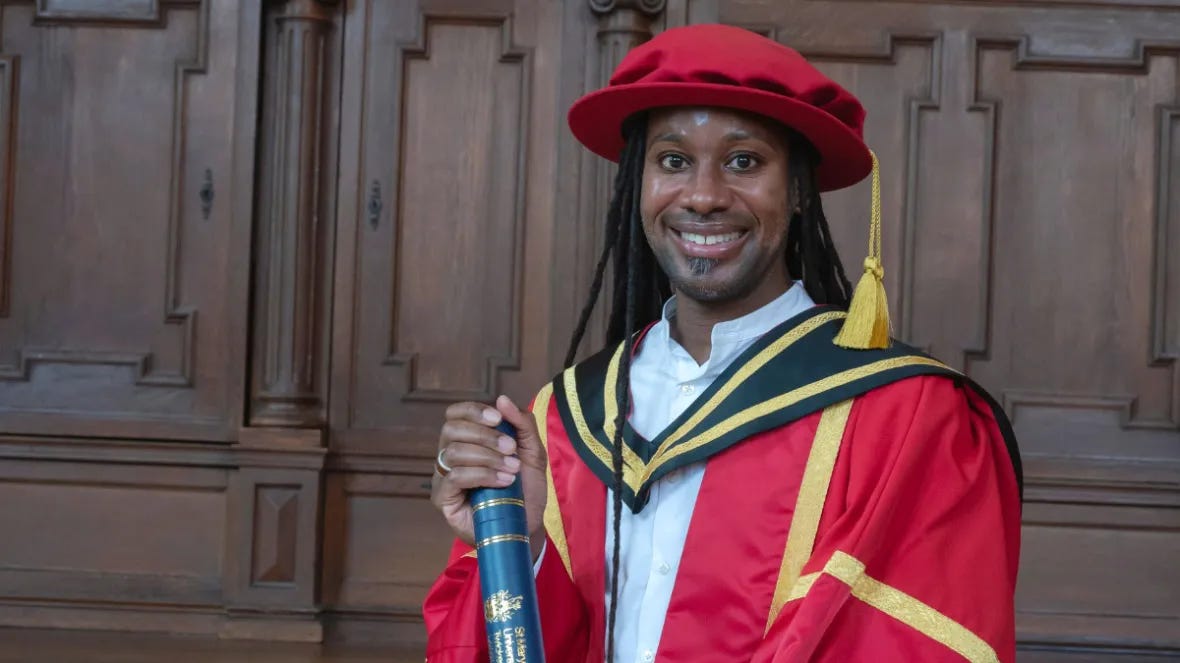
Jason Arday
When Cambridge University appointed Arday in 2023, the university practically launched a global publicity campaign. The headlines spoke of the youngest Black professor in Cambridge’s history, a man who had reportedly been unable to speak until the age of 11 and unable to read or write until 18, overcoming impossible odds to reach one of the world’s most prestigious universities. He became the face of the institution’s commitment to diversity, equity and inclusion. Well, 3 years later, that celebrated narrative has imploded.
Arday resigned this week after Cambridge announced an investigation into his qualifications, academic appointments, and basically every claim he has ever made. Plagiarism claims first attracted attention, but it has gone far beyond that now. Journalists have spent weeks unpicking an astonishing collection of shifting public claims that now appear to be complete fiction. He says he ran 600 miles in 6 days before later saying it had actually taken 12 days. He also said he personally raised £5.5 million for charity before later explaining the money had been raised collectively by a syndicate of around 100 people. There were claims about volunteering for WaterAid (the charity says nope), appearing in the famous Seven Up documentary series decades before he was born, holding visiting professorships that institutions now say did not happen, and even stories involving masked attackers and a pig’s head delivered to his parents’ home. All have come under intense scrutiny.
Cambridge itself, initially described criticism of Arday as part of a “vile smear campaign”, but they have now abandoned their defence of the man.
As is often the way, the dam has broken and all the stories are pouring forth. Students have described inadequate supervision, cancelled meetings, and being effectively abandoned during their studies. One student moved to another supervisor after complaining about the quality of supervision and another said hour-long sessions routinely lasted only twenty minutes.
The Arday affair should be a cautionary tale for every institution pursuing identity-driven appointments. Every exceptional Black academic now faces more suspicion because one university fell for an impossibly inspiring biography.
🇺🇸 The WNBA is at war with itself
The WNBA seems to spend more time talking about internal dramas and politics than basketball. Caitlin Clark has brought unprecedented audiences, television ratings have surged, and women’s basketball has finally entered the mainstream sporting conversation. But the league seems determined to turn every opportunity into another culture war, alienating many of the ordinary fans it spent decades trying to attract.
Nothing illustrates that better than the reaction to Sophie Cunningham’s entirely reasonable position that biological men should not compete in women’s basketball or share women’s changing rooms. Cunningham went out of her way to emphasise that she bears no ill will towards transgender people and believes there should be love and respect for everyone. Her argument was simply that women’s sport exists because biological sex matters. It is the very premise upon which every women’s sporting competition has been built.
Yet now Cunningham is being treated as though she committed some grave offence. Protests have been organised around her appearances, teenage girls wearing shirts supporting women’s sports have been abused by a WNBA team co-owner, and media outlets have portrayed Cunningham as some kind of right-wing provocateur rather than an athlete defending the integrity of her sport.
The response from Minnesota Lynx coach Cheryl Reeve perfectly captures how detached parts of the league have become from the people they are supposed to be entertaining. Reeve appeared courtside in a “Trans Kids Belong” shirt and publicly argued that including biological males in women’s sport means “we all win”. The irony is that Reeve benefited from decades of women fighting for recognition, funding, and respect, only to use her platform to undermine the very sex-based category that made her career possible.
The absurdity is being highlighted further by calls for French transgender player Julie Tétart to join the WNBA. He is a 6’3” male, who dominates France’s women’s league, averaging roughly 21 points and 20 rebounds per game and collecting loads of medals and honours.
The WNBA spent years demanding that women’s basketball be taken seriously. Serious sport, however, depends upon rules that people believe are fair.
Attorney General reminds the courts that Parliament is supreme
Attorney General Chris Bishop delivered a constitutionally significant speech this week, making an unapologetic defence of parliamentary sovereignty and warning against the growing tendency to use the courts as an alternative legislature. He said in a democracy, major public policy decisions belong to Parliament because Parliament alone possesses both the democratic mandate and the institutional legitimacy to make them. Courts exist to interpret and apply the law, not to drive their own policy preferences.
In short - other stuff that happened
Steve Braunias’ brutal review of Kiri Allan’s memoir Go Hard or Go Home argues that while the book is candid, energetic, and often well written, it ultimately lacks the redemption arc needed to make it truly satisfying. He praises Allan’s vivid account of her unconventional upbringing, rise through politics, and honest discussion of her mental health crisis, but criticises her for continuing to portray herself as a victim over her 2023 drink-driving arrest, glossing over much of her ministerial career, and offering little reflection on colleagues or her political legacy.
Highly recommended just for a refreshingly honest assessment of the situation.
Ani O'Brien comes from a digital marketing background, she has been heavily involved in women's rights advocacy and is a founding council member of the Free Speech Union. This article was originally published on Ani's Substack Site and is published here with kind permission.
Roy Morgan’s demographic figures are worth a look too. The governing parties lead the opposition 64–28 among men over 50, while Labour, the Greens and Te Pāti Māori lead among women under 50 almost exactly the other way, 60–28. New Zealand politics is developing a sex/age gap you could drive a Ford Ranger through.
Election 2026: When policy happens live on air
Speculation that Luxon ruled out TOP on the fly last week was bolstered when he appeared to make another whimiscal announcement on Newstalk ZB in response to a listener’s question. He announced that he thought New Zealand should have another referendum on MMP. He later repeated the idea at a public meeting and suggested it could be held alongside the proposed referendum on moving to 4 year terms.
National MPs had to figure out pretty quickly whether their leader had just announced an actual policy. Campaign chair Simeon Brown said Luxon had merely expressed a “view”, Mark Mitchell said National would not be campaigning on it, Nicola Willis observed, magnificently, that “the Prime Minister is the leader of the National Party”, and Simon Watts referred reporters back to Luxon’s “statement in regards to what his expectations are”. But by Friday Paul Goldsmith declared that it was “of course” party policy because when the leader says he wants to do something, “it becomes policy, obviously”.
It has been 15 years since we voters were last asked if we can stomach MMP (57.8% chose to retain it) and there could be conversations about the 5% threshold, electorate coat-tailing, the power of small parties, proportionality, and whether the system is producing the political incentives New Zealanders want. But announcing a referendum immediately after complaining about having to accommodate “some yahoo or numpty from some other party” rather unfortunately looks like frustration with your coalition partners nicking your votes.
Election 2026: Labour loses another candidate
Labour lost its second electorate candidate in a month this week when Tracey-Lee Repia withdrew from Kaipara ki Mahurangi for personal reasons, following Selwyn candidate Nick Moody’s withdrawal last month. Repia has been replaced by public servant Jolyon “Jo” Swinburn. No candidate is likely to steal the electorate from the popular Chris Penk anyway, but having candidates pull out is never ideal.
Opportunity unveiled its list last week and I will get round to doing some analysis on it this week. National is set to reveal its list this weekend which I will inevitably comment on too.
And it has been a long final week of the Good Faith Yarns Tour and I can’t remember if I told you last week that New Zealand First has brought Ron Mark back, so apologies if this is me repeating myself.
Political theatre and Chloe Swarbrick booted from the House
Look, I didn’t like Winston Peters’ remarks to Lawrence Xu-Nan, but the reaction to it exposed a pretty troubling double standard. On Saturday, Migrant Workers Association activists staged a mock trial of Winston Peters before wheeling an effigy of him to a guillotine and chopping off its head while supporters cheered. Organisers described it as “political theatre” but it should have raised a lot more alarm than it did. Much of the media treated it as little more than colourful activism, rather examining the increasing comfort parts of the activist left have with violent political imagery.

Joe Carolan and Anupam Kaloti with their effigy of Winston Peters
Winston Peters should have an honourary doctorate in getting under the skin of left wing activists. In fact, in the House this week he drove Chloe Swarbrick to the brink. After perceiving that Peters was repeatedly escaping consequences for his behaviour, Swarbrick accused Speaker Gerry Brownlee of applying “double standards” and was kicked out of the House. She has since claimed to media that Brownlee has privately acknowledged to her that Peters receives more latitude because he is effectively “part of the institution”. Naturally, Brownlee strongly disputes this.
Endless analysis of whether Peters is treated too leniently sat alongside remarkably little outrage about activists literally staging his execution in Auckland days earlier. The media even dragged Raybon Kan out of his time machine because apparently no political controversy is complete without a celebrity anecdote from three decades ago. Kan says that Peters told him to “go back to your own country” sometime in the 1990s after a celebrity debate.
Ayesha Verrall thinks lawyers should be judged on their clients
The attack on the Health Minister’s ministerial appointments to the Medical Council moved from media to Parliament with Labour’s Ayesha Verrall attempting to discredit Dr Roderick Mulgan by portraying his legal work as evidence that he was unfit to serve on the Medical Council. Disclosure: he is my friend.
Hearing her questions might leave one thinking he was some kind of voluntary pedophile supporter. Verrall’s line of questioning repeatedly suggested there was something inherently suspect about him. But the truth is that as well as being a medical doctor, Roderick is a defence lawyer. Overachiever, I know.
Like every defence lawyer, he often represents clients who aren’t exactly the most sympathetic of characters. He has acted in Medical Council disciplinary matters and has also worked on Clean Slate applications, helping people who have served their sentence, and remained on the right side of the law, move on with their lives. This is under legislation Parliament itself enacted, obviously.
Verrall’s attack is illiberal and concerning. Defence lawyers do not endorse every client they represent and the right to legal representation is a cornerstone of a free society. But she sought to blur that distinction deliberately, inviting us to believe that because Mulgan has defended dodgy people, he must also be dodgy.
That is like saying anyone who has defended an accused murderer is somehow suspect and should not be trusted to advance to appointed positions like, oh I don’t know, becoming a judge? It is an absurd idea, but one Labour seemed perfectly happy to advance when the political target happens to be someone appointed by Simeon Brown.
Her attacks became even more silly when she turned to Roderick’s interest in nutritional medicine. Verrall repeatedly tried to paint his support for supplements containing ingredients such as turmeric, olive leaf, and black pepper as evidence of quackery, despite the Speaker himself intervening to remind her use of nutritional supplements is widespread in New Zealand. Roderick doesn’t argue that supplements should replace conventional medicine. Like many many doctors, he simply believes that lifestyle, nutrition, and pharmaceutical treatments all have roles to play.
It is also interesting criticism coming for someone whose own Government enthusiastically embraced rongoā Māori as part of the public health system. Labour championed traditional Māori healing practices and allocated millions of dollars towards rongoā services.
New Zealand First wants more Kiwi kids
New Zealand First’s Kiwi Kids Grant isn’t guaranteed to reverse New Zealand’s collapsing birth rate, but it at least acknowledges we have a problem.
With fertility now sitting at around 1.5 births per woman, well below replacement level, New Zealand is ageing rapidly and becoming increasingly reliant on immigration to sustain population growth. For years, politicians have largely avoided this conversation altogether.
The proposed policy would provide $5,000 a year for the first three years of each of a family’s first three children. While international evidence suggests baby bonuses alone won’t restore fertility, and critics are right to point that out, they’re wrong to conclude that means we shouldn’t try anything.
The reality is that declining birth rates are driven by far more than just household budgets. Housing affordability, delayed family formation, career structures built around uninterrupted work, declining marriage rates, and a culture that increasingly treats children as something to fit in after you’ve finished living all play a role. No single policy will reverse half a century of demographic change. That requires massive social change and a shift to valuing motherhood in particular but parenthood in general.
The real value of the Kiwi Kids Grant is that it starts a conversation New Zealand has been avoiding. If we genuinely believe families are important, then our politics, economy and culture should make it easier for people who want children to have them.
Labour pledges to drop the Investment Boost
Labour was chasing the small business owner vote this week and there are some sensible ideas buried in the policy. The party wants big businesses to pay small suppliers within 15 days for invoices of $25,000 or less, lift the instant asset write-off from $1,000 to $10,000 for businesses turning over less than $10 million, and raise the GST registration threshold from $60,000 to $80,000. Labour says around 35,000 of the smallest operators would no longer need to register for GST, and the package would cost taxpayers $1.56 billion over four years.
Timing was great for Labour as Christopher Luxon had just spent several days apologising for telling struggling business owners in Rotorua that they had a “parent-child mentality” and needed to be more “adult”. But where the politics look good, the economics look less so.
The 15 day payment rule is probably the strongest part. Small firms carry payroll, rent, GST, and supplier costs themselves so faster payment is useful. But the bigger issue is how Labour proposes to pay for all this. It would abolish National’s Investment Boost, which allows businesses to deduct 20% of the cost of new capital assets, and replace it with this much narrower small business package. Investment Boost was forecast to cost around $6.6 billion over 4 years, while Labour’s replacement costs $1.56 billion. That leaves roughly $5 billion sitting there for Labour to use elsewhere.
Labour’s argument is that Investment Boost is too broad and rewards firms for purchases they would have made anyway. There is some evidence for that, but the party is then too quick to reduce the debate to a caricature about CEOs getting tax breaks on BMWs. The point of Investment Boost is to lower the cost of capital investment across the economy and Treasury has estimated it could lift GDP by up to 0.5% over five years. So Labour is proposing to scrap a productivity policy and replace it with a smaller, more political package.
Helen White unintentionally highlighted another policy contradiction. The Mt Albert MP said this week that she wants house prices to come down because they have become hopelessly unaffordable. True. But Labour is simultaneously relying on capital gains to fund part of its health programme. Its CGT modelling assumes average house price growth of around 3% in its calculation of how much tax it will collect. Chris Hipkins unsurprisingly declined to endorse White’s position, while Barbara Edmonds said she wants prices to remain “stable”.
National have also experienced this policy conundrum with Christopher Luxon and Chris Bishop advocating for price growth and greater affordability respectively. However, Labour has made he contradiction more acute by explicitly earmarking CGT revenue for spending commitments.
Bizarre rampage in Epsom causes carnage
In the space of about 8 minutes, what began as an ordinary Auckland morning became a scene of extraordinary violence. In Epsom events unfolded rapidly, beginning with an attack on a woman out for a run. A passerby stopped to help her and was rewarded by the assailant stealing her car and almost immediately driving it into a cluster of Auckland Grammar boys out training with their cycling club before school. One boy remains in a critical condition, facing injuries police have described as life-altering. Then, in another final act of senseless brutality, the assailant exited the car and accosted a woman walking her dogs. He strangled one of the dogs to death in front of her before police arrived and managed to subdue him.
If, as has been publicly suggested, this was committed by someone with a significant history of severe mental illness known to authorities, we must honestly examine whether enough was done to protect both him and the public.
The 49 year old man now faces 17 charges, including attempts to cause grievous bodily harm, injuring with intent, assault with a vehicle, unlawful taking of a motor vehicle, dangerous driving, cruelty to an animal, and assaulting police. The most serious charge carries a maximum penalty of 14 years’ imprisonment. He was due to appear in the Auckland District Court on Thursday, but remained in Auckland City Hospital under police guard. The judge therefore adjourned the matter until Monday, granted interim name suppression, and directed that he could appear by audio-visual link. He is to be remanded in custody once his medical condition allows.
The McSkimming scandal somehow gets worse
Just when you thought the Jevon McSkimming scandal had exhausted its capacity to make New Zealand Police look catastrophically dysfunctional, another lot of internal correspondence has been released and it gets worse.
The latest documents show that while McSkimming was on special leave because allegations of a sexual nature were being investigated, then-interim commissioner Tania Kura thanked him for offering to provide her with “support and expertise” and told him she had informed the Police Minister that he would do so. The emails do not establish whether he ultimately provided that assistance, but the fact it was contemplated is extraordinary. This was a deputy commissioner whose conduct was sufficiently serious to require stand down yet senior leadership was still comfortable treating him as a useful adviser rather than maintaining the clearest possible distance.
Newly released correspondence also shows the former commissioner Andy Coster pushing back against the IPCA’s intervention and framing McSkimming as someone who risked being further “victimised” by an investigation that might derail his shot at becoming commissioner. Coster wrote that the process could irreversibly damage McSkimming’s career and stressed the need to resolve matters quickly because of the commissioner appointment process. The IPCA later concluded that his preconception of McSkimming as the victim clouded his judgment and that he had sought to bring a serious investigation to an “unduly rapid conclusion”.
McSkimming was convicted of possessing child sexual exploitation and bestiality material on police devices and sentenced to 9 months’ home detention. The scandal then triggered a rapid review of police processes, and this week another officer, Matthew Rogers, pleaded guilty to possessing objectionable publications. Police investigated 22 cases prompted from that review. Of those, 12 have already resulted in disciplinary or performance action and 4 people resigned.
🇬🇷 Scottish woman found dead in suitcase in Athens
The murder of 38 year old Scottish aid worker Elisabeth-Jane Ross (known as Lisa) in Athens has again drawn attention to the increased violence in Europe and Britain against women by migrants from countries that severely oppress women. Afghanistan is not simply a country with slightly different social norms. It is a place where women are catastrophically oppressed under Taliban rule. Girls are barred from education and women face severe restrictions on participation in public life. They cannot travel without a male “guardian” and even their voices have been restricted in public broadcasting. Dress codes are coercively and violently enforced, and international human rights organisations describe the Taliban’s treatment of women as systematic persecution. People do not arrive at a border as blank slates. They bring beliefs, habits and assumptions with them, some admirable and some profoundly incompatible with liberal societies.
Ross’ body was found stuffed inside a suitcase in an abandoned building. She had spent years helping refugees and vulnerable people and had travelled to Greece to continue that work.
A 26 year old Afghan migrant and boxer, Sharif Ahmadzai, has been charged with intentional homicide, robbery, and weapons offences. He denies killing Ross, although Greek police say he has admitted moving her body in a suitcase, taking her phone, and bank cards, and sending messages from her phone after her death. CCTV shows him transporting the suitcase through Athens before abandoning it at the site where she was found. He is now in pre-trial detention.
Ahmadzai arrived in Greece as a teenage migrant from Afghanistan. His journey was even turned into a sympathetic Red Cross film presenting him as a refugee success story.
ACT policy attracts headlines
ACT is asking the question: who is actually in charge of the classroom? Their answer is that the teacher should be and they propose to amend the Education and Training Act to give teachers an explicit legal power to direct seriously or persistently disruptive students to leave the classroom and, where necessary, use reasonable force to remove the student who repeatedly refuses lawful instructions after senior staff have become involved. It would also provide clearer legal protection for teachers acting in good faith, require mandatory stand-downs or suspensions for assaults on teachers or students, and require parents to engage with schools following serious behavioural incidents, with fines for persistent refusal.
Naturally, the headlines have been very much preoccupied with the “reasonable force” bit. Teacher unions and principals have come out against the policy. Opposition politicians argued for more funding and additional learning support instead. But ACT points out the Education Review Office found that almost half of teachers report losing 40-50 minutes every day dealing with challenging behaviour, while many cite classroom disruption as a major reason they are considering leaving the profession altogether.
Critics characterised the proposal as a return to corporal punishment, despite ACT explicitly ruling that out. They say their policy is not about hitting children, but about restoring authority. Reasonable force already exists throughout New Zealand law as a legal standard, for example the police, security guards, and parents may use reasonable force in appropriate circumstances. ACT says teachers should not be left paralysed by fear of complaints and bureaucratic investigations when attempting to maintain order in their own classrooms.
🇬🇧 Jason Arday and the biography that fell apart
If you have not heard the story of the extraordinary rise and spectacular fall of Cambridge professor Jason Arday, buckle up.
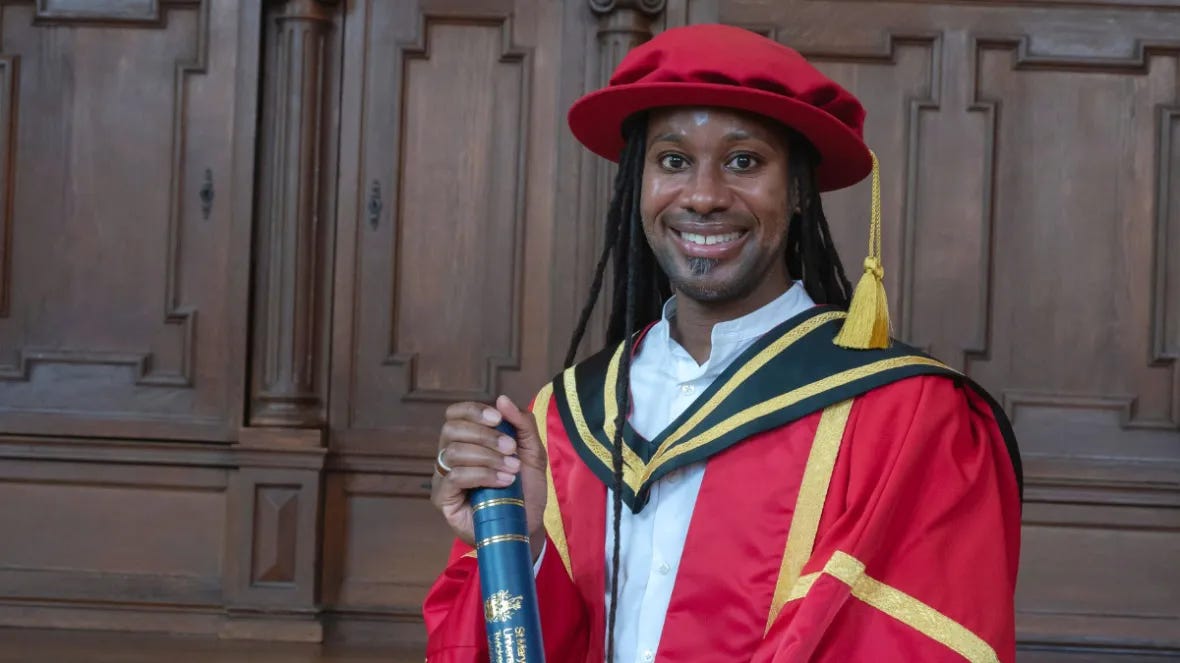
Jason Arday
When Cambridge University appointed Arday in 2023, the university practically launched a global publicity campaign. The headlines spoke of the youngest Black professor in Cambridge’s history, a man who had reportedly been unable to speak until the age of 11 and unable to read or write until 18, overcoming impossible odds to reach one of the world’s most prestigious universities. He became the face of the institution’s commitment to diversity, equity and inclusion. Well, 3 years later, that celebrated narrative has imploded.
Arday resigned this week after Cambridge announced an investigation into his qualifications, academic appointments, and basically every claim he has ever made. Plagiarism claims first attracted attention, but it has gone far beyond that now. Journalists have spent weeks unpicking an astonishing collection of shifting public claims that now appear to be complete fiction. He says he ran 600 miles in 6 days before later saying it had actually taken 12 days. He also said he personally raised £5.5 million for charity before later explaining the money had been raised collectively by a syndicate of around 100 people. There were claims about volunteering for WaterAid (the charity says nope), appearing in the famous Seven Up documentary series decades before he was born, holding visiting professorships that institutions now say did not happen, and even stories involving masked attackers and a pig’s head delivered to his parents’ home. All have come under intense scrutiny.
Cambridge itself, initially described criticism of Arday as part of a “vile smear campaign”, but they have now abandoned their defence of the man.
As is often the way, the dam has broken and all the stories are pouring forth. Students have described inadequate supervision, cancelled meetings, and being effectively abandoned during their studies. One student moved to another supervisor after complaining about the quality of supervision and another said hour-long sessions routinely lasted only twenty minutes.
The Arday affair should be a cautionary tale for every institution pursuing identity-driven appointments. Every exceptional Black academic now faces more suspicion because one university fell for an impossibly inspiring biography.
🇺🇸 The WNBA is at war with itself
The WNBA seems to spend more time talking about internal dramas and politics than basketball. Caitlin Clark has brought unprecedented audiences, television ratings have surged, and women’s basketball has finally entered the mainstream sporting conversation. But the league seems determined to turn every opportunity into another culture war, alienating many of the ordinary fans it spent decades trying to attract.
Nothing illustrates that better than the reaction to Sophie Cunningham’s entirely reasonable position that biological men should not compete in women’s basketball or share women’s changing rooms. Cunningham went out of her way to emphasise that she bears no ill will towards transgender people and believes there should be love and respect for everyone. Her argument was simply that women’s sport exists because biological sex matters. It is the very premise upon which every women’s sporting competition has been built.
Yet now Cunningham is being treated as though she committed some grave offence. Protests have been organised around her appearances, teenage girls wearing shirts supporting women’s sports have been abused by a WNBA team co-owner, and media outlets have portrayed Cunningham as some kind of right-wing provocateur rather than an athlete defending the integrity of her sport.
The response from Minnesota Lynx coach Cheryl Reeve perfectly captures how detached parts of the league have become from the people they are supposed to be entertaining. Reeve appeared courtside in a “Trans Kids Belong” shirt and publicly argued that including biological males in women’s sport means “we all win”. The irony is that Reeve benefited from decades of women fighting for recognition, funding, and respect, only to use her platform to undermine the very sex-based category that made her career possible.
The absurdity is being highlighted further by calls for French transgender player Julie Tétart to join the WNBA. He is a 6’3” male, who dominates France’s women’s league, averaging roughly 21 points and 20 rebounds per game and collecting loads of medals and honours.
The WNBA spent years demanding that women’s basketball be taken seriously. Serious sport, however, depends upon rules that people believe are fair.
Attorney General reminds the courts that Parliament is supreme
Attorney General Chris Bishop delivered a constitutionally significant speech this week, making an unapologetic defence of parliamentary sovereignty and warning against the growing tendency to use the courts as an alternative legislature. He said in a democracy, major public policy decisions belong to Parliament because Parliament alone possesses both the democratic mandate and the institutional legitimacy to make them. Courts exist to interpret and apply the law, not to drive their own policy preferences.
In short - other stuff that happened
- Immigration Minister Erica Stanford has referred fresh evidence to the Michael Heron KC inquiry after documents suggested officials withheld key information about the failed biometric capability upgrade, including that projected costs had blown out from $35 million to about $45 million and would require Cabinet approval.
- The Waitangi Tribunal has warned that the Government's review of Treaty clauses across 19 statutes could cause "real harm" and potentially contribute to Māori deaths, a claim New Zealand First deputy leader Shane Jones dismissed as "extraordinary" and politically motivated. Jones accused the Tribunal of fearmongering and attempting to undermine New Zealand First ahead of the election.
- ACT candidate Paul Henry told a packed Blenheim campaign event that voters should give their party vote to ACT but their electorate vote to National’s Stuart Smith, acknowledging ACT's Kaikōura candidate Tom Spooner was unlikely to win the seat. Spooner said he was standing to promote the party's values despite long odds.
- Wellington's new water entity, Tiaki Wai, has apologised after sending water bills to homeowners whose properties have been declared uninhabitable following storm damage. The agency says the bills were sent in error during the transition to the new system.
- Justice Minister Paul Goldsmith has ordered a review of the Ministry of Justice after it emerged a former employee accused of money laundering remained suspended on full pay for five years as it went through the courts, costing taxpayers more than half a million dollars. Goldsmith said the case represented a “comedy of errors” that had seriously shaken his confidence in the ministry and has directed the Public Service Commissioner to strengthen guidance for all agencies on managing staff facing criminal proceedings.
- James Miller has been appointed chair of the Financial Markets Authority for a five year term, with Trevor Janes joining the board for two years, as the regulator takes on expanded powers and undergoes an independent investigation into workplace conduct and culture. The appointments come after the recent leave of chief executive Samantha Barrass who pushed out Craig Stobo.
- Auckland's City Rail Link will officially open on Sunday, 13 September, ending more than a decade of construction and years of delays. The 3.5km underground rail link adds two new central city stations, more frequent train services and a transformed rail network.
- ACT MP Todd Stephenson has criticised new diversity action plans from MBIE and Treasury, arguing initiatives such as expanding everyday use of te reo Māori, cultural capability programmes and employee diversity networks risk distracting public servants from their core work despite recent Public Service Act changes emphasising political neutrality and merit-based appointments.
- Corrections Minister Mark Mitchell has halted a proposed $9 million nationwide rongoā Māori programme in prisons, including mirimiri (traditional massage), karakia and spiritual healing. The programme, which was expected to deliver 111 hours of services a week at $175 an hour, had been justified by Corrections on the basis of Māori overrepresentation in prisons.
- The coroner's inquest into Pauline Hanna's death began this week. Her husband Philip Polkinghorne was acquitted of her murder in 2024 and is expected to give evidence next week.
- 🏴 Police in Scotland are investigating reports that four Ugandan boxers, two men and two women, went missing after the Commonwealth Games amid allegations they intend to seek asylum in the UK. The athletes reportedly failed to travel home with the rest of the team.
- A Hamilton care worker, Karanpreet Singh, has been sentenced to 8 years, 3 months and 2 weeks in prison for raping and attempting to sexually violate a vulnerable woman living in supported accommodation on his first day working unsupervised. Singh will be deported to India after serving his sentence.
Steve Braunias’ brutal review of Kiri Allan’s memoir Go Hard or Go Home argues that while the book is candid, energetic, and often well written, it ultimately lacks the redemption arc needed to make it truly satisfying. He praises Allan’s vivid account of her unconventional upbringing, rise through politics, and honest discussion of her mental health crisis, but criticises her for continuing to portray herself as a victim over her 2023 drink-driving arrest, glossing over much of her ministerial career, and offering little reflection on colleagues or her political legacy.
Highly recommended just for a refreshingly honest assessment of the situation.
Ani O'Brien comes from a digital marketing background, she has been heavily involved in women's rights advocacy and is a founding council member of the Free Speech Union. This article was originally published on Ani's Substack Site and is published here with kind permission.


5 comments:
Ayesha Verrall
On that subject, isn't it so ironic that Labour were exactly like a criminals union in power, finding new and creative ways, gaslighting included, to ensure accountability was not on the agenda for their deeply misunderstood criminal friends. And with that we all experienced the typical Progressives crime wave that is seen wherever this idiotic thinking is implemented as policy and practical law.
Verrall, like virtually all of her cult colleagues see the world through some academic fictional lens, not the actual real world. It goes without saying that Criminal lawyers do a vital job, and like plumbers, undertakers and similarly unappealing occupations, work in a very necessary occupation. But Verall and her woke like thinkers don't know this as they rarely if ever experience what goes on in everyday non academic life.
Labour deserve to be tanking. And they, like their near identical proxies Green and TPM are not the Labour Party of old, but a hot mess of ugly racial politics. And I think we can add TOP to that list.
Jason Arday is an extreme example of DEI gone haywire. From Wikipedia:
"He completed his Doctor of Philosophy (PhD) degree in education at Liverpool John Moores University. He claimed he had to relearn the content of his dissertation weeks before defending it following the removal of a benign brain tumour that caused memory loss. Arday's doctoral thesis, An Exploration of Peer-Mentoring among Student Teachers' [sic] to Inform Reflective Practice within the Context of Action Research, was completed in 2015 under the supervision of Phil Vickerman. The biologist Richard Dawkins later criticised the thesis as being written in an obscurantist, "gobbledygook" style. Dawkins highlighted "332 instances where a plural noun's terminal 's' is incorrectly followed by an apostrophe", including in the title itself, and questioned whether Arday's supervisor and examiners had actually read the thesis."
This from a bloke who got his GCSEs in PE and textiles and often didn't turn up in class because he was playing snooker.
'Professor', huh..........
On WNBA. The world has truly gone insane. The Emperor has no clothes. Its cringingly embarrassing to watch these adults fools pontificate on trans anything. Its lunacy and sheer absurdity .
What is far more concerning is these same adults performing the equivalent of 1940's frontal lobotomies on children and young people with this cult. They are all firmly on the wrong side of history with this shit.
Yet, when exactly when did the manufactured trans rights grift, that I understand was created after the gay marriage cause gravy train was rendered inert by its legislation into law, ooze out of academia and into every day life?
Perhaps it's that it is the unsolvable cipher is the reason and a living can be made from this ridiculous pretend non event.
Follow the money.
"Roy Morgan’s demographic figures are worth a look too. The governing parties lead the opposition 64–28 among men over 50, while Labour, the Greens and Te Pāti Māori lead among women under 50 almost exactly the other way, 60–28."
Maybe the misogynists of the last 125 years were right.
I want to be excited about the CRL, I really do, but Auckland Council and their inability to control identity politics has killed that off.
This thing cost an absolute fortune, destroying many a business along the way and we the ratepayers and taxpayers are going to foot the bill. Hell, even Wayne Brown and his supporters got through yet another monstrous rate rise in honour of it. But it appears that Maori are the only race who matter.
Not only are the station names Maori, even though for 3 out of the 4 locations are actually English derived place names, they just couldn't resist re-spelling K Rds in an argumentative new manner. For a culture without a written language, this is head shaking ridiculous.
But worse is the safety signage in the stations. Its predominant bold language is Maori, that about 2-4 % of the population can read.
The minor smaller font that everyone can read is English.
Obviously it's super important to impart safety messaging clearly, boldly and with as little clutter and distraction as possible. Auckland Council failed miserably. They have instead bored the readers with a illegible word salad before they've made it to the second paragraph that is that safety message.
I hoped for the cost, the wise elites of Auckland Council would want to take the people with them. Instead they embarked on a patronising arrogant culture lesson and lost us.
Post a Comment
Thank you for joining the discussion. Breaking Views welcomes respectful contributions that enrich the debate. Please ensure your comments are not defamatory, derogatory or disruptive. We appreciate your cooperation.