

Labour’s proposal to cap public transport fares at $20 per week (in Auckland, Wellington, and Christchurch; $10 everywhere else) has been touted as a “cost of living” measure, but the policy is politically strategic rather than a solution to a burning problem. It sounds good. Everyone understands that household budgets are under pressure and everyone likes the idea of cheaper transport. Additionally, public transport occupies a privileged position in modern political discourse. It is a left-coded snack they cannot help going back to. Zohran Mamdani in New York made it a cornerstone of his recent campaign to promise “free buses”. But already he has “acknowledged that his plan for fast and free buses isn’t going to happen so fast”.
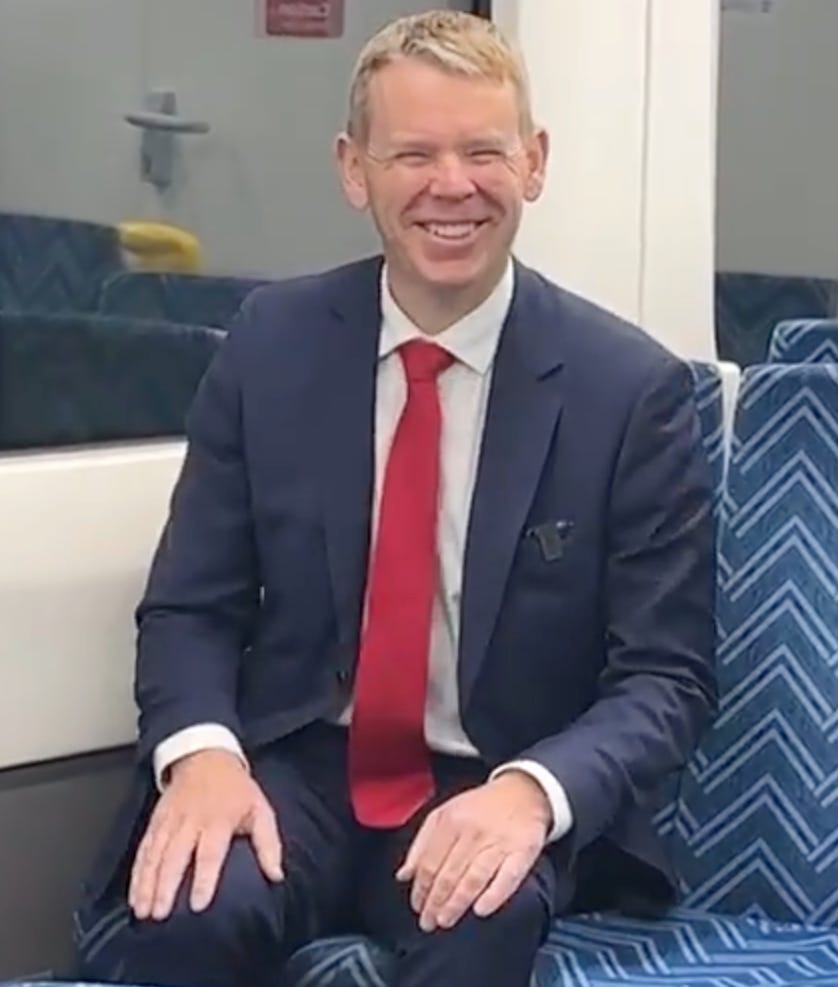
Supporting these kinds of policies is suppose to be progressive, while questioning further subsidies risks being portrayed as somehow anti-environment or anti-public transport. Even “far right” gasp. Everything is far right in 2026.
But if we look beyond the snackable marketing, Labour’s fare cap is really just another example of middle class welfare. Worse still, if we get the magnifying glass out as the guys at Taxpayers’ Union did, the numbers underpinning the proposal also appear highly questionable.
The first fallacy is that Labour is asking New Zealanders to believe that public transport is underfunded and therefore requires substantial new taxpayer support. In truth, it is almost the opposite. Public transport is already one of the most heavily subsidised services in the country. Taxpayers and ratepayers cover approximately 87% of every public transport fare. A decade ago it was around 61%. So public transport users are only paying 13% of what it costs for them to use the service. Today the average subsidy sits at $17.65 per ride.
The scale of that subsidy is very rarely understood. Every time someone taps their AT Hop, Bee, or Snapper card, the overwhelming majority of the cost is already being paid for by someone else. Around half comes from the National Land Transport Fund, which is financed by motorists and road users. Local government contributes a further 34% which homeowners finance via their rates, while central government directly contributes around 3% (our taxes). This next bit is really important because people don’t seem to get that when something is called “free” it just means we already paid for it:
Across the country, the average household contributes roughly $1,373 annually towards public transport regardless of whether anyone in that household ever uses it.
Whether you use public transport or not, your household is already paying for it. Labour is proposing to make an already heavily subsidised service even more heavily subsidised.
The second fallacy is that public transport is often discussed as though it is a universal public service used by most New Zealanders. It is not. Not even close. Only around 6% of New Zealanders are regular public transport users and nearly 90% of all public transport journeys occur in Auckland, Wellington and Christchurch. For the overwhelming majority of the country, public transport is either unavailable, impractical, or irrelevant to daily life.
Every additional dollar spent subsidising public transport is a dollar collected from a population that overwhelmingly does not use it. The people who would actually benefit from this policy are concentrated in a small number of urban centres, while the costs are spread across the entire country. When politicians describe this as helping “New Zealanders”, they are glossing over the fact that most New Zealanders will never be “helped”.
The people least likely to benefit are often those facing the greatest financial pressure. Much of the political conversation around transport assumes a middle class urban lifestyle in which people commute between home and a central office. That may describe a policy adviser in Wellington or an accountant in Auckland, but it bears little resemblance to the lives of most lower income New Zealanders.
The people who genuinely struggle with transport costs are those who have no realistic alternative to driving. Shift workers start before buses and trains run and finish after they stop. Caregivers and home health professionals travel between multiple locations throughout the day under huge time pressures. Tradespeople transport their own equipment. Rural workers travel long distances and into remote areas that public transport networks just don’t reach. And parents coordinate school drop offs, kindy, grocery shopping, and work commitments across sprawling suburbs that were built around cars rather than train stations.
For these New Zealanders, public transport is not a cheaper alternative that they are stubbornly refusing to adopt. It is just not a viable option. Further subsidised public transport will not entice them to use it because it doesn’t work for them. They will continue paying for fuel, registration, insurance and vehicle maintenance regardless of how much of our taxes and rates Labour piles in to buses and trains. Taxes and rates that they contribute to nonetheless.
Labour’s fare cap is honestly just middle class welfare. The policy provides additional financial assistance to a relatively small group of people who already receive substantial taxpayer support and who, in most cases, are actually perfectly capable of paying their existing fares. They are disproportionately urban professionals, students, and office workers.
There is nothing progressive about requiring a home care worker in South Auckland to further subsidise the train commute of a public servant in Wellington who is paid twice what she earns herself. Neither is there anything particularly equitable about making a solo parent in provincial New Zealand help fund cheaper transport for urban DINKs (Double Income, No Kids) living along major metropolitan transport corridors. Yet that is what we are told when we object to these policies. Everything is back to front and upside down. Those objecting to the policy are not the elitists in this situation.
Now, even if one accepts this redistribution desirable, there remains the awkward issue of whether Labour has any idea what it will actually cost. The party claims the fare cap will cost taxpayers $65 million per year, but independent analysis suggests Labour’s figure may in actual fact bear little resemblance to reality. Using publicly available data, the Taxpayers’ Union estimated the annual cost of the policy in Auckland, Wellington and Canterbury alone and their calculations produced a range of between $141.7-$182.5 million annually. Auckland by itself was estimated to cost between $118-$141 million, Wellington added another $23-$38 million, while Canterbury contributed up to $3.4 million.
This suggests Labour’s nationwide costing of $65 million may not even cover these three regions. Even the lowest estimate produced by the Taxpayers’ Union exceeds Labour’s claimed national annual cost by a substantial margin. The upper estimate is nearly three times Labour’s figure.
It has been six months since Labour has floated a policy proposal. We have been provided next to no detail on the Future Fund because they say telling us more could have “Treaty implications”. Their 3 “free” GP visits policy is terribly flawed as well given it is also subsidising the wealthy and middle class and will overburden our health system. And it looks like we can expect the same opacity when it comes to this public transport announcement.
Despite repeated questions, Labour has failed to provide detailed assumptions, regional breakdowns, or even basic information about how many people are expected to benefit. Transport spokesperson Tangi Utikere responded to scepticism from two different Newstalk ZB hosts with determined repetition that it would cost $65 million per year.
If the Taxpayers’ Union can work out a costing model from publicly available information, it is reasonable to expect Labour’s parliamentary research team to explain how it arrived at its own numbers.
Chris Hipkins recently suggested that voters don’t really care about the details and perhaps some don’t, but when times are tough we are all forced to pay more attention to the details. We have to look more carefully at the numbers in our bank accounts and price tag of everything. If we have to do it individually and as families, then we sure should expect our government to be all over the details of their spending.
Unfortunately, the blasé attitude of Hipkins and Labour is reminiscent to the way they sprayed cash around when they were last in government not checking if it was going to the most in need or if we could afford it. Under the last Government, net core Crown debt roughly tripled from about $58 billion before COVID to more than $175 billion by the time Labour left office. Labour's defenders will rightly point out that COVID required extraordinary borrowing, but it is also true that New Zealand emerged from the Ardern-Hipkins years realising that a lot of what was spent cannot be really accounted for. It was frittered away.
New Zealand taxpayers now spend around $9 billion every year simply servicing government debt. Not paying the debt off, just paying the interest bill. That money does nothing. It is just the price of yesterday's borrowing. To put it into perspective, more of our taxes are now spent servicing government debt than are spent on law and order. Our entire justice system, including Police, Corrections and the courts, costs us about $7.3 billion each year.
Imagine what an additional $9 billion a year could do if it were available for frontline services. It could fund substantial improvements across health, education, law and order, or provide tax relief to working New Zealanders. Instead, an increasing share of government revenue is being eaten up by interest payments because our debt tripled under Labour. This is the problem of treating debt as free money and the problem of treating taxpayers’ money as free money.
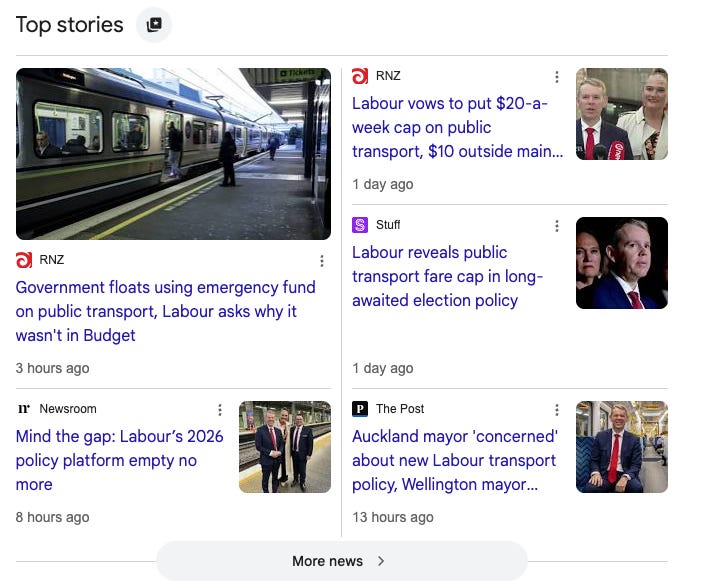
Every dollar borrowed today for a scheme to further subsidise public transport for middle class urban professionals who are already only paying 13% of the cost, eventually becomes a massive burden on future taxpayers who have to service the debt instead of hiring more nurses or police, building more schools, fixing the roads, and building resilience for the next global shock.
Labour should be especially careful when presenting taxpayers with policies whose numbers appear not to add up. They have a long way to go in order to win back the trust of New Zealanders. Well, the ones who understand just how royally they sent us up the creek without a paddle.
But luckily for Labour there is always someone else on the Left willing to be just a little more extreme leaving them looking moderate by comparison. In this case, Labour proposed a fare cap and immediately The Opportunity Party cried that they have not gone far enough and public transport should be entirely free. Freeeeeeee. Well, I guess if taxpayers are already covering 87% of the cost, why not go the whole hog? Just abolish the fees altogether. Good grief, these socialists are the ones telling everyone they are an alternative to National!
Disclosure: my boss (at private company) is also the Executive Director of the Taxpayers’ Union. I have not discussed this piece with him or anyone else and I am under no obligation to share their work. I am doing so because it is good work and I think more New Zealanders should know about it.
Ani O'Brien comes from a digital marketing background, she has been heavily involved in women's rights advocacy and is a founding council member of the Free Speech Union. This article was originally published on Ani's Substack Site and is published here with kind permission.


13 comments:
Always a question of how to prioritize spending and what's a social good. Huge number of bureaucrats in Ministry of Education. Taxpayer money, right? Why so many? Do we really need Maori and Pasifika bureaucrats to always give the same report? (Clue: report says not enough consultation, X policy will hurt X people). Can't AI give that same sage advice? We certainly can pay for free buses. Other cities can, without raising taxes. Are we just too dumb, financially? We need many more people in Immigration. I remember in the old days one could pop in--in person--and sort passport, etc. On the spot. Why can't we go back to such a system? Closing all these NZ post shops: I find depressing. Okay, people use post less and less and NZ Post loses money or needs to make a profit. Who cares? Post shops serve a social good, particularly for the elderly. Where's Winston Peters? We really have no visionary leaders, anywhere.
Glad to see this article after Jordan’s yesterday. These commentators really love roads and really hate public transport and poor people and the economy and the environment and fuel security.
Why don’t Ani and Jordan run their own site? It’s an idea.
Regular kiwis are supportive of this sensible and beneficial policy.
Regular kiwis abhor the tax breaks for landlords! The Labour public transport cap costs a smidgeon of the landlord handout!
Or they could roll back the tobacco tax breaks. Boom, policy paid for- and then some!
Imagine for a moment. Train carriages and buses occupied by groups of rowdy, or drunk, teenagers. Groups of homeless people riding all day in a warm train. Mentally ill people terrorising passengers at will.
That and worse is what you get if public transport is free.
We actually tried it during Covid. Thats when people who never used buses found they were a new place to be a social hazard. Attacks at bus stops and on buses were rare before then but are a feature now.
You do not want free public transport.
"Much of the political conversation around transport assumes a middle class urban lifestyle in which people commute between home and a central office.”
OMG, this so describes the modern left progressives and it's perfect for Labour. These lanyard wearing bureaucrats and their political junky boss who knows nothing else see the world through that lens. They IMAGINE that is what the hoi poloi need to go through their struggling lives as they battle the world created by the capitalists.
Then the next phase is to blow simply horrendous amounts of public money propping up the stupid cause, employing an army of otherwise unemployable bureaucrats to run the causes, lanyard equipped, that mirrors the politicians who create them.
Labour under Hipkins, are politically astute but like it's predesesor, completely unable to run a piss up in a brewery. And Labour have not in any sense changed. They are the same bunch of idiots who existed under Ardern.
How much is spent on all the exaggerated bold priority signage in fictional te reo maori on Auckland Transport busses and trains ?
The white ants in AT must go home smugly satisfied with the indoctrination they are foisting on the travellers everyday.
How many people actively avoid Auckland trains with the long extremely loud announcements in fictional Maori that not a single person on the train understands, or wants.
Stop it AT - your arrogance is unbelievable.
Well, we certainly seem able to identify the problems, but much less so at proposing solutions. Just ban any political party member from ever becoming an MP. The improvements would be immediate, and dramatic. We would all begin to feel some hope for the future. Oh yes, and severe punishment for any attempted deceit.
Has National done anything about the cost of living crisis? No. Labour is.
Actually, rather than free, pay us to catch buses. It's probably next on the policy agenda!
But seriously, I worked in public transport and saw first hand what the lack of gates on the train stations correlated to and that was crime. So, everywhere but Newmarket and Britomart you could evade paying. This led to criminal activity as freeloaders have no investment in their trip and the train became their personal dirt box. Payment of fares, strictly enforced and with real consequences would make an unsafe mode of transport a lot safer. TOP are delusional.
Questioning subsidies is in no way considered a moral failing. Ani leading with a strawman- not off to a good start!
I would suggest that subsidising tobacco companies by way of affording them tax breaks is not economically sensible, and I would go further in that one to say it is not moral as the vast majority of kiwis are against smoking and do not smoke and there is no health or social benefit to doing it. The same goes for subsidising travel for ex politicians and their families.
Where the Labour policy makes sense:
- economically
- quality of life for users and non users of public transport
- the planet in terms of reduced pollution
- international trade in terms of a plank towards us meeting climate reduction target and therefore not being in breach of trade agreements
- for low earners, who can afford big ticket parking and petrol costs
All at such a low low relative cost.
Labours idea only makes sense on such obviously beneficial bases. It doesn’t do well against strawman arguments ;-)
Anon 12-51. Can you clarify how Labours policy improves "quality of life for users and non users of public transport"? Considering how much taxpayers are subsidising PT. I cannot see non users quality of life going up. Also not surprised to see landlords and tobacco companies getting a mention, again
I always hated traveling by bus to school.
By the age of 13 many of us already dreaded that daily grind.
It motivated thousands of young people to obtain a driving license and forever preserve that mode of public transportation for "losers".
I've never stepped on a bus in NZ since.
The only exception being when living overseas and those were sojourns to adventure.
My point is - I don't know why my tax should fund filthy smelly caravans of despair and their fetid patrons.
Anon@11.46: "Also not surprised to see landlords and tobacco companies getting a mention, again"
Nor am I. It's a depressingly familiar argument, put forward by people who either don't understand, or wilfully refuse to accept, what actually happened there.
Cutting the excise tax on heated tobacco products should please people who don't want traditional cigarettes more widely used. And restoring tax breaks to landlords just made business sense: other businesses hadn't lost tax breaks, after all. The loss of tax breaks, along with the healthy homes stuff, both pushed up significantly the cost of renting.
The previous government's Smokefree legislation was barking mad. We took one look at it, and realised that it was going to benefit enormously the existing black market. Thank goodness the current government repealed it.
The latest announcement by Labour regarding a cap on PT is more idiocy from those loonies. A cap equals a subsidy: more money coming out of ratepayers' pockets: we already subsidise PT by a considerable amount. There's no such thing as a free lunch, folks!
Post a Comment
Thank you for joining the discussion. Breaking Views welcomes respectful contributions that enrich the debate. Please ensure your comments are not defamatory, derogatory or disruptive. We appreciate your cooperation.